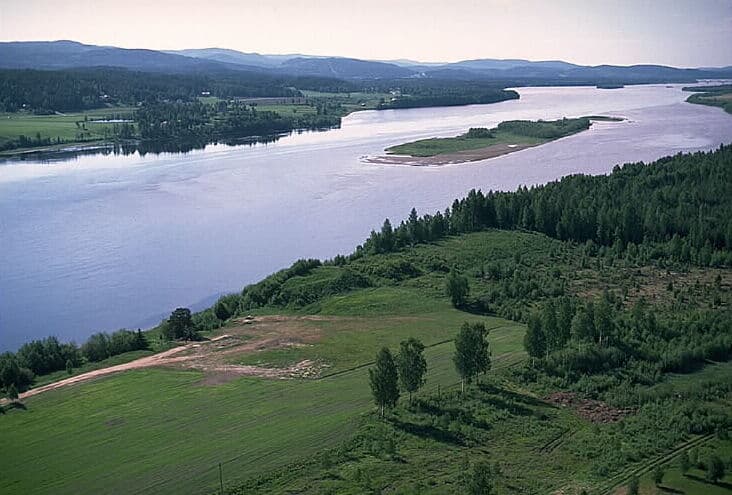
Styresholm — Sweden castle

Styresholm

Styresholm fortress in Sweden
Kramfors, Sweden
Late Medieval (14th–15th c.)
Archaeological Site

Styresholm fortress is a significant example of a late medieval bastioned fortress located in what is now Kramfors Municipality, Sweden. Originally constructed in the 14th century by the notorious pirate group known as the Victual Brothers, it formed part of a strategic network of fortifications along the Gulf of Bothnia. The fortress's original position was on an island in the Ångermanälven river, which at the time had a water level several metres higher than today, altering its landscape and defensive advantages.

Historical context and foundation

The Victual Brothers were a pirate confederation active in the Baltic Sea during the late 14th century, known for their maritime raids and control of key trading routes. Styresholm was one of several fortresses they established to secure their stronghold and influence over regional waters. The fortress's earliest recorded mention dates to 1398, coinciding with the transfer of ownership to Queen Margaret I, who ruled the Kalmar Union uniting Denmark, Norway, and Sweden. This transfer marked a shift from pirate control to royal governance, with a Danish governor appointed in 1400 to oversee the fortress and its surrounding territories.

Architectural features and strategic importance

As a bastioned fortress, Styresholm was designed with angular bastions projecting from its defensive walls, a style that allowed defenders to cover adjacent walls with crossfire and resist siege artillery more effectively than traditional medieval curtain walls. This architectural approach was relatively advanced for its time and reflects the evolving military engineering of the late medieval period. The fortress likely included thick stone walls, moats fed by the river, and fortified gates to control access. Its island location provided natural defense, making it difficult for attackers to mount direct assaults without exposure to defensive fire.

Location and environmental changes

Styresholm's placement on an island in the Ångermanälven river was a critical defensive feature. Over the centuries, the water level of the river has dropped by several metres, transforming the site from an island fortress to a riverside location. This environmental change has impacted the preservation and visibility of the fortress remains, as well as the surrounding landscape.

Political significance and later history

Following its acquisition by Queen Margaret I, Styresholm served as a strategic royal outpost in northern Sweden, helping to assert the Kalmar Union's control over the region and secure maritime routes in the Gulf of Bothnia. The appointment of a Danish governor in 1400 underscores its importance as a military and administrative center during this period.

Details about Styresholm's later history are sparse, but like many medieval fortresses, it likely experienced periods of decline as military technology and political boundaries evolved. The fortress's role diminished as centralized nation-states developed stronger armies and new fortifications elsewhere.

Present condition and archaeological significance

Today, Styresholm exists as an archaeological site with limited above-ground remains. The changes in the river's water level and natural erosion have affected the preservation of the fortress's structures. Archaeological investigations have contributed to understanding its layout and historical function, offering insights into 14th-century military architecture and the maritime conflicts of the Baltic region.

Styresholm's legacy as a late medieval bastioned fortress built by pirates and later integrated into royal defense systems highlights the complex political and military history of northern Europe during the Middle Ages.

Frequently asked questions (FAQ)

What is the historical significance of Styresholm?
Styresholm is a notable example of medieval architecture in Sweden, reflecting the region's rich history and cultural heritage. It served as a stronghold during various conflicts and has been a witness to the evolution of Swedish nobility over the centuries.
When was Styresholm built?
Styresholm was constructed in the late 14th century, making it one of the oldest castles in Sweden. Its architecture showcases the defensive needs of the period, with features designed to withstand sieges and attacks.
What are the opening hours for Styresholm?
Styresholm is open to visitors from May to September, with hours typically from 10 AM to 5 PM. It's advisable to check the official website for any seasonal changes or special events that may affect opening hours.
Can I visit Styresholm year-round?
While Styresholm has a primary visiting season during the warmer months, there may be special guided tours or events during the off-season. It's best to contact the castle administration for specific off-season visiting opportunities.
Is Styresholm accessible for visitors with disabilities?
Yes, Styresholm is committed to accessibility and has made efforts to accommodate visitors with disabilities. There are ramps and designated areas to ensure everyone can enjoy the castle's historic beauty.
What are the ticket prices for visiting Styresholm?
Ticket prices for Styresholm are generally affordable, with discounts available for students and seniors. Children under a certain age may enter for free, but it's best to check the official site for the most current pricing and any special offers.
When is the best time to visit Styresholm?
The best time to visit Styresholm is during the summer months when the weather is pleasant and the gardens are in full bloom. Additionally, various events and activities take place during this time, enhancing the visitor experience.
Are there nearby attractions to visit after Styresholm?
Yes, there are several attractions near Styresholm, including beautiful nature reserves and scenic hiking trails in the Kramfors area. Visitors can also explore local museums and cultural sites to enrich their experience.

Photo gallery

Styresholm
Click to view

Photo by {{{artist}}}•CC BY 2.5 se

1 photo • Click any image to view in full screen

Information

Bastioned Fortress

Loading map...

Visitor reviews

No reviews yet. Been here? Write the first review and help other travelers!

Write the first review

Visited this castle? Share your experience

Your review helps other travelers and adds first-hand knowledge to our encyclopedia.

Write a review

(5/5)

0/2000 characters

Your review will be visible after admin approval

Nearby castles

10 km

Stensätter Hill Fort

Bollstabruk, Sweden

Stensätter Hill Fort, also known locally as Stensättersborgen or Borgberget, is among the most well-preserved ancient hill fortifications in the northern Swedish region of Norrland. Situated on a prominent 190-meter-high hill near the small locality of Bollstabruk, this site offers a remarkable example of prehistoric defensive architecture in Scandinavia. The fort's elevated position provided strategic advantages, overseeing the surrounding landscape and controlling movement through the area. Architectural features and fortifications The hill fort is defined by a substantial stone wall that stretches approximately 135 meters in length, enclosing the summit of the hill. This wall measures about 4 meters wide and stands roughly 2.5 meters high, constructed from locally sourced stones carefully arranged to form a robust defensive barrier. The thickness and height of the wall suggest it was built to withstand attacks and to serve as a formidable obstacle to invaders. Unlike many other ancient fortifications, the Stensätter Hill Fort has not yet undergone archaeological excavation, which leaves much about its construction techniques, internal layout, and period of use open to interpretation. However, its preservation state allows for a clear understanding of its defensive purpose and scale. Historical context and significance Hill forts such as Stensätter were typically constructed during the Iron Age in Scandinavia, roughly spanning from 500 BC to 1050 AD. These structures served as refuges during times of conflict and as symbols of territorial control. While the exact dating of Stensätter is unconfirmed due to the lack of excavation, its architectural characteristics align with other known hill forts from the Late Iron Age. The location in Norrland, a region known for its rugged terrain and sparse population historically, indicates the fort could have played a role in local defense strategies or as a gathering place for communities in times of threat. Its preservation contributes valuable insight into the defensive practices of ancient Scandinavian societies. Natural setting and strategic importance Perched atop a high hill, Stensätter Hill Fort utilizes the natural topography to enhance its defensive capabilities. The steep slopes surrounding the site would have made direct assault difficult, forcing attackers to confront the fortified stone wall under disadvantageous conditions. This natural defense combined with man-made fortifications exemplifies the strategic use of landscape in ancient military architecture. The fort's vantage point also allowed for surveillance over the surrounding valleys and routes, enabling early warning of approaching groups or enemies. This would have been critical in an era when communication and rapid mobilization were limited. Preservation and potential for future research Despite its excellent preservation, Stensätter Hill Fort remains largely unstudied archaeologically. Future excavations could reveal important information about its construction phases, the people who built and used it, and the broader cultural context of hill forts in northern Sweden. Such research would contribute to a more comprehensive understanding of Scandinavian prehistory. Currently, the site is accessible to visitors interested in ancient history and archaeology, offering a tangible connection to the region's distant past. Its status as one of the best-preserved hill forts in Norrland makes it a significant cultural heritage site.

Early Medieval (5th–10th c.)
Details
166.2 km

Tibrandsholm Castle Ruins

Krokom, Sweden

Tibrandsholm Castle ruins stand as a silent witness to a turbulent chapter in Swedish history, located near Krokom in Jämtland County, Sweden. Dating back to the late medieval period, around 1390, the castle's origins and purpose remain partly shrouded in mystery. The first documented mention of the castle appears in 1402, when Margaret I of Denmark ordered its demolition during the conflicts surrounding the Kalmar Union. Historical background and ownership The castle was likely named after its steward, Tibrand, who is believed to have been associated with the Victual Brothers, a group of privateers and pirates active in the Baltic Sea during the late 14th and early 15th centuries. These privateers opposed the Kalmar Union, a political entity uniting Denmark, Norway, and Sweden under a single monarch. Tibrandsholm's strategic location made it a significant military site during this period of regional conflict. In the 17th century, during the wars between Sweden and Denmark, the ruins of Tibrandsholm served a different purpose as a soldier camp and a place of execution. This later use highlights the site's continued military significance long after the castle itself had fallen into ruin. Archaeological significance and surrounding settlements Excavations and studies around Tibrandsholm have revealed evidence of human activity dating back to the Bronze Age, Iron Age, and Viking Age. These findings indicate that the area was inhabited or used for settlement and strategic purposes for many centuries before the castle's construction. The presence of these ancient settlements adds layers of historical depth to the site, making it an important location for understanding the broader history of the region. Architectural features and castle type Although only ruins remain today, Tibrandsholm was likely a hill castle, built on elevated terrain to provide defensive advantages. The castle's design would have included typical late medieval fortification features such as thick stone walls, defensive towers, and possibly a moat or ditch. The limited remains make it difficult to reconstruct the full layout, but the strategic location and historical context suggest a fortress built primarily for military defense rather than residential comfort. Legacy and cultural importance Tibrandsholm Castle ruins are a valuable cultural heritage site in Sweden, offering insights into the medieval power struggles in Scandinavia and the complex history of the Kalmar Union. The site's archaeological layers contribute to the understanding of continuous human occupation in the region from prehistoric times through the medieval era. Today, the ruins attract historians, archaeologists, and visitors interested in medieval fortifications and Scandinavian history. Preservation efforts focus on maintaining the ruins as an archaeological site and promoting awareness of its historical significance. While the castle itself no longer stands intact, the surrounding landscape and ruins provide a tangible connection to the past conflicts and cultural developments that shaped northern Sweden.

Late Medieval (14th–15th c.)
Details
199.4 km

Korsholm Castle Ruins

Vaasa, Finland

Korsholm Castle stands as a significant medieval site located in Vaasa, Finland. Constructed in the 1370s, it is one of the earliest recorded fortifications in the region, with the first written mention dating to 1384 in the testament of Bo Jonsson Grip, where it was referred to as Krytzeborg. Originally, the castle was strategically built on a small island, providing natural defense advantages. This location was further enhanced by a surrounding moat and two concentric defensive walls, typical of medieval fortification practices aimed at deterring invaders and protecting the occupants. Architectural features and construction The castle's primary construction material was likely wood, which was common for fortifications of this period in the Nordic region due to the abundant timber resources and the relative speed of construction. The wooden structures would have included towers, walls, and living quarters, although no above-ground remains survive. The defensive layout with a moat and double walls indicates a well-planned stronghold designed to control access and withstand attacks. Defensive design and strategic importance Building Korsholm Castle on an island was a deliberate choice to maximize defense. The moat would have been filled with water, creating a barrier against siege engines and infantry assaults. The two walls provided layered protection, forcing attackers to breach multiple obstacles. This design reflects medieval military architecture principles where natural and man-made defenses were combined. Historical context and ownership Throughout the Middle Ages, Korsholm Castle was a property of several noble families, serving as both a military fortress and a noble residence. Among its most notable owners was Sten Sture the Older, a prominent Swedish statesman and regent who played a key role in the politics of Sweden and Finland during the late 15th and early 16th centuries. His association with Korsholm highlights the castle's significance in regional power dynamics during this era. Medieval role and governance The castle functioned as a local administrative center and a symbol of noble authority. It was part of the broader network of fortifications that secured Swedish interests in Finland, which was then under Swedish rule. The castle's position near the coast allowed control over maritime routes and local trade, enhancing its strategic value. Later developments and destruction By the 18th century, Korsholm Castle had lost its military importance. In 1748, the site was repurposed with the construction of a new governor's house. This development led to the demolition of all remaining medieval structures, erasing much of the castle's original fabric. Later, in 1851, another building was erected on the site, only to be destroyed a year later in the great fire of Vaasa in 1852, which devastated much of the town. Current state and heritage significance Today, Korsholm Castle exists only as a low mound marking the location of the former island fortress. No substantial ruins remain above ground, but the site is commemorated by a monument dedicated to the castle's historical importance. This modest remnant serves as a tangible link to the medieval past of Vaasa and the broader region of Finland. Archaeological potential and preservation Despite the lack of visible structures, the site holds archaeological interest. Excavations could reveal foundations, artifacts, and other material evidence that would provide deeper insight into medieval construction techniques and daily life at Korsholm. Preservation efforts focus on maintaining the site as a cultural heritage landmark accessible to visitors and scholars alike. Visiting korsholm castle ruins The castle ruins are accessible to the public and offer a quiet historical site for visitors interested in medieval Finnish history. While there are no standing structures to explore, the monument and the surrounding landscape provide context for understanding the castle's original setting. Interpretive signage and local guides may enhance the visitor experience by explaining the site's history and significance.

Late Medieval (14th–15th c.)
Details
