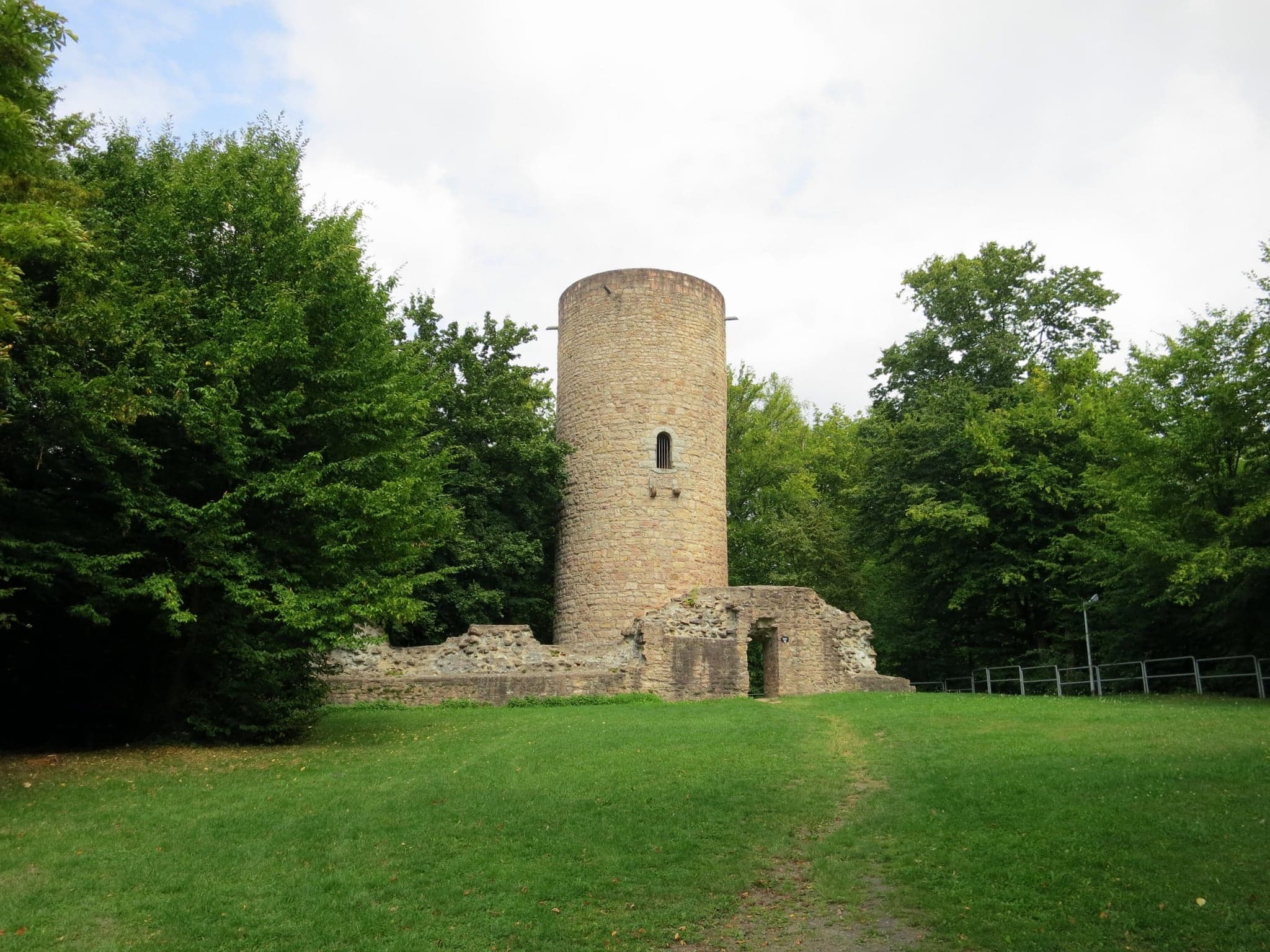
Stolzenberg Castle
Stolzenberg Castle stands as a remarkable example of a medieval hilltop fortress in the region of Hessen, Germany. Perched atop a 277-meter hill overlooking the town of Bad Soden-Salmünster, the castle occupies a strategic vantage point that historically controlled the vital Via Regia trade route. This ancient route connected various parts of the Holy Roman Empire, making Stolzenberg a key military and economic stronghold during the High Medieval period.
The origins of Stolzenberg Castle likely trace back to the 11th or 12th century, when early fortifications were established to oversee and protect the trade corridor. However, the first documented mention occurs in 1252 in a royal charter issued by King William of Holland. This charter granted Abbot Heinrich IV of Fulda permission to rebuild the castle after it had been destroyed by enemies described as "enemies of the church." Historical evidence suggests these attackers could have been the Counts of Rieneck or Archbishop Gerhard of Mainz, reflecting the intense power struggles between secular nobility and ecclesiastical authorities during this era.
Architectural features and construction
Following its reconstruction in the mid-13th century, Stolzenberg Castle was fortified with stone walls and a prominent bergfried, a tall defensive tower characteristic of German medieval fortresses. This bergfried, approximately 20 meters high, was designed to oversee and protect the castle's most vulnerable approaches. Its original elevated entrance, located about ten meters above ground level, was accessible only by a removable ladder, enhancing its defensive capabilities.
The castle's inner courtyard, or burghof, was enclosed by a substantial ring wall that surrounded the entire hilltop plateau. While only the double surrounding ditches and earthworks remain today, these features outline the castle's original perimeter and fortifications. The deep ditches would have functioned as formidable obstacles to attackers, while the earthen embankments likely supported wooden palisades or stone walls.
Within the courtyard, remnants of walls believed to be the foundations or back walls of former buildings provide insight into the castle's internal layout, suggesting the presence of living quarters and administrative spaces adjacent to the bergfried. This configuration reflects the typical organization of a High Medieval hill castle, balancing defense with residential and functional needs.
Historical significance and ownership
The nearby settlement, initially a suburbium associated with the castle, was granted town rights in 1296 by King Adolf of Nassau. This community later became known as Soden, named after a local salt-salting hamlet, and its early growth was closely linked to the castle's presence and protection.
By the late 13th century, the noble von Hutten family became closely connected to Stolzenberg Castle. Hermann von Hutten is documented as an official at the castle in 1299, marking the beginning of the family's long-standing association with the site. Throughout the 15th century, the von Hutten lineage established itself as the ruling lords of the castle, eventually adopting the name "zu Stolzenberg" to signify their connection.
In 1319, the castle chapel was (re)consecrated, serving both the fortress inhabitants and the adjacent settlement. This chapel remained central to local religious life until a separate church was constructed later in the medieval period. Notably, a vineyard was cultivated around the chapel as late as 1335, illustrating the site's agricultural as well as defensive roles.
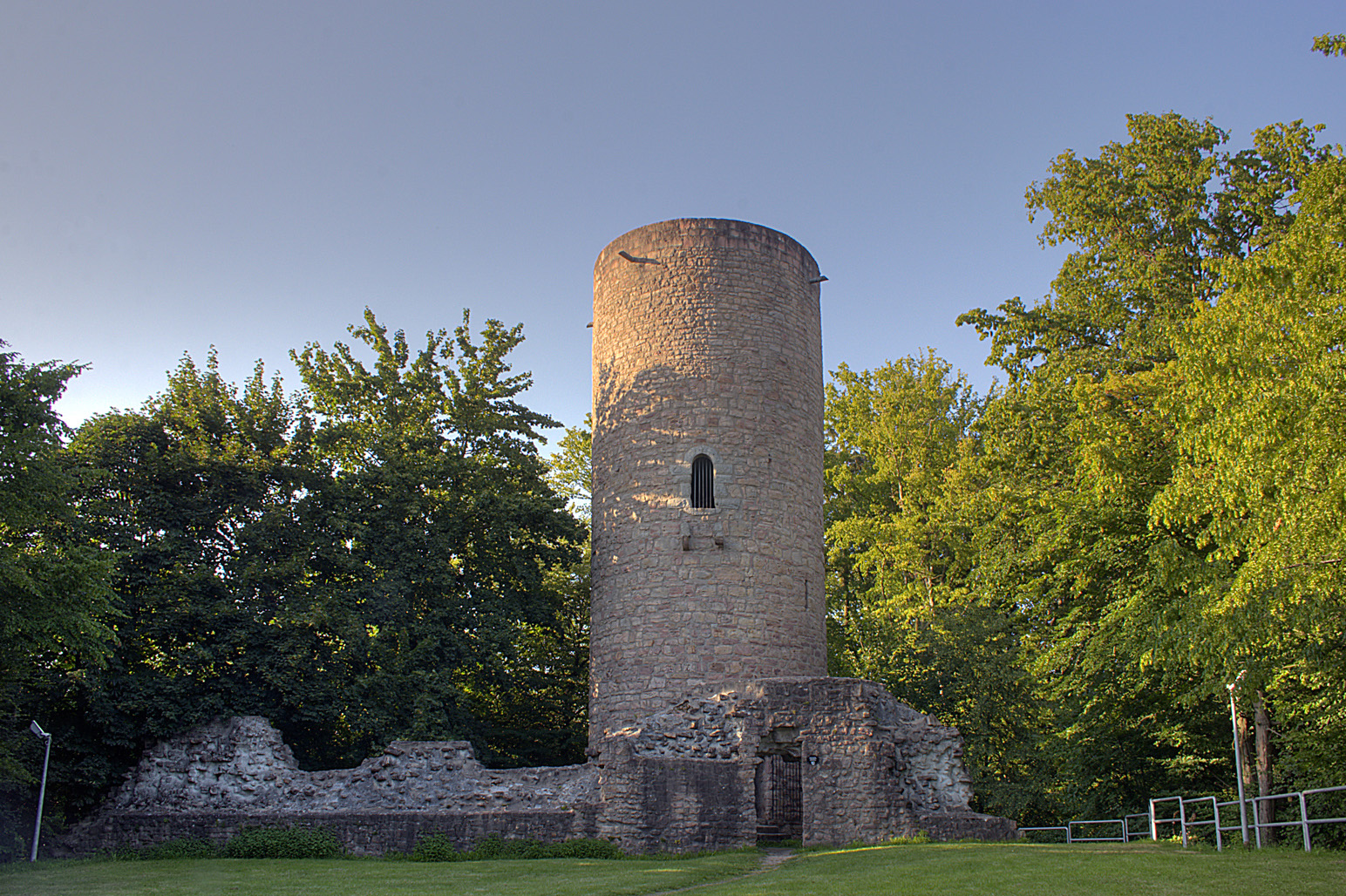
Photo by Sven Teschke • CC BY-SA 3.0 de
Decline and later history
The 16th century marked the beginning of Stolzenberg's decline. Structural damage caused a partial collapse in 1512, followed by a siege in 1522 during the Ritterkrieg, a conflict involving Frowin von Hutten and forces led by Philip of Hesse. Although repairs were made after the siege, by 1536, Lucas von Hutten had relocated his residence downslope, signaling a shift away from the hilltop fortress.
Despite the castle's deteriorating condition, the chapel continued to serve as a place of Protestant worship until at least 1597. This was in the face of resistance from local Catholic clergy, highlighting the religious tensions of the period. The last known resident was the burgrave Cord Gaull, with family births recorded at the site up to 1609. By 1734, the fortress had fallen into ruin, and much of its stone was repurposed for local construction.
In the late 19th century, a dance hall was built on the slopes beneath the castle plateau, further altering the historic landscape. Preservation efforts in 1970 stabilized the remaining walls and converted the bergfried into an observation tower, preserving the castle's enduring presence above Bad Soden.
Current remains and visitor experience
Today, Stolzenberg Castle's ruins provide valuable insight into the defensive sophistication and architectural layout of a High Medieval hill castle. The most prominent surviving feature is the bergfried, which visitors can access via a modern ground-level doorway and ascend 88 steps to reach the viewing platform. From here, expansive views of the surrounding landscape and town are visible.
The remaining wall fragments in the inner courtyard offer a glimpse into the castle's former internal structures, while the double ditches and earthworks surrounding the hilltop outline the original fortifications. Although much of the stone was removed over time, the site is protected as a historic monument and remains openly accessible to the public.
Stolzenberg Castle stands as a testament to the complex history of medieval fortifications in Germany, reflecting the interplay of military, religious, and economic factors that shaped the region during the High Medieval period. Its enduring ruins continue to attract visitors interested in medieval architecture, local history, and panoramic views of Hessen's landscape.
Frequently asked questions (FAQ)
- What is the historical significance of Stolzenberg Castle?
- Stolzenberg Castle, located in Bad Soden-Salmünster, is a remarkable example of medieval architecture that dates back to the 13th century. It played a crucial role in the regional defense system and has witnessed various historical events that shaped the area. The castle's rich history makes it a fascinating site for visitors interested in Germany's medieval past.
- When was Stolzenberg Castle built?
- Stolzenberg Castle was constructed around the year 1270, serving as a fortification for the local noble families. Over the centuries, it has undergone several renovations, reflecting the architectural styles of different periods. This blend of history and architecture attracts many tourists each year.
- Can I visit Stolzenberg Castle?
- Yes, Stolzenberg Castle is open to visitors, offering guided tours that provide insights into its history and architecture. It is advisable to check the official website for any special events or closures before planning your visit. Enjoying the scenic views from the castle is also a highlight for many guests.
- What are the opening hours for Stolzenberg Castle?
- Stolzenberg Castle typically opens from 10 AM to 6 PM during the summer months and may have reduced hours in the winter. It is best to verify the current opening times on the official website, as they can vary based on the season or special events. Planning ahead ensures you make the most of your visit.
- Is it possible to access the castle for people with disabilities?
- Stolzenberg Castle provides limited accessibility options, as some areas may have uneven terrain or stairs. However, efforts have been made to accommodate visitors with mobility challenges. It is recommended to contact the castle administration in advance to discuss specific accessibility needs.
- What are the ticket prices for visiting Stolzenberg Castle?
- Ticket prices for Stolzenberg Castle are generally affordable, with discounts available for students and seniors. Children under a certain age may enter for free. Check the official website for the most up-to-date pricing and any special offers that might be available during your visit.
- When is the best time to visit Stolzenberg Castle?
- The best time to visit Stolzenberg Castle is during the spring and early autumn when the weather is mild and the surrounding landscape is vibrant. Many visitors enjoy the lush greenery and blooming flowers that enhance the castle's picturesque setting. Summer can be busy, so planning a visit during weekdays might offer a more tranquil experience.
- What nearby attractions can I explore while visiting Stolzenberg Castle?
- While visiting Stolzenberg Castle, you can explore the charming town of Bad Soden-Salmünster, known for its spa facilities and beautiful parks. Additionally, the surrounding area offers hiking trails and natural parks, perfect for outdoor enthusiasts. Don’t miss the opportunity to enjoy local cuisine in nearby restaurants after a day of exploration.
Photo gallery


Information
Website
Visit websiteSources & official resources
Verify the information above using these authoritative references.
Loading map...
Visitor reviews
No reviews yet. Been here? Write the first review and help other travelers!
Write the first reviewVisited this castle? Share your experience
Your review helps other travelers and adds first-hand knowledge to our encyclopedia.



