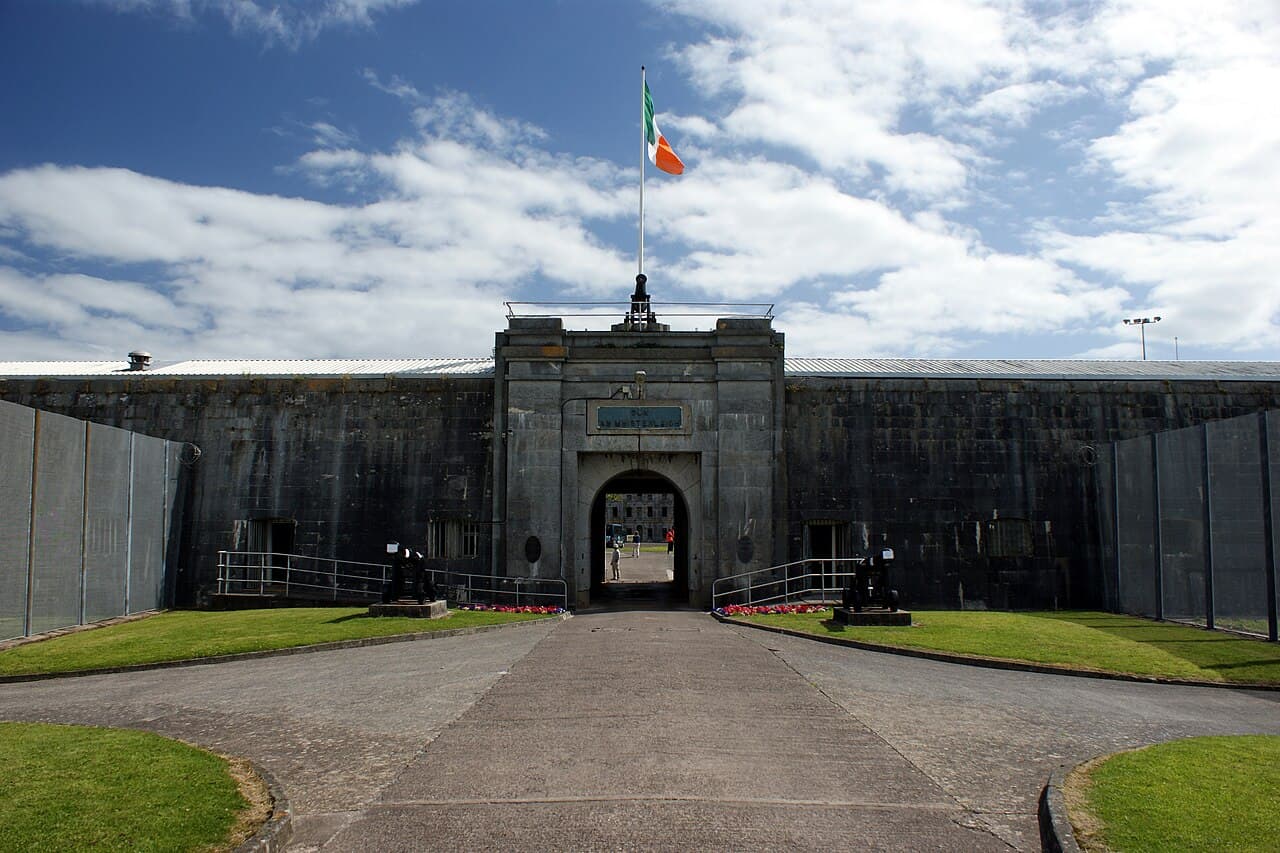
Spike Island
Spike Island (Irish: Inis Píc) is a 103-acre island located in Cork Harbour, Ireland. Its history spans from an early monastic settlement to a significant military fortification and prison complex. The island's strategic position at the entrance to one of Ireland's largest natural harbours made it a critical site for coastal defense and control throughout several centuries.
Early history and monastic origins
Before its military significance, Spike Island was home to a monastic community, reflecting Ireland's rich early medieval religious heritage. The island's isolation made it an ideal location for monastic settlement, offering both seclusion and protection. While little physical evidence remains of this early period, it establishes the island's longstanding human occupation.
Development as a bastioned fortress
During the 18th century, Spike Island was transformed into a bastioned fortress known as Fort Mitchel. This fortification was part of a wider network of coastal defenses constructed by the British government to protect Cork Harbour, a vital naval and commercial port. The design of Fort Mitchel follows the principles of post-medieval military architecture, featuring angular bastions that allowed defenders to cover all approaches with overlapping fields of fire.
The fort's construction included thick stone walls, a dry moat, and multiple gun emplacements. Its bastions were designed to withstand artillery bombardment and provide strong defensive positions against naval and land attacks. The layout reflects advances in military engineering of the period, emphasizing both defense and the ability to house a significant garrison.
Architectural features
Fort Mitchel's architecture incorporates massive curtain walls interspersed with projecting bastions at the corners, enabling defenders to cover adjacent walls with cannon fire. The fort also includes casemates—vaulted chambers built into the walls for artillery and troop accommodation. The dry moat surrounding the fort served as an additional obstacle to attackers, while the main gate was heavily fortified with guardhouses and defensive positions.
Use as a prison
From the 19th century onward, Spike Island became well known for its role as a prison. It housed convicts, political prisoners, and later, during the Irish War of Independence and Civil War, republican prisoners. The prison facilities were built within and around the fortifications, adapting the military structures to serve penal functions.
The prison complex included multiple cell blocks, solitary confinement cells, and exercise yards. Its isolated island location made it a secure site for incarceration, limiting escape possibilities. Conditions in the prison were often harsh, reflecting the penal practices of the time.
Modern heritage and tourism
In the early 21st century, Spike Island has been developed as a heritage tourist attraction. Significant investment, totaling approximately €5.5 million, was made to enhance visitor facilities, create exhibitions, and promote the island's history. The site now offers guided tours, educational programs, and cultural events that explore its complex past.
Visitor numbers have grown steadily, with over 81,000 recorded in 2019, marking a 21% increase from the previous year. Spike Island was recognized as the top European tourist attraction at the 2017 World Travel Awards, highlighting its importance as a cultural and historical destination.
Visitor experience
Visitors to Spike Island can explore the extensive fortifications, prison cells, and other historic buildings. The island's location provides panoramic views of Cork Harbour and the surrounding coastline. Interpretive signage and multimedia exhibits help contextualize the site's military and penal history for a broad audience.
Strategic significance and legacy
Spike Island's history reflects broader themes in Irish and British military and penal history. Its role as a bastioned fortress demonstrates advances in fortification design during the post-medieval period. Its later use as a prison illustrates the intersection of military and civil authority in controlling populations.
Today, Spike Island serves as a tangible link to these historical narratives, preserving architectural features and stories that span centuries. Its ongoing preservation and interpretation contribute to understanding Ireland's coastal defense history and penal heritage.
Frequently asked questions (FAQ)
- How do I get to Spike Island?
- Spike Island is accessible by ferry from Cobh in Cork Harbour. Regular ferry services operate daily, and tickets can be purchased in advance or at the departure point.
- What is the historical significance of Spike Island?
- Spike Island has served as a monastic site, a military bastioned fortress, and a prison. Its strategic location in Cork Harbour made it vital for coastal defense and incarceration over several centuries.
- Can I tour the prison facilities on Spike Island?
- Yes, guided tours include access to the former prison cells and exercise yards, providing insight into the island's penal history and conditions.
- When is the best time to visit Spike Island?
- The island is open daily from 10:00 to 17:00, with spring and summer months offering the best weather for exploring the outdoor fortifications and enjoying harbour views.
- Are there facilities for visitors on the island?
- Spike Island has visitor centers, exhibition spaces, and rest areas. There are also guided tours and educational programs available to enhance the visitor experience.
Photo gallery

Information
Opening hours
10:00-17:00, daily
Ticket prices
€15 adult, €7 child
Current owner
State heritage agency
Loading map...
Visitor reviews
No reviews yet. Been here? Write the first review and help other travelers!
Write the first reviewVisited this castle? Share your experience
Your review helps other travelers and adds first-hand knowledge to our encyclopedia.



