South Africa's Safari-Themed Castle

Sun City safari-themed castle in North-West, South Africa
Sun City, North-West, South Africa
Post-Renaissance (17th–18th c.)
Well Preserved

Sun City safari-themed castle stands as a unique architectural marvel nestled in the North-West province of South Africa, just a two-hour drive from Johannesburg. This grand palace is renowned for its distinctive safari-inspired design, featuring a path lined with imposing elephant statues that welcome visitors into the estate. The castle's main fountain is a striking centerpiece, with water spouting from the horns of sable antelope sculptures, while the courtyard showcases a life-sized replica of Shawu, an elephant famed for possessing some of the longest tusks ever recorded in South Africa's Kruger National Park.

Constructed in 1979 by the visionary business magnate Sol Kerzner, Sun City Resort was developed as a lavish palace and entertainment complex. Its location in the autonomous region of Bophuthatswan during the apartheid era was a strategic choice, as the area permitted leisure activities prohibited elsewhere, such as topless venues. This geopolitical context adds a layer of complexity and controversy to the castle's history, reflecting the socio-political landscape of South Africa at the time.

Architectural and thematic design

The castle's architecture is a fascinating blend of modern luxury and safari-themed aesthetics. Unlike traditional medieval castles, Sun City incorporates elements that celebrate South Africa's rich wildlife heritage. The use of animal motifs, such as the elephant statues and antelope fountains, creates an immersive environment that pays homage to the natural surroundings of the region.

The palace's design does not follow conventional castle typologies like hill castles or water castles, but instead represents a palace castle type, emphasizing grandeur and entertainment rather than defense. Its expansive grounds include multiple courtyards, gardens, and water features that contribute to the overall thematic experience.

The historical context of Sun City

Sun City's establishment in 1979 occurred during a turbulent period in South African history. The region of Bophuthatswan was one of several homelands or "Bantustans" created under the apartheid regime to segregate and control the black population. Although internationally unrecognized, these territories had limited self-governance.

Sol Kerzner's decision to build the resort here was influenced by the unique legal freedoms the area offered, allowing entertainment options that were otherwise banned in South Africa. This included casinos and adult entertainment, making Sun City a controversial yet popular destination.

Over time, Sun City evolved into a major resort complex, combining luxury accommodation, casino gaming, and safari experiences. The castle itself became a symbol of extravagance amidst the political complexities of its location.

Notable features and attractions

Beyond its striking architectural elements, Sun City is known for its extensive amenities and attractions. Visitors can explore the Valley of Waves, a large water park with artificial beaches and surf pools, or enjoy world-class golf courses set against the backdrop of the South African bush.

The castle's elephant statues and the replica of Shawu serve as cultural and natural history exhibits, connecting guests to the wildlife heritage of the region. These features enhance the immersive safari theme that defines the resort's identity.

Current status and visitor information

Today, Sun City remains a well-preserved and operational resort complex, attracting tourists from around the globe. It offers a unique blend of luxury, entertainment, and cultural experiences in a setting that reflects South Africa's diverse heritage.

The resort operates year-round, with various entertainment events and festivals hosted on-site. Visitors can enjoy guided tours of the castle grounds, wildlife safaris, and the many recreational facilities available.

Frequently asked questions (FAQ)

How do I get to Sun City safari-themed castle from Johannesburg?
Sun City is approximately a two-hour drive northwest of Johannesburg. Visitors can reach the resort by car or shuttle services that operate regularly from the city.
What are the main attractions at Sun City castle?
The castle features impressive elephant statues, a fountain with sable antelope horns, and a life-sized replica of Shawu, the elephant with the longest tusks in South Africa. The resort also offers a water park, golf courses, and safari experiences.
When was Sun City castle built and by whom?
Sun City was built in 1979 by Sol Kerzner, a prominent business magnate, during the apartheid era in the autonomous region of Bophuthatswan.
Is Sun City castle open to visitors year-round?
Yes, Sun City operates throughout the year, offering various entertainment events, guided tours, and recreational activities for tourists.
Why was Sun City built in Bophuthatswan?
Sun City was established in Bophuthatswan because the region allowed entertainment options like casinos and topless venues, which were prohibited in other parts of South Africa during apartheid.

Information

Palace Castle

Current owner

Private owner

Loading map...

Visitor reviews

No reviews yet. Been here? Write the first review and help other travelers!

Write the first review

Visited this castle? Share your experience

Your review helps other travelers and adds first-hand knowledge to our encyclopedia.
Write a review

(5/5)

0/2000 characters

Your review will be visible after admin approval

Nearby castles

118.8 km
Fort Schanskop — South Africa castle

Fort Schanskop

, South Africa

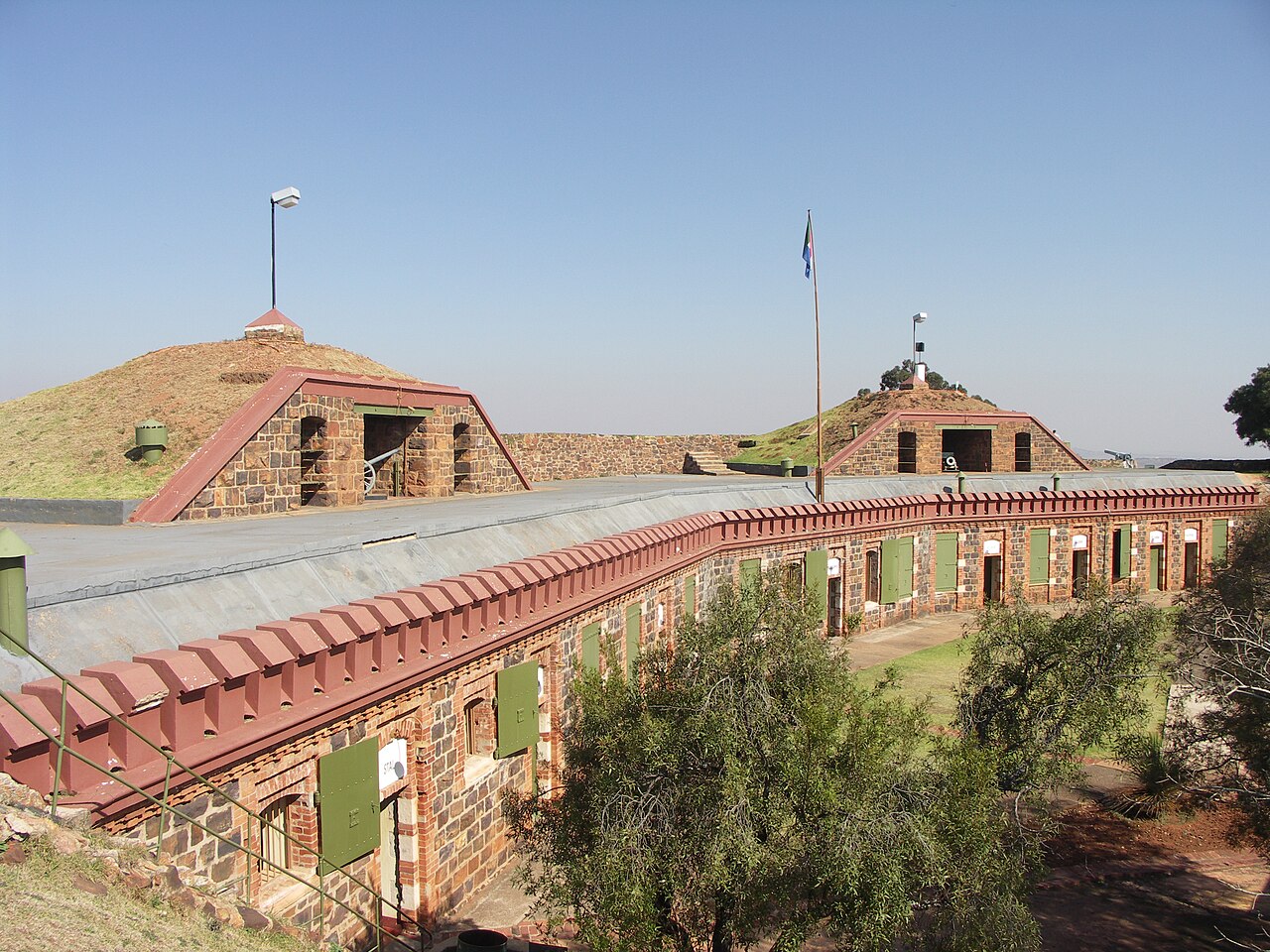
Fort Schanskop is a notable example of a 19th-century bastioned fortress located in South Africa. Constructed during the modern period, this fortification was designed primarily for military defense, reflecting the strategic military architecture of its time. It features the classic elements of a bastioned fortress, including angular bastions that allowed defenders to cover all approaches with overlapping fields of fire, a design that was common in European military engineering adapted to local conditions. Historical context and construction The fort was built in the 19th century during a period of regional conflicts and colonial expansion in Southern Africa. Its construction was motivated by the need to secure strategic points and protect against potential attacks. Fort Schanskop served as a key military installation, guarding important routes and serving as a base for troops. The exact date of construction falls within the late 1800s, a time when bastioned fortresses were still relevant despite the evolving nature of warfare. Architectural features and design Fort Schanskop exemplifies the bastioned fortress style, characterized by its geometric layout and robust defensive structures. The fort’s walls are thick and angled, designed to deflect artillery fire and provide strong defensive coverage. The bastions project outward from the main walls, allowing defenders to fire along the walls and cover blind spots. The fort includes artillery positions strategically placed to maximize defensive capability. The fortress layout typically includes a central courtyard surrounded by defensive walls and bastions. Inside, there would have been barracks, ammunition storage, and command posts, although many of these internal structures may no longer be fully intact. The design reflects military engineering principles aimed at maximizing defense and control over the surrounding area. Military significance and use During its active use, Fort Schanskop played a significant role in regional defense. It was part of a network of fortifications intended to maintain control over key territories and routes. The fort's design allowed it to withstand sieges and artillery bombardments typical of 19th-century warfare. Although it may not have seen extensive combat, its presence was a deterrent and a stronghold for military forces. Current condition and preservation Today, Fort Schanskop is recognized for its historical and architectural value. It remains well preserved with much of its original structure intact, including the bastions and ramparts. The fort is accessible to visitors interested in military history and architecture, offering insight into 19th-century fortification techniques and colonial military presence in South Africa. Visiting Fort Schanskop Visitors to Fort Schanskop can explore the fortress grounds and observe the characteristic bastioned walls and defensive positions. The site provides educational opportunities about the military history of the region and the architectural methods used in fortress construction during the modern period. It is an important cultural heritage site that reflects the complex history of South Africa's colonial era. Architectural details The fort’s bastions are designed with angular faces and flanks to enable crossfire, a hallmark of bastioned fortresses. The walls are constructed from stone and earthworks, combining durability with the ability to absorb cannon fire. The layout is symmetrical, with a focus on maximizing defensive coverage and minimizing blind spots. Historical importance in South Africa Fort Schanskop is part of a broader network of military installations that illustrate the strategic military planning of the 19th century in South Africa. Its construction coincided with periods of conflict such as the Anglo-Boer Wars, where control of territory was crucial. The fort represents the adaptation of European military architecture to the African context.

Modern (19th–20th c.)
Details
121.3 km
Fort Klapperkop — South Africa castle

Fort Klapperkop

, South Africa

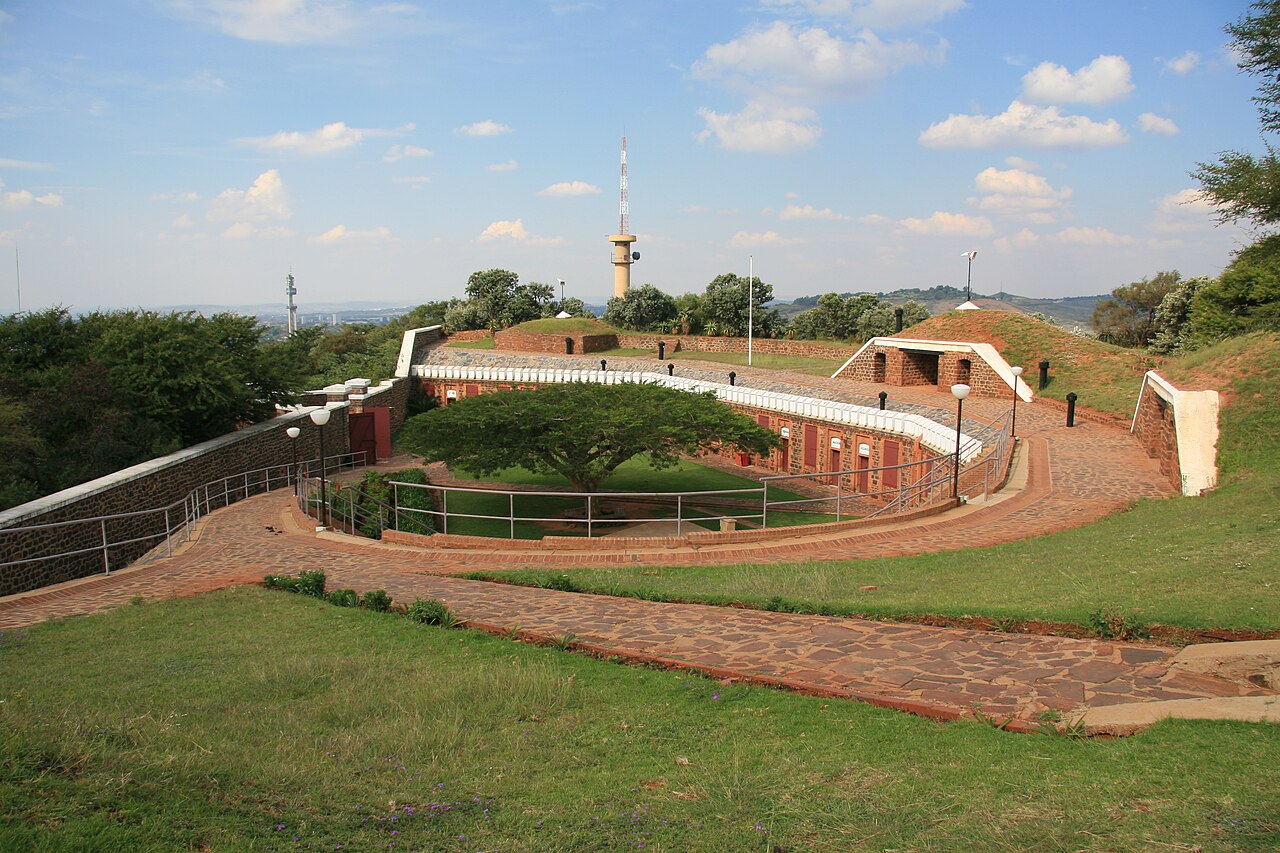
Fort Klapperkop is a significant bastioned fortress located in South Africa, constructed in the 19th century during the era of colonial military expansion. This fortification was part of a network of defensive structures designed to protect the then-capital city of Pretoria and its surroundings from potential threats. The fort exemplifies the military architectural principles of the modern period in South Africa, reflecting the strategic importance of fortified positions in controlling key territories. Historical context and purpose The construction of Fort Klapperkop was motivated by the need to defend Pretoria, which was a focal point of the South African Republic (ZAR) during the late 19th century. The fort was built as part of a larger defensive scheme that included several other forts such as Fort Schanskop and Fort Daspoortrand. These forts were strategically placed on hills surrounding Pretoria to provide overlapping fields of fire and to serve as deterrents against British imperial advances and local conflicts. Completed in the late 1800s, Fort Klapperkop played a role during the Second Boer War (1899–1902), a conflict between the British Empire and the Boer republics. The fort's design and armaments were intended to withstand artillery bombardments and infantry assaults, reflecting the military technology and tactics of the time. Architectural features and design Fort Klapperkop is characterized by its bastioned fortress design, which incorporates angular bastions projecting outward from the main walls. This design allowed defenders to cover adjacent walls with crossfire, eliminating blind spots and enhancing the fort's defensive capabilities. The walls were constructed from robust masonry and earthworks, combining stone and brick with earthen ramparts to absorb artillery impacts. The fort includes a series of defensive elements such as moats, ramparts, battlements, and gun emplacements. The bastions were equipped with artillery positions to defend against approaching forces. Inside, the fort contained barracks, ammunition stores, command posts, and other facilities necessary to support a garrison. Its location on Klapperkop Hill provided a commanding view of the surrounding terrain, allowing early detection of enemy movements and effective control over the approaches to Pretoria. Military significance and later use During the Second Boer War, Fort Klapperkop was part of Pretoria's defensive ring, although it saw limited direct combat. The fort's presence contributed to the city's strategic defense posture. After the war, the fort remained a military installation and was used by various South African defense forces through the 20th century. In later years, the fort's military role diminished, and it became a site of historical interest. It is now recognized as a heritage site that reflects South Africa's colonial and military history. Preservation and public access Fort Klapperkop is currently in a well-preserved condition, with many of its original structural elements intact. The site is managed to maintain its historical integrity and to provide educational opportunities for visitors interested in military architecture and South African history. Visitors can explore the fort's ramparts, bastions, and interior spaces, gaining insight into the defensive strategies employed in the late 19th century. The fort's elevated position also offers panoramic views of Pretoria and the surrounding landscape. Architectural legacy and cultural importance As a bastioned fortress from the modern period, Fort Klapperkop exemplifies the adaptation of European military architectural principles to the South African context. Its design reflects the transition from medieval-style fortifications to more modern forms suited to artillery warfare. The fort is an important cultural landmark, representing the complex history of colonialism, conflict, and defense in South Africa. It serves as a tangible reminder of the military challenges faced by the Boer republics and the strategic importance of Pretoria in the region.

Modern (19th–20th c.)
Details
552.2 km
Fort Lijdzaamheid — Mozambique castle

Fort Lijdzaamheid

, Mozambique

Fort Lijdzaamheid is a bastioned fortress located in Mozambique, representing a significant example of colonial military architecture in East Africa. Built during the period of European colonial expansion, this fortress was designed to serve both defensive and administrative functions. Its strategic position allowed control over local trade routes and provided protection against rival colonial powers and local resistance. Historical context and construction The construction of Fort Lijdzaamheid dates back to the era when Mozambique was under Portuguese colonial rule, predominantly in the 17th and 18th centuries. The fortress was part of a network of coastal and inland fortifications established to secure Portuguese interests in the region, particularly along the Indian Ocean trade routes. The name "Lijdzaamheid," which translates to "patience" in Dutch, reflects the influence of multiple European powers in the region and possibly the fortress's role during periods of conflict and negotiation. The fortress's design incorporates the bastioned fortress style, characterized by angular bastions projecting from the walls to provide overlapping fields of fire and reduce blind spots. This architectural approach was widely adopted in the 16th to 18th centuries as a response to the development of artillery and gunpowder warfare. Fort Lijdzaamheid's walls were constructed with locally sourced stone and lime mortar, ensuring durability against both natural elements and military assaults. Architectural features Fort Lijdzaamheid exhibits key features typical of bastioned fortresses, including: Angular bastions at each corner, allowing defenders to cover adjacent walls effectively. Thick curtain walls designed to withstand cannon fire and sieges. Moats or ditches surrounding the fortress to hinder enemy approach. Central courtyard providing space for troop assembly and logistical operations. Interior buildings such as barracks, armories, and command posts arranged within the protective walls. The fortress's layout reflects the military engineering principles of the Renaissance period, adapted to the local topography and climate. The use of bastions allowed for a more effective defense compared to earlier medieval castles, which relied on high walls and towers without angular projections. Role in regional history Throughout its active use, Fort Lijdzaamheid played a crucial role in the defense of Portuguese colonial territories in Mozambique. It served as a military garrison, a center for administration, and a symbol of colonial authority. The fortress witnessed several conflicts, including skirmishes with local African kingdoms and rival European powers competing for influence in the region. Its strategic location facilitated control over maritime routes and inland trade, contributing to the economic and political stability of Portuguese Mozambique. Over time, as military technology and political circumstances evolved, the fortress's defensive importance declined, leading to changes in its use and maintenance. Current condition and preservation Today, Fort Lijdzaamheid stands as a partially preserved historical monument. While some sections of the fortress have suffered from natural decay and neglect, efforts have been made to maintain and restore key elements of its structure. The site attracts historians, architects, and tourists interested in colonial military architecture and the history of Mozambique. Preservation initiatives focus on stabilizing the remaining walls, protecting the bastions, and promoting awareness of the fortress's cultural heritage. The fortress's condition reflects both the challenges of conserving colonial-era structures in tropical environments and the growing recognition of their historical value. Visiting Fort Lijdzaamheid Visitors to Fort Lijdzaamheid can explore the fortress's imposing walls and bastions, gaining insight into the military strategies of the colonial period. The site offers panoramic views of the surrounding landscape, highlighting its strategic placement. Informational signage and guided tours provide context about the fortress's construction, historical role, and architectural significance.

Post-Renaissance (17th–18th c.)
Details