Sokolac Castle
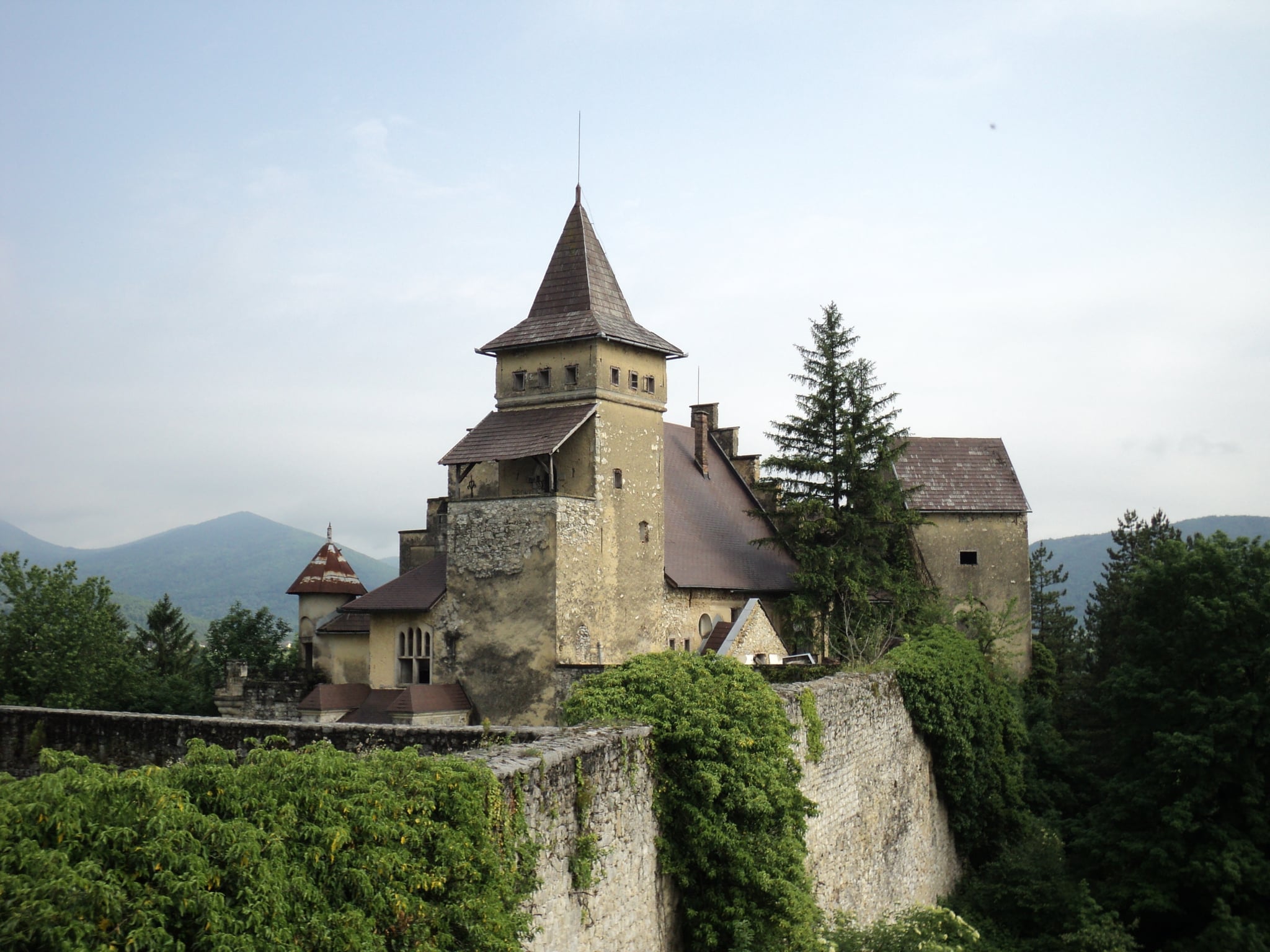
Sokolac Castle stands prominently on a hill east of Debeljača hill, overlooking the left bank of the Una River near the town of Bihać in Bosnia and Herzegovina. This late medieval hill castle has a rich history that spans from prehistoric times through the medieval period and into Ottoman rule, reflecting the strategic importance of this location in the borderlands of the medieval Bosnian state and later empires.
The earliest evidence of human occupation at the site dates back to the Bronze Age, when a large prehistoric fortress measuring approximately 670 by 170 meters existed here. Archaeological excavations have uncovered prehistoric ceramics dating from the 10th to 9th centuries BCE, linking the site to the Illyrian Japodian tribe known to have settled along the Una River. This long history of settlement underscores the enduring strategic and cultural significance of the hill.
Medieval origins and historical significance
The first documented mention of Sokolac Fortress appears in a charter from the 14th century, specifically in 1395, when it was recognized as a royal town within the medieval Bosnian kingdom. Throughout the late medieval period, the fortress played a key role in the dynastic struggles for control of the Bosnian crown. It frequently changed hands during conflicts involving prominent figures such as King Sigismund of Luxembourg and Ladislaus of Naples.
During the 16th century, Sokolac’s strategic position on the frontier made it a critical military asset. The fortress was granted to Petar Keglević by King Ferdinand, emphasizing its role in the defense of the kingdom’s borderlands. However, in 1592, the fortress fell to the Ottoman Empire and was incorporated into the Ottoman administrative system, initially as part of the Bihać Sanjak and later the Bihać Captaincy.
Architectural features and layout
Sokolac Castle is characterized by its triangular layout, a design that combines elements from both its medieval origins and later Ottoman modifications. The fortress is surrounded by defensive walls reinforced with tightly spaced buttresses known locally as grudobrani. These buttresses include small openings for firearms, reflecting adaptations to gunpowder weaponry.
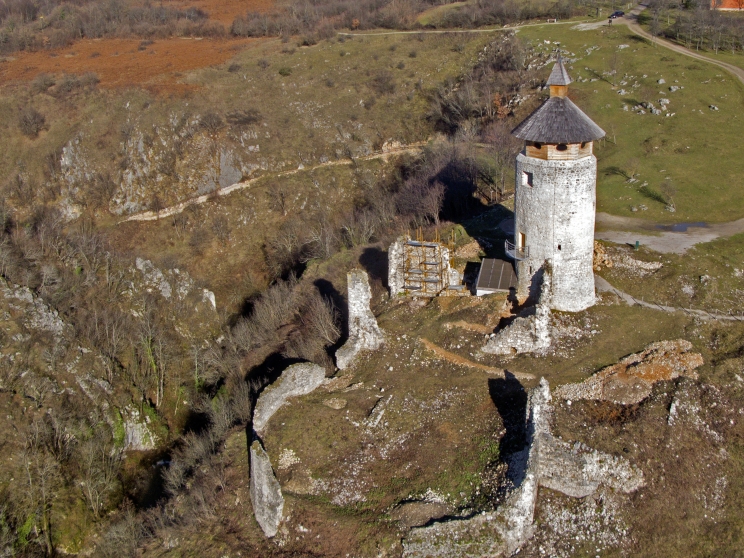
Below the walls, remnants of stone consoles and sockets indicate the former presence of wooden galleries used for patrolling and defense. The fortress encloses a large courtyard measuring approximately 175 by 120 meters, within which traces of houses suggest areas for domestic or military quarters.
The main entrance is marked by the imposing Kapi Tower, a three-story structure equipped with machicolations—openings designed to drop projectiles or pour boiling substances on attackers. This feature exemplifies the defensive ingenuity of the castle’s builders.
At the highest point within the courtyard stands the Main Tower, a roughly square structure about 10 meters in diameter and rising 16 meters high. The tower’s entrance is on the second floor, originally accessed via a wooden staircase from the courtyard. Inside, the rooms feature pointed vaulted ceilings, fireplaces, and rectangular windows with built-in stone benches, indicating that these spaces served both defensive and residential functions.
The tower’s upper level includes gun ports shielded by a stone parapet, and wall consoles that likely supported shelving. Although the original pointed wooden roof no longer survives, the tower’s form and features reveal a well-planned medieval defensive structure.
Recent archaeological work uncovered a cistern in a small courtyard adjacent to the Main Tower, highlighting the importance of water storage for sustaining the fortress during sieges. Stairs from the tower’s first floor lead down to a ground-level chamber, possibly used for storage or as a guardroom.
Ottoman period and decline
Following its capture by the Ottomans in 1592, Sokolac Castle became part of the Ottoman military and administrative network. Initially included in the Bihać Sanjak, it later belonged to the Bihać Captaincy, governed locally by an official known as a ćehaja. Despite its early importance, the fortress gradually lost military significance to the nearby Ripač Fortress.
By the early 19th century, Sokolac’s defenses had diminished considerably. Records from 1833 indicate that the fortress was manned by only about a dozen soldiers and equipped with just two small cannons. The fortress was ultimately abandoned following the Austro-Hungarian occupation of Bosnia in 1878.
Modern restoration and cultural significance
In 1897, the fortress underwent restoration under the direction of Bihac Mayor Lothar von Berks, who also initiated entrance fees, marking one of the earliest efforts to promote tourism in the region. Today, Sokolac Castle is recognized as a national monument of Bosnia and Herzegovina, protected for its cultural and historical value.
A condition report from 2010 highlighted the fortress’s poor state of preservation and estimated that repairs would require significant funding, exceeding 400,000 euros. Despite this, the castle remains an important heritage site, offering insights into the region’s complex history from prehistoric times through medieval and Ottoman eras.
Archaeological insights and ongoing research
Archaeological excavations at the site have revealed the multi-layered history of Sokolac Castle. The prehistoric hillfort beneath the medieval fortress demonstrates the continuity of strategic settlement on this hill. Finds such as prehistoric ceramics link the site to the ancient Japodian culture, while the medieval and Ottoman architectural layers reflect the evolving military technologies and administrative changes over centuries.
These investigations have helped clarify the fortress’s construction phases and adaptations, including the addition of gun ports and machicolations to meet the challenges of early modern warfare. The discovery of the cistern and other structural elements provides valuable information about the daily life and defensive strategies employed by the castle’s occupants.
Visiting sokolac castle today
Visitors to Sokolac Castle can explore the extensive ruins that dominate the hilltop landscape near Bihać. The castle’s triangular walls, towers, and courtyard offer a tangible connection to the region’s medieval and Ottoman past. Although the fortress is in a state of partial preservation, its imposing structures and scenic location overlooking the Una River make it a compelling destination for history enthusiasts and cultural tourists.
Information about current visiting hours and ticket prices may vary, and visitors are encouraged to check local sources for the latest details. The castle’s designation as a national monument ensures ongoing efforts to preserve and promote this important cultural heritage site.
Frequently asked questions (FAQ)
- What is the historical significance of Sokolac Castle?
- Sokolac Castle, located in Bihać, Bosnia and Herzegovina, dates back to the 14th century and is a significant example of medieval military architecture. It served as a strategic point for defense against invasions and has witnessed various historical events, making it a vital part of the region's heritage.
- When was Sokolac Castle built?
- Sokolac Castle was constructed in the mid-14th century. Over the years, it has undergone several renovations and restorations, maintaining its historical integrity while adapting to the needs of visitors.
- Can I visit Sokolac Castle?
- Yes, Sokolac Castle is open to visitors who wish to explore its historical grounds. It's advisable to check local guidelines and opening hours before your visit to ensure a smooth experience.
- What are the opening hours for Sokolac Castle?
- Sokolac Castle typically opens from 9 AM to 6 PM during the summer months and may have reduced hours in winter. It's recommended to verify the current hours through local tourist information before planning your visit.
- Is it possible to access Sokolac Castle with mobility challenges?
- While Sokolac Castle is a historical site, accessibility may be limited due to its ancient structure and terrain. Visitors with mobility challenges are encouraged to contact local tourism services for detailed information regarding access options.
- What is the best time to visit Sokolac Castle?
- The best time to visit Sokolac Castle is during the spring and early autumn months when the weather is mild and ideal for outdoor exploration. Additionally, these seasons tend to have fewer tourists, allowing for a more enjoyable experience.
- Are there any nearby attractions to visit along with Sokolac Castle?
- Yes, nearby attractions include the beautiful Una National Park, known for its stunning waterfalls and natural scenery. Visitors can also explore the historic town of Bihać, which offers a rich cultural experience alongside the castle.
- What are the ticket prices for Sokolac Castle?
- Ticket prices for Sokolac Castle are generally affordable, allowing visitors of all ages to enjoy the historical site. It's best to check the official website or local tourism office for the most up-to-date pricing information.
Information
Loading map...
Visitor reviews
No reviews yet. Been here? Write the first review and help other travelers!
Write the first reviewVisited this castle? Share your experience
Your review helps other travelers and adds first-hand knowledge to our encyclopedia.