Smolenice Castle
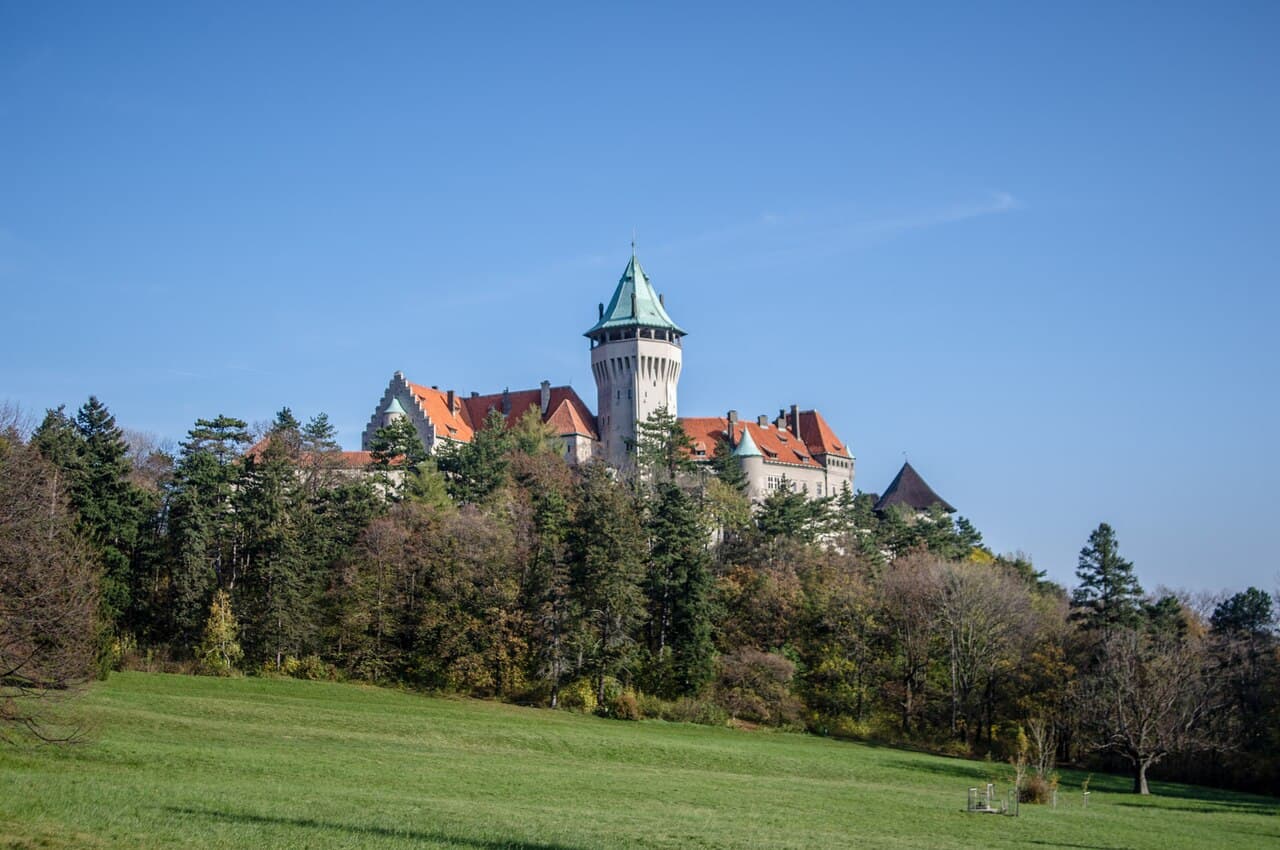
Smolenice Castle is a notable hill castle located on the eastern slope of the Little Carpathians, near the town of Smolenice, Slovakia. Originally constructed in the 15th century during the late medieval period, the castle has undergone significant transformations over the centuries, reflecting the turbulent history and architectural evolution of the region.
Medieval origins and early history
The castle was initially built as a strategic fortification in the 15th century, serving both defensive and residential purposes. Its location on a hill provided a commanding view of the surrounding landscape, an important feature for protection against invaders. However, the castle's medieval structure did not survive intact through the centuries.
During Rákóczi's War of Independence (1703–1711), the castle suffered considerable damage. Later, it was further affected during the Napoleonic wars in the early 19th century, which contributed to its decline and eventual ruin. By the late 18th century, when Count János Pálffy inherited the estate in 1777, the castle was in a poor state and uninhabitable due to the lack of funds for restoration.
20th-century reconstruction and architectural design
The castle's revival began in the early 20th century under the direction of Count József Pálffy. The rebuilding project was inspired by the Kreuzenstein Castle near Vienna, a well-preserved example of medieval architecture. The reconstruction was designed by the architect Jozef Hubert, with construction supervision by Pavol Reiter, an architect from Bavaria.
The reconstruction employed a diverse workforce, including masters and craftsmen from Italy, Germany, Austria, and Hungary, alongside about 60 local workers from Smolenice and neighboring villages. The main building features two wings and a prominent tower, constructed using ferroconcrete, a modern material choice that allowed for greater structural strength while preserving a historic aesthetic.
Damage, state ownership, and modern use
In the spring of 1945, during the final stages of World War II, Smolenice Castle sustained damage. That same year, ownership transferred to the state. After 1950, several reconstruction efforts were undertaken to stabilize and restore parts of the castle.
Since June 26, 1953, the castle has been the property of the Slovak Academy of Sciences. Today, it functions primarily as a conference centre, hosting various academic and cultural events. Public access is limited, with the castle generally open to visitors only during the summer season.
Architectural features and layout
The castle's layout includes a main building with two wings arranged around a courtyard, and a distinctive tower that serves as a visual focal point. The use of ferroconcrete in the 20th-century reconstruction reflects a blend of modern construction techniques with traditional castle architecture. The design draws heavily from the medieval style, echoing the original appearance while incorporating contemporary materials for durability.
The castle's position on a hillside provides natural defensive advantages, with steep slopes on several sides. The surrounding landscape of the Little Carpathians adds to the castle's scenic and strategic significance.
Cultural significance and visitor information
Smolenice Castle holds cultural and historical importance in Slovakia, representing centuries of architectural and political history. Its restoration in the 20th century preserved a key piece of the region's heritage, linking medieval traditions with modern uses.
Visitors interested in castle architecture, Slovak history, and scenic mountain landscapes find Smolenice Castle an intriguing destination. While the castle is not open year-round, the summer months provide the best opportunity to explore its grounds and appreciate its architectural features.
As a conference centre, the castle also plays a role in fostering scientific and cultural exchange, contributing to the intellectual life of Slovakia.
Frequently asked questions (FAQ)
- When was Smolenice Castle originally built?
- Smolenice Castle was originally built in the 15th century during the late medieval period as a defensive hill castle.
- What led to the castle's decline before the 20th-century reconstruction?
- The castle was damaged during Rákóczi's War of Independence and the Napoleonic wars, leading to its ruin and abandonment by the late 18th century.
- Who was responsible for the 20th-century reconstruction of Smolenice Castle?
- Count József Pálffy initiated the reconstruction in the early 20th century, with architect Jozef Hubert designing the rebuild and Pavol Reiter supervising the works.
- Is Smolenice Castle open to the public?
- The castle is generally open to visitors during the summer season, as it primarily functions as a conference centre under the Slovak Academy of Sciences.
- What architectural style influenced the 20th-century reconstruction?
- The reconstruction was inspired by Kreuzenstein Castle near Vienna, reflecting a medieval architectural style combined with modern ferroconcrete construction.
Photo gallery

Public domain
Information
Sources & official resources
Verify the information above using these authoritative references.
Loading map...
Visitor reviews
No reviews yet. Been here? Write the first review and help other travelers!
Write the first reviewVisited this castle? Share your experience
Your review helps other travelers and adds first-hand knowledge to our encyclopedia.