Slawenburg Raddusch
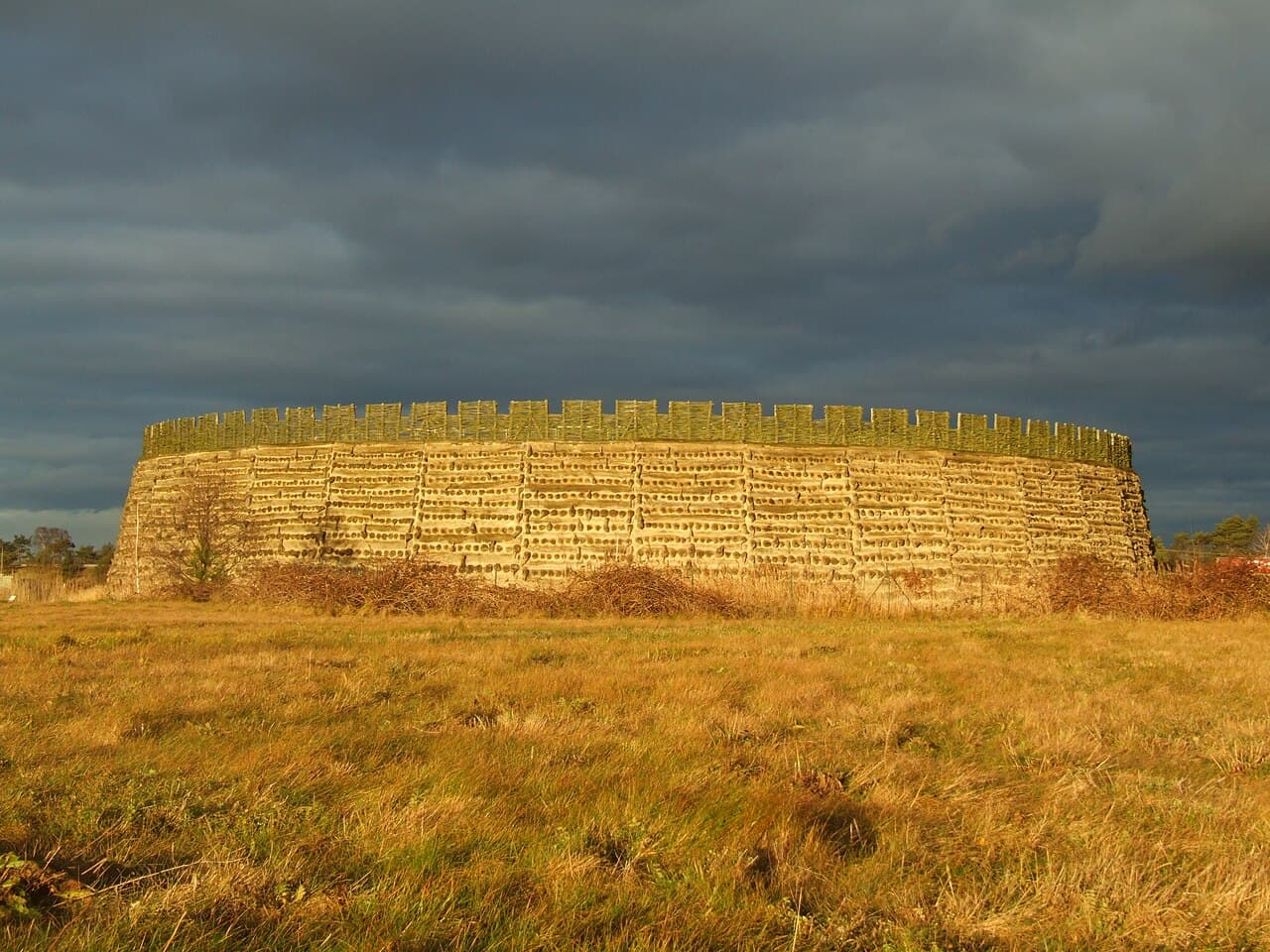
The Slawenburg Raddusch stands as a significant archaeological and cultural monument near the village of Raddusch in the municipality of Vetschau/Spreewald, Germany. This site is a faithful reconstruction of a 9th-century Slavic ring fort originally built by the Lusatian Slavs, or Lusitzi, around 880 AD. Positioned in the historic region of Lower Lusatia, the fort served as a defensive refuge during a period of intense territorial pressure from the expanding Saxon forces and the East Frankish realm. Its strategic location and robust construction reflect the military and social organization of the Lusatian Slavs during the Early Medieval period.
The fortification was part of a larger network of approximately forty similar circular strongholds that dotted the landscape, each serving as a bastion against Saxon incursions. Around 930 AD, the fort underwent significant fortification enhancements, including the construction of wider and higher walls, underscoring the escalating threats faced by the Lusitzi. A further renovation near 950 AD reinforced its defensive capabilities, demonstrating the community's ongoing commitment to security in a volatile era.
Historical context and significance
The Lusatian Slavs were a West Slavic people inhabiting the region of Lower Lusatia, an area that today straddles parts of eastern Germany and western Poland. Their settlements, including Slawenburg Raddusch, were centers of local power and culture during the 9th and 10th centuries. The fort's abandonment in 963 AD followed the conquest by the Saxon margrave Gero, who subdued the Lusatzi without evidence of violent destruction at the site. This peaceful abandonment marks a significant turning point in the region's history, as Saxon control expanded and the Slavic presence diminished.
Excavations in the late 20th century revealed that the site was occupied long before the Slavic fortification, with evidence of Germanic settlements and Bronze to Iron Age activity beneath the Slavic layers. This continuity of occupation highlights the strategic importance of the location over millennia.
Architectural features and construction techniques
The fort's nearly circular layout measures approximately 35 to 36 meters across internally, enclosed by a formidable defensive wall constructed using the Rostbauweise or timber-lacing method. This technique involved alternating long oak beams laid lengthwise and crosswise, filled with earth and stones to create a wall about 10 meters thick, offering both strength and flexibility against attacks and environmental stresses.
Surrounding the wall is a protective ditch approximately 5.5 meters wide, enhancing the fort's defensive perimeter. Unusually for a small ring fort, Slawenburg Raddusch features two gate tunnels: one to the northwest leading toward an adjacent settlement and another to the east. Both gates were accessed by bridges spanning the ditch and connected internally by a narrow path about 2.3 meters wide, allowing controlled movement and defense.
Later modifications nearly doubled the wall's width to around 20 meters and included ramps leading to the gates, reflecting adaptive responses to evolving military needs. The timber elements required regular renewal every 40 to 50 years due to decay and structural shifting, demonstrating the ongoing maintenance demands of such fortifications.
Domestic structures and wells
Within the enclosure, archaeologists uncovered domestic buildings featuring clay-covered floors and dome-shaped stoves, indicating year-round habitation and daily life activities. The presence of four wells constructed from wooden box structures is particularly notable, as such water sources are rare among West Slavic sites. The oldest well dates back to the initial construction phase around 880 AD, with the deepest reaching nearly 12 meters, an exceptional depth for the region.
Artifacts recovered from the wells include pottery fragments, knives, spear tips, whetstones, bone skates, wooden tools such as mallets and spades, and a rare brass bowl known as a "Hanse bowl" dating after 950 AD. These finds provide insight into the material culture and craftsmanship of the Lusatian Slavs.
Cultural and spiritual significance
One of the most remarkable discoveries at Slawenburg Raddusch is the "Götze von Raddusch", a wooden idol carved from oak featuring a head-like top and a pierced hole in the chest area. Dendrochronological dating places this artifact at 926 AD. Found broken and charred within the latest well fill, it likely held ritual or symbolic importance for the fort's inhabitants. Its unique design distinguishes it from other known West Slavic wooden idols, offering valuable insight into the spiritual beliefs and practices of the Lusitzi.
Modern reconstruction and museum
The modern reconstruction of Slawenburg Raddusch, completed between 1999 and 2003 by the Brandenburg State Office for Monument Preservation and Archaeology, faithfully replicates the original fort's size and design. The defensive walls, ditch, and gates have been recreated using concrete facades that simulate the timber-earth construction, allowing visitors to visualize the fort's imposing presence.
The interior now houses a museum exhibition that presents the site's extensive history, spanning over 12,000 years of human activity in the region. Reconstructed storage buildings and a well replica complement the exhibition, providing a tangible connection to the past. The large courtyard, covering approximately 1,000 square meters, serves as a multifunctional space for cultural events and educational programs, reflecting the fort's historical footprint and ongoing cultural relevance.
Visiting slawenburg raddusch today
Today, Slawenburg Raddusch is managed by the Slavonic Europe Foundation as a cultural venue and museum since August 2024. Visitors can explore the reconstructed fortifications, learn about Lusatian Slavic history, and engage with exhibitions that illustrate the site's archaeological significance. The site offers an immersive experience into Early Medieval Slavic life and defense architecture, making it a valuable destination for history enthusiasts and scholars alike.
Frequently asked questions (FAQ)
- What is the historical significance of Slawenburg Raddusch?
- Slawenburg Raddusch is a reconstructed Slavic fortress that dates back to the 10th century. It serves as a vital representation of the early medieval history of the region and showcases the culture and architectural style of the Slavic tribes that once inhabited this area.
- When was Slawenburg Raddusch built?
- The original structure of Slawenburg Raddusch was constructed in the 10th century, during a time when Slavic tribes were establishing settlements in Central Europe. The current reconstruction was completed in the early 2000s, aiming to provide insights into the architectural practices of that era.
- What are the opening hours for Slawenburg Raddusch?
- Slawenburg Raddusch is typically open to visitors from April to October, daily from 10 AM to 6 PM. During the winter months, opening hours may vary, so it’s advisable to check their official website for the most current information before planning your visit.
- Can I purchase tickets online for Slawenburg Raddusch?
- Yes, tickets for Slawenburg Raddusch can be purchased online through their official website. This option is convenient and allows you to secure your entry in advance, especially during peak visiting times.
- Is Slawenburg Raddusch accessible for visitors with disabilities?
- Slawenburg Raddusch strives to be accessible for all visitors, including those with disabilities. There are pathways and facilities designed to accommodate individuals with mobility challenges, but it’s recommended to contact the site beforehand for specific accessibility details.
- When is the best time to visit Slawenburg Raddusch?
- The best time to visit Slawenburg Raddusch is during the spring and summer months, from May to September, when the weather is pleasant and various events are often held. Visiting during this time allows you to enjoy guided tours and participate in cultural programs that enhance the experience.
- What nearby attractions can I visit while at Slawenburg Raddusch?
- While visiting Slawenburg Raddusch, you can also explore the beautiful Spreewald biosphere reserve, known for its unique waterways and rich biodiversity. Additionally, the nearby town of Vetschau offers charming local shops and restaurants, making it a delightful stop after your castle visit.
- How much do tickets cost for Slawenburg Raddusch?
- Ticket prices for Slawenburg Raddusch are generally affordable, with discounts available for children, students, and seniors. It’s best to check the official website for the latest pricing and any special offers that may be available during your visit.
Photo gallery

Information
Loading map...
Visitor reviews
No reviews yet. Been here? Write the first review and help other travelers!
Write the first reviewVisited this castle? Share your experience
Your review helps other travelers and adds first-hand knowledge to our encyclopedia.