Burg Friedland
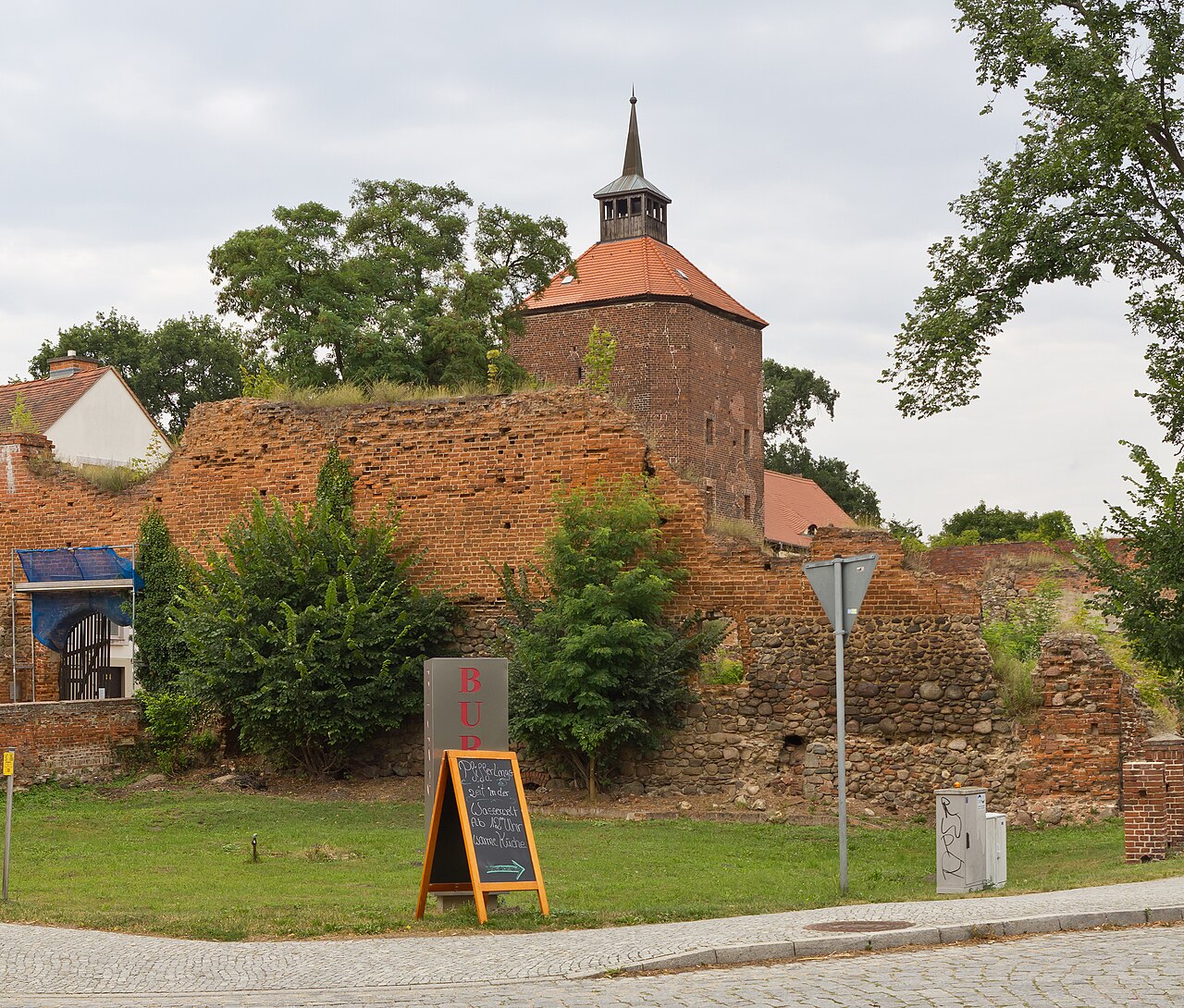
Burg Friedland stands as a remarkable example of a medieval hill castle located in the town of Friedland, Brandenburg, Germany. This castle, built in the early 14th century, has a rich history marked by noble ownership, military significance, and adaptive reuse through centuries. Positioned strategically atop the hill known as Kaupe, it overlooks the surrounding landscape, reflecting its original defensive purpose.
Historical origins and early ownership
The earliest documentary evidence related to the castle site dates back to August 1301, referencing both a castle and the town under the name Vredeburch. The first explicit mention of the castle itself appears in 1336. During the early 1300s, the castle and its adjacent settlement were likely under the control of Timo von Strele, a regional nobleman. By the 16th century, the ownership had transferred to Veit von Thümen, the Master of the Johanniter Order, a religious military order with significant regional influence. From 1518 onward, the castle, the town, and nearby villages were integrated into the Order’s holdings, marking a shift towards ecclesiastical governance.
Architectural evolution and reconstruction
Damage and rebuilding after the 1623 fire
A catastrophic fire in 1623 devastated much of the castle, leaving only the foundations and cellar vaults intact. Reconstruction efforts began several years later under the direction of Adam Graf von Schwarzenberg, then Master of the Johanniter Order. In 1630, he rebuilt the castle tower to a height of three stories, incorporating durable construction techniques of the period.
Mid-17th century modifications and military occupation
During the Thirty Years’ War, from 1643 to 1650, the castle and town were occupied by Swedish forces commanded by Colonel Wittkopf. In 1658, the castle underwent further enhancement with the addition of a half-timbered office building between two existing residential towers. This structure provided administrative space for scribes, reflecting the castle’s evolving role beyond pure military defense.
18th-century defensive changes
In the 18th century, the castle’s defensive features were adapted to changing military technologies and needs. A drawbridge installed in 1758 was replaced within a decade by a solid causeway, and the surrounding earthworks were dismantled. These modifications indicate a transition from active fortification to more administrative and residential functions.
Secularization and civic use
Following the secularization of the Johanniter Order in 1866, the castle came under the administration of the Kingdom of Saxony. In 1875, the local community purchased the castle and its lands, repurposing its spaces for civic uses such as schools, magistrate offices, and housing. This adaptive reuse ensured the castle’s continued relevance in the local community.
20th-century restorations and wartime roles
Between 1910 and 1913, Burg Friedland underwent significant restoration, including roof renewal, wall repairs, and gate restoration, aimed at preserving its historic fabric. During the interwar period, from 1934 to 1942, the castle served as a training facility for troop leaders of the Reich Labor Service, with interior renovations carried out in 1935. During World War II, the castle was briefly used by the Reich Foreign Ministry to store documents.
Postwar transformations and cultural development
After liberation by the Red Army in April 1945, the castle’s role shifted to practical community needs. It functioned as grain storage and later housed refugees displaced from eastern German territories in 1946. School activities resumed in part of the building, particularly the rear residential tower. Over subsequent decades, the castle accommodated agricultural machinery operations, school kitchens, and craft lessons, demonstrating its versatility.
From the mid-1970s, cultural amenities expanded within the castle. The central town library opened in 1975, and the knight’s hall was converted into a concert venue by 1979. An apothecary was established in restored outbuildings during the 1980s. Major preservation efforts between 1996 and 1999 stabilized and restored many structural elements, securing the castle’s historical and cultural significance for the future.
Architectural features and layout
Defensive structures and fortifications
Burg Friedland’s original design followed typical medieval defensive principles. The castle is enclosed by thick walls and ramparts, with the adjacent town similarly fortified. A stream called Dammmühlenfließ was dammed to flood the meadows around the castle, enhancing natural defenses. Entry was controlled through a single southern gate, originally spanned by a drawbridge later replaced by a solid causeway leading to a gatehouse.
The castle’s outer defense includes a Zwinger, a narrow enclosed passage between two walls, featuring small round towers at the corners for watch and defense, and a rectangular bastion on the western side. These features illustrate the layered defensive strategy employed to protect the castle.
Residential and administrative buildings
On the eastern side stands a three-story residential tower dating from the 1658 reconstruction, which remains fully intact. The western side retains fragments of the original ring wall, although more fragmentary. The southern wall is notable for its three outward-opening Gothic window niches near the gatehouse, adjacent to an economic building now functioning as a restaurant.
Inside, the main building preserves richly carved wooden support beams, including one with an inscription attributing construction to Adam Graf von Schwarzenberg in 1630. This inscription provides a tangible link to the castle’s historical patron and its 17th-century rebuilding phase.
The knight’s hall and interior spaces
The knight’s hall occupies the northeast corner of the castle and features a cellar-like room with a low vaulted ceiling adorned with painted coats of arms. This ceremonial space highlights the castle’s role in hosting official and representative functions. The vaulted ceiling and heraldic decoration underscore the hall’s importance within the castle’s interior hierarchy.
Preservation and cultural significance
Thanks to successive restoration campaigns, particularly in the early 20th century and the late 1990s, Burg Friedland stands among the best-preserved castles in Brandenburg. Its outer walls, towers, and inner fortifications have been carefully conserved, ensuring the survival of significant architectural elements and maintaining the castle’s historical appearance.
Today, Burg Friedland serves not only as a monument to medieval architecture and history but also as a vibrant cultural venue and community center, integrating its rich past with contemporary civic life.
Frequently asked questions (FAQ)
- How do I visit Burg Friedland?
- Burg Friedland is open to visitors throughout the year, with specific opening hours often aligned with local cultural events. It is advisable to check the town’s official website or visitor center for current visiting times and guided tour availability.
- What architectural styles are visible at Burg Friedland?
- The castle primarily exhibits <strong>Gothic architectural features</strong> with later additions reflecting 17th and 18th-century modifications. Key elements include the thick defensive walls, Gothic window niches, and half-timbered administrative buildings.
- When was Burg Friedland built?
- Burg Friedland was constructed in the early 14th century, with the first documented mention in 1336. It has undergone several significant reconstructions, especially after the 1623 fire.
- Can I attend cultural events at Burg Friedland?
- Yes, the castle hosts various cultural activities, including concerts in the knight’s hall and exhibitions in restored spaces. These events contribute to the castle’s role as a vibrant community center.
- Is Burg Friedland wheelchair accessible?
- Due to its medieval structure and hilltop location, full wheelchair accessibility may be limited. However, some areas and events are adapted to accommodate visitors with mobility challenges. It is recommended to contact the castle’s administration in advance for specific accessibility information.
Information
Sources & official resources
Verify the information above using these authoritative references.
Loading map...
Visitor reviews
No reviews yet. Been here? Write the first review and help other travelers!
Write the first reviewVisited this castle? Share your experience
Your review helps other travelers and adds first-hand knowledge to our encyclopedia.