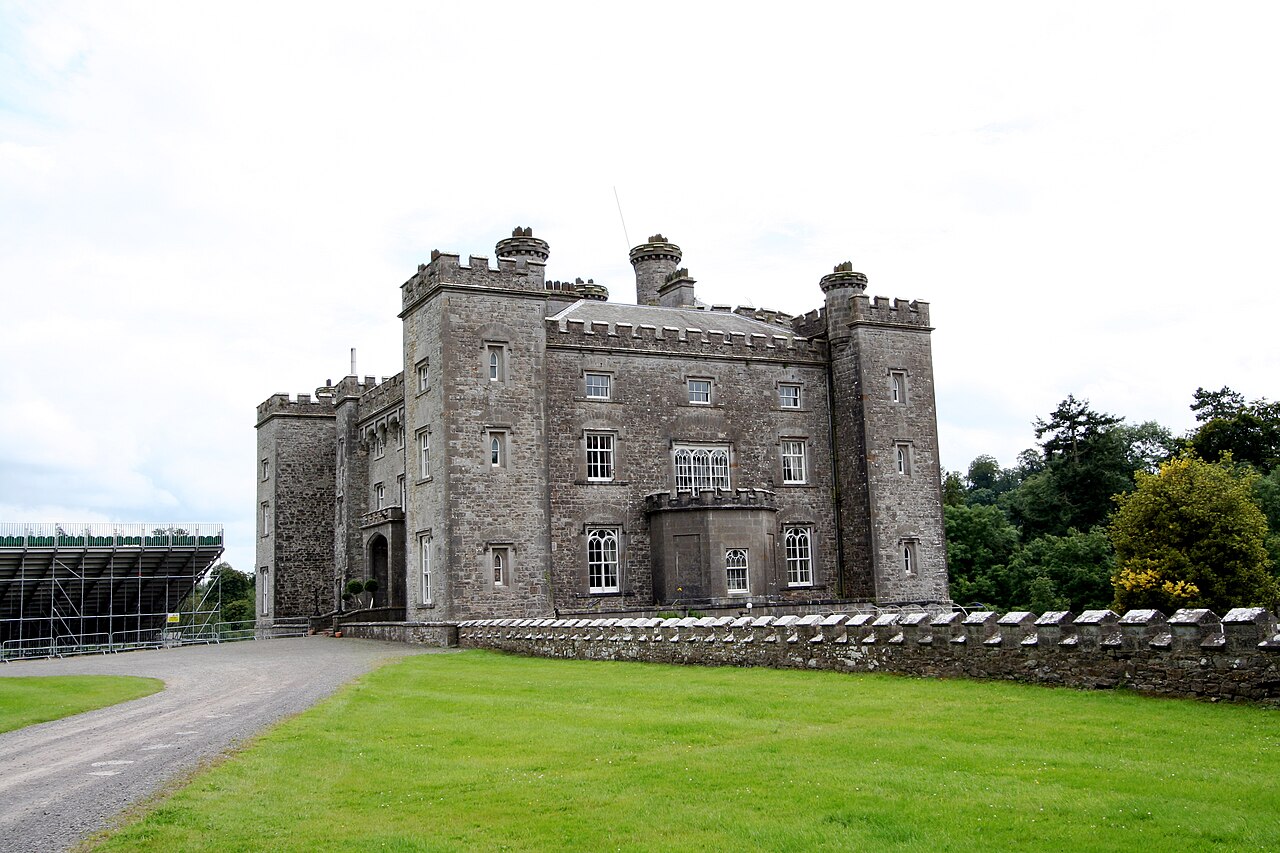
Dunmoe Castle
Dunmoe Castle is a historic Anglo-Norman hill castle located near Navan in County Meath, Northern Ireland. Built during the mid-15th century by the notable D'Arcy family, the castle stands as a significant example of medieval fortification on the western edge of The Pale, the area under direct English control in Ireland during that period. Its name, derived from the Irish term "Dún mBó" meaning "hillfort of cattle," indicates the site likely hosted an earlier Gaelic Irish fortification before the stone castle was erected.
Historical significance and ownership
The castle was constructed by the Anglo-Norman D’Arcy family, who played a prominent role in the region's medieval history. Historical records from the Civil Survey of the 1650s confirm that Thomas Darcy owned the entire parish surrounding the castle, including not only the fortress itself but also a church, mill, orchard, and fishing weir. This collection of estate features demonstrates the castle's dual role as a defensive stronghold and a center of local economic activity.
During the Cromwellian campaign of 1649, Dunmoe Castle was attacked by troops crossing the nearby River Boyne. Despite being targeted, the castle remarkably escaped major damage, a testament to its robust construction. A local tradition recounts the castle's involvement in the Williamite War in Ireland: George d’Arcy, the castle's resident, reportedly hosted King James II the night before the Battle of the Boyne in 1690 and then welcomed King William III the following day after the battle. This unusual hospitality inspired a well-known rhyme reflecting the uncertainty of the battle's outcome.
In the 18th century, a two-storey building was added to the castle's eastern side, indicating continued occupation and adaptation of the site. However, the castle suffered significant damage when it was set on fire during the Irish Rebellion of 1798. Today, only parts of the southern towers and some walls remain standing. Nearby, a chapel containing the tombs of the D’Arcy family preserves the memory of the castle's former noble inhabitants.
Architectural features and layout
Dunmoe Castle was originally designed as a rectangular donjon, or keep, reflecting typical Anglo-Norman military architecture of the period. The keep measured approximately 15 by 10 meters (around 16 by 11 yards) and featured a tower at each corner, which provided enhanced defensive capabilities. Built primarily from stone, the structure was intended to withstand sieges and attacks common in medieval Ireland.
Today, the remains include the two southern corner towers and sections of the castle's walls. The northern towers and rear portions of the castle have collapsed over time. The ground floor, now buried beneath rubble, was originally vaulted, providing a strong foundation and storage space beneath the main living quarters. Narrow arrowslits along the south wall allowed defenders to shoot arrows while remaining protected within the thick stone walls.
Inside the southwest tower, a spiral newel staircase leads upwards and includes a gun loop, a small opening designed for firing firearms. This feature illustrates the castle's adaptation to evolving military technology, incorporating defenses suitable for the early use of gunpowder weapons. The attached two-storey building on the eastern side, dating from the 18th century, reflects the castle's later phases of occupation and modification.
Estate and surrounding features
Beyond its military functions, Dunmoe Castle was part of a larger estate that included a church, mill, orchard, and fishing weir. These elements highlight the castle's role as a local economic hub, supporting agricultural and fishing activities essential to the community. Remnants of these features can still be detected in the landscape surrounding the castle ruins.
Close to the castle stands a chapel that houses the tombs of the D’Arcy family, maintaining a tangible connection to the castle's noble lineage. This chapel serves as a historical monument preserving the memory of the family who shaped the castle's history.
Military history and cultural legacy
Dunmoe Castle's strategic location near the River Boyne made it a significant defensive site during several key conflicts in Irish history. Its survival through the Cromwellian conquest and its association with the Battle of the Boyne underscore its importance in the military and political struggles that shaped Ireland in the 17th century.
The castle's destruction during the Irish Rebellion of 1798 marked the end of its active military use, leaving it as a ruin that today offers valuable insights into medieval and early modern fortification techniques. The site continues to attract historians, archaeologists, and visitors interested in Ireland's turbulent past and architectural heritage.
Present condition and preservation
Currently, Dunmoe Castle is classified as ruins, with only partial walls and two southern towers remaining intact. The site is an important cultural landmark in Northern Ireland and is accessible to the public, offering a glimpse into the Anglo-Norman architectural style and the medieval history of the region.
Preservation efforts focus on maintaining the stability of the remaining structures and protecting the surrounding landscape, including the nearby chapel and estate features. Visitors can explore the ruins and appreciate the castle's historical context within the broader narrative of Irish history.
Frequently asked questions (FAQ)
- What is the historical significance of Dunmoe Castle?
- Dunmoe Castle, dating back to the 15th century, is an important example of medieval architecture in Ireland. It is believed to have been a stronghold for the O'Reilly clan, showcasing the rich heritage and tumultuous history of the region.
- When was Dunmoe Castle built?
- Dunmoe Castle was constructed in the late 1400s, with its architecture reflecting the defensive needs of the time. Over the centuries, it has undergone various renovations that highlight its evolving significance in Irish history.
- Can I visit Dunmoe Castle?
- Yes, Dunmoe Castle is open to the public for tours, allowing visitors to explore its historical grounds and learn about its past. Advanced booking is recommended, especially during peak tourist seasons.
- What are the opening hours of Dunmoe Castle?
- Dunmoe Castle typically opens daily from 10 AM to 5 PM, but hours may vary by season or special events. It’s advisable to check the official website for the most current information before planning your visit.
- Is Dunmoe Castle accessible for individuals with mobility challenges?
- Dunmoe Castle has made efforts to improve accessibility for all visitors, including pathways and ramps in certain areas. However, some sections of the castle may still pose challenges due to their historic nature.
- When is the best time to visit Dunmoe Castle?
- The best time to visit Dunmoe Castle is during the spring and early autumn months when the weather is mild, and the gardens are in full bloom. Summer also offers vibrant activity, but it can be busier with tourists.
- What are the ticket prices for Dunmoe Castle?
- Ticket prices for Dunmoe Castle are generally £10 for adults, £5 for children, and there are discounts for families and groups. Special events may have different pricing, so it’s best to check the website for current rates.
- What nearby attractions should I visit while at Dunmoe Castle?
- While visiting Dunmoe Castle, consider exploring the beautiful Boyne Valley, which is rich in ancient history and scenic landscapes. Nearby attractions include the Hill of Tara and Newgrange, both offering fascinating insights into Ireland's past.
Information
Website
Visit websiteSources & official resources
Verify the information above using these authoritative references.
Loading map...
Visitor reviews
No reviews yet. Been here? Write the first review and help other travelers!
Write the first reviewVisited this castle? Share your experience
Your review helps other travelers and adds first-hand knowledge to our encyclopedia.