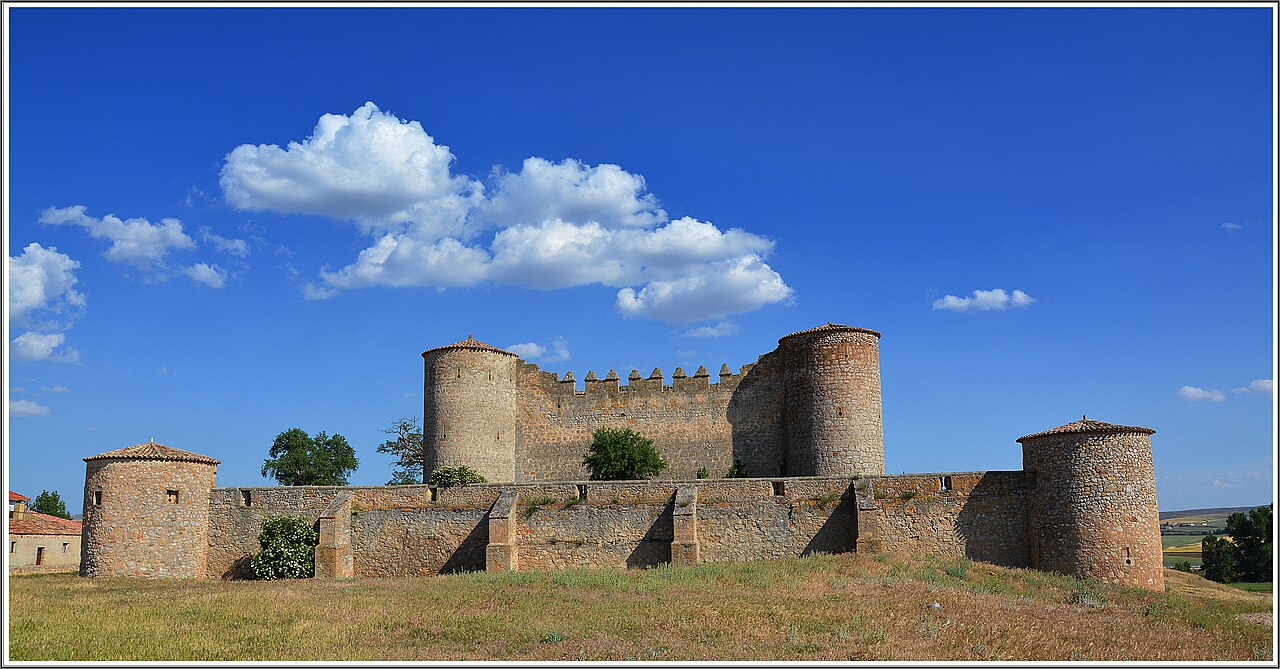
Serón de Nágima Castle
Serón de Nágima castle stands as a distinctive example of late medieval military architecture in Spain, located in the small town of Serón de Nágima. Built in the 14th century, this fortress was part of the strategic Raya frontier that separated the kingdoms of Castile and Aragón. The castle's primary function was to defend the vital communication route linking the Jalón river valley, which flows into the Ebro, with the Duero valley. This route was crucial for military and trade movements during the numerous conflicts that marked the late Middle Ages.
What makes Serón de Nágima castle particularly remarkable is its construction method: it is one of the few surviving fortifications in the region built exclusively using rammed earth techniques. Unlike most contemporaneous castles that relied heavily on stone or brick, this castle's walls were formed by compacting layers of earth, a method that required specialized knowledge and careful execution to ensure durability and defensive strength. The use of rammed earth reflects both the local availability of materials and the adaptation of medieval military architecture to regional conditions.
Historical context and strategic importance
The Raya frontier was a zone of frequent military tension and skirmishes between the kingdoms of Castile and Aragón during the 14th and 15th centuries. To secure this volatile border, a network of castles and fortified towns was established. Many of these were either newly constructed or rebuilt from earlier Muslim fortifications and older castles. Serón de Nágima castle was part of this system, playing a key role in controlling access through the Jalón valley corridor.
The castle's position allowed it to monitor and protect the communication and trade routes that were essential for the movement of troops and goods. Its presence helped to delimit the boundary between the two kingdoms and served as a deterrent against incursions. The castle's fortifications were designed to withstand sieges and assaults typical of the period, incorporating defensive features adapted to the challenges of frontier warfare.
Architecture and construction techniques
Rammed earth construction
The most distinctive architectural feature of Serón de Nágima castle is its exclusive use of rammed earth for the walls and fortifications. This technique involves compressing layers of moist earth within temporary wooden frameworks to create solid, thick walls. The method was labor-intensive and required skilled craftsmanship to ensure the walls' stability and resistance to weathering.
Rammed earth walls have excellent thermal properties and can absorb and release moisture, which contributes to their longevity when properly maintained. However, they are vulnerable to erosion if left exposed, which makes the castle's preservation noteworthy. The castle's walls exhibit legible constructive signs that reveal the building processes and techniques employed by medieval builders in this region.
Defensive features
The castle includes typical late medieval military architectural elements, adapted to its rammed earth structure. These likely included battlements for archers, towers or lookout points to survey the surrounding landscape, and a fortified gatehouse controlling access. The thickness of the rammed earth walls provided substantial resistance against projectiles and siege engines common in the period.
While detailed architectural surveys have documented the castle's remains, the structure's exact layout and the number of defensive towers remain subjects of ongoing research. The castle's design reflects a pragmatic approach to frontier defense, balancing resource availability with military needs.
Research and conservation
The study of Serón de Nágima castle has contributed valuable insights into the construction techniques of late medieval fortifications along the Castile-Aragón border. Research has focused on documenting the castle's fabric and interpreting the constructive signs visible in its walls. This work is part of a broader effort to understand the systematization of castle building in the region during a period of intense military activity.
Fieldwork involving detailed surveys and documentation has allowed historians and archaeologists to reconstruct aspects of the castle's construction process and to place it within the wider context of medieval castellology in the province of Soria. The castle's preservation state offers a rare opportunity to study rammed earth fortifications, which are less common than stone castles in Spain.
Legacy and cultural significance
Today, Serón de Nágima castle remains an important cultural and historical landmark. Its unique construction method and strategic location provide valuable evidence of the military and architectural strategies employed during the late medieval period on the Iberian Peninsula. The castle is a testament to the adaptation of fortification techniques to local materials and geopolitical realities.
Visitors to the site can observe the impressive rammed earth walls and gain an appreciation for the engineering skills of medieval builders. The castle's role in the defense of the Castile-Aragón frontier highlights the complex history of territorial disputes and alliances that shaped medieval Spain.
Frequently asked questions (FAQ)
- What is the historical significance of Serón de Nágima Castle?
- Serón de Nágima Castle is a remarkable example of medieval military architecture in Spain, dating back to the 13th century. It played a crucial role in the defense during the Reconquista, showcasing the region's strategic importance in historical conflicts.
- When was Serón de Nágima Castle built?
- The castle was constructed in the 13th century, around the time of the Reconquista, reflecting the architectural styles and military needs of the period. Its design incorporates elements typical of the era, making it a valuable site for understanding medieval Spanish history.
- Can I visit Serón de Nágima Castle?
- Yes, visitors are welcome to explore Serón de Nágima Castle and its surrounding grounds. The site offers an opportunity to immerse yourself in history and admire the impressive architecture.
- What are the opening hours for Serón de Nágima Castle?
- Serón de Nágima Castle is open to visitors from 10 AM to 6 PM, but hours may vary seasonally. It's advisable to check the official website or local tourist information for any updates on opening times before your visit.
- Is it possible to access Serón de Nágima Castle by public transportation?
- Yes, there are public transportation options available to reach Serón de Nágima Castle from nearby towns. Buses and shuttles frequently operate in the region, making it convenient for visitors to access the castle without a car.
- What is the best time to visit Serón de Nágima Castle?
- The best time to visit Serón de Nágima Castle is during the spring and early autumn months when the weather is mild and pleasant. These seasons also offer fewer crowds, allowing for a more enjoyable experience while exploring the castle and its grounds.
- Are there any nearby attractions to visit while at Serón de Nágima Castle?
- Yes, nearby attractions include charming local villages and beautiful natural landscapes, perfect for hiking and photography. Additionally, the region is rich in cultural heritage, with other historical sites and museums that enhance your visit to Serón de Nágima.
- What are the ticket prices for Serón de Nágima Castle?
- Ticket prices for Serón de Nágima Castle are generally affordable, with discounts available for children and seniors. It's best to check the official website for the most current pricing and any special offers that may be available during your visit.
Information
Loading map...
Visitor reviews
No reviews yet. Been here? Write the first review and help other travelers!
Write the first reviewVisited this castle? Share your experience
Your review helps other travelers and adds first-hand knowledge to our encyclopedia.