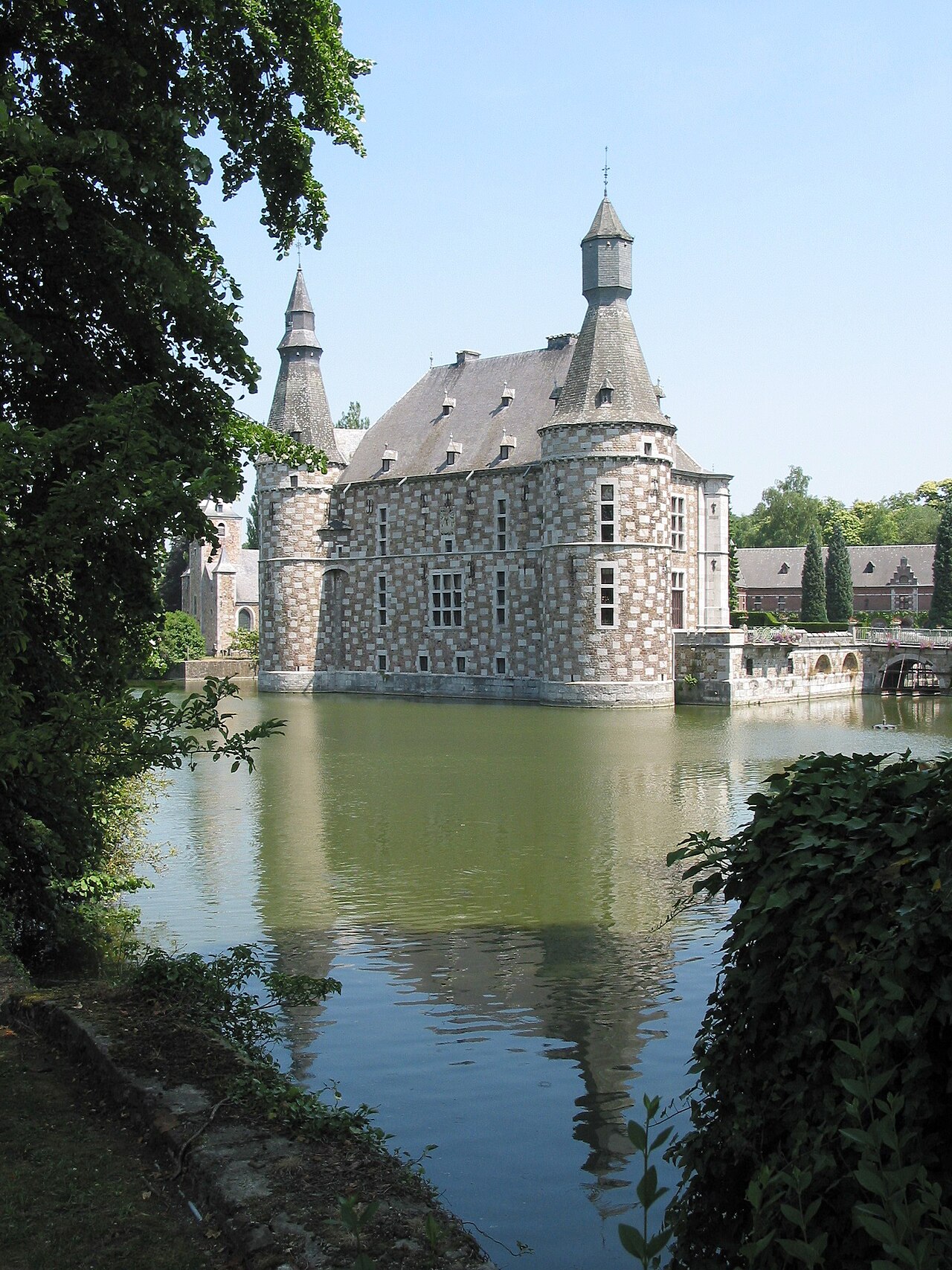
Seraing-le-Château Castle
Seraing-le-Château Castle, also known locally as Château de Seraing-le-Château, is a historic medieval fortress located in the village of Seraing-le-Château, within the province of Liège in the Wallonia region of Belgium. The castle's origins date back to the 14th century, and it has played a significant role throughout the late medieval period and beyond, reflecting the turbulent history of the region.
The village of Seraing-le-Château itself is first documented in a charter from 911, indicating its early medieval roots. It is mentioned again in 956 in a donation to the Abbey of Saint-Trond. The castle gave the village its name and served as the center of a seigniory under the jurisdiction of the feudal court of Liège. This connection highlights the castle's importance in regional governance and feudal administration during the Middle Ages.
Medieval origins and feudal history
The construction of Seraing-le-Château Castle began in the 14th century, a period marked by frequent conflicts and the consolidation of noble power in the region. Initially owned by the Haneffe family, the castle later passed through marriage to the influential De La Marck family. This family played a notable role in the history of the castle and the wider region.
The wild boar of the ardennes
One of the most infamous owners was William I de La Marck, known as the "Wild Boar of the Ardennes" due to his violent campaigns in the late 15th century. His brutal military actions left a mark on the history of the castle, which often served as his refuge. The castle's strategic location and fortifications made it a suitable stronghold during these turbulent times.
Sieges and conflicts
During the Eighty Years' War, the castle was subjected to military action. In 1568, the forces of Prince-Bishop Gerard de Groesbeeck laid siege to Seraing-le-Château Castle in an effort to suppress the rebellion led by William II de La Marck, Lord of Lumey. William II was a descendant of William I and a prominent admiral of the Sea Beggars, a group of Dutch rebel privateers.
This siege reflects the castle's continued military and political significance well into the 16th century. Ownership remained with William II's descendants until 1774, after which the castle passed to the d'Arenberg family, who maintained possession until the upheavals of the French Revolution.
Destruction and restoration
In 1812, the castle was sold to the d'Oultremont de Warnant family. However, disaster struck in 1869 when a large fire severely damaged the structure. The castle was subsequently rebuilt, with reconstruction inspired by medieval architectural styles, reflecting a 19th-century romanticized view of the Middle Ages.
The castle changed hands several times in the late 19th and early 20th centuries, passing to the de Laminne family in 1885 and later to the de Radzitzky d'Ostrowick family in 1908. By 1953, it was sold to a demolition company and partially dismantled, a fate that many historic castles faced during periods of neglect.
In 1960, a Flemish priest purchased the castle and began restoration efforts. Unfortunately, a second fire in 2003 destroyed much of this work, leaving the castle in ruins once more.
Modern revival and current use
The castle ruin was acquired in 2015 by a descendant of the Dutch branch of the De La Marck family, reconnecting the site with its historical lineage. Restoration was completed by 2023, reviving the castle's medieval character with careful attention to its architectural heritage.
Today, Seraing-le-Château Castle is used as a venue for wellness retreats, offering a unique experience within its historic walls. Access to the castle is limited to guests attending these retreats, preserving its tranquility and exclusivity. The restoration has been praised for its faithful recreation of the castle's medieval ambiance, transforming it from a ruin into a functional and atmospheric site.
Architectural features and significance
Seraing-le-Château Castle exemplifies the characteristics of a late medieval fortress in the Wallonia region. Its original construction would have included typical defensive features such as thick stone walls, battlements, and possibly a moat or gatehouse, designed to withstand sieges and attacks common during the Middle Ages.
The 19th-century reconstruction introduced elements inspired by medieval architecture, likely including turrets, , and ornamental stonework, reflecting the romantic revival of medieval styles popular at the time. These additions blend with the surviving medieval fabric to create a castle that visually narrates its layered history.
Location and strategic importance
Situated in the village of Seraing-le-Château, the castle occupies a strategic position in the province of Liège. Its location would have allowed control over local routes and served as a defensive stronghold in a contested region. This strategic importance is underscored by its involvement in regional conflicts and its role as a refuge for military leaders.
Cultural heritage and preservation
The castle's long history, from its medieval origins through periods of destruction and restoration, reflects the broader historical and cultural shifts in Belgium. Its preservation and adaptive reuse as a wellness retreat demonstrate contemporary approaches to maintaining historic sites by combining heritage conservation with functional modern use.
Seraing-le-Château Castle stands as a testament to the enduring legacy of medieval architecture and feudal history in Belgium, offering insights into the region's past while serving present-day cultural and recreational needs.
Frequently asked questions (FAQ)
- How do I get to Seraing-le-Château Castle?
- Seraing-le-Château Castle is located in the picturesque village of Seraing-le-Château, Belgium. You can reach the castle by car, with ample parking available nearby, or by public transportation, with local bus services connecting to the nearest train stations.
- What is the historical significance of Seraing-le-Château Castle?
- Seraing-le-Château Castle dates back to the 13th century and has played a significant role in the region's history. It has witnessed various historical events and changes in ownership, representing the architectural evolution of medieval fortifications in Belgium.
- When was Seraing-le-Château Castle built?
- The construction of Seraing-le-Château Castle began in the early 13th century, with various modifications made over the centuries. The castle's architecture reflects the styles of different periods, showcasing both medieval and Renaissance influences.
- Can I take photos inside the castle?
- Yes, visitors are welcome to take photos inside Seraing-le-Château Castle, but it is advisable to check for any specific restrictions during guided tours. Capturing the stunning architecture and historical artifacts is encouraged to enhance your visit.
- Why is Seraing-le-Château Castle a popular tourist attraction?
- Seraing-le-Château Castle attracts visitors due to its rich history, beautiful architecture, and picturesque surroundings. The castle offers guided tours that provide insight into its past, making it an educational experience for history enthusiasts.
- Is it possible to host events at Seraing-le-Château Castle?
- Yes, Seraing-le-Château Castle can be rented for private events, including weddings, corporate gatherings, and cultural events. It provides a unique and enchanting setting, combining historical charm with modern amenities.
- What are the opening hours for Seraing-le-Château Castle?
- Seraing-le-Château Castle is typically open to visitors from 10 AM to 5 PM, Wednesday through Sunday. However, it is recommended to check the official website for any seasonal changes or special closures.
- What are the ticket prices for visiting Seraing-le-Château Castle?
- Ticket prices for Seraing-le-Château Castle are generally affordable, with discounts available for students and seniors. Children under a certain age may enter for free, making it an accessible destination for families.
- When is the best time to visit Seraing-le-Château Castle?
- The best time to visit Seraing-le-Château Castle is during the spring and fall when the weather is mild and the surrounding gardens are in bloom. Additionally, visiting during weekdays can help you avoid larger crowds, allowing for a more intimate experience.
- Are there any nearby attractions to explore after visiting the castle?
- Yes, after visiting Seraing-le-Château Castle, you can explore the charming village of Seraing-le-Château, as well as nearby attractions like the scenic Meuse River and various hiking trails. The region is rich in natural beauty and historical sites, making it perfect for a full day of exploration.
Information
Address
Rue du Château, Seraing-le-Château, Belgium
Loading map...
Visitor reviews
No reviews yet. Been here? Write the first review and help other travelers!
Write the first reviewVisited this castle? Share your experience
Your review helps other travelers and adds first-hand knowledge to our encyclopedia.