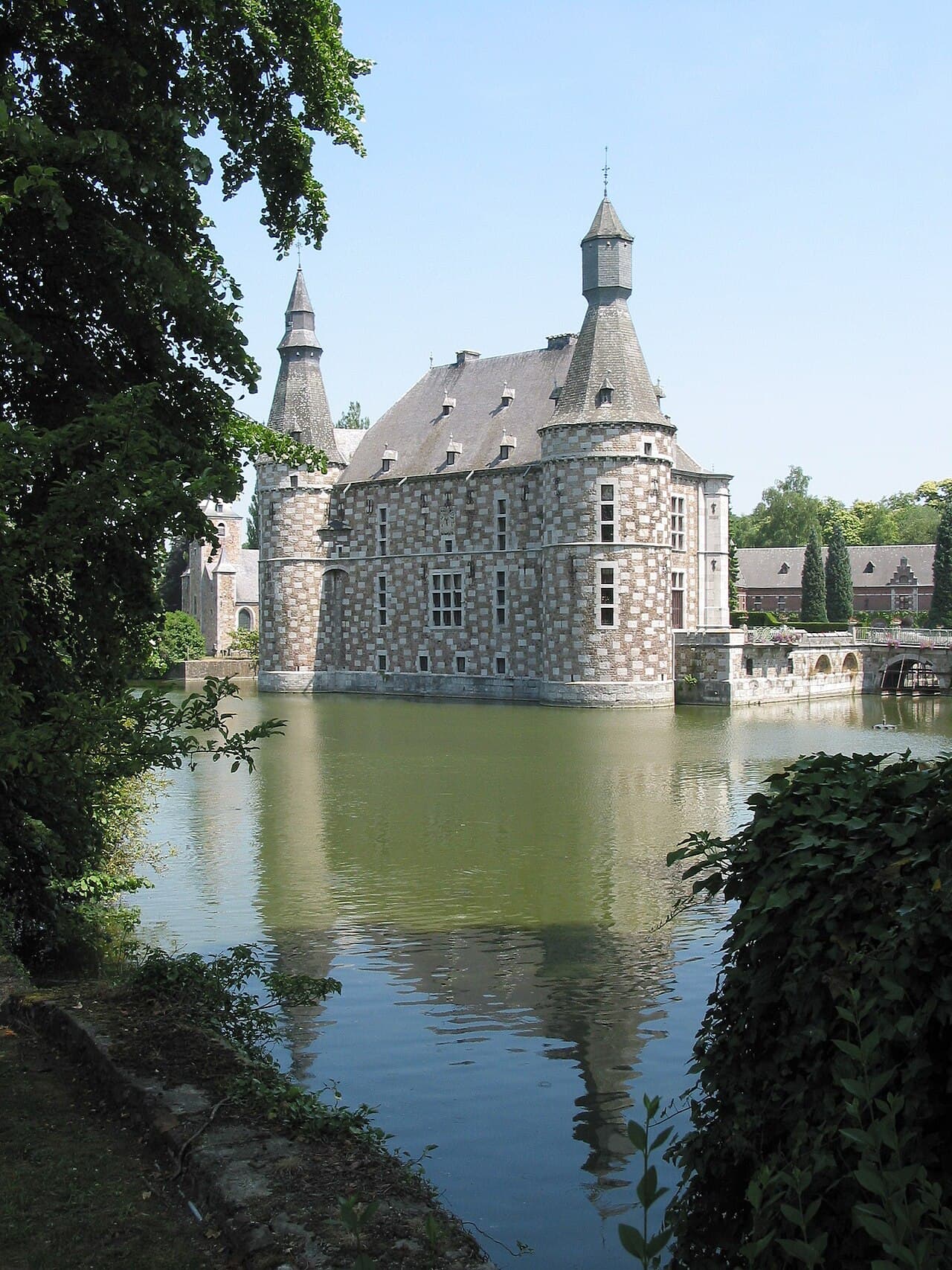
Jehay Castle — Belgium castle

Jehay Castle

Jehay Castle: historic hill castle in Wallonia, Belgium
Amay, Belgium
High Medieval (11th–13th c.)
Restored

Jehay Castle, also known as Château de Jehay, is a remarkable example of a restored hill castle situated in the province of Liège in the Wallonia region of Belgium. Nestled in a marshy landscape north of the town of Amay, this castle has a long and layered history that dates back to ancient times. The strategic importance of the site was first recognized by the Celts, who established an early settlement here, which was later transformed into a Roman castrum. Subsequently, the site evolved into a Carolingian stronghold, underscoring its enduring military and strategic significance.

The exact date of the construction of the first true castle on this site remains unknown, but historical records indicate that during the 12th and 13th centuries, Jehay Castle was owned by various noble families. By the early 14th century, it was in the possession of Arnould de Jehain during the conflicts between the Awans and Waroux families. The castle's ownership changed hands multiple times, reflecting the turbulent political and social landscape of the region.

Medieval origins and early history

Jehay Castle's early history is marked by its role in regional conflicts and noble disputes. During the first quarter of the 15th century, the castle was owned by Wathieu Datin, who rebelled against the Principality of Liège in 1428. Following his banishment, the castle was confiscated and passed to Gérard Gossuin de Beyne, the Mayor of Liège in 1456. Through marriage, the estate came under the ownership of the De Sart family in 1483, who maintained possession during a period of regional warfare, including the conflict between Jean de Hornes, Prince-Bishop of Liège, and the De la Marck family. The castle suffered repeated damage during these wars.

Reconstruction and architectural evolution

Around 1550, a significant rebuilding effort was undertaken by the De Sart family, marking a pivotal moment in the castle's architectural development. In 1567, ownership transferred to the De Mérode family through marriage, who held the castle for nearly 150 years. This period saw numerous building campaigns that shaped the castle's current form.

The castle's distinctive checkerboard facade, unique in Europe, was created in the mid-16th century and remains one of its most striking architectural features. This design combines alternating patterns of brick and stone, giving the castle a visually captivating appearance that distinguishes it from other European castles.

The van den steen family and later history

In 1720, Jehay Castle was acquired by Lambert Amand van den Steen, Lord of Saive in Hesbaye and private advisor to the Prince-Bishop of Liège. His descendants, who took the name Van den Steen de Jehay, continued to enhance the castle with several building campaigns, contributing to its evolution through the centuries.

The last private owner, Count Guy van den Steen Jehay, sold the castle to the province of Liège in 1978 while retaining usufruct rights until his death in 1999. This transfer ensured the castle's preservation and opened it to the public as a national museum.

Architectural features and the castle grounds

Jehay Castle is surrounded by moats and set within an idyllic landscape that includes Italian-style parks and gardens. These gardens feature remarkable trees, trellised linden alleys, and a restored 19th-century kitchen garden. The garden spans approximately one hectare and is enclosed by a brick wall, offering visitors a tranquil environment with ancient vegetable varieties, edible flowers, fruit trees, and delicate roses.

The castle's exterior is particularly notable for its harmonious blend of Renaissance architectural elements and the unique checkerboard pattern. Inside, the castle houses high-quality collections reflecting its rich history, although visitors often find the exterior more captivating than the interior. Photography inside the castle is prohibited to preserve the integrity of the exhibits.

Cultural significance and visitor experience

Classified as an exceptional heritage site of Wallonia, Jehay Castle is a major tourist attraction in the province of Liège. The castle offers visitors a glimpse into the lifestyle of its last private owners through permanent exhibitions and a tourist film that provides a virtual tour of the castle as it was lived in.

The castle's dependencies welcome many visitors, and the site is actively maintained to preserve its historical and cultural value. The province of Liège manages the castle, ensuring that it remains accessible to the public and safeguarded for future generations.

Visiting information and accessibility

Jehay Castle is open to visitors for a fee, with access to both the castle and its extensive grounds. The serene gardens and historical architecture make it a favored destination for those interested in medieval and Renaissance history, architecture, and garden design. Visitors are encouraged to explore the surrounding parkland and enjoy the peaceful atmosphere of this historic site.

Overall, Jehay Castle stands as a testament to the layered history of the region, showcasing architectural evolution from medieval fortification to Renaissance residence, set within beautifully maintained gardens and landscapes that enhance its historical ambiance.

Frequently asked questions (FAQ)

What is the historical significance of Jehay Castle?
Jehay Castle, dating back to the 16th century, is a prime example of Renaissance architecture in Belgium. It has been classified as a protected monument and is renowned for its unique design, beautiful gardens, and rich history tied to the local nobility.
When was Jehay Castle built?
Construction of Jehay Castle began in 1550 and was completed in 1580. It was built by the noble family of Jehay and reflects the architectural style and cultural influences of its time.
What are the opening hours for Jehay Castle?
Jehay Castle is typically open to visitors from March to November, with specific hours varying by season. It is advisable to check the official website or contact the castle directly for the most current opening hours before planning your visit.
Can I take a guided tour of Jehay Castle?
Yes, guided tours are available at Jehay Castle, providing visitors with in-depth information about its history and architecture. These tours are a fantastic way to fully appreciate the castle's features and learn more about its significance.
Is it possible to visit Jehay Castle year-round?
While Jehay Castle is primarily open during the warmer months, some special events or guided tours may be available during the off-season. It is recommended to check the castle's website for any winter events or limited access information.
How do I get to Jehay Castle?
Jehay Castle is located in Amay, Belgium, and can be accessed by car or public transportation. The nearest major city is Liège, which is approximately 20 kilometers away, making it a convenient day trip for visitors in the region.
What are the ticket prices for visiting Jehay Castle?
Ticket prices for Jehay Castle vary depending on age and group size, with discounts often available for children and seniors. It's best to check the official website for the most accurate and updated pricing information before your visit.
When is the best time to visit Jehay Castle?
The best time to visit Jehay Castle is during the spring and summer months when the gardens are in full bloom, and the weather is pleasant for outdoor exploration. Additionally, visiting during these months allows you to enjoy various events and activities hosted at the castle.
Are there any nearby attractions to visit along with Jehay Castle?
Yes, there are several nearby attractions, including the beautiful Meuse River and the historic town of Huy, which features stunning architecture and local shops. Exploring the surrounding area can enhance your experience and provide a fuller understanding of the region's history.

Photo gallery

Jehay Castle
Click to view

Photo by Jean-Pol GRANDMONT•CC BY 2.0

1 photo • Click any image to view in full screen

Information

Hill Castle

Address

Rue du Parc 1, Belgium

Loading map...

Visitor reviews

No reviews yet. Been here? Write the first review and help other travelers!

Write the first review

Visited this castle? Share your experience

Your review helps other travelers and adds first-hand knowledge to our encyclopedia.

Write a review

(5/5)

0/2000 characters

Your review will be visible after admin approval

Nearby castles

3.1 km

Jehay-Bodegnee Castle

Amay, Belgium

Jehay-Bodegnee Castle stands as a remarkable example of architectural evolution in Amay, Liege, Belgium. The castle's core structure primarily dates back to the early 16th century, showcasing its Renaissance origins. This period marked a significant transformation from its medieval predecessor, of which only some vaulted basements of the former keep remain, dating to the 13th century. These remnants provide a tangible link to the castle's medieval heritage and underscore the site's long-standing strategic and residential importance. In the 19th century, the castle underwent extensive renovations and expansions under the direction of the renowned architect Alphonse Balat. Balat's work introduced a sober Gothic Revival style that harmoniously blended with the existing Renaissance elements. This architectural intervention not only preserved but also enhanced the castle's historic character, adding features such as pointed arches, decorative battlements, and refined stonework that exemplify the Gothic Revival movement's restrained elegance. Architectural features and layout The castle's layout reflects its layered history, with the medieval vaulted basements forming the foundation beneath the Renaissance superstructure. The keep remnants are notable for their robust stone construction and vaulted ceilings, typical of defensive medieval architecture. Above ground, the Renaissance elements include symmetrical façades and large mullioned windows that allowed more light into the interiors, reflecting the era's aesthetic and functional preferences. The 19th-century additions by Balat introduced a more vertical emphasis with tall towers and steeply pitched roofs, characteristic of Gothic Revival style. The castle's exterior is marked by a combination of stone walls and ornamental detailing, including finials and tracery that add to its picturesque silhouette. The grounds include formal gardens and parkland that complement the castle's historic ambiance. Interior and collections The interior of Jehay-Bodegnee Castle is richly decorated, reflecting the tastes and status of its historical owners. Visitors can explore rooms furnished with an extensive collection of antique furniture, musical instruments, tapestries, and paintings. These collections provide insight into the cultural and artistic heritage of the region and the aristocratic lifestyle of the Counts van den Steen de Jehay, who owned the castle from the late 17th century until 1999. The castle's interiors also feature ornate woodwork, fireplaces, and period-appropriate decorative arts that enhance the historical atmosphere. The preservation of these elements allows visitors to experience the ambiance of a noble residence spanning several centuries. Historical significance and ownership Originally constructed on medieval foundations, Jehay-Bodegnee Castle illustrates the transition from fortified medieval keeps to more comfortable Renaissance residences. Its continuous occupation and adaptation over centuries reflect broader historical trends in castle architecture and aristocratic life in Belgium. The castle was long held by the Counts van den Steen de Jehay family, who played a significant role in the local history and governance. After the death of the last Count van den Steen in 1999, the castle and its valuable collections were acquired by the province of Liège, ensuring its preservation and public accessibility. Visiting the castle and its grounds Today, Jehay-Bodegnee Castle is open to visitors, primarily during the summer season. The estate offers a unique opportunity to explore a castle that embodies both Renaissance architecture and 19th-century Gothic Revival renovation. Visitors can enjoy guided tours of the interiors, which highlight the art collections and architectural features, as well as stroll through the surrounding gardens and parkland. The castle's location in Amay within the Liège region makes it accessible for day trips from nearby cities. Its rich history, architectural significance, and well-preserved collections make it a valuable cultural destination in Belgium.

Renaissance (15th–17th c.)
Details
3.5 km

Hermalle-sous-Huy Castle

Hermalle-sous-Huy, Belgium

Hermalle-sous-Huy Castle, known locally as Château d'Hermalle-sous-Huy, stands in the heart of the village sharing its name, located in the Liège province within Belgium's Wallonia region. This castle's origins trace back to the 12th century, when it was initially constructed by Michel de Hermalle. Its strategic position and robust design reflect the medieval fortification needs of the period. Medieval origins and early destruction The earliest incarnation of Hermalle-sous-Huy Castle was a stronghold typical of the high medieval period. It played a significant role in the regional conflicts of the era. In 1315, during the violent feud between the Awans and Waroux families, the castle was destroyed. Local legend recounts that children from the city of Liège aided in this attack by filling in the castle's moat, a strategic move that compromised its defenses. Today, only the gray round tower, a fragment of the curtain wall, and the base of another round tower remain from this original structure. Rebuilding and further conflict Following its destruction, the castle was rebuilt, but its troubles were far from over. In 1346, it suffered another assault, this time by the inhabitants of the nearby town of Huy, who sacked the fortress. Despite these setbacks, the castle continued to be a seat of local power and changed hands among several noble families over the centuries, including the De Lummen, De Salme, De Horion, De Rougrave, De Goisbeck, and De Berlo families. Renaissance transformation under the d'ursel family In the 17th century, Hermalle-sous-Huy Castle entered a new chapter when acquired by Conrad d'Ursel, a Count of the Holy Roman Empire. He undertook significant rebuilding efforts that transformed the castle's appearance and structure. The renovations embraced the Mosan Renaissance architectural style, a regional style notable for its harmonious blend of Renaissance elements with local building traditions. This style is characterized by the use of brick and stone, ornate gables, and elegant window frames, which would have modernized the castle while preserving its defensive features. Architectural features of the mosan renaissance style The Mosan Renaissance style seen in Hermalle-sous-Huy Castle features decorative stonework combined with red brick, creating a distinctive aesthetic that reflects the cultural influences of the Meuse river valley. The castle's layout likely includes a courtyard surrounded by fortified walls and towers, though much of the original medieval fabric was altered or replaced during these renovations. The presence of battlements and defensive towers would have remained essential for security while the residential quarters were enhanced for comfort and status. Later modifications and current status Subsequent centuries, particularly the 18th and 19th centuries, saw further rebuilding and modifications to the castle, adapting it to changing tastes and needs. These alterations may have included updates to interior spaces and the addition of ancillary buildings such as stables or farm structures. Today, Hermalle-sous-Huy Castle is private property and is not open to public visitation. However, the associated farm buildings are accessible to visitors on weekends, offering a glimpse into the estate's agricultural past. From the public road, only a small portion of the castle is visible, limiting the ability to appreciate its full architectural grandeur. Historical significance and heritage Hermalle-sous-Huy Castle embodies the layered history of medieval and renaissance fortifications in Belgium. It reflects the turbulent history of regional noble conflicts and the evolution of castle architecture from purely defensive structures to more refined residential estates. The castle's survival through destruction, rebuilding, and stylistic transformation illustrates the resilience and adaptability of such historic sites. Its association with notable families and the adoption of the Mosan Renaissance style make it an important example of local heritage, linking the architectural traditions of the Meuse valley with broader European trends of the Renaissance period.

High Medieval (11th–13th c.)
Details
3.5 km

Castle of Warfusée

Saint-Georges-sur-Meuse, Belgium

The Castle of Warfusée stands as a remarkable example of Belgian noble heritage, nestled near the village of Stockay in the municipality of Saint-Georges-sur-Meuse. This hill castle occupies a strategic plateau approximately 130 meters above sea level, overlooking the scenic Meuse River valley about two kilometers away. Its origins trace back to the medieval period, with the earliest known fortification being a donjon constructed in the 11th century, serving as a defensive and administrative stronghold for the local nobility. Throughout its long history, the castle has witnessed significant architectural transformations and played a pivotal role in regional politics and society. The site evolved from its medieval roots into a refined 18th-century neoclassical residence, reflecting the tastes and social aspirations of its noble owners, particularly during the mid-1700s reconstruction. Medieval origins and early history The Castle of Warfusée's earliest documented structure was a donjon, a fortified tower built in the 11th century to oversee and control the surrounding lands. This initial fortress no longer survives, but it laid the foundation for the castle's strategic importance. By the early 12th century, the seigneurie of Warfusée was established and recorded, marking the site as a notable lordship within the region. Ownership of the seigneurie changed hands multiple times during the 14th and 15th centuries, passing through prominent noble families including the Haneffe, d’Enghien, de la Marck, de Corswaren, de Hamal, de Renesse, de Thiennes, and Bavière-Schagen lineages. These frequent transitions reflect the complex feudal and political dynamics of the late medieval period in this part of Belgium. 18th-century reconstruction and architectural features A major turning point in the castle's history came in 1707, when Marie-Isabelle de Bavière-Schagen married François d’Oultremont, transferring ownership to the d’Oultremont family. Their son, Florent d’Oultremont, commissioned a substantial reconstruction between 1754 and 1755, guided by the architect Jean-Gilles Jacob. This renovation transformed the castle into a refined example of the Louis XV style, embodying the elegance and symmetry characteristic of the neoclassical architectural movement. The castle's layout is a distinctive square plan enclosing an inner courtyard, surrounded by four buildings that form the main residential and functional spaces. The ensemble is complemented by landscaped grounds featuring a park and a pond, enhancing the estate's aesthetic appeal and demonstrating 18th-century landscaping trends. A notable architectural element is the monumental gatehouse or donjon dating from 1622, which serves as the imposing main entrance. This gatehouse preserves the castle's defensive character and leads visitors into the honor courtyard. The main building is crowned by a small bell tower known as a clocheton, housing a carillon—a set of tuned bells played via a keyboard mechanism, adding a unique auditory feature to the castle. Interior design and artistic heritage The interior of the Castle of Warfusée retains much of its 18th-century character. Several apartments are furnished with period-appropriate pieces, including a four-poster bed and velvet-covered chairs, reflecting the comfort and status of its noble inhabitants. The salons are richly decorated with tapestries from Audenaerde, depicting scenes from the adventures of Don Quixote, which add cultural and artistic value to the interiors. Portraits of King Louis XV and King Louis XVI adorn the walls, reinforcing the castle's historical connection to the French monarchy and the aristocratic milieu of the time. Additional interior highlights include a chapel featuring delicate stucco decoration and an entrance hall with elegant marble flooring. Multiple salons boast similar tapestries and portraits, underscoring the luxurious lifestyle and refined tastes of the castle's former residents. Notable historical figures and social significance The castle was the birthplace and lifelong residence of Charles-Nicolas d’Oultremont (1716–1771), who served as prince-bishop of Liège. During his tenure, the castle functioned as a social and political hub within the Prince-Bishopric of Liège, hosting important events and gatherings tied to regional governance. In the 19th century, the castle remained associated with prominent figures such as Émile d’Oultremont (1787–1851), a member of the Belgian National Congress involved in the foundation of Belgium. His daughter, Émilie d’Oultremont, later known as the Blessed Émilie d’Oultremont for founding the Society of Mary Reparatrix, lived at Warfusée until 1847, adding a religious and philanthropic dimension to the castle's history. Landscape and protected heritage status The castle grounds include notable sequoia trees planted around 1877, reflecting 19th-century landscaping fashions and the estate's ongoing evolution. The park, along with ancillary buildings such as the orangery used for cultivating citrus trees, contribute to the estate's historical and horticultural significance. Today, the Castle of Warfusée remains a private residence of the d’Oultremont family. Its architectural and historical value has been formally recognized through classification as exceptional heritage within the Wallonia region. The ensemble, comprising the castle, outbuildings, orangery, and landscaped grounds, is protected as an extraordinary heritage site. Public access is limited and controlled, with visits generally available only through organized group tours, preserving the castle's integrity and ensuring its conservation for future generations.

Late Medieval (14th–15th c.)
Details

