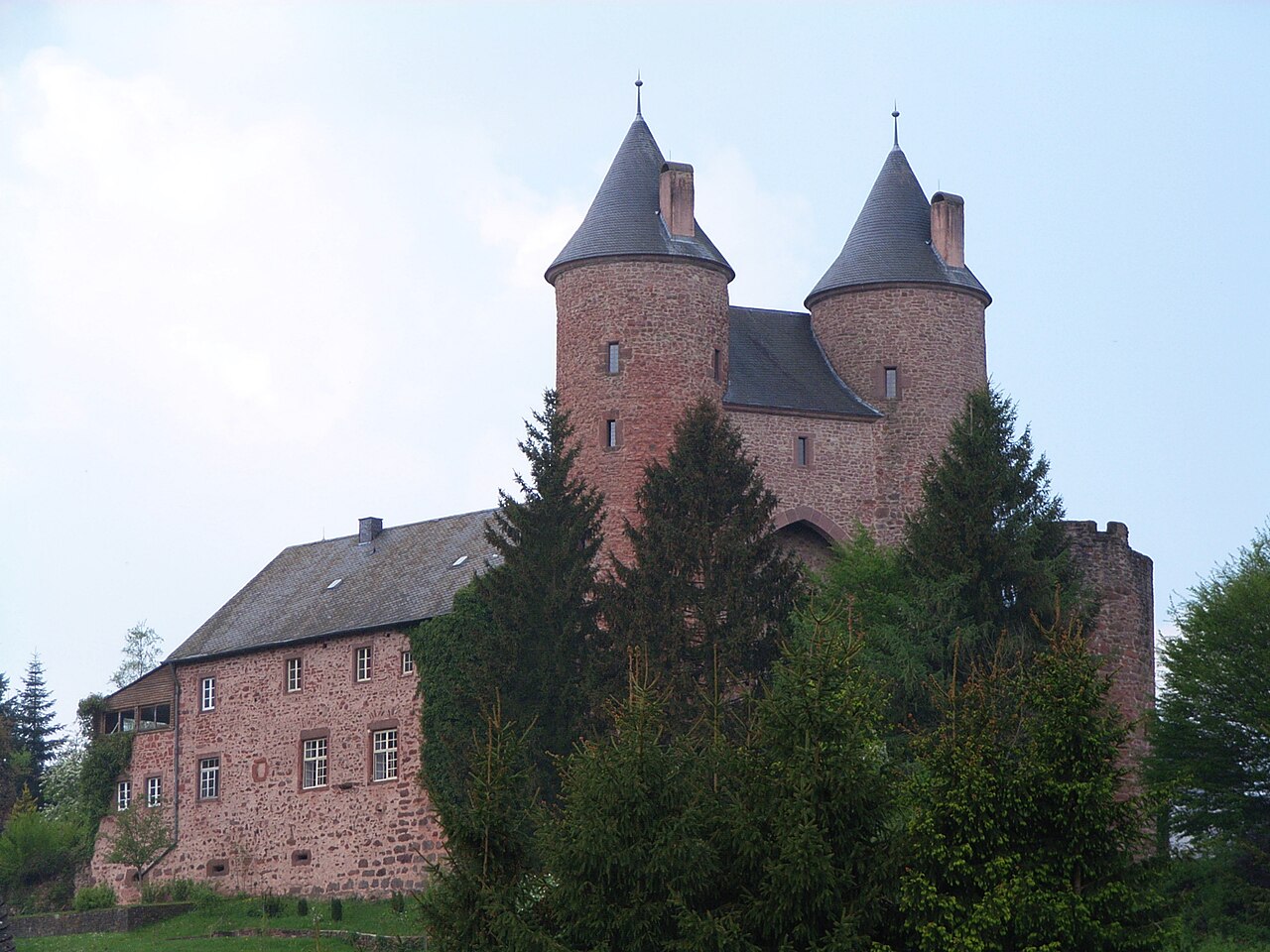
Seinsfeld Castle
Seinsfeld Castle is a notable example of a late medieval fortress located in the Bitburg-Prüm district of Germany. Dating back to the 14th century, it is first documented in 1325, marking its significance during the medieval period. The castle complex is characterized by its almost circular layout, a distinctive feature that sets it apart from many other medieval castles, which often have irregular or polygonal shapes.
Architectural features and layout
The castle is surrounded by a wide moat, a defensive water-filled barrier typical of medieval fortifications designed to deter attackers and prevent undermining of the walls. The moat encircles the entire structure, emphasizing the castle's defensive purpose. The walls and remaining structures suggest a strong fortification system, although detailed architectural studies are limited due to the castle's private ownership.
Defensive elements
The nearly circular plan of Seinsfeld Castle allowed for comprehensive defensive coverage, minimizing blind spots. The moat further enhanced its defenses, making direct assaults difficult. While specific towers or gatehouses are not extensively documented, the castle's design would have likely included typical medieval defensive features such as battlements, arrow slits, and possibly a drawbridge.
Historical context and ownership
First mentioned in historical records in 1325, Seinsfeld Castle played a role in the regional power dynamics of the Bitburg-Prüm area during the late medieval period. The castle was likely owned by local nobility or knights who controlled the surrounding lands. Over the centuries, the castle has remained under private ownership, which has limited public access and detailed archaeological exploration.
Current status and accessibility
Today, Seinsfeld Castle remains privately owned and is not open to the public. Its preservation state is described as well-preserved, maintaining much of its original medieval character. The castle's moat and overall form remain visible, offering valuable insight into medieval defensive architecture despite limited public engagement.
Significance in medieval fortification studies
Seinsfeld Castle provides an important example of a moated late medieval fortress with a rare circular design. Its preservation contributes to understanding the variety of castle layouts used in the Rhineland region. The castle's defensive features reflect the military architectural trends of the 14th century, emphasizing water defenses and compact, easily defensible shapes.
Frequently asked questions (FAQ)
- How do I get to Seinsfeld Castle?
- Seinsfeld Castle is located in the picturesque Bitburg-Prüm district of Germany. You can reach it by car via the A60 motorway, and there are also local bus services available from nearby towns. The castle is situated in a scenic area, making it a lovely destination for a day trip.
- What is the historical significance of Seinsfeld Castle?
- Seinsfeld Castle dates back to the 12th century and has played a crucial role in the region's history. It served as a fortified residence for local nobility and has witnessed various historical events throughout the centuries. Today, it stands as a testament to medieval architecture and the rich heritage of the area.
- When was Seinsfeld Castle built?
- Construction of Seinsfeld Castle began in the early 12th century, making it a significant part of the region's medieval history. Over the centuries, it underwent various renovations and expansions, reflecting the architectural styles of different periods. Its long history adds to its charm and intrigue as a visitor destination.
- Can I tour Seinsfeld Castle?
- Yes, visitors are welcome to tour Seinsfeld Castle during its opening hours. Guided tours are often available, providing insights into the castle's history and architecture. It's recommended to check the official website for any special events or guided tour schedules.
- Why is Seinsfeld Castle popular among tourists?
- Seinsfeld Castle attracts tourists for its stunning architecture and rich historical background. The picturesque surroundings and well-preserved structures offer a glimpse into the past, making it a perfect spot for history enthusiasts and photographers alike. Additionally, its proximity to other attractions in the Bitburg-Prüm area enhances its appeal.
- Is it possible to host events at Seinsfeld Castle?
- Yes, Seinsfeld Castle can be rented for private events such as weddings, corporate gatherings, and parties. The unique setting and historical ambiance make it an attractive venue for special occasions. Interested parties should contact the castle administration for more information on availability and services.
- What are the opening hours for Seinsfeld Castle?
- Seinsfeld Castle typically opens to visitors from April to October, with specific hours varying by day and season. It is advisable to check the official website or contact the castle directly for the most current visiting hours. Planning ahead ensures you can maximize your visit.
- What are the ticket prices for visiting Seinsfeld Castle?
- Ticket prices for Seinsfeld Castle are generally affordable, with discounts available for children, students, and seniors. Family packages may also be offered, making it accessible for all visitors. For the latest pricing information, please refer to the official website before your visit.
- What nearby attractions should I visit while in Bitburg-Prüm?
- While visiting Seinsfeld Castle, you can explore other nearby attractions such as the Bitburg Brewery, known for its famous pilsner, and the scenic Prüm Valley. Additionally, nature enthusiasts can enjoy hiking and cycling in the beautiful surrounding countryside. The area is rich in cultural and natural sites that complement your visit to the castle.
Loading map...
Visitor reviews
No reviews yet. Been here? Write the first review and help other travelers!
Write the first reviewVisited this castle? Share your experience
Your review helps other travelers and adds first-hand knowledge to our encyclopedia.