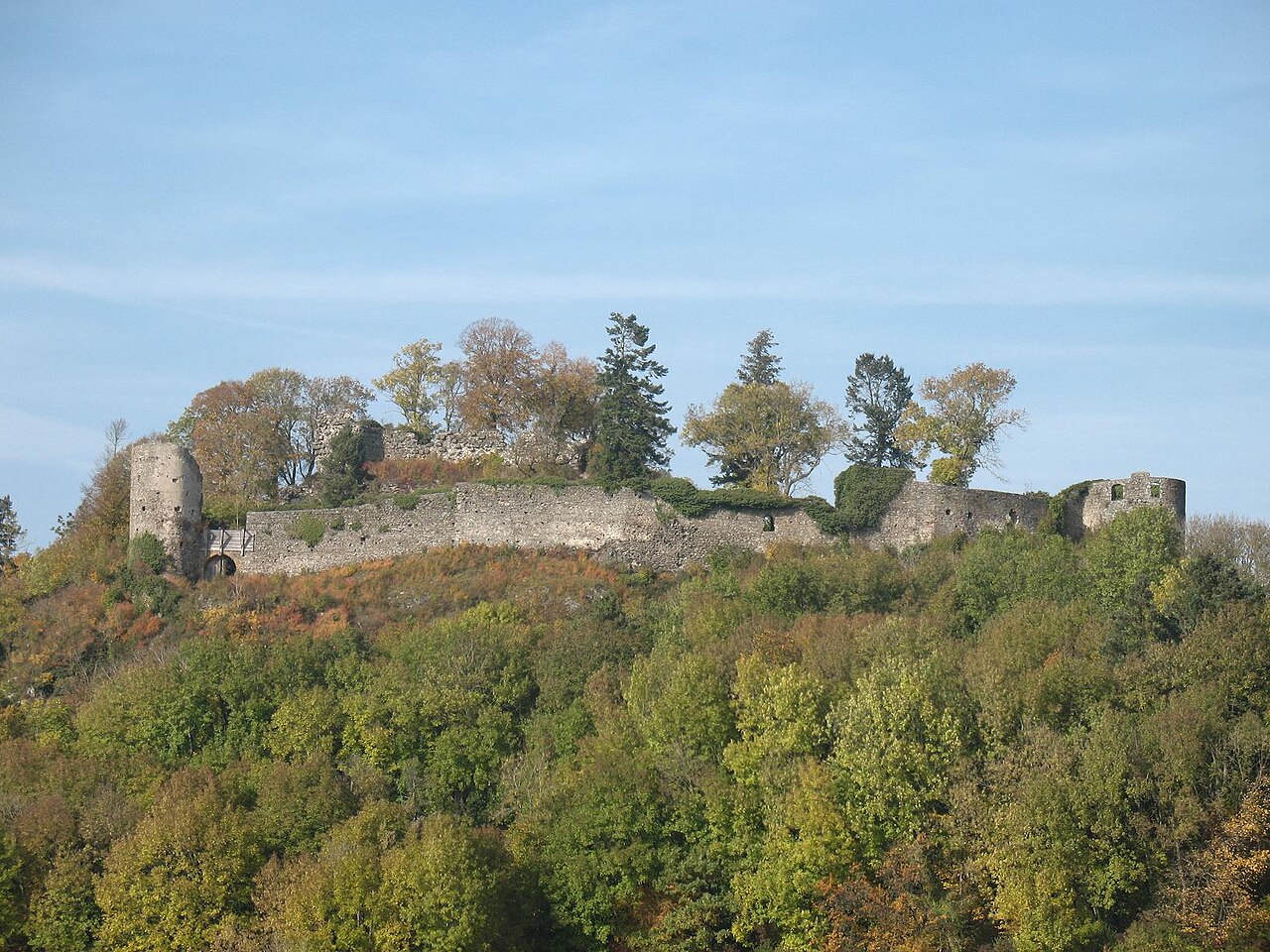
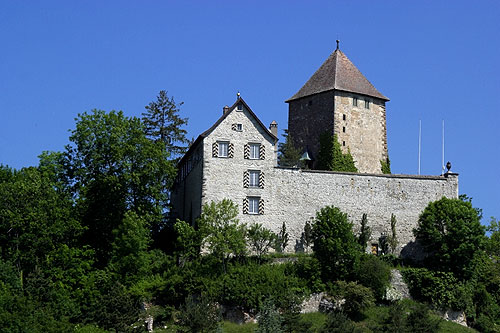
Schloss Blumenfeld stands prominently on a limestone hill overlooking the Biber River near the town of Tengen in southern Germany. Its strategic location, rising approximately 40 meters above the surrounding landscape, exemplifies typical medieval defensive siting, providing commanding views and natural protection. The castle's origins trace back to the 11th century, making it a significant example of early medieval fortification evolving through centuries of architectural and functional transformations.
The medieval origins and early history
The earliest documentary references to Schloss Blumenfeld date from 1292 and 1362, though archaeological and architectural evidence suggests the site was initially fortified during the High Medieval period, likely in the 11th century. Originally constructed by local German noble builders, the castle served as the ancestral seat of the Ritter von Blum(en)egg family, a noble lineage whose name is reflected in the castle's designation.
During the 14th century, ownership passed to the influential Klingenberg family, prominent in the surrounding regions of Hegau and Thurgau. Under their stewardship, Schloss Blumenfeld was expanded and fortified to consolidate their territorial influence. The castle's defensive capabilities were tested during the 1441-1442 siege by the Swabian city leagues, who sought to suppress raids by local nobility. Although the castle resisted capture, the siege underscored its strategic importance.
However, in 1499, during the Swabian War, the castle was destroyed by Swiss troops, marking a significant turning point in its history and leading to a period of reconstruction and repurposing in the following centuries.
Reconstruction and the Teutonic Order period
Following its destruction, Schloss Blumenfeld entered a new phase under the ownership of the Teutonic Order’s Mainau commandery from 1511 until 1806. During this period, the castle served as the residence of the vogt (local bailiff), functioning as an administrative center for the surrounding territories controlled by the order.
Significant architectural developments took place in the early 16th century, notably the construction of the south wing in 1515, built upon the foundations of the original medieval palas—the main residential hall typical of castles of this era. This wing reflects Renaissance influences in its design, blending defensive features with residential comfort.
Between 1578 and 1582, the castle was further expanded with the addition of the north wing, which increased both the residential space and defensive capabilities. These expansions illustrate the castle's transition from a purely military fortress to a multifunctional administrative residence.
18th and 19th-century transformations
The 18th century saw restoration efforts aimed at modernizing the castle's interior environment, including the renewal of windows and stoves between 1759 and 1762. These improvements reflect the evolving standards of comfort and habitability during this period.
After a period of vacancy from 1774 to 1876, Schloss Blumenfeld assumed various civic and social roles. It housed the district administration until 1857, followed by the district court until 1864. Subsequently, it served as a children’s orphanage from 1864 to 1874, then was converted into a hospital and poorhouse and later a nursing home until 2017. These adaptive reuses demonstrate the castle’s enduring social significance beyond its original military and administrative functions.
Preservation and modern use
By the mid-20th century, Schloss Blumenfeld faced significant deterioration and risked ruin. In 1975, community-led preservation efforts successfully halted further decay. Subsequent demolition of 19th-century annexes in 1980 made way for a new wing designed to harmonize with the castle’s medieval architectural style, featuring two stair towers that enhance both access and visual continuity.
Restoration work continued through the 1980s and 1990s, focusing on critical structural elements such as roofing and interior spaces, ensuring the castle's historical character was carefully maintained. Today, the castle stands five stories tall, with two floors fully restored and accessible to visitors. Archival photographs and heraldic emblems preserved within the castle testify to its layered history and architectural evolution.
Since 2021, Schloss Blumenfeld has embraced a contemporary role as a hub for community-oriented projects, including coworking and coliving spaces, alongside a café. This adaptive reuse highlights the castle’s ongoing relevance and vitality in the modern era.
Architectural features and layout
The castle’s layout today primarily reflects the early 16th-century reconstruction and late 16th-century expansions. The south wing, built on the medieval palas foundations, anchors the complex, while the north wing extends along the northern perimeter, creating a cohesive residential and defensive compound.
Notable architectural elements include fireplaces, bay windows, and preserved family heraldic emblems that decorate the interior, illustrating the castle’s noble heritage and the aesthetic sensibilities of its successive owners.
The castle’s elevated position on a limestone hill not only provided strategic defense advantages but also shaped its architectural development, adapting to the natural topography to maximize surveillance and protection.
Defensive structures and adaptations
While much of the original medieval fortifications were lost or transformed during reconstruction, the castle retains elements typical of a hill castle, such as thick defensive walls and elevated vantage points. The removal of later annexes and the addition of the new wing with stair towers in the late 20th century were designed to respect and echo the castle’s historic defensive character.
Interior and residential aspects
The transition from fortress to administrative residence is evident in the castle’s architectural evolution. The palas foundation under the south wing and the expanded living quarters in the north wing reflect a shift towards comfort and governance functions. Interior features like stoves and window renovations in the 18th century further enhanced habitability.
Frequently asked questions (FAQ)
- How do I get to Schloss Blumenfeld?
- Schloss Blumenfeld is located in the picturesque region of Germany, easily accessible by car or public transport. If you are traveling by train, the nearest station is just a short bus ride away, making it convenient for visitors from major cities.
- What is the historical significance of Schloss Blumenfeld?
- Schloss Blumenfeld dates back to the 16th century and is known for its rich history as a noble residence. It has witnessed significant events and changes in the region, making it a fascinating site for history enthusiasts.
- When was Schloss Blumenfeld built?
- Construction of Schloss Blumenfeld began in the late 1500s, with various architectural styles added over the centuries. Its evolution reflects the cultural and political shifts that have occurred in Germany throughout history.
- Can I take guided tours of Schloss Blumenfeld?
- Yes, guided tours are available and provide an in-depth look at the castle's history, architecture, and notable features. These tours are led by knowledgeable guides who can answer your questions and share fascinating stories about the castle.
- Why is the architecture of Schloss Blumenfeld unique?
- The architecture of Schloss Blumenfeld showcases a blend of Renaissance and Baroque styles, which is quite rare in this region. Its intricate details, grand facades, and beautifully landscaped gardens contribute to its charm and historical significance.
- Is it possible to host events at Schloss Blumenfeld?
- Yes, Schloss Blumenfeld offers facilities for hosting various events, including weddings and corporate gatherings. The scenic backdrop and historical ambiance make it a popular choice for memorable occasions.
- What are the opening hours for Schloss Blumenfeld?
- Schloss Blumenfeld is typically open to visitors from 10 AM to 5 PM, Tuesday through Sunday. However, it's advisable to check the official website for any seasonal variations or special events that may affect these hours.
- What are the ticket prices for visiting Schloss Blumenfeld?
- Ticket prices for Schloss Blumenfeld are generally affordable, with discounts available for students and seniors. Family passes and group rates are also offered, making it an economical choice for visitors looking to explore the castle.
- When is the best time to visit Schloss Blumenfeld?
- The best time to visit Schloss Blumenfeld is during the spring and early autumn when the weather is pleasant, and the gardens are in full bloom. Additionally, visiting during weekdays may offer a more peaceful experience compared to weekends.
- Are there nearby attractions to visit along with Schloss Blumenfeld?
- Yes, there are several nearby attractions, including charming villages, hiking trails, and other historical sites. Exploring the surrounding area can enhance your visit and provide a deeper understanding of the local culture.
Information
Website
Visit websiteSources & official resources
Verify the information above using these authoritative references.
Loading map...
Visitor reviews
No reviews yet. Been here? Write the first review and help other travelers!
Write the first reviewVisited this castle? Share your experience
Your review helps other travelers and adds first-hand knowledge to our encyclopedia.