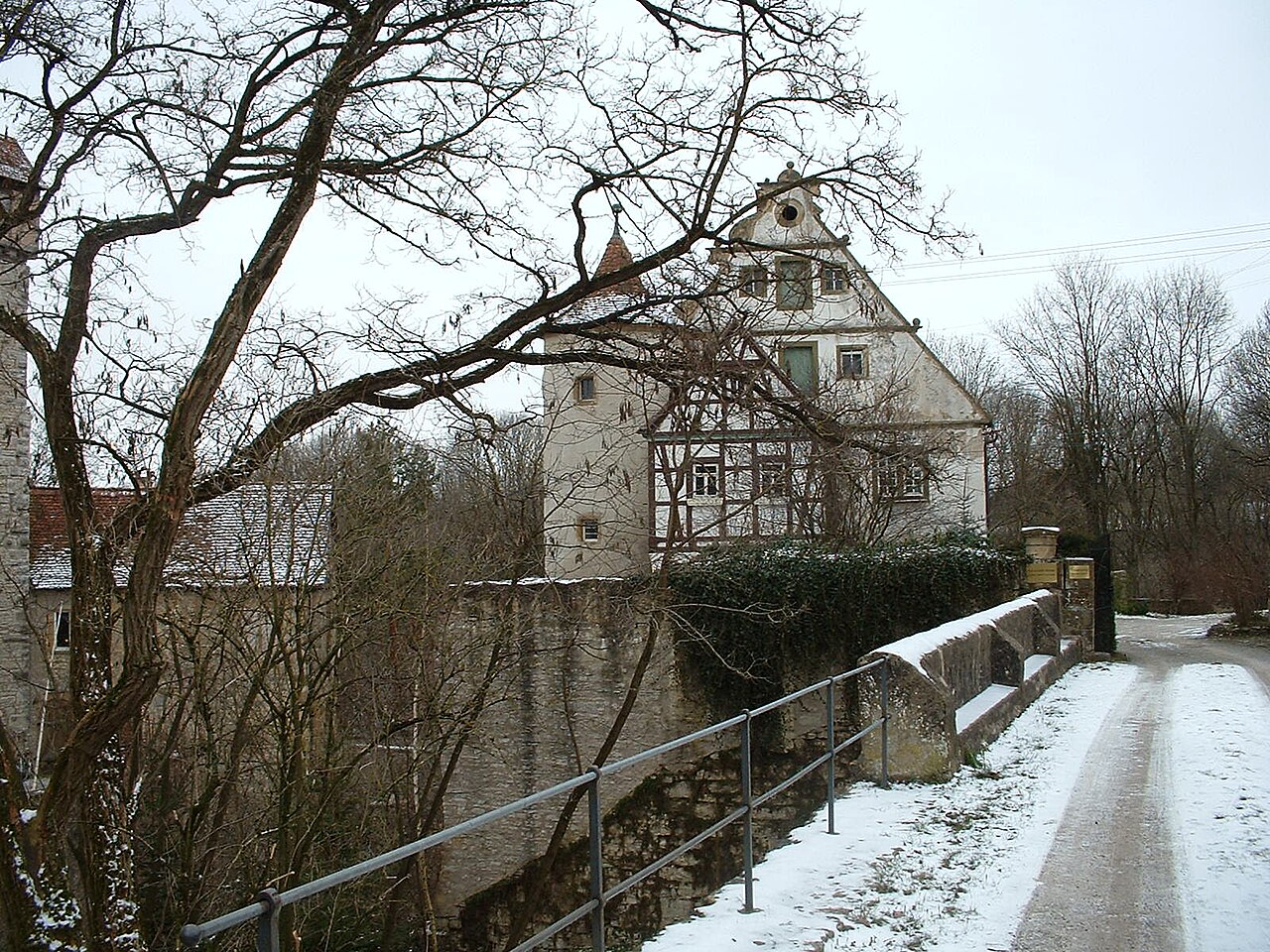
Schillingsfürst Castle
Schillingsfürst Castle is a prominent Baroque castle located in the town of Schillingsfürst in Bavaria, Germany. Its origins trace back to the early medieval period, with the first recorded mention of a fortification on the site dating to the year 1000 AD. Over the centuries, the castle has undergone multiple destructions and reconstructions, reflecting the turbulent history of the region.
Early history and medieval destructions
The castle was initially owned by the House of Hohenlohe from the 1300s, a noble family influential in Franconia. The original medieval fortress was destroyed in 1316 by forces led by Ludwig of Bavaria. A successor castle was built but met destruction again during the Peasants' War of 1525, a widespread uprising in the Holy Roman Empire. The third iteration of the castle was destroyed in 1632 during the Thirty Years' War, a devastating conflict that reshaped much of Central Europe.
Construction of the current baroque castle
The present-day Schillingsfürst Castle was constructed between 1753 and 1793 under the direction of Prince Karl Albrecht of Hohenlohe-Schillingsfürst. This construction period places the castle firmly within the post-Renaissance era, embracing the Baroque architectural style characterized by grandeur, elaborate ornamentation, and symmetry.
The castle was designed as a stately residence rather than a military fortress, reflecting the changing role of castles in the 18th century. Its architecture features typical Baroque elements such as ornate facades, decorative stucco work, and formal gardens that emphasize aesthetic appeal and comfort.
Architectural features and layout
Schillingsfürst Castle is a hill castle situated on elevated terrain, providing commanding views of the surrounding landscape. The castle complex includes a main residential building, courtyards, and ancillary structures arranged in a coherent Baroque plan. The interiors are known for their richly decorated halls, featuring period furnishings and artworks that reflect the tastes of 18th-century German nobility.
The castle's defensive features are minimal compared to earlier medieval fortresses, highlighting its role as a noble residence. However, the site retains some elements reminiscent of its fortified past, such as thick walls and a gatehouse that mark the entrance.
Museum and cultural significance today
Today, Schillingsfürst Castle functions as a museum open to the public, showcasing the history of the castle and the Hohenlohe family. Visitors can explore the preserved rooms, learn about the castle's architectural evolution, and appreciate the cultural heritage of the region.
The castle also hosts cultural events and exhibitions that promote the historical and artistic significance of this Baroque landmark. Its preservation contributes to understanding the transition from medieval fortifications to elegant noble residences in Bavaria.
Frequently asked questions (FAQ)
- How do I get to Schillingsfürst Castle?
- Schillingsfürst Castle is located in the charming village of Schillingsfürst, Germany. It is easily accessible by car and public transportation, with nearby train stations and bus services providing convenient options for visitors. Parking is available on-site for those driving to the castle.
- What is the historical significance of Schillingsfürst Castle?
- Schillingsfürst Castle dates back to the 13th century and has a rich history intertwined with the region's noble families. Originally built as a fortress, it has served various purposes over the centuries, including as a residence and a military stronghold. The castle is a testament to medieval architecture and offers insights into the local history.
- When was Schillingsfürst Castle built?
- Construction of Schillingsfürst Castle began in the early 13th century, with significant modifications made in the following centuries. The castle reflects various architectural styles, showcasing its evolution through time. Today, it stands as a remarkable example of medieval architecture in Germany.
- Can I take a guided tour of Schillingsfürst Castle?
- Yes, guided tours are available at Schillingsfürst Castle, providing visitors with a deeper understanding of its history and architecture. Tours are typically led by knowledgeable guides who share fascinating stories and insights about the castle. It is recommended to check the schedule in advance and book a spot, especially during peak tourist seasons.
- Why is Schillingsfürst Castle considered an architectural gem?
- Schillingsfürst Castle is considered an architectural gem due to its blend of medieval and Renaissance styles, characterized by impressive stonework and intricate details. The castle’s towers, fortified walls, and beautiful courtyards showcase the craftsmanship of the era. Visitors can appreciate its unique design and picturesque surroundings, making it a must-see destination.
- Is it possible to host events at Schillingsfürst Castle?
- Yes, Schillingsfürst Castle offers facilities for hosting various events, including weddings, corporate gatherings, and cultural activities. The stunning backdrop of the castle adds a unique charm to any occasion. Interested parties should contact the castle administration for more information on availability and services.
- What are the opening hours for Schillingsfürst Castle?
- Schillingsfürst Castle is generally open to visitors from April to October, with specific hours varying by season. Typically, the castle opens at 10 AM and closes by 6 PM, but it's best to check the official website for precise times before planning your visit. During winter months, the castle may have limited hours or be closed, so advance planning is essential.
- What are the ticket prices for visiting Schillingsfürst Castle?
- Ticket prices for Schillingsfürst Castle vary based on age and type of tour. Generally, adult tickets are priced around €8, while discounts may be available for students and seniors. Children under a certain age may enter for free, making it an affordable outing for families.
- What is the best time to visit Schillingsfürst Castle?
- The best time to visit Schillingsfürst Castle is during the spring and early autumn months when the weather is usually mild and pleasant for outdoor exploration. Additionally, these seasons often feature fewer crowds, allowing for a more enjoyable experience. Special events and festivals may also take place during these times, adding to the overall visit.
- Are there any nearby attractions to Schillingsfürst Castle?
- Yes, there are several nearby attractions to explore in addition to Schillingsfürst Castle. The picturesque town of Rothenburg ob der Tauber is just a short drive away and offers beautiful medieval architecture and charming streets. Visitors can also enjoy scenic walks in the surrounding countryside and discover other historical sites in the region.
Information
Website
Visit websiteSources & official resources
Verify the information above using these authoritative references.
Loading map...
Visitor reviews
No reviews yet. Been here? Write the first review and help other travelers!
Write the first reviewVisited this castle? Share your experience
Your review helps other travelers and adds first-hand knowledge to our encyclopedia.