Santa Cruz Castle
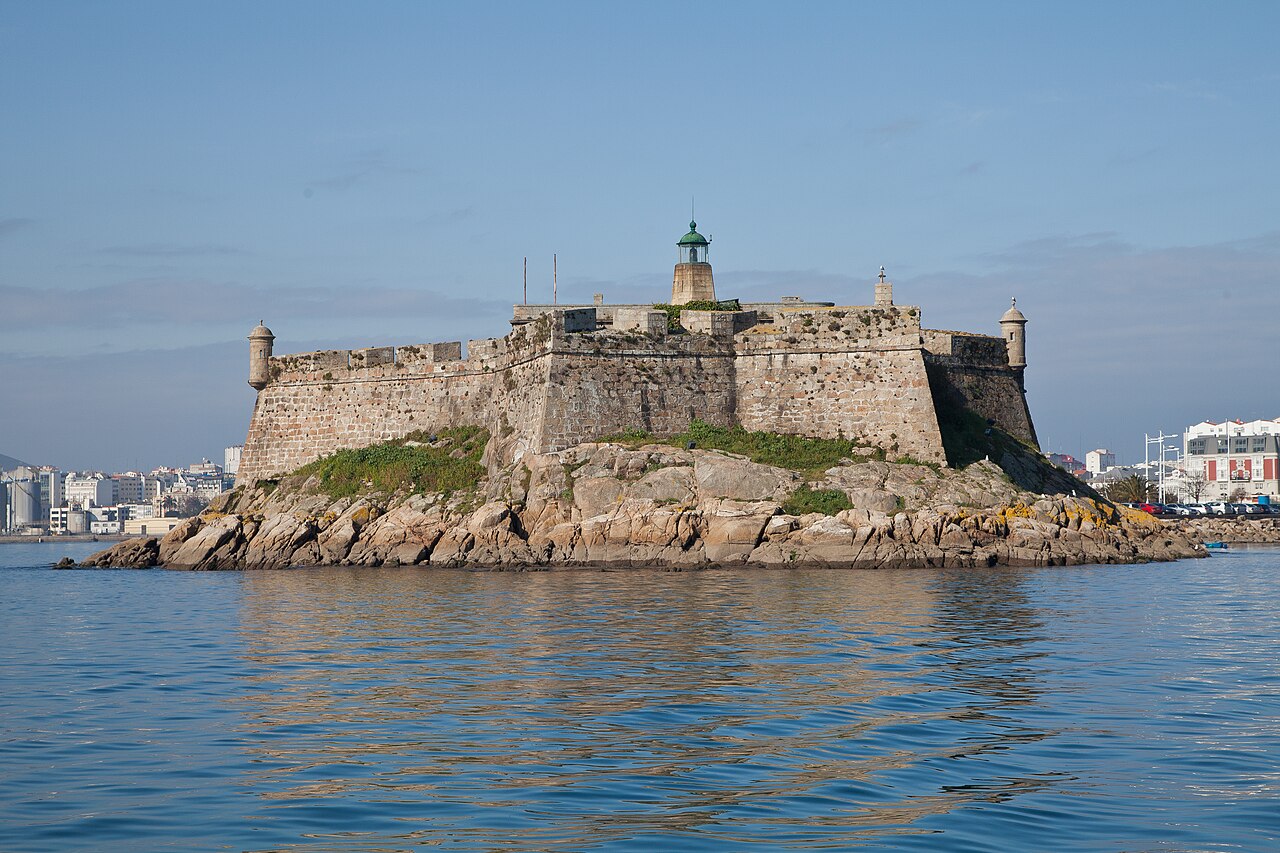
Santa Cruz Castle, located on the island of Santa Cruz in the municipality of Oleiros, Spain, is a remarkable example of Renaissance military architecture from the 16th century. Built by General Diego Dasmariñas in the late 1500s, it was a key element in the defensive system protecting the bay of A Coruña. Its strategic position on a small island at the mouth of the ria provided a commanding vantage point to monitor and repel naval threats, reflecting the Spanish crown's priorities during a period of intense maritime conflict.
The castle's construction began around 1594 or 1595 under the supervision of Dasmariñas, with the design crafted by the military engineer Pedro Rodríguez Muñiz. The fortress was conceived to counter the growing naval dangers posed by rival European powers. Its isolated location, surrounded by water at high tide, enhanced its defensive capabilities by making direct assaults more difficult. Over the centuries, the castle evolved architecturally and militarily to meet changing needs.
Historical development and military significance
During the early 17th century, Santa Cruz Castle was armed with a formidable array of artillery, including a large bronze culverin, two smaller bronze sacres, and an iron cannon. These weapons served as a deterrent against maritime attacks, notably during the 1639 Franco-Dutch naval offensive led by Archbishop and Admiral Henri D’Escobleau de Sourdis. Although the castle did not see major combat, its presence contributed to the defense of the ria of A Coruña.
By 1640, the fortress was largely complete and featured the renowned cannon called “O Barraco”, capable of firing projectiles up to 10 kilometers. This artillery piece exemplified the advances in military technology of the era and underscored the castle's role in coastal defense. Throughout the 18th century, the castle underwent significant renovations and expansions to enhance its fortifications.
18th-century enhancements
Between 1752 and 1758, under the direction of Antonio de Gaver, major improvements were proposed and implemented. These included the construction of additional pavilions, bastions, and parapets to strengthen the castle's defensive perimeter. Further expansions occurred around 1784 under Captain General Martín Cermeño, reflecting ongoing efforts to modernize the fortress in response to evolving military tactics.
In 1792, Fernando de Gaver designed upgrades to the artillery batteries, replacing a small three-cannon battery with a larger bastion mounting six cannons arranged in two groups of three. A lower battery with four cannons was added shortly after, based on designs by Miguel de Hermosilla in 1799. These enhancements reflect a strategic shift towards more organized and powerful coastal artillery defenses.
Architectural features and layout
Santa Cruz Castle is primarily constructed from slate and earth, materials typical for coastal fortifications in Galicia due to their availability and resilience. The fortress's layout evolved from scattered artillery placements to a more systematic arrangement of defensive structures. Its fortifications include bastions projecting outward to cover adjacent walls, parapets providing protective barriers for gunners, and pavilions serving as quarters and storage.
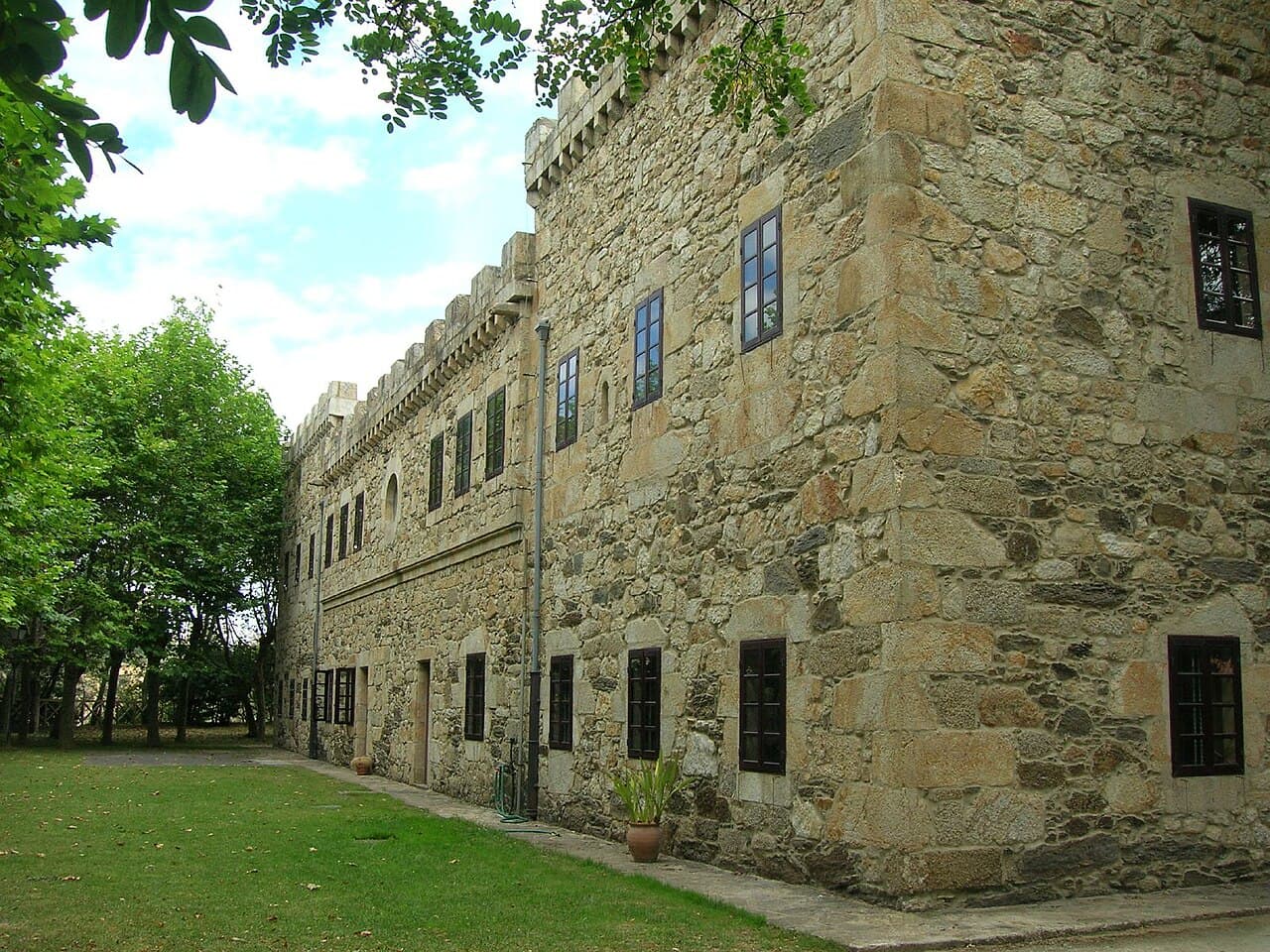
The castle's position on soft, erosion-prone terrain influenced its design and necessitated ongoing maintenance. Historical records from 1847 describe a simple parapet and a relatively weak wall closing a gorge, elements of the defensive system that were later reinforced. Residential buildings within the castle walls accommodated the governor and officers, with space for 150 to 200 soldiers at its peak. By the mid-19th century, only the governor's house and a small guardhouse remained in good condition, while other structures fell into disrepair or were repurposed.
Later history and adaptive reuse
After losing military relevance in the 19th century, the castle was acquired by José Quiroga Pérez de Deza, husband of the celebrated writer Emilia Pardo Bazán. They transformed the fortress into a summer residence, blending its historic character with domestic use. Later, during the Spanish Civil War era, the castle served as a summer retreat for war orphans, following a donation by Blanca Quiroga in 1938-1939.
In 1989, ownership transferred to the Oleiros town council, which repurposed the site for environmental education. The establishment of the Center for University Extension and Environmental Dissemination of Galicia (CEIDA) in 2001 marked a new chapter, integrating the castle's heritage with contemporary educational goals. Restoration efforts between 2009 and 2011, funded by national and regional authorities, stabilized the structure, repaired weather damage, and preserved the castle's historic fabric.
Preservation and current use
Today, Santa Cruz Castle stands as a well-preserved example of a hill castle with Renaissance origins, adapted over centuries to meet military and civilian needs. The restoration work has consolidated the walls and fortifications, addressing damage caused by environmental exposure. Its current role as the home of CEIDA ensures that the castle remains a vibrant part of the community, serving both as a cultural landmark and an educational resource.
The castle's unique combination of historical military architecture and modern adaptive reuse highlights the importance of preserving heritage sites while giving them new life. Visitors to Santa Cruz Castle can appreciate its strategic location, architectural evolution, and the layers of history embedded in its walls, from 16th-century coastal defense to 20th-century social service and environmental education.
Frequently asked questions (FAQ)
- How do I get to Santa Cruz Castle?
- You can reach Santa Cruz Castle by taking public transport or driving to Oleiros, Spain. The castle is located near the coastline, offering picturesque views and is easily accessible by following local signage.
- What is the historical significance of Santa Cruz Castle?
- Santa Cruz Castle was built in the 16th century to protect the city of La Coruña from maritime invasions. Its strategic location and impressive architecture make it an important historical site reflecting the military history of the region.
- When was Santa Cruz Castle constructed?
- Construction of Santa Cruz Castle began in 1589 and was completed in 1594. It was designed as a stronghold during a period of frequent naval conflicts, showcasing the military architecture of the time.
- Can I take guided tours of Santa Cruz Castle?
- Yes, guided tours are available for visitors to explore Santa Cruz Castle. These tours provide insightful information about the castle's history, architecture, and significance, making your visit more enriching.
- Why is Santa Cruz Castle considered an architectural gem?
- Santa Cruz Castle is renowned for its unique star-shaped design and robust fortifications. The blend of Renaissance and military architectural styles, along with its stunning coastal views, contributes to its status as an architectural treasure.
- Is it possible to visit Santa Cruz Castle year-round?
- Yes, Santa Cruz Castle is open to visitors year-round, although opening hours may vary by season. It's advisable to check the official website for the latest information on accessibility and visiting hours before planning your trip.
- What are the ticket prices for visiting Santa Cruz Castle?
- Admission to Santa Cruz Castle is typically free, allowing all visitors to enjoy its historical and cultural significance. However, fees may apply for guided tours or special events, so it's best to verify in advance.
- What is the best time to visit Santa Cruz Castle?
- The best time to visit Santa Cruz Castle is during the spring and early autumn months when the weather is mild and pleasant. These seasons also offer fewer crowds, allowing for a more enjoyable experience exploring the castle and its surroundings.
- Are there any nearby attractions to visit along with Santa Cruz Castle?
- Yes, nearby attractions include the beautiful beaches of Oleiros and the charming town of La Coruña. You can also explore local parks and hiking trails that offer stunning views of the coastline and the castle itself.
Photo gallery

Information
Loading map...
Visitor reviews
No reviews yet. Been here? Write the first review and help other travelers!
Write the first reviewVisited this castle? Share your experience
Your review helps other travelers and adds first-hand knowledge to our encyclopedia.