Castro de Elviña
Castro de Elviña is a significant Iron Age hill fort situated just south of the city of A Coruña in the autonomous community of Galicia, Spain. This archaeological site represents one of the most important remnants of the pre-Roman Castro culture that flourished in northwestern Iberia during the first millennium BCE. The site was officially declared a historic monument in 1962, recognizing its cultural and historical value.
Historical context and cultural significance
The Castro culture was characterized by fortified settlements, often located on elevated terrain for defensive purposes. Castro de Elviña exemplifies this tradition as a hill fort that provided protection and a strategic vantage point over the surrounding landscape. These settlements were typically occupied from the late Bronze Age through the Iron Age, roughly from the 9th century BCE until the Roman conquest in the 1st century BCE.
As a site, Castro de Elviña offers valuable insight into the social organization, defensive architecture, and daily life of the indigenous peoples of Galicia before Romanization. The fort's location near A Coruña places it within a region rich in archaeological heritage related to the ancient Celtic and Iberian peoples.
Architectural features and layout
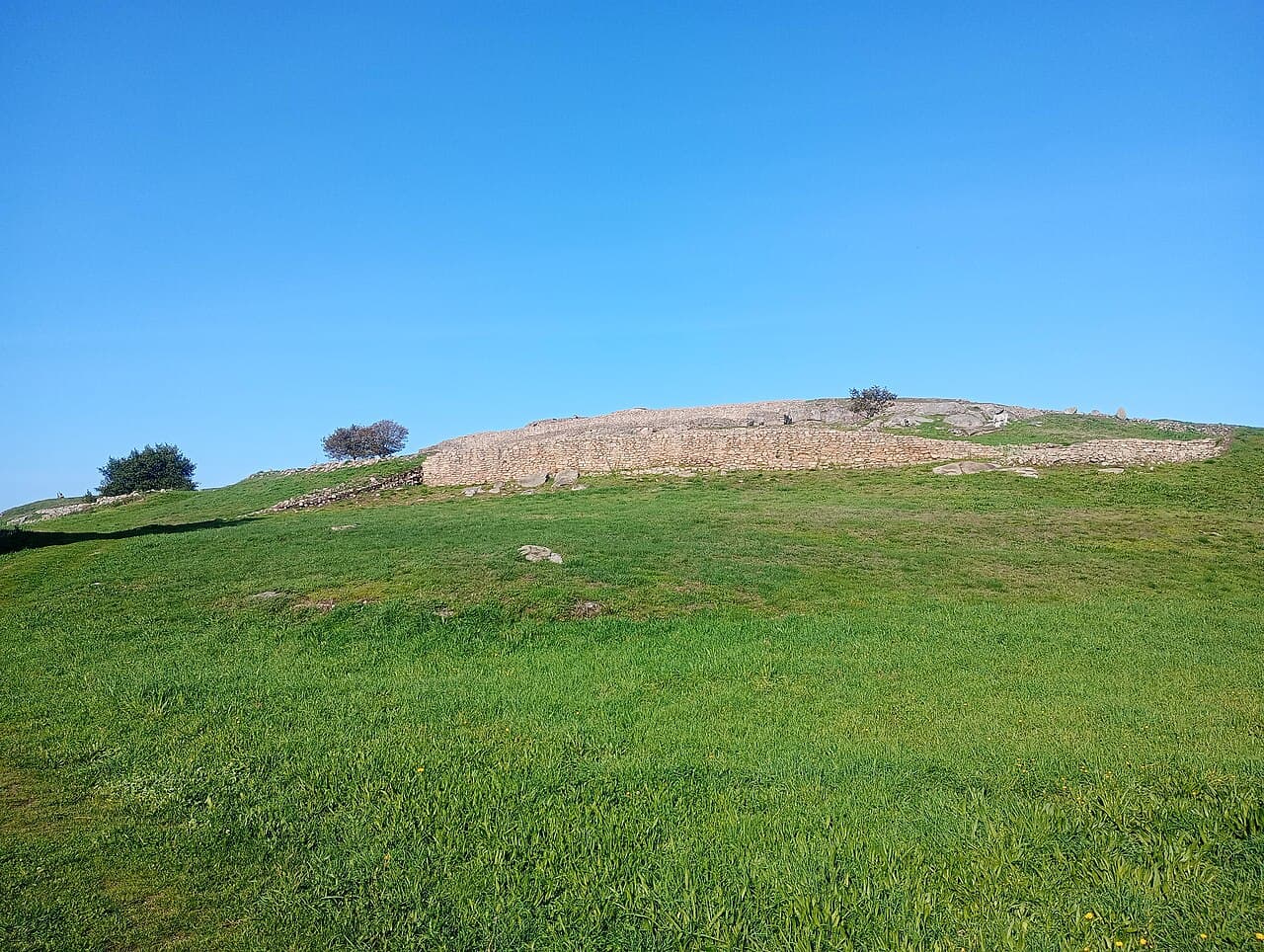
The site consists primarily of ruins of circular and oval stone dwellings typical of the castro settlements. These structures were built with local stone and featured walls that could be several meters thick to withstand attacks. The settlement was enclosed by defensive walls and ramparts, sometimes accompanied by ditches, which enhanced its fortification.
The layout of Castro de Elviña reflects the typical organization of castro settlements, with a central area likely used for communal activities, surrounded by residential buildings. The fort's elevated position allowed inhabitants to monitor approaching threats and control nearby routes.
Excavations and archaeological research
Archaeological investigations at Castro de Elviña have uncovered artifacts such as pottery, tools, and metal objects that shed light on the material culture of its inhabitants. These findings contribute to the understanding of trade, craftsmanship, and daily practices during the Iron Age in Galicia.
Excavations have also helped clarify the chronology of the site, confirming its occupation primarily during the Iron Age with evidence of continued use or reoccupation in later periods. The preservation of the ruins allows visitors and researchers to appreciate the construction techniques and spatial organization of ancient hill forts in the region.
Preservation and public access
Currently classified as archaeological ruins, Castro de Elviña is protected under Spanish heritage laws. The site remains accessible to the public, offering an opportunity to explore the remains of this ancient fortification and learn about the pre-Roman history of Galicia.
Visitors to the site can observe the remnants of the stone walls, building foundations, and the overall layout typical of castro settlements. Interpretive signage and guided tours may be available to enhance the educational experience, although facilities are limited due to the site's archaeological nature.
Castro de Elviña in the broader context of Galician heritage
Castro de Elviña is part of a network of similar hill forts scattered across Galicia, reflecting the widespread presence of the Castro culture in this region. These sites collectively illustrate the complexity and resilience of indigenous societies prior to Roman domination.
Understanding Castro de Elviña contributes to a broader appreciation of Galicia's ancient past and its role in the cultural landscape of northwestern Spain. The site remains a focus for ongoing archaeological study and cultural preservation efforts.
Frequently asked questions (FAQ)
- What is the historical significance of Castro de Elviña?
- Castro de Elviña is an important Iron Age hill fort that provides insights into the pre-Roman Castro culture of Galicia. It reflects the social and defensive strategies of ancient indigenous communities in northwestern Spain.
- Can I visit Castro de Elviña and explore the ruins?
- Yes, Castro de Elviña is accessible to the public as an archaeological site. Visitors can explore the remains of stone dwellings and defensive walls, though facilities may be limited due to its status as ruins.
- When was Castro de Elviña declared a historic monument?
- The site was declared a historic monument in 1962, recognizing its cultural and archaeological importance in Spain.
- What architectural features characterize Castro de Elviña?
- The site features typical castro architecture, including circular stone dwellings, thick defensive walls, ramparts, and ditches, all designed to protect the settlement on its elevated hilltop location.
- Is there evidence of occupation beyond the Iron Age at Castro de Elviña?
- Archaeological research indicates primary occupation during the Iron Age, with some evidence suggesting possible reoccupation or use in later periods, though the main significance lies in its Iron Age context.
Photo gallery

Information
Loading map...
Visitor reviews
No reviews yet. Been here? Write the first review and help other travelers!
Write the first reviewVisited this castle? Share your experience
Your review helps other travelers and adds first-hand knowledge to our encyclopedia.