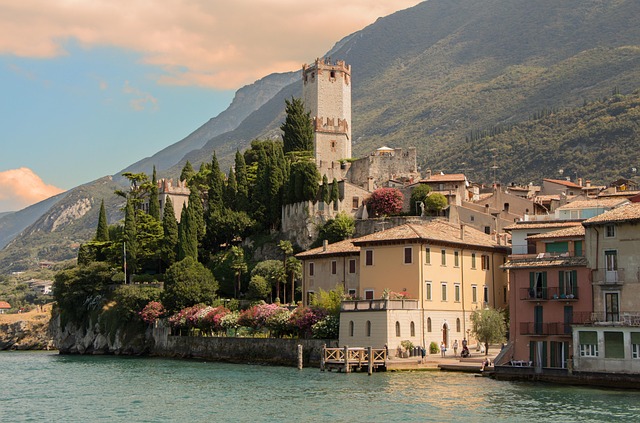
San Giovanni Castle

San Giovanni Castle in Bondone, Italy
Bondone, Italy
High Medieval (11th–13th c.)
Partially Restored

San Giovanni Castle stands prominently on a high rock spur near the village of Bondone in northern Italy, commanding sweeping views over the surrounding landscape. Its strategic position on elevated terrain reflects its historical role as a hill castle designed for defense and surveillance. The castle's origins date back to the 11th century, with the earliest documentary mention occurring in 1086 and a formal record in 1189. These references confirm the castle's significance during the high medieval period, a time when fortifications were vital for controlling territories and trade routes.

Historical context and military significance

During the 15th century, San Giovanni Castle was occupied by Milanese troops, reflecting the turbulent political landscape of northern Italy in the late medieval era. The castle's military function was central to regional power struggles, as various factions vied for control over the alpine passes and local communities. Its robust construction and commanding location made it a valuable stronghold during these conflicts.

Architectural features and construction

The castle exhibits typical characteristics of high medieval hill castles, including thick defensive walls built from local stone and a compact layout adapted to the rocky outcrop. While much of the original structure has undergone changes over the centuries, the remains still showcase elements such as fortified walls, towers, and remnants of gatehouses that once controlled access to the site. The castle's design emphasizes defense, with limited openings and elevated vantage points for observation and protection against attackers.

Renovation and modern use

After centuries of abandonment and decay, San Giovanni Castle was purchased in 1956 by the entrepreneur Milan Luigi Cavalli. Recognizing its historical and architectural value, Cavalli initiated a careful renovation to transform the ruins into a private residence. This restoration preserved many of the castle's medieval features while adapting it for modern habitation. Today, the castle is accessible to visitors, offering a unique opportunity to explore a well-preserved example of medieval fortification combined with 20th-century restoration efforts.

Cultural and touristic importance

San Giovanni Castle is a significant cultural landmark in the Trentino region, attracting tourists interested in medieval architecture, history, and panoramic alpine scenery. Its location near Bondone makes it a popular destination for hikers and history enthusiasts alike. The castle's blend of natural beauty and historical depth provides a compelling experience for visitors seeking to understand the region's medieval past and architectural heritage.

Visitor information

The castle is open to the public, allowing visitors to explore its grounds and appreciate the stunning views from its elevated position. Access is typically seasonal, with guided tours available during warmer months to provide historical context and highlight architectural details. Visitors are encouraged to wear suitable footwear for the rocky terrain and to respect the site's preservation efforts.

Frequently asked questions (FAQ)

How do I get to San Giovanni Castle?
San Giovanni Castle is located in Bondone, Italy, and can be reached by car or public transport. The closest major city is Trento, from where you can take local buses or drive along scenic routes to the castle. Make sure to check local transport schedules for the most convenient options.
What is the historical significance of San Giovanni Castle?
San Giovanni Castle dates back to the 12th century and serves as a testament to the feudal history of the region. Originally built as a defensive structure, it played a crucial role in protecting the area from invasions and has since become a symbol of local heritage. Its rich history attracts many visitors interested in medieval architecture and culture.
When was San Giovanni Castle built?
Construction of San Giovanni Castle began in the early 12th century, around the year 1140. Over the centuries, it underwent several renovations and expansions, reflecting the architectural styles of different periods. This layered history makes the castle a fascinating site for those interested in historical architecture.
Can I take guided tours of San Giovanni Castle?
Yes, guided tours of San Giovanni Castle are available and highly recommended for an enriching experience. These tours provide valuable insights into the castle's history, architecture, and the surrounding area. It's advisable to book a tour in advance, especially during peak tourist seasons.
Why is San Giovanni Castle a popular tourist attraction?
San Giovanni Castle attracts visitors due to its stunning architecture, historical significance, and breathtaking views of the surrounding landscape. The castle's well-preserved structure and fascinating stories from its past make it a must-see for history enthusiasts. Additionally, its location in the picturesque village of Bondone enhances its appeal.
Is it possible to visit San Giovanni Castle year-round?
Yes, San Giovanni Castle is open to visitors year-round, although opening hours may vary depending on the season. It's best to check the official website or contact local tourist information for the most current visiting hours. Be mindful that winter weather may affect accessibility during colder months.
What are the ticket prices for San Giovanni Castle?
Ticket prices for San Giovanni Castle are generally affordable, with discounts available for students, seniors, and groups. Children under a certain age may enter for free. It's recommended to check the official site for the most current prices and any special promotions that might be available.
What is the best time to visit San Giovanni Castle?
The best time to visit San Giovanni Castle is during the spring and early fall when the weather is pleasant, and the surrounding nature is in full bloom. Summer can be busy with tourists, while winter may present challenges due to snow. Visiting during off-peak seasons often allows for a more peaceful experience.
What nearby attractions can I visit while in Bondone?
While visiting San Giovanni Castle, you can explore other nearby attractions such as the charming village of Bondone itself, which offers picturesque views and local eateries. Additionally, hiking trails in the surrounding mountains provide opportunities for outdoor activities. The region's rich history is also reflected in various other historical sites and churches nearby.

Information

Hill Castle

Loading map...

Visitor reviews

No reviews yet. Been here? Write the first review and help other travelers!

Write the first review

Visited this castle? Share your experience

Your review helps other travelers and adds first-hand knowledge to our encyclopedia.

Write a review

(5/5)

0/2000 characters

Your review will be visible after admin approval

Nearby castles

4.5 km

Anfo Rock

, Italy

Rocca d'Anfo is a remarkable military fortress located in the Sabbia Valley near Lake Idro in the province of Brescia, Lombardia, Italy. Constructed in the early 15th century, around 1400, this imposing fortification was strategically positioned to dominate over a kilometer of the lake's shoreline and extend up the slopes of Mount Censo nearly to its summit. The fortress exemplifies the evolution of defensive military architecture during the late medieval period and reflects the military engineering advancements of its time. Historical significance and strategic location The fortress was originally built to control and defend the vital passage along Lake Idro and the surrounding valleys, which were important for trade and military movements. Its elevated position on the rocky terrain provided a commanding view over the lake and the neighboring areas, allowing early detection of approaching enemies. Over the centuries, Rocca d'Anfo played a key role in regional defense, particularly during periods of conflict between local powers and foreign invaders. Architectural features and layout The fortress complex is a sprawling example of military architecture, integrating natural topography with man-made defenses. It includes a series of trenches, ramps, covered roads, and fortified walls that snake up the mountain slopes. The Old Fortress section contains a notable barracks and an elevated gatehouse, which served as a lookout point dominating the entire lake. The gatehouse was equipped with vents that allowed defenders to anticipate enemy movements and prepare accordingly. Additional facilities within the fortress include powder magazines for storing gunpowder, stables for horses, and various military housing units. The integration of these functional elements demonstrates the fortress's role not only as a defensive stronghold but also as a self-sustaining military base capable of housing troops and supplies for extended periods. Defensive systems The design of Rocca d'Anfo incorporates multiple layers of defense. The extensive trenches and battlements provided protection against artillery and infantry assaults. The fortress's location on steep rocky slopes made direct attacks difficult, while the covered roads allowed secure movement of troops and supplies within the complex. These features collectively made Rocca d'Anfo one of the most effective military fortifications in the region. Later uses and preservation efforts With the decline of traditional fortifications due to changes in military technology and tactics, Rocca d'Anfo gradually lost its defensive function. It was repurposed as a barracks for conscript training, a prison, and a powder magazine. Despite these changes, the fortress remained a significant historical monument reflecting the military heritage of Lombardia. Since 2005, the local municipal administration of Anfo and the Mountain Community of Sabbia Valley have undertaken extensive restoration and conservation programs. These efforts aim to preserve the fortress's architectural integrity and promote its cultural and historical value. Today, Rocca d'Anfo stands as a well-preserved example of late medieval military architecture, attracting visitors interested in history, architecture, and the scenic beauty of the region. Visiting Rocca d'Anfo Visitors to Rocca d'Anfo can explore the extensive network of fortified structures, including the gatehouse, barracks, trenches, and powder magazines. The site offers panoramic views of Lake Idro and the surrounding mountains, making it a popular destination for history enthusiasts and hikers alike. The restoration projects have improved accessibility and interpretive signage, enhancing the visitor experience while preserving the site's authenticity.

Late Medieval (14th–15th c.)
Details
21.3 km
Malcesine Castle — Italy castle

Malcesine Castle

Malcesine, Italy

Malcesine Castle, also known as the Castello Scaligero of Malcesine, stands prominently on a rocky promontory in the center of the town of Malcesine, within the province of Verona in the Veneto region of Italy. This historic hill castle overlooks the northern shores of Lake Garda, offering commanding views of the lake and the dramatic cliffs of Mount Baldo. Its strategic location and imposing silhouette have made it a defining landmark of the area for centuries. The origins of Malcesine Castle trace back to the Early Medieval period, with the first fortifications believed to have been established by the Lombards. According to local tradition, the castle was destroyed by the Franks in 590 AD and subsequently rebuilt. Historical anecdotes suggest that King Pepin of Italy, son of Charlemagne, visited the castle in 803, highlighting its early significance in the region. Medieval origins and scaliger reconstruction Following the turbulent period marked by Hungarian raids in the 10th century, the castle became part of the Veronese episcopal properties. Its fortunes changed dramatically in the late 13th century when it came under the control of the powerful Scaliger family, also known as the Della Scala dynasty. The Scaliger lordship, which ruled Verona and its surroundings, undertook extensive reconstruction and fortification of the castle, giving it much of its present-day form. Malcesine Castle was a key element in the Scaligers' network of fortresses around Lake Garda, which included castles at Sirmione, Lazise, Torri del Benaco, and Riva. These castles enabled the Scaligers to exert military and administrative control over the entire lake region. Malcesine served as a residence for the Scaliger family from 1277 until their fall in 1387. Architectural features from the scaliger period The castle exhibits classic medieval military architecture typical of the Scaliger period, characterized by its swallow-tail Ghibelline merlon crenellations, which are visible on the battlements. The defensive walls and towers were designed to withstand sieges and provide vantage points for surveillance of the lake and surrounding lands. The castle's prominent white natural stone medieval tower is a distinctive feature, rising above the rocky outcrop and dominating the town's skyline. Later history: visconti, venetian, and austrian rule After the Scaligers, the castle passed to the Visconti Dukes of Milan until 1403, after which its ownership became contested between the Venetian Republic and the German Empire. The castle was besieged and captured by Venetian forces in 1513, and it remained under Venetian control until the late 18th century. During Venetian rule, Malcesine Castle was an important military and administrative site. The castle's strategic location continued to make it a valuable asset, particularly as part of the Venetian defense system around Lake Garda. In 1786, the castle was famously visited by the German writer Johann Wolfgang von Goethe, who sketched the castle and recounted his experiences in his travelogue Italienische Reise (Italian Journey). The castle briefly experienced French occupation in 1797 during the Napoleonic wars, followed by Austrian control in 1798. From 1805 to 1815, it was part of the Napoleonic Kingdom of Italy, before returning to Austrian rule after the Congress of Vienna. The Austrians fortified the castle further, converting it into a military garrison and ammunition depot. During this period, significant renovations and structural reinforcements were carried out to adapt the castle for modern military needs. Austrian renovations and military use The Austrian period saw the castle's transformation into a fortified military installation within the strategic province of Verona, part of the so-called "quadrilateral" of fortresses. The Austrians constructed a powder magazine within the castle, which was later repurposed as a prison by the Italian Guardia di Finanza after Italy's unification in 1866. The bell cast in 1442 remains in use to this day, serving as a historical artifact connecting the castle's medieval past to the present. Modern era and cultural significance Since 1902, Malcesine Castle has been recognized as a national monument of Italy. It is currently owned by the municipality of Malcesine and functions as a museum dedicated to the natural history of Lake Garda and the nearby Monte Baldo mountain range. The museum offers visitors insights into the region's geological, botanical, and zoological heritage, enriching the cultural experience of the castle beyond its architectural and historical importance. The castle grounds also host an open-air theater, sheltered by white tents adjacent to the structure, which serves as a venue for cultural events and performances, further integrating the castle into the community's cultural life. Visitor experience and accessibility Visitors to Malcesine Castle can explore its well-preserved medieval fortifications, climb the high tower for panoramic views of the lake and mountains, and tour the museum's exhibits. The castle is open to the public for a modest entrance fee, with visiting hours typically accommodating tourists during the warmer months. Its location in the picturesque town of Malcesine, with its charming streets and lakeside promenade, makes it a popular destination for history enthusiasts and travelers seeking to experience the rich heritage of northern Italy. The castle's dramatic setting on a rocky outcrop overlooking the lake, combined with its layered history from Lombard origins through Scaliger dominance, Venetian and Austrian military use, to its current role as a cultural monument, makes Malcesine Castle a fascinating example of the evolution of medieval fortifications in Italy. Archaeological and historical findings Within the castle walls, remnants of an Etruscan tomb have been discovered, indicating the site's long-standing strategic and cultural importance predating the medieval period. This archaeological evidence enriches the narrative of the castle, linking it to ancient civilizations that once inhabited the region. The castle's continuous adaptation over more than a millennium reflects the shifting political and military landscape of northern Italy, from Lombard and Frankish control through the rise and fall of regional powers like the Scaligers and Visconti, to the dominance of Venice and Austria.

Early Medieval (5th–10th c.)
Details
24.1 km

San Felice Castle

San Felice del Benaco, Italy

San Felice Castle, known locally as Castello di San Felice, is a medieval fortress situated in the village of San Felice del Benaco within the Brescia province of the Lombardy region in Italy. The castle occupies a historically strategic position overlooking the area near Lake Garda, reflecting the turbulent political and military history of northern Italy during the Middle Ages and Renaissance. The castle was first documented in 1331 in a record associated with the Counts of Castelbarco, yet its origins trace back to the aftermath of the destruction of the nearby castle of Scovolo by forces from the city of Brescia in 1279. This event prompted the construction of San Felice Castle as a new defensive stronghold to assert control over the surrounding territory. The strategic role and military history During the 15th century, the castle became a significant military asset amid the conflicts between the Duchy of Milan and the Venetian Republic. In 1438, the castle was seized by Niccolò Piccinino, a renowned condottiero serving the Milanese Visconti family. Piccinino used San Felice Castle as a base for conducting raids in the Brescia region. However, the Venetians recaptured the fortress in 1440. Recognizing its strategic importance, they reinforced the castle in 1483 during the War of Ferrara, enhancing its defensive capabilities. Despite these efforts, the castle remained a contested site and was frequently attacked in the ongoing regional conflicts. The castle met significant destruction in 1509 during the Italian Wars, when it was deliberately demolished on the orders of the French cardinal and statesman George d'Amboise. The fortress was rebuilt in 1521 after it was restored to Venetian control. Although it faced raids, including incursions by German troops under the Duke of Brunswick in 1528, the castle's military significance gradually diminished in the following centuries. Architectural features and current remains Originally, San Felice Castle likely featured a roughly square ground plan with a prominent keep positioned centrally along the western curtain wall. The defensive design would have included curtain walls and multiple corner towers to provide overlapping fields of fire and secure the perimeter. Today, only partial ruins survive, including the base sections of the curtain walls, two corner towers, and the gate tower. Notably, the gate tower has been repurposed as a bell tower for the adjacent parish church, integrating the castle's medieval heritage into the modern village landscape. The surviving corner tower is distinctive for its robust construction and remains a key visual element of the site. The castle grounds have been adapted for use as a cemetery and ossuary, a function that has preserved the site from further demolition but altered its original military character. Decline and cultural significance Following the loss of its strategic role, San Felice Castle fell into ruin. Local inhabitants quarried the stone from the ruins for building materials, a common fate for many abandoned medieval fortifications. Additionally, the castle walls became a burial site, reflecting the community's evolving relationship with the historic structure. Despite its modest remains, San Felice Castle offers insights into the military architecture and regional power struggles of northern Italy from the late medieval period through the Renaissance. The castle's integration into the village cemetery and the conversion of the gate tower into a bell tower illustrate adaptive reuse of historic structures in rural Italy. Visiting San Felice Castle today The castle grounds, now serving as a cemetery, are freely accessible during daytime. While the site may not attract visitors seeking grand or fully intact fortresses, the peculiar corner tower and the historical layering visible in the ruins provide a unique perspective on the area's past. Its location in the scenic Lombardy region near Lake Garda also makes it a point of interest for those exploring the cultural heritage of northern Italy.

Late Medieval (14th–15th c.)
Details