San Carlos Fortress
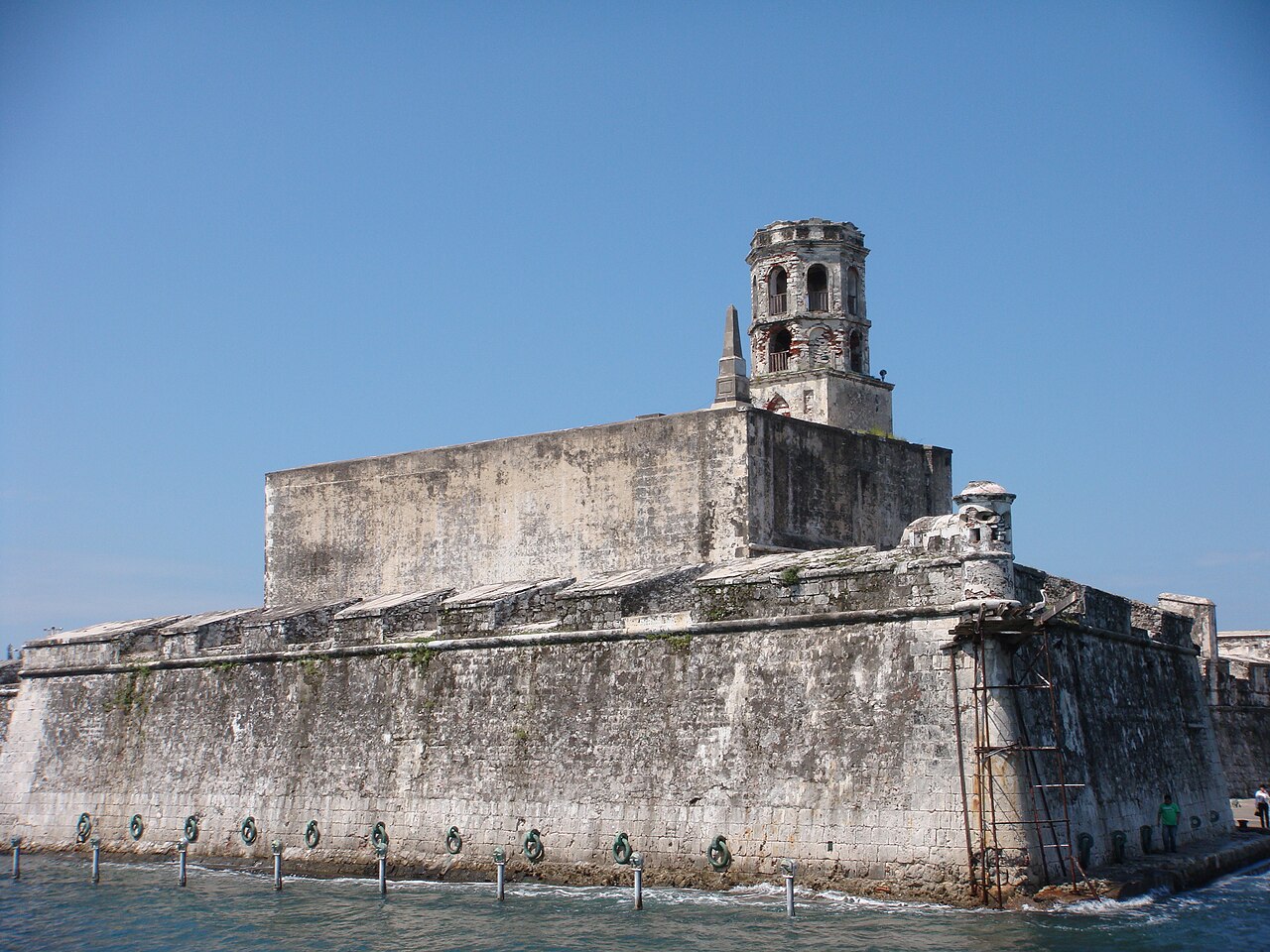
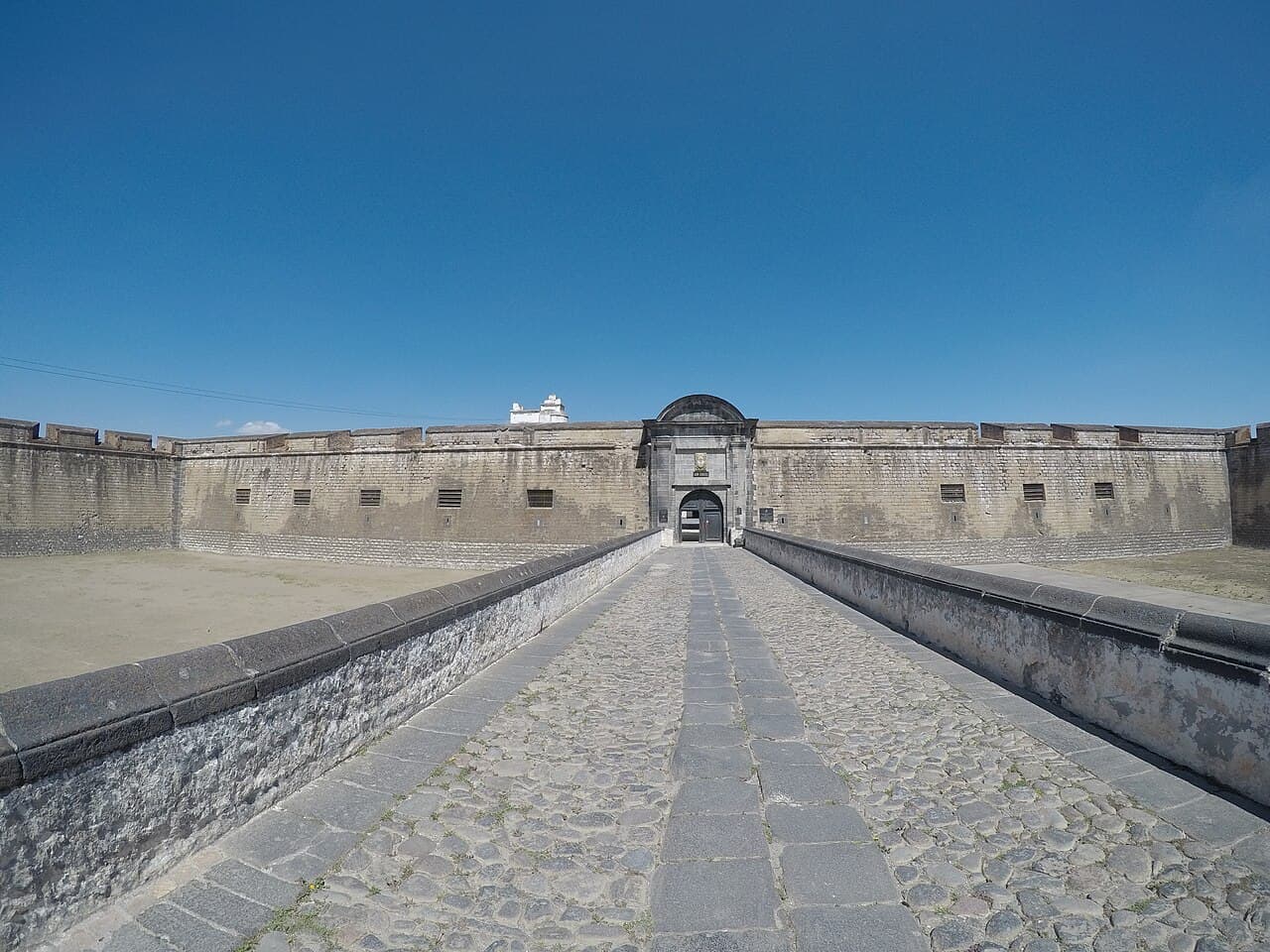
The San Carlos Fortress (Spanish: Fortaleza de San Carlos) is a prominent 18th-century bastioned fortress located in the city of Perote, within the Mexican state of Veracruz. Constructed between 1770 and 1776 under the direction of Manuel de Santisteban, the fortress was originally designed as a strategic military guard post and a secure repository for treasure awaiting shipment to Spain. Its robust bastioned design reflects the military engineering principles of the post-Renaissance period, emphasizing strong defensive walls and angular bastions to repel artillery attacks.
Architectural features and military design
The fortress exemplifies the bastioned fortress typology common in the 18th century, characterized by thick stone walls, low and angled bastions, and a layout optimized for cannon defense. Its walls are constructed from locally sourced stone, providing durability against siege weaponry. The fortress's design includes multiple bastions positioned at strategic points to cover all approaches with overlapping fields of fire, a moat that once surrounded the structure, and fortified gates allowing controlled access. Inside, the complex housed barracks, armories, and storage rooms, arranged around a central courtyard to facilitate troop movements and defense.
Historical significance and military use
Following Mexico's War of Independence, the fortress transitioned from a Spanish colonial stronghold to a key military installation for the nascent Mexican state. In 1823, General Guadalupe Victoria, the first President of Mexico, established the Perote Military College within the fortress complex, marking its importance in military education and national defense.
Prison for texan expedition survivors
Between 1841 and 1844, the fortress served as a prison for soldiers from the Republic of Texas, including survivors of the Texan Santa Fe Expedition, the Dawson Massacre, and the Mier Expedition. Approximately 300 members of the failed Santa Fe expedition were detained during the harsh winter of 1841–42. Later, around fifty men captured by General Adrián Woll in 1842, including Dawson's company members, were confined here. In 1843, about 160 survivors of the Mier Expedition were imprisoned after forced labor near Mexico City. These prisoners faced severe conditions, with many succumbing to wounds, disease, or starvation, while others escaped or were released through diplomatic efforts.
Role in mexican-american war and later conflicts
During the Mexican–American War (1846–1848), the fortress was captured by American forces on April 22, 1847. The U.S. military used San Carlos as a garrison to secure the vital communication route between Veracruz and Mexico City, protecting it from guerrilla attacks. The fortress's strategic location and robust defenses made it an essential military asset during this conflict.
20th-century use and preservation
At the close of World War II, after Mexico declared war on the Axis powers, San Carlos Fortress was repurposed as a prison for German and Italian detainees. Subsequently, from 1949 until March 2007, it functioned as a state prison. Following its decommissioning as a penitentiary, the fortress was opened to the public, allowing visitors to explore its extensive military and penal history.
Notable figures and events
General Guadalupe Victoria, Mexico's first president, died within the fortress complex in March 1843 while receiving medical treatment for epilepsy. His association with the site underscores its historical importance beyond military functions. The fortress also witnessed significant events tied to Mexico's turbulent 19th-century history, including the imprisonment of Texan soldiers and its role in the Mexican–American War.
Cultural and heritage importance
Today, the San Carlos Fortress stands as a well-preserved example of post-Renaissance military architecture in Mexico. It offers insight into colonial military strategies, the country's struggle for independence, and 19th-century conflicts involving the United States and Texas. The fortress is a cultural landmark in Veracruz, attracting historians, architects, and tourists interested in Mexico's colonial and military heritage.
Visiting information and accessibility
Since its opening to the public in 2007, the fortress has been accessible for tours that showcase its bastioned walls, dungeons, courtyards, and historical exhibits. Visitors can learn about its architectural features and the varied roles it played over centuries. The site provides educational programs and guided tours, enhancing understanding of its significance in Mexican history.
Frequently asked questions (FAQ)
- What is the historical significance of San Carlos Fortress?
- San Carlos Fortress, built in the 19th century, served as a crucial military stronghold during Mexico's struggles for independence and later conflicts. Its strategic location allowed it to command the surrounding region, making it an essential site in Mexican history.
- When was San Carlos Fortress constructed?
- The construction of San Carlos Fortress began in 1775 and was completed in 1784. This impressive structure was built to protect the city of Perote from potential invasions and to serve as a military garrison.
- What are the opening hours for visitors?
- San Carlos Fortress is open to visitors from Tuesday to Sunday, from 10:00 AM to 5:00 PM. It is closed on Mondays, so be sure to plan your visit accordingly.
- Can I buy tickets in advance to visit San Carlos Fortress?
- Yes, visitors can purchase tickets at the entrance of San Carlos Fortress. However, it's advisable to arrive early, especially during peak tourist seasons, to avoid long wait times.
- Is San Carlos Fortress accessible for visitors with disabilities?
- Yes, San Carlos Fortress has made efforts to accommodate visitors with disabilities. There are accessible pathways and facilities, but it’s recommended to check in advance for the best experience.
- What is the best time to visit San Carlos Fortress?
- The best time to visit San Carlos Fortress is during the cooler months, from November to March, when temperatures are more comfortable for outdoor exploration. Additionally, visiting during weekdays may help you avoid larger crowds.
- Are there nearby attractions to visit after San Carlos Fortress?
- Yes, there are several attractions nearby, including the historic center of Perote and the beautiful natural landscapes of the surrounding area. The nearby Mexican Revolution Museum also offers insight into the local history.
- How do I get to San Carlos Fortress from the city center?
- San Carlos Fortress is easily accessible from the city center of Perote by walking or a short taxi ride. The fortress is located just a few minutes away, making it a convenient stop during your visit.
- What architectural features should I look for at San Carlos Fortress?
- San Carlos Fortress showcases a blend of military architecture with its imposing stone walls, bastions, and strategic layout. Visitors can appreciate the fortress's design, which reflects the military needs of its time and the historical context of its construction.
Photo gallery

Information
Loading map...
Visitor reviews
No reviews yet. Been here? Write the first review and help other travelers!
Write the first reviewVisited this castle? Share your experience
Your review helps other travelers and adds first-hand knowledge to our encyclopedia.