Sahood Fort
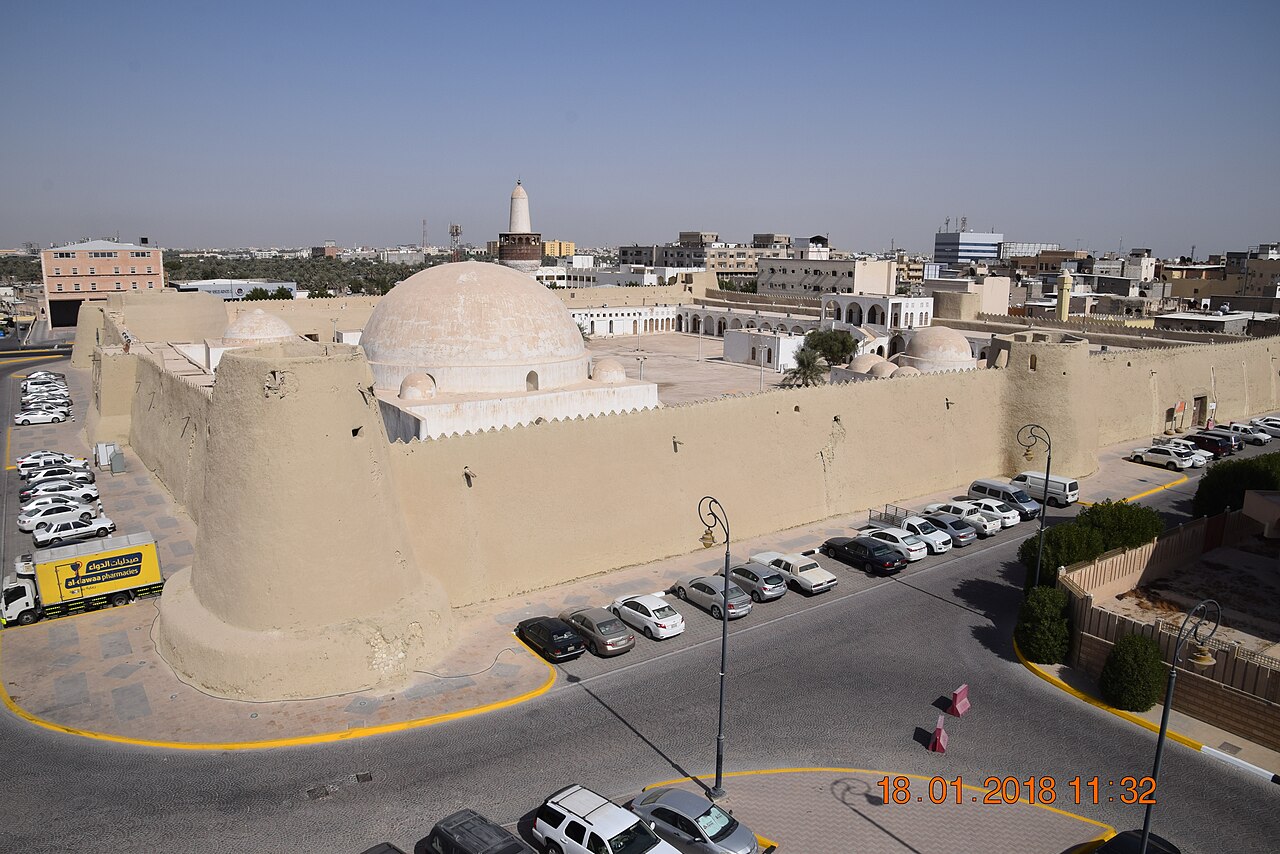
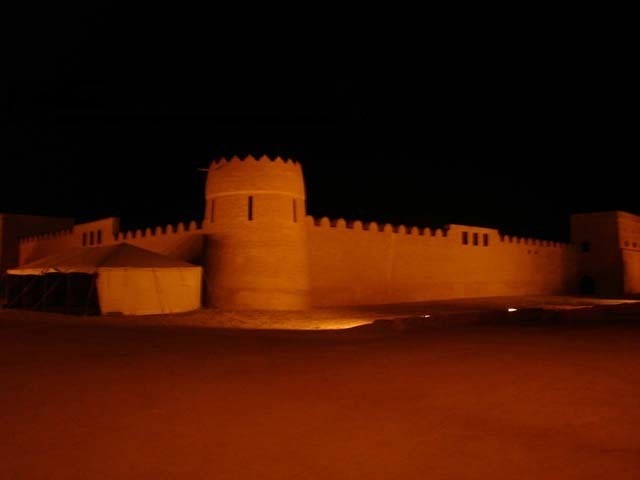
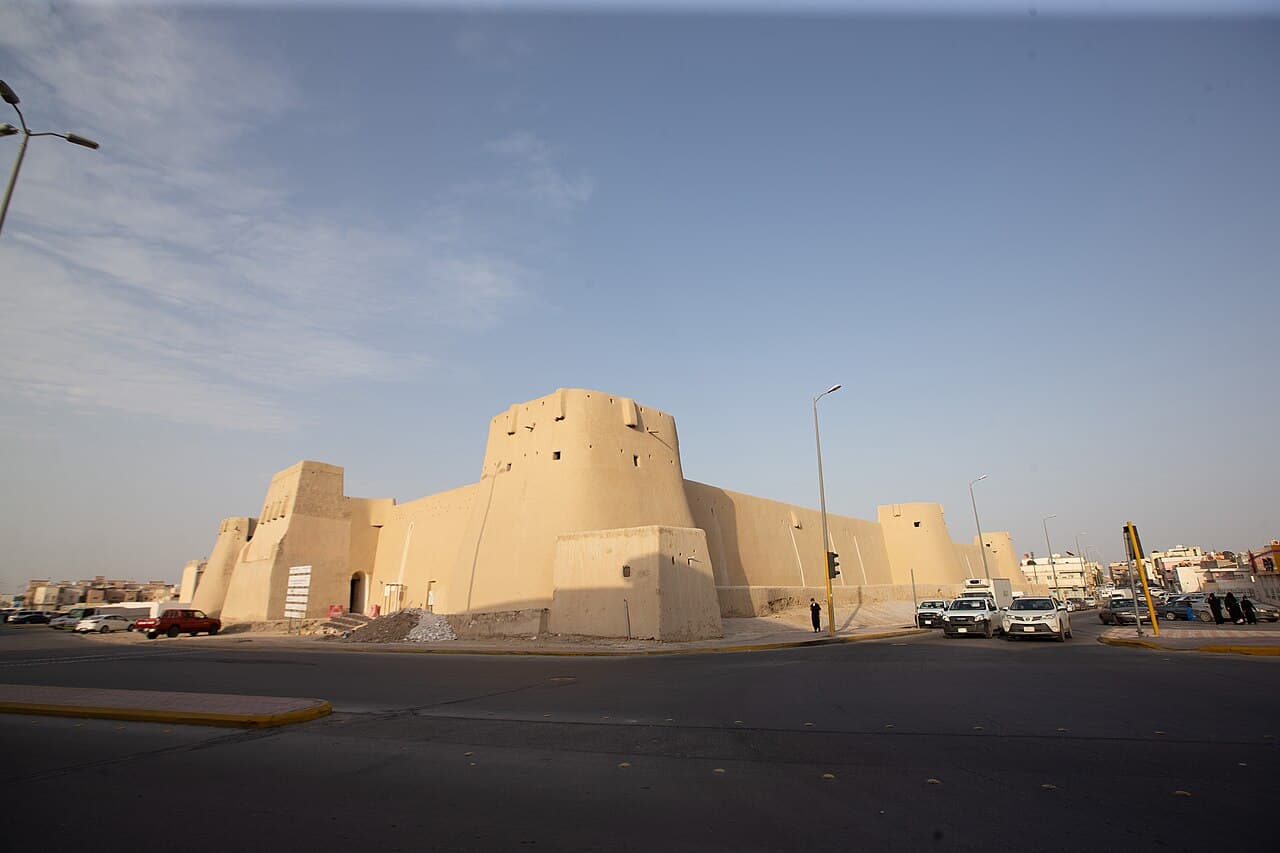
Sahood Fort stands just outside the western walls of Al Mubarraz city in the Al-Ahsa region of Saudi Arabia. This hill castle was constructed by local Arab settlers as a defensive stronghold to protect the city and its fertile agricultural lands from frequent Bedouin raids. It also served to secure nearby seasonal Bedouin encampments, reflecting its strategic role in regional security and tribal conflicts.
Historical background and significance
The exact origins of Sahood Fort are debated among historians, but most sources place its initial construction in the late 7th century Hijri, roughly the late 13th century CE. During this period, the fort became the principal stronghold of the Bani Khaled tribe under the leadership of their prince, Barrack. Notably, Barrack used the fort as a base to successfully expel Ottoman Turkish forces from the Al-Ahsa region in 1082 Hijri (1671-1672 CE).
Other historical accounts attribute the founding or significant reconstruction of the fort to Imam Saud bin Abdul-Aziz bin Muhammad in the early 13th century Hijri (18th to 19th century CE), indicating the fort's continuing military and administrative importance over several centuries.
Throughout the 18th century, Sahood Fort was a focal point in the power struggles between the emerging Saudi state and the Bani Khaled tribe. Between 1176 and 1208 Hijri (1762-1793 CE), the fort witnessed numerous military engagements, including a pivotal siege of Al Mubarraz in 1208 Hijri (1793 CE), which resulted in the reassertion of Saudi control over the Al-Ahsa region.
One of the most dramatic episodes in the fort's history occurred in 1214 Hijri (1799 CE) when it withstood a major siege by a substantial Ottoman force led from Baghdad. Despite being defended by only about 100 Saudi soldiers, the fort resisted repeated assaults and heavy artillery bombardment for two months, ultimately repelling the attackers and preserving Saudi sovereignty in the region.
Following this siege, the fort suffered significant damage but was extensively rebuilt after the Ottoman withdrawal. When Ottoman forces returned to occupy Al-Ahsa in 1288 Hijri (1871 CE), Sahood Fort was repurposed as a police station, staffed by a small garrison of six soldiers, reflecting a shift from military fortress to administrative post.
In the early 20th century, the fort's strategic military role diminished due to changing political and military dynamics. A brief Bedouin siege in 1905 was limited in scale, and by 1950, the fort housed only a small military detachment before being largely abandoned as modernization rendered such fortifications obsolete.
Today, Sahood Fort has been restored and continues to serve the Saudi Arabian Armed Forces, maintaining its long-standing association with defense and military activity.
Architectural features and construction techniques
Sahood Fort is primarily constructed from mud bricks coated with a layer of clay plaster, a traditional local building method that provides excellent insulation against the harsh desert climate and protects the structure from weathering. The fort's defensive walls are notable for their double-layer construction: two parallel mud brick walls are connected by palm trunks, an ancient technique that binds the walls together and significantly enhances their structural strength.
The space between these parallel walls is filled with a mixture of stones and mud, creating a solid, resilient barrier designed to withstand attacks and artillery fire. Surrounding the fort is a deep trench or moat, which served as a physical obstacle to hinder direct assaults and prevent enemies from easily reaching the walls.
The fort's exterior is punctuated by several towers attached to the defensive walls. Each tower has two floors accessible via internal stairs, allowing defenders to gain elevated vantage points for surveillance and to launch defensive actions against attackers. This design reflects a sophisticated understanding of military architecture adapted to the local environment and threats.
The main gate of Sahood Fort faces west toward the nearby Al Hazm suburb and features a bent entrance design. This architectural choice complicates enemy entry by forcing attackers to navigate turns rather than a direct, straight path, thereby enhancing the fort's defensibility. Above the gate is a rectangular surveillance room that functions both as a lookout post and a connector to the soldiers' living quarters.
Internal layout and functional spaces
Inside the fort, adjacent to the southeastern side of the entrance, is a multipurpose area containing a storehouse and a well. The well provided a reliable water source critical for sustaining the fort's inhabitants during prolonged sieges. North of the entrance lies a square-shaped room, likely used as additional functional space for storage or administrative purposes.
A rectangular mosque within the fort served the religious needs of its occupants. This mosque includes a mihrab, a niche indicating the direction of Mecca for prayer, and a pulpit supported by five columns topped with four arches each, demonstrating architectural attention to religious and cultural practices.
Along the southeastern corner of the fort is a council chamber overlooking the well, suggesting its use for strategic meetings and planning close to essential resources. The northwestern corner houses horse stables, underscoring the fort's role in military logistics and mobility.
Bathrooms are located along the northern walls, indicating a consideration for sanitation and hygiene within the fort's design.
Restoration and current use
The entire structure of Sahood Fort has undergone restoration efforts to preserve its architectural integrity and historical significance. These efforts have ensured that the fort remains structurally sound and capable of serving modern functions.
Currently, the fort functions as barracks for the Saudi Arabian Armed Forces, continuing its centuries-old association with military defense and regional security. Its preservation allows visitors and scholars to appreciate the blend of traditional Arabian military architecture and the historical events that shaped the region.
Cultural and heritage importance
Sahood Fort embodies the military, administrative, and religious facets of the societies that inhabited the Al-Ahsa region over several centuries. Its architecture reflects local building techniques adapted to the desert environment and the evolving demands of defense against both tribal and imperial forces.
The fort's history is intertwined with key regional powers such as the Bani Khaled tribe, the Saudi state, and the Ottoman Empire. Its survival through sieges and battles marks it as a significant monument in the historical narrative of eastern Saudi Arabia.
As a well-preserved example of a hill castle in the Arabian Peninsula, Sahood Fort offers valuable insights into the military strategies, architectural innovations, and cultural practices of the region's past.
Frequently asked questions (FAQ)
- How do I get to Sahood Fort?
- Sahood Fort is located in Al Mubarraz, Saudi Arabia, easily accessible by car or local transport. Visitors can reach the fort by taking the main roads leading from nearby cities, and GPS directions are typically reliable for navigation.
- What is the historical significance of Sahood Fort?
- Sahood Fort holds great historical significance as it served as a strategic military stronghold in the region. It reflects the architectural style and defensive needs of its time, showcasing the heritage of Saudi Arabia.
- When was Sahood Fort built?
- Sahood Fort was constructed in the early 19th century, during a time of regional conflict and change. Its design and structure are indicative of the military architecture of that era, making it a notable historical landmark.
- Can I take guided tours of Sahood Fort?
- Yes, guided tours are available at Sahood Fort, allowing visitors to learn about its history and architecture from knowledgeable guides. These tours enhance the experience and provide deeper insights into the fort's significance.
- Why is Sahood Fort important for architecture enthusiasts?
- Sahood Fort is an excellent example of traditional Saudi military architecture, featuring unique design elements that reflect the local culture and environment. Its construction techniques and materials offer valuable insights into the architectural practices of the period.
- Is it possible to visit Sahood Fort year-round?
- Yes, Sahood Fort is open for visitors throughout the year. However, the best time to visit is during the cooler months, typically from October to March, when the weather is more pleasant for exploring.
- What are the opening hours for Sahood Fort?
- Sahood Fort generally opens to visitors from 9 AM to 6 PM daily. It's recommended to check in advance for any seasonal changes or special events that may affect these hours.
- Are there any nearby attractions to Sahood Fort?
- Yes, there are several nearby attractions, including historical sites and cultural centers in Al Mubarraz. Visitors can explore local markets and museums that showcase the rich heritage of the region, making for a full day of exploration.
- What are the ticket prices for visiting Sahood Fort?
- Ticket prices for Sahood Fort are quite affordable, with discounts available for students and groups. It's advisable to check the official website or local tourism offices for the most current pricing information before your visit.
Photo gallery

Information
Website
Visit websiteSources & official resources
Verify the information above using these authoritative references.
Loading map...
Visitor reviews
No reviews yet. Been here? Write the first review and help other travelers!
Write the first reviewVisited this castle? Share your experience
Your review helps other travelers and adds first-hand knowledge to our encyclopedia.