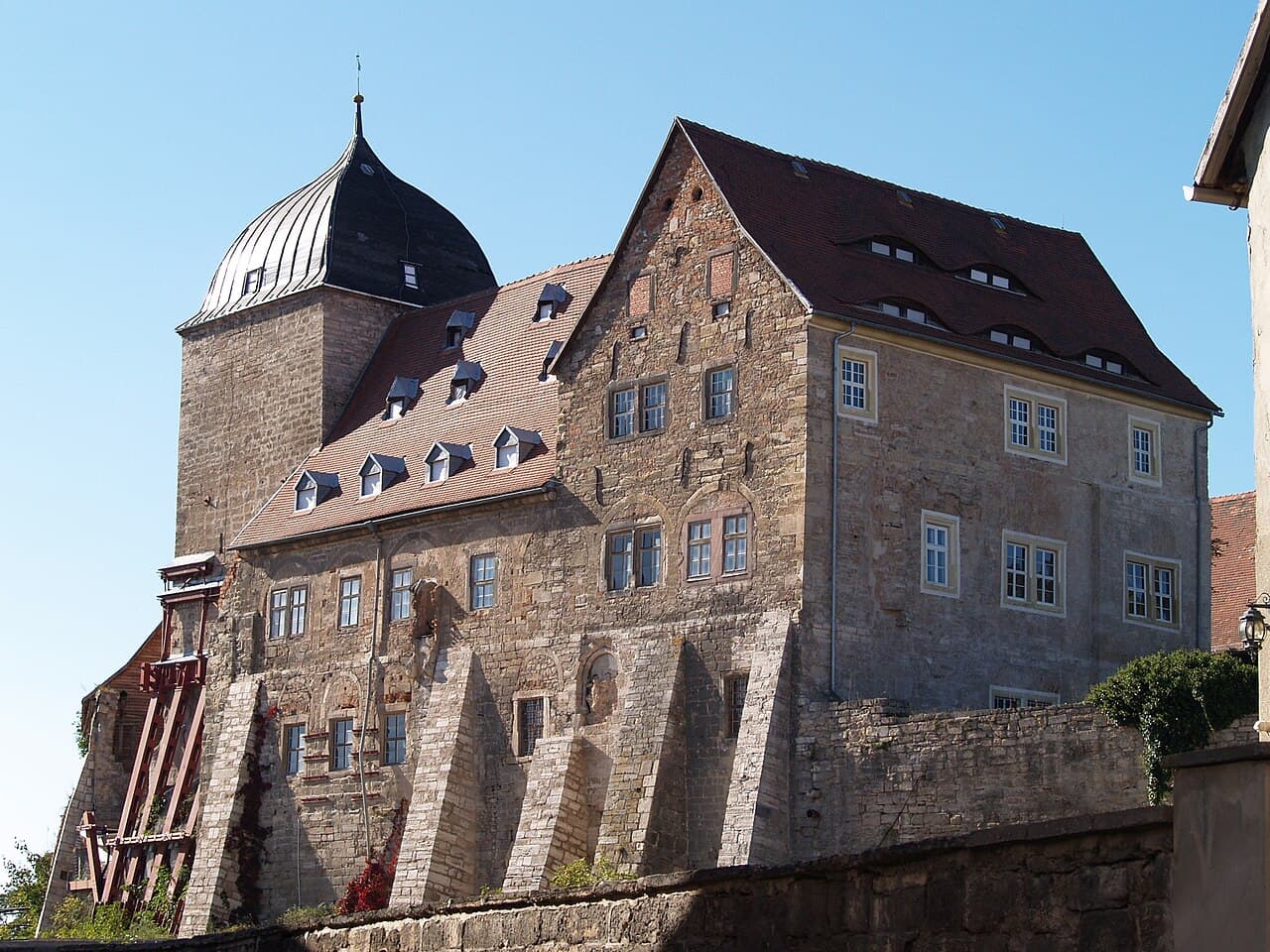
Historical context and significance
The 12th century was a period of extensive castle building across Europe, driven by the need for fortified residences for nobility and strategic military outposts. Runneburg castle fits within this broader context as a stronghold designed to assert control over the surrounding territory and protect local interests. Its construction during the High Medieval period reflects the feudal system's emphasis on territorial defense and administration.
While specific historical records about Runneburg castle's original builders and occupants are limited, it is consistent with other German hill castles of the era that served both defensive and administrative roles. The castle likely functioned as a residence for local lords and a center for managing estates and local justice.
Architectural features and construction
Runneburg castle exhibits typical characteristics of hill castles from the 12th century. Its strategic placement atop a hill provided natural fortification, reducing the need for extensive artificial defenses on certain sides. The castle would have included a keep or donjon as the central stronghold, surrounded by defensive walls and possibly a bailey or courtyard area.
The construction methods of the period involved thick stone walls designed to withstand sieges and attacks. The castle's layout prioritized defense, with narrow entrances, battlements, and towers positioned to oversee approaches. Although the specific architectural style is generally Romanesque transitioning into early Gothic during this period, Runneburg's surviving structures or ruins would reflect these influences.
Defensive elements
The castle's hilltop location was its primary defense, supplemented by features such as a moat or ditch, strong gatehouses, and towers for archers. The walls would have been crenellated, allowing defenders to fire upon attackers while remaining protected. These features were standard in High Medieval hill castles to resist sieges and raids common in the era.
Later history and current condition
Over the centuries, Runneburg castle experienced changes typical of medieval fortifications, including periods of repair, partial destruction, and adaptation to new military technologies. Like many castles from the High Medieval period, it may have lost its original military function as warfare evolved and centralized states emerged.
Today, Runneburg castle stands as a partially preserved hill castle, with some ruins or restored sections visible. It serves as a cultural heritage site that offers insights into medieval fortification architecture and regional history. Visitors can explore the remains and appreciate the castle's strategic location and historical significance.
Visiting Runneburg castle
While specific visitor information such as hours and ticket prices may vary, hill castles like Runneburg typically offer access to their grounds and ruins, often with interpretive signage explaining the site's history and architecture. The castle's elevated position also provides scenic views, making it a popular destination for history enthusiasts and hikers.
Runneburg castle exemplifies the defensive ingenuity and architectural style of the High Medieval period in Germany, making it a valuable site for understanding the region's medieval past.
Frequently asked questions (FAQ)
- How do I get to Runneburg Castle?
- Runneburg Castle is easily accessible by car and public transportation. If you're driving, there are designated parking areas nearby. For those using public transport, local buses and trains connect to the nearest town, from which you can enjoy a scenic walk to the castle.
- What is the historical significance of Runneburg Castle?
- Runneburg Castle dates back to the 13th century and played a crucial role in the regional defense during the Middle Ages. It served as a noble residence and has witnessed many historical events, making it an important site for understanding the local history of Germany.
- When was Runneburg Castle built?
- The construction of Runneburg Castle began in the early 1200s and was completed in the late 13th century. Over the centuries, it has undergone various renovations, reflecting different architectural styles and historical periods.
- Can I take guided tours of the castle?
- Yes, guided tours are available at Runneburg Castle. These tours provide in-depth insights into the castle's history, architecture, and its role in regional events. It's recommended to book in advance, especially during peak tourist seasons.
- Why is Runneburg Castle a popular tourist destination?
- Runneburg Castle is popular for its stunning architecture, rich history, and breathtaking views of the surrounding landscape. Visitors are often drawn to its well-preserved structures and the fascinating stories that bring the castle's past to life.
- Is it possible to visit Runneburg Castle with children?
- Absolutely! Runneburg Castle is family-friendly and offers activities that engage children and adults alike. The grounds are spacious for exploration, and the guided tours can be adapted to keep younger visitors entertained.
- What are the opening hours for Runneburg Castle?
- Runneburg Castle is open to visitors from 10 AM to 6 PM daily during the tourist season, which runs from April to October. During the off-peak months, hours may vary, so it's advisable to check the official website before your visit.
- What are the ticket prices for visiting Runneburg Castle?
- Ticket prices for Runneburg Castle are generally affordable, with discounts available for children, seniors, and families. A single adult ticket typically costs around 8 euros, while children under 12 often enter for free.
- What nearby attractions can I explore while visiting Runneburg Castle?
- While visiting Runneburg Castle, you can also explore the charming town that surrounds it, offering quaint shops and local eateries. Additionally, nearby parks and hiking trails provide opportunities for outdoor activities, making it a perfect day trip destination.
Photo gallery

Information
Loading map...
Visitor reviews
No reviews yet. Been here? Write the first review and help other travelers!
Write the first reviewVisited this castle? Share your experience
Your review helps other travelers and adds first-hand knowledge to our encyclopedia.


