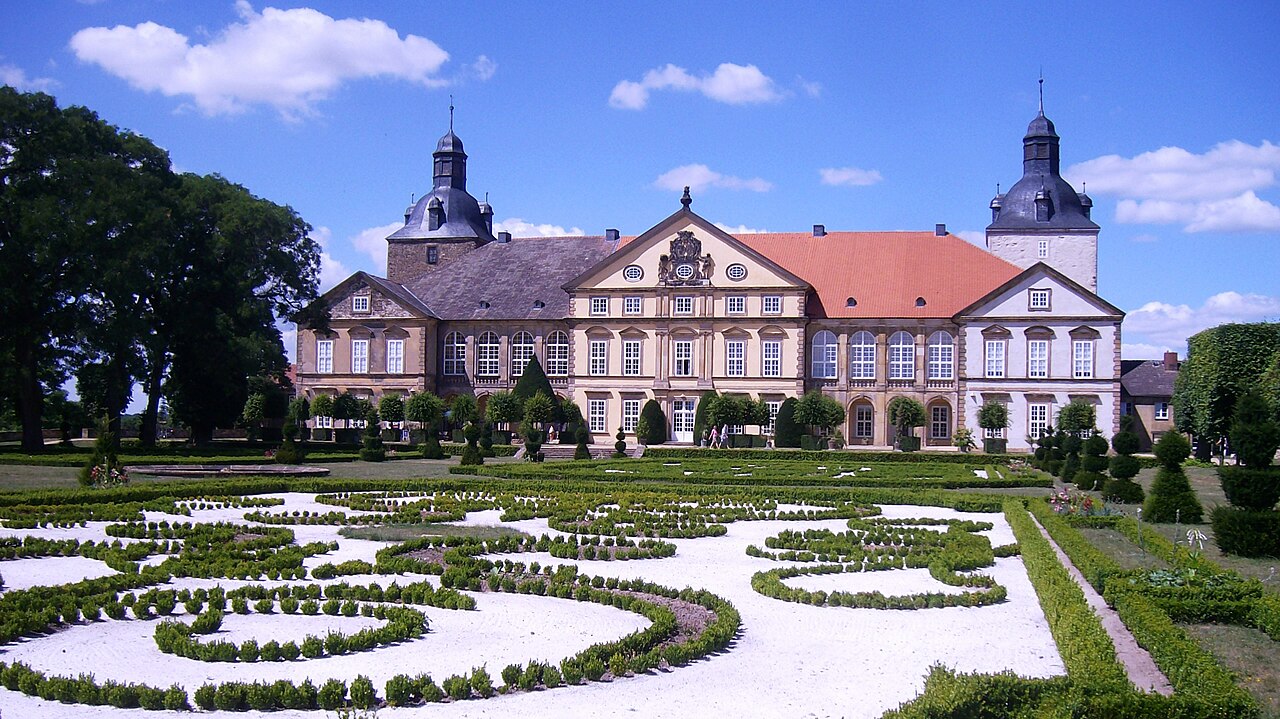
Rogätz Castle
Rogätz Castle stands as a significant historical monument on the western bank of the Elbe River in the municipality of Rogätz, Germany. Originally constructed in the 10th century by Saxon rulers, the castle was established as a fortified border post to defend against incursions by Slavic groups. This early medieval stronghold played a crucial role in the territorial defense and control of trade routes along the Elbe, marking it as an important strategic and economic site in the region.
The earliest documented mention of the settlement at Rogätz dates to 1144, when King Conrad III confirmed the donation of the village by Count Otto of Hillersleben to the Bishop of Havelberg. Over the subsequent centuries, Rogätz Castle became a focal point of territorial disputes, primarily between the Margraves of Brandenburg and the Archbishops of Magdeburg. This rivalry culminated in the 1449 Treaty of Zinna, which definitively granted the castle and its surrounding lands to the Archbishopric of Magdeburg, solidifying its ecclesiastical control.
Historical ownership and economic significance
In 1369, the castle along with its governing rights, including toll collection on the Elbe River, was sold by Archbishop Albrecht to the Alvensleben family, specifically the Red Line branch. The Alvenslebens held the estate for nearly five centuries, until 1850, maintaining extensive control over the surrounding lands and river traffic. A legendary symbol of their authority was a golden chain reputed to encircle the castle’s tower foundation, which physically enforced toll and staple rights by barring river traffic until passage fees were paid.
The cultural peak under Joachim I von Alvensleben
During the late 16th century, Rogätz Castle experienced a cultural flourish under the stewardship of Joachim I von Alvensleben, a noted humanist lord who championed the arts and scholarship between 1570 and 1582. This period marked a renaissance in the castle’s role not only as a military and economic center but also as a hub of intellectual and cultural activity within the region.
Destruction and decline
The castle suffered severe damage during the Thirty Years’ War, particularly in 1626, when it was contested and changed hands between Imperial and Danish forces. A devastating fire during this conflict destroyed much of the fortress, and the castle was never rebuilt to its former military grandeur. Despite the loss of the main structure, the Alvensleben family continued to administer the estate through appointed officials until 1796.
Subsequent ownership passed through several hands until 1945. Notably, the estate was home to the renowned physicist Max Planck during the Second World War, linking the site to modern scientific history.
Architectural features and surviving structures
Originally, Rogätz Castle was a four-winged complex built in the Renaissance style. Archaeological investigations and historical illustrations suggest that its layout and appearance resembled nearby Schloss Wolmirstedt, a similar episcopal residence known from mid-17th-century depictions. The castle grounds were divided into an upper and lower bailey, both once enclosed by defensive fortifications that underscored the castle’s military importance.
Today, the only surviving part of the original castle is the Klutturm, a prehistoric tower prominently located at the confluence of the Elbe and Ohre rivers. This tower serves as a tangible reminder of the site’s ancient origins and continuous occupation through centuries of history.
The castle chapel and parish church
Following the Reformation in 1558, the castle chapel’s tower was converted into the village parish church. The church tower now features a distinctive Baroque-style roof dating from around 1700. Inside, visitors can find memorial plaques honoring former owners, complemented by an intricately carved baptismal font commemorating the lords of Rogätz, reflecting the castle’s religious and community significance.
Legacy and modern condition
The castle estate’s historical economic privileges, particularly the enforcement of tolls on river traffic, are symbolized by the legendary golden chain that once barred passage on the Elbe. This feature highlights the castle’s critical role in controlling trade and asserting regional power.
By the 20th century, a reconstruction illustration created in 1935 by Anco Wigboldus depicted Rogätz Castle as it appeared around 1895. The image shows the main defensive tower, or bergfried, and the surrounding landscape shaped by the confluence of the Ohre and Elbe rivers. However, this depiction does not include later additions such as the 1898 manor house designed by Reinhold Himburg. Today, the castle’s original fortifications along the riverside have vanished, and the upper and lower baileys have been repurposed for agricultural use, reflecting the transformation of the site over time.
Despite the loss of much of its original fabric, Rogätz Castle remains a site of considerable historical and cultural importance. Its surviving structures and documented history provide valuable insight into the medieval and early modern periods of German castle architecture, regional power dynamics, and economic control along one of Europe’s major rivers.
Frequently asked questions (FAQ)
- How do I get to Rogätz Castle?
- Rogätz Castle is located in the municipality of Rogätz in Saxony-Anhalt, Germany. It is accessible by local roads and is near the Elbe River, making it reachable by car or regional transport. Visitors should check local travel options for the best route.
- What is the historical significance of Rogätz Castle?
- Rogätz Castle was originally built in the 10th century as a fortified border post and played a key role in controlling trade and territorial disputes between regional powers such as the Margraves of Brandenburg and the Archbishops of Magdeburg.
- Can I visit the Klutturm tower at Rogätz Castle?
- The Klutturm is the only surviving tower of Rogätz Castle and is visible at the confluence of the Elbe and Ohre rivers. While the tower stands as a historical landmark, access may be limited due to preservation efforts, so visitors should inquire locally about visiting opportunities.
- When was Rogätz Castle damaged and why was it not rebuilt?
- Rogätz Castle was severely damaged during the Thirty Years’ War in 1626, suffering a devastating fire. After this destruction, the castle was not rebuilt as a fortress, marking the end of its military function.
- What architectural style characterizes Rogätz Castle?
- Originally constructed as a four-winged Renaissance complex, Rogätz Castle featured architectural elements typical of Renaissance style, similar to nearby Schloss Wolmirstedt, with fortified baileys and a bergfried tower.
Information
Loading map...
Visitor reviews
No reviews yet. Been here? Write the first review and help other travelers!
Write the first reviewVisited this castle? Share your experience
Your review helps other travelers and adds first-hand knowledge to our encyclopedia.