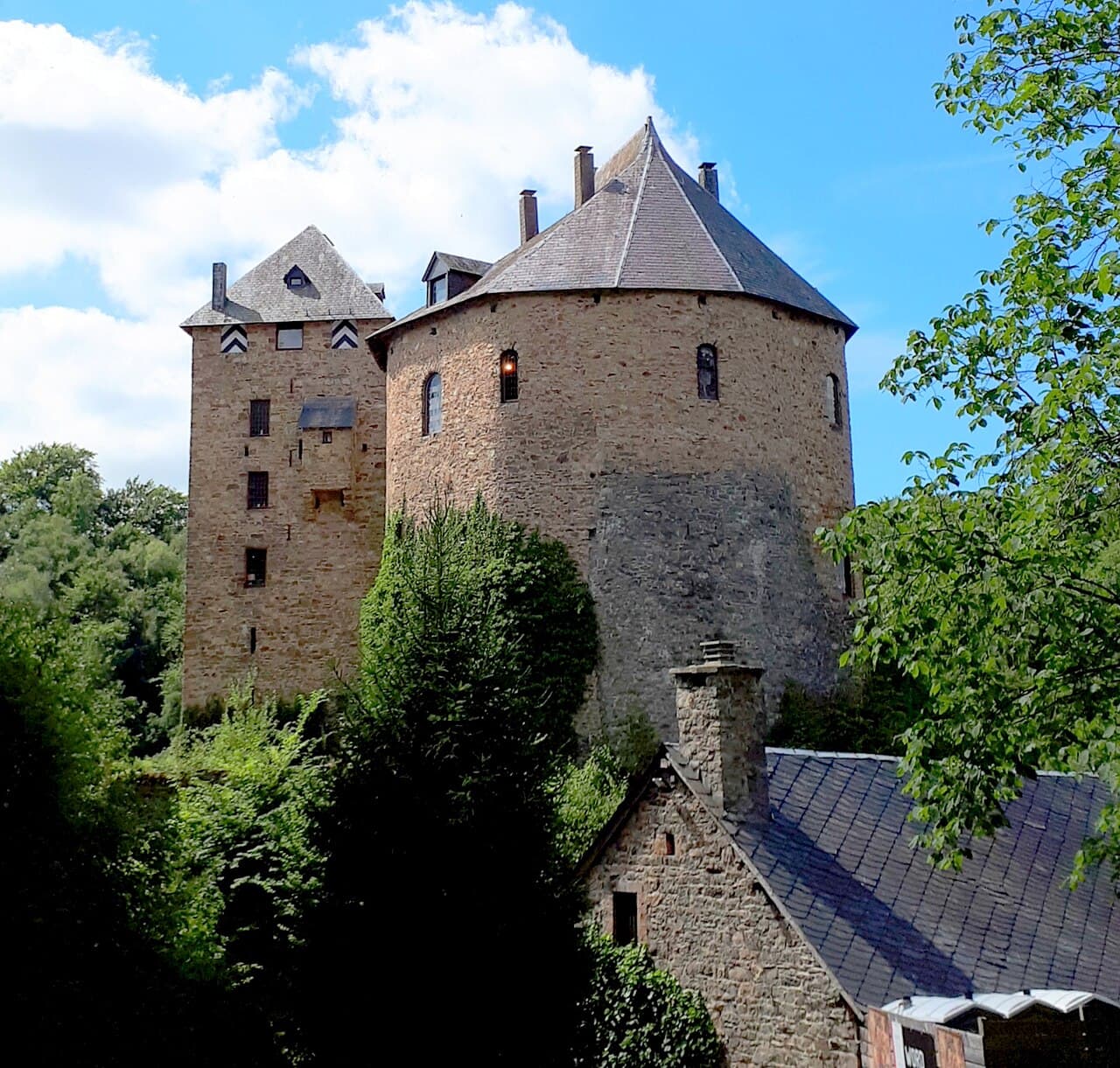
Reinhardstein Castle
Reinhardstein Castle, also known locally as Burg Reinhardstein or Burg Metternich, is a remarkable medieval fortress situated on a rocky outcrop overlooking the valley of the Warche stream near the village of Ovifat in the municipality of Waimes, within the province of Liège in Belgium's Wallonia region. The castle's strategic location atop a natural rock formation provided a commanding view of the surrounding landscape, an essential defensive feature in medieval fortifications.
The origins of Reinhardstein Castle date back to 1354, when Wenceslas, Duke of Luxembourg, granted permission to his vassal Renaud de Waimes to construct a castle at this site. This authorization marked the beginning of a fortress that would play a significant role in the region's feudal history. The castle was originally built during the high medieval period, reflecting the architectural and military needs of the 14th century.
Medieval origins and lineage
Following its construction, Reinhardstein Castle passed through a series of noble families, illustrating the complex web of medieval inheritance and alliances. After the extinction of the Waimes family, ownership transferred successively to the families of Zivelle, Brandscheid, and Van Nassau. In 1468, the castle entered the Van Nassau family through marriage, further cementing its status as a noble residence.
In 1550, the castle became the property of the influential De Metternich family following the marriage of Anne de Nassau to Guillaume de Metternich. The Metternichs were a prominent Rhineland family, and their stewardship of Reinhardstein lasted until the upheavals of the French Revolution. The castle's long association with this family reflects the broader political and social shifts in the region during the Early Modern period.
Architectural features and fortifications
Although much of the original medieval structure was lost or altered over the centuries, Reinhardstein Castle was initially designed as a hill castle, utilizing the natural topography for defense. Its key architectural elements included robust stone walls, defensive battlements, and a keep that served both as a last refuge and a residence. The castle's position on a rocky outcrop enhanced its defensibility, making it difficult for attackers to approach.
The castle complex featured typical medieval fortification elements such as towers for surveillance and defense, a gatehouse controlling access, and internal courtyards that organized living and service spaces. The surrounding valley and the stream below likely provided a natural moat-like barrier, augmenting the castle's protection.
Decline and destruction
Reinhardstein Castle's history was marked by periods of conflict and decline. While some sources suggest that it was destroyed in 1677 by the troops of Ludwig XIV during the Franco-Dutch War, this event remains uncertain as other accounts, including the castle's visitor guide, do not confirm this destruction. Regardless, the castle fell into disuse and deterioration over the following centuries.
During the French Revolution, the castle was confiscated, reflecting the widespread seizure of noble properties during this turbulent era. Afterward, it was returned to the De Metternich family, but by the early 19th century, the family chose to sell the castle. Concerned about the possibility of renewed French aggression and preferring to reside on their estates in Germany, the Metternichs allowed the castle to be largely dismantled.
The majority of Reinhardstein was pulled down in the early 1800s, leaving it a ruin. The abandoned remains suffered further damage from treasure hunters who searched for a rumored hoard of gold and silver hidden within the castle walls. This period of neglect left the castle in a precarious state, with much of its medieval fabric lost.
20th-century restoration and current status
The castle's fortunes changed dramatically in 1969 when Jean Overloop, a Belgian professor of diplomacy and history enthusiast, rediscovered the ruins. Inspired by 17th-century drawings and historical documents, Overloop undertook a meticulous restoration project to rebuild Reinhardstein Castle to its former medieval appearance.
The restoration process took approximately eighteen months, involving local artisans and volunteers who helped revive the castle's architectural heritage. Overloop lived in the restored castle until his death in 1994. Today, Reinhardstein Castle stands as a well-preserved example of medieval military architecture, although it is technically a 20th-century reconstruction based on historical evidence.
Currently, Reinhardstein Castle is private property but is accessible to the public through guided tours. Visitors can explore the castle's exterior and grounds, appreciating its dramatic setting and architectural details. However, photography inside the castle is prohibited to preserve its interior ambiance and integrity.
Location and cultural significance
Reinhardstein Castle's location in the Wallonia region of Belgium places it within a rich cultural and historical landscape. The province of Liège, known for its medieval heritage and natural beauty, provides a fitting backdrop for this fortress. The castle's position overlooking the Warche valley offers not only strategic advantages but also scenic views that attract visitors and history enthusiasts alike.
The castle's history encapsulates significant themes of European medieval and early modern history, including feudal power structures, noble family alliances, and the impact of political upheavals like the French Revolution. Its restoration reflects broader trends in heritage conservation and the appreciation of medieval architecture in the modern era.
Visiting information and accessibility
Visitors interested in Reinhardstein Castle should plan to join guided tours, which provide detailed historical context and access to areas not open for independent exploration. The castle's private ownership means that visits are carefully managed to balance preservation with public interest. Photography restrictions inside the castle help maintain its historical atmosphere.
The surrounding area offers additional attractions, including natural hiking trails along the Warche stream and other historical sites in the municipality of Waimes. This makes a visit to Reinhardstein Castle a rewarding experience combining cultural heritage and natural beauty.
Frequently asked questions (FAQ)
- How do I get to Reinhardstein Castle?
- Reinhardstein Castle is located in Ovifat, Belgium, and can be accessed by car or public transportation. The nearest major city is Malmedy, which is approximately 10 kilometers away. There is parking available near the castle for visitors who drive.
- What is the historical significance of Reinhardstein Castle?
- Reinhardstein Castle was built in the 13th century and served as a strategic fortification in the region. It played an important role in the defense against invasions during the Middle Ages. Today, it is recognized as a cultural landmark and a testament to medieval architecture.
- When was Reinhardstein Castle last renovated?
- Reinhardstein Castle underwent significant restoration work in the late 20th century, with efforts starting in the 1960s. The renovations aimed to preserve its historical integrity while making it accessible to the public. The castle now features well-maintained structures that reflect its rich history.
- Can I visit Reinhardstein Castle with my family?
- Yes, Reinhardstein Castle is family-friendly and offers guided tours that are suitable for visitors of all ages. Children can learn about the castle's history and explore its fascinating architecture. There are also picnic areas nearby for families to enjoy.
- Why is Reinhardstein Castle considered an architectural gem?
- The castle is renowned for its unique blend of medieval and neo-Gothic architectural styles, showcasing impressive stonework and intricate details. Its picturesque setting atop a hill offers stunning views of the surrounding landscape. The combination of history and architecture makes it a must-visit for enthusiasts.
- Is it possible to host events at Reinhardstein Castle?
- Yes, Reinhardstein Castle can be rented for private events such as weddings, corporate gatherings, and special celebrations. The castle provides a charming and historic backdrop for any occasion. Interested parties should contact the management for more information on availability and arrangements.
- What are the opening hours of Reinhardstein Castle?
- Reinhardstein Castle is typically open to visitors from April to October, with specific hours varying by season. During peak months, the castle may open daily, while off-peak times may have limited hours. It is advisable to check the official website for the most current opening times before your visit.
- What are the ticket prices for visiting Reinhardstein Castle?
- Ticket prices for Reinhardstein Castle vary depending on age and group size, with discounts available for children and families. As of the latest updates, adult tickets are generally around €8, while children under a certain age may enter for free. Be sure to confirm the prices on the official site before your visit.
- What nearby attractions should I visit while in Ovifat?
- While in Ovifat, visitors can explore the beautiful High Fens Nature Reserve, known for its stunning landscapes and hiking trails. Additionally, the charming town of Malmedy offers various cultural attractions, including local museums and restaurants. These sites provide a well-rounded experience during your trip to Reinhardstein Castle.
Photo gallery

Information
Sources & official resources
Verify the information above using these authoritative references.
Loading map...
Visitor reviews
No reviews yet. Been here? Write the first review and help other travelers!
Write the first reviewVisited this castle? Share your experience
Your review helps other travelers and adds first-hand knowledge to our encyclopedia.



