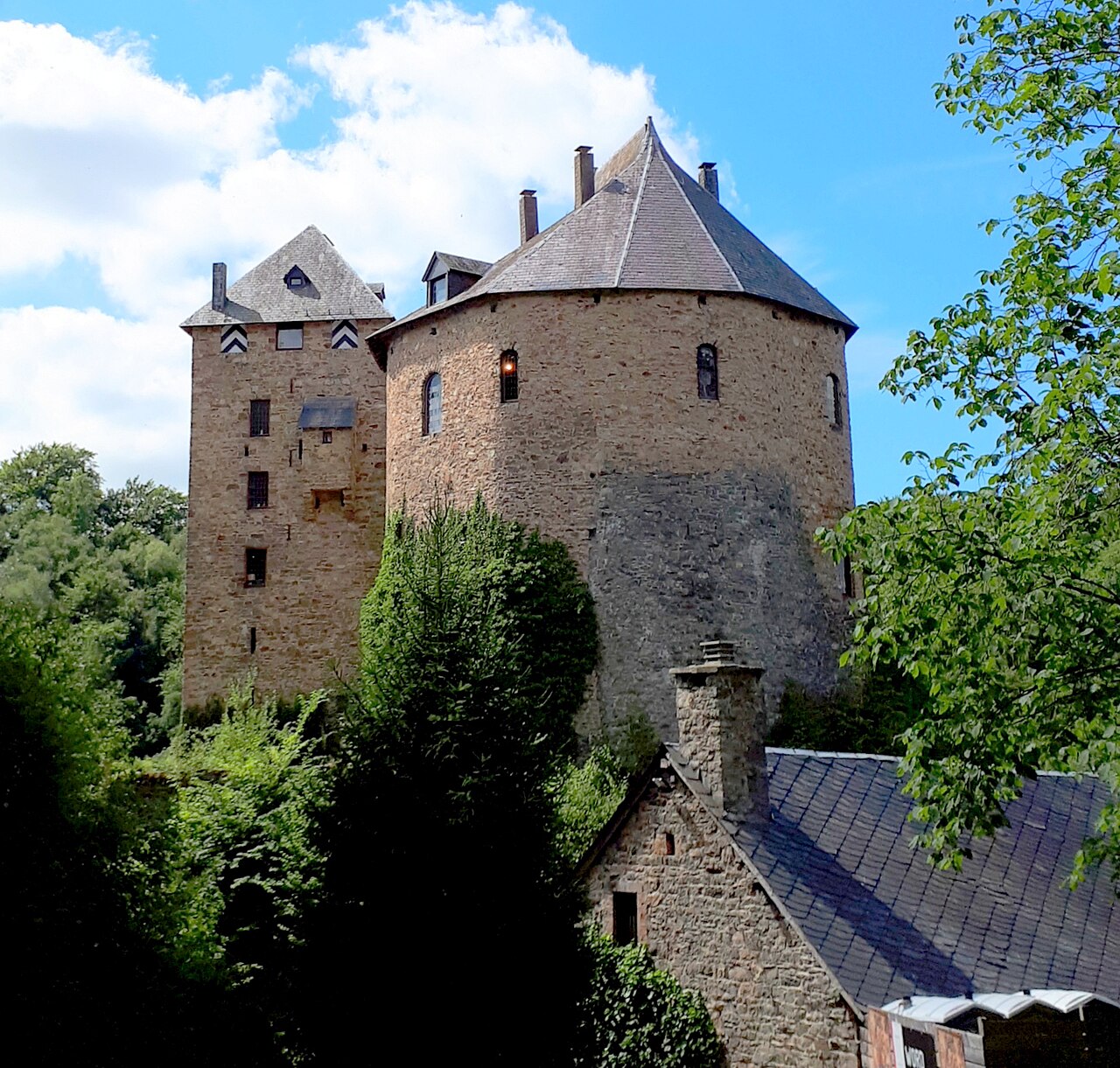
Bütgenbach Castle
Bütgenbach Castle is a medieval fortress located in the village of Bütgenbach, in the province of Liège within the Wallonia region of Belgium. Positioned strategically next to the dam of the Bütgenbach Reservoir, the castle was originally constructed on a small rocky outcrop surrounded by the Warche stream, offering natural defensive advantages typical of high medieval fortifications.
The foundation and early history of Bütgenbach Castle
The castle was built in 1230 by Walram of Limburg, who held the titles Lord of Monschau and Bütgenbach. This period falls within the high medieval era, a time marked by the construction of many stone castles across Europe to assert feudal control and defend territories. The choice of location on a rocky promontory was a common medieval defensive strategy, maximizing natural barriers alongside man-made fortifications.
Following Walram of Limburg's death, ownership passed to his son, Walram the Younger. During his tenure, the castle became involved in regional conflicts. Notably, after Walram the Younger led a raid that resulted in the burning of the nearby village of Theux, the Bishop of Liège retaliated in 1237 by attacking Bütgenbach Castle and burning down one of its towers. This event highlights the turbulent feudal rivalries and the importance of castles as military strongholds and symbols of power during this period.
Ownership transitions and architectural changes
After the extinction of the male line of the Limburg family, the castle and the associated lordship of Monschau passed through marriage to the Falkenburg family. In 1352, ownership transferred to the Counts of Vianden, who held the castle until 1417. Subsequently, the castle came under the rule of the House of Orange-Nassau from 1417 until the late 18th century.
Despite the political control by the House of Orange-Nassau, the actual residence and management of Bütgenbach Castle were under the Lords of Rolshausen. They lived in the castle and maintained ownership until the end of the 18th century, during the period leading up to and including the French Revolutionary Wars. Under the direction of Christoph von Rolshausen, significant repairs and modifications were undertaken after the castle suffered damage from fire during the Jülich Feud in the 16th century, a conflict that affected many fortifications in the region.
Military significance and destruction
By 1621, Bütgenbach Castle was regarded as impregnable, reflecting its robust medieval defensive architecture. However, this reputation did not prevent its destruction in 1689 during the campaigns of King Louis XIV of France. French troops deliberately demolished the castle as part of their military strategy to weaken enemy strongholds during the wars of that era.
Reconstruction efforts began in 1697, making the castle habitable once again. Despite this restoration, the castle's strategic importance declined with changing political landscapes. The French rule from 1795 to 1815 marked the final chapter in the castle's active use. During this period, the castle fell into disrepair and was ultimately dismantled, with its stones repurposed as building material for local houses.
Current state and visitor information
Today, Bütgenbach Castle exists mainly as ruins, with only a small portion of a round tower and some indistinct wall fragments remaining. These remnants provide a tangible connection to the castle's medieval past but offer limited architectural insight due to their fragmentary nature.
The castle site is of interest primarily to enthusiasts of medieval architecture and regional history. Its location near the Bütgenbach Reservoir makes it accessible for visitors exploring the area. While the ruins do not present extensive structures, they serve as a reminder of the turbulent history of the region and the feudal conflicts that shaped it.
Architectural features and defensive elements
The original castle incorporated typical high medieval defensive features, including a round tower which was a common element designed for better defense and visibility. The surrounding Warche stream acted as a natural moat, enhancing the castle's defenses against attackers. The rocky outcrop foundation provided elevation and protection, making direct assaults difficult.
The destruction of one of the towers in 1237 by the Bishop of Liège's forces indicates the castle's vulnerability despite its strong position, reflecting the intense regional conflicts of the time. Later damage from fire during the Jülich Feud and the eventual demolition by French troops further attest to the castle's military significance and the challenges of maintaining such fortifications over centuries.
Historical context and regional significance
Bütgenbach Castle played a role in the complex feudal dynamics of the Ardennes region in the Middle Ages. Its ownership passed through several noble families, reflecting alliances and power shifts typical of medieval European nobility. The castle's connection to the House of Orange-Nassau links it to broader European political history, as this house later became prominent in the Netherlands and beyond.
The castle's decline during the French Revolutionary period mirrors the fate of many feudal castles across Europe, as changing military technology and political upheavals rendered such fortresses obsolete. The reuse of castle stones for local construction was a common practice, contributing to the loss of many medieval structures.
Visiting Bütgenbach Castle today
Visitors to Bütgenbach Castle should not expect extensive ruins or restored buildings but can appreciate the historical landscape and the castle's strategic location. The site offers a glimpse into medieval defensive architecture and the region's feudal past. It is recommended for those with a particular interest in medieval castles or local history.
The surrounding area, including the Bütgenbach Reservoir, provides opportunities for outdoor activities, making a visit to the castle part of a broader exploration of the Wallonia region's natural and historical attractions.
Frequently asked questions (FAQ)
- How do I get to Bütgenbach Castle?
- Bütgenbach Castle is located in the picturesque town of Bütgenbach, Belgium. You can reach it by car, with ample parking available nearby, or by public transport, which connects to major cities in the region.
- What is the historical significance of Bütgenbach Castle?
- Bütgenbach Castle dates back to the 12th century and has played a crucial role in the region's history. It has served various purposes over the centuries, including as a residence for nobility and a military stronghold.
- When was Bütgenbach Castle built?
- Construction of Bütgenbach Castle began in the early 1200s, and it has undergone several renovations since then. The castle's architecture reflects the various styles that have influenced its development throughout the centuries.
- Can I visit Bütgenbach Castle?
- Yes, Bütgenbach Castle is open to visitors, allowing you to explore its stunning architecture and beautiful grounds. Guided tours are available to enhance your experience and provide deeper insights into the castle's history.
- Is it possible to host events at Bütgenbach Castle?
- Bütgenbach Castle offers facilities for hosting events such as weddings, corporate meetings, and private gatherings. The scenic backdrop and historical ambiance make it a unique venue for special occasions.
- What are the opening hours of Bütgenbach Castle?
- Bütgenbach Castle is typically open from 10 AM to 6 PM during the tourist season, but hours may vary in the off-season. It’s recommended to check the official website or contact them directly for the most accurate information.
- What are the ticket prices for visiting Bütgenbach Castle?
- Tickets to Bütgenbach Castle are reasonably priced, with discounts available for children, students, and seniors. Group rates may also be offered, so it’s a good idea to inquire if you’re planning a visit with a large party.
- When is the best time to visit Bütgenbach Castle?
- The best time to visit Bütgenbach Castle is during the spring and summer months when the gardens are in full bloom and the weather is pleasant. However, autumn also provides a beautiful backdrop with changing foliage.
- Are there any nearby attractions to explore after visiting Bütgenbach Castle?
- Yes, nearby attractions include the scenic lakes of Bütgenbach, which are perfect for outdoor activities like hiking and fishing. Additionally, the charming villages and natural parks in the area offer a wealth of exploration opportunities.
Information
Address
Burgstrasse, Bütgenbach, Belgium
Loading map...
Visitor reviews
No reviews yet. Been here? Write the first review and help other travelers!
Write the first reviewVisited this castle? Share your experience
Your review helps other travelers and adds first-hand knowledge to our encyclopedia.