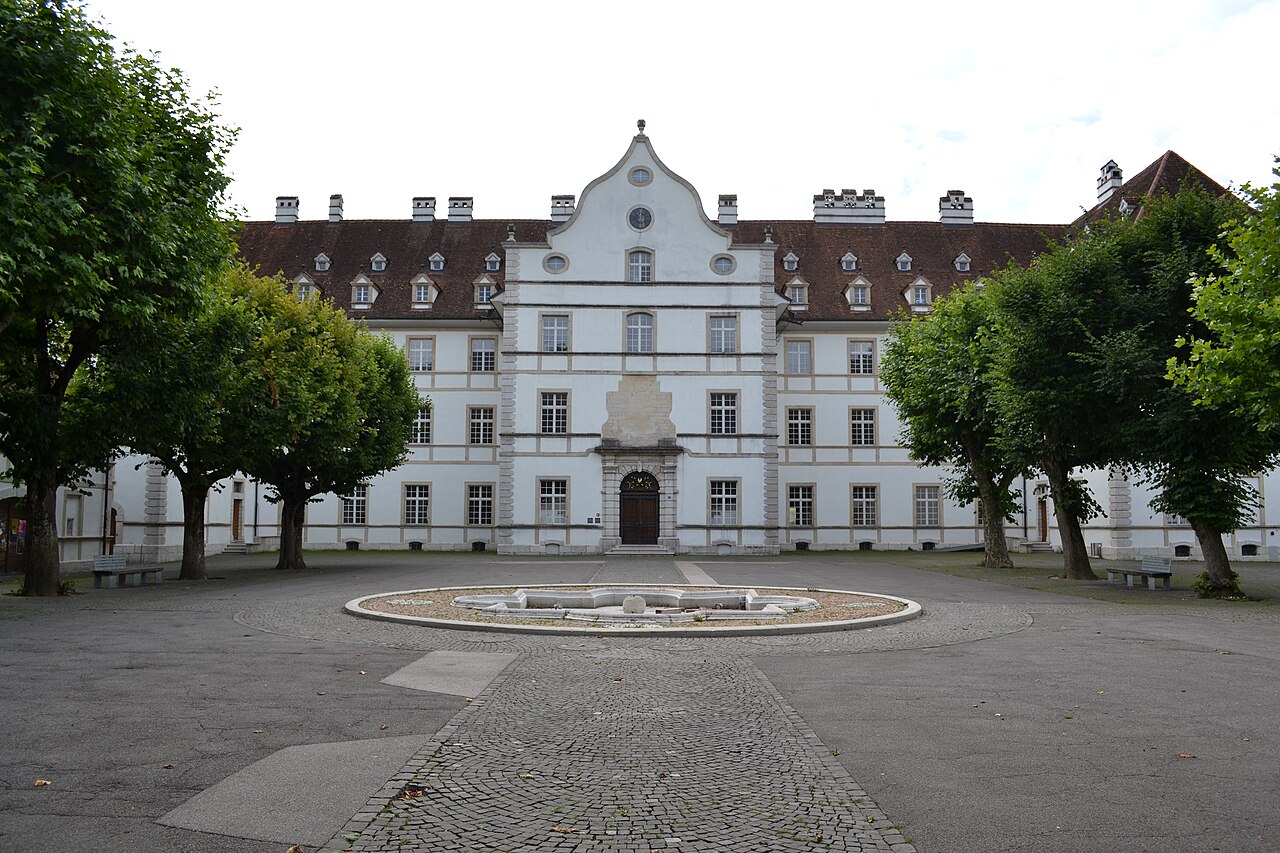
Raymontpierre Castle
Raymontpierre Castle stands prominently on a spur of the north slope of Mont Raimeux in Vermes, Switzerland. This Renaissance-era castle was constructed between 1594 and 1596 by Georges Hugué de Raymontpierre, who served as the châtelain of Delémont. The land on which the castle sits was originally granted as a fief by the Bishop of Basel to Georges' father in 1576, establishing the family's regional prominence and authority.
Architectural features and design
The castle was built as a fortified mansion typical of the late Renaissance period, combining residential comfort with defensive elements. Its location on a natural spur provided strategic advantage, allowing control over the surrounding landscape and protection against potential attackers. The structure includes robust stone walls, likely featuring battlements and defensive apertures such as arrow slits or , though exact details of these features are less documented.
The castle's layout would have included a central residential block with adjoining service buildings, all enclosed within a fortified perimeter. The use of Renaissance architectural elements would have been visible in the symmetry and proportion of the façades, window designs, and possibly decorative stonework reflecting the period's stylistic trends.
Historical ownership and transformations
From the Raymontpierre family to the Staal family
After its construction, Raymontpierre Castle remained under the ownership of the Raymontpierre family for several decades. In 1623, ownership passed to the Staal family, a noble lineage from Solothurn. The Staals held the castle until 1809, a period that likely saw changes in the castle's function and adaptations to evolving needs.
Conversion to a farmhouse
Following the decline of feudal military needs, the castle was repurposed as a farmhouse. This change reflects a common fate for many fortified residences in the region, where agricultural use became more economically viable than maintaining a military stronghold. The conversion would have involved modifications to the interior spaces to accommodate farming activities and domestic life.
20th-century restoration and preservation
In 1941, the castle was acquired by the Buehrle family, who undertook significant restoration efforts in 1949. These works aimed to preserve the castle's historical character while stabilizing its structure. The restoration likely included repairing stone masonry, restoring original architectural details, and adapting the building for modern use without compromising its Renaissance heritage.
Location and cultural significance
Situated in the Jura region of Switzerland, Raymontpierre Castle occupies a landscape rich in history and natural beauty. Its position on Mont Raimeux provides panoramic views and strategic oversight of the surrounding valleys. The castle is a notable example of regional Renaissance architecture and reflects the historical power structures of the late 16th century in the Bishopric of Basel's territory.
Role within the local heritage
Raymontpierre Castle contributes to the cultural heritage of Vermes and the canton of Jura. It embodies the transition from medieval fortified residences to more comfortable Renaissance mansions that still retained defensive features. The castle's survival and restoration underscore the importance of preserving such sites to understand the area's social and architectural history.
Frequently asked questions (FAQ)
- What is the historical significance of Raymontpierre Castle?
- Raymontpierre Castle, located in Vermes, Switzerland, dates back to the 13th century and is a remarkable example of medieval architecture. It served as a strategic stronghold during various conflicts in the region, reflecting the power struggles of its time. Today, it stands as a testament to Switzerland's rich history and attracts history enthusiasts from around the world.
- When was Raymontpierre Castle built?
- Raymontpierre Castle was constructed in the early 1200s, showcasing the architectural styles of that period. Over the centuries, it has undergone several renovations, allowing it to preserve its historical integrity while adapting to modern visitor needs.
- What are the opening hours for Raymontpierre Castle?
- Raymontpierre Castle is open to visitors from April to October, typically from 10 AM to 5 PM. It's advisable to check the official website for any seasonal changes or special events that may affect the opening hours.
- How do I get to Raymontpierre Castle?
- Raymontpierre Castle is accessible by public transportation, with regular train and bus services connecting it to major cities in Switzerland. For those driving, ample parking is available nearby, making it convenient for visitors traveling by car.
- Can I take guided tours of Raymontpierre Castle?
- Yes, guided tours are available at Raymontpierre Castle, providing an in-depth look at its history and architecture. These tours are led by knowledgeable guides who share fascinating stories about the castle and its significance in Swiss history.
- What is the ticket price for visiting Raymontpierre Castle?
- The ticket prices for Raymontpierre Castle are typically around CHF 10 for adults and CHF 5 for children. Discounts may be available for families, students, and seniors, so it's a good idea to inquire at the ticket office upon arrival.
- Is Raymontpierre Castle accessible for visitors with mobility challenges?
- Raymontpierre Castle strives to accommodate all visitors, including those with mobility challenges. While some areas may present difficulties due to the historical nature of the site, there are pathways and facilities designed to enhance accessibility.
- When is the best time to visit Raymontpierre Castle?
- The best time to visit Raymontpierre Castle is during the spring and early autumn months when the weather is pleasant and the surrounding landscapes are vibrant. These seasons also see fewer crowds compared to peak summer months, allowing for a more enjoyable experience.
- What nearby attractions can I explore after visiting Raymontpierre Castle?
- After visiting Raymontpierre Castle, you can explore the charming village of Vermes, known for its scenic beauty and local culture. Additionally, nearby attractions include hiking trails and other historical sites that highlight the rich heritage of the region.
Information
Loading map...
Visitor reviews
No reviews yet. Been here? Write the first review and help other travelers!
Write the first reviewVisited this castle? Share your experience
Your review helps other travelers and adds first-hand knowledge to our encyclopedia.