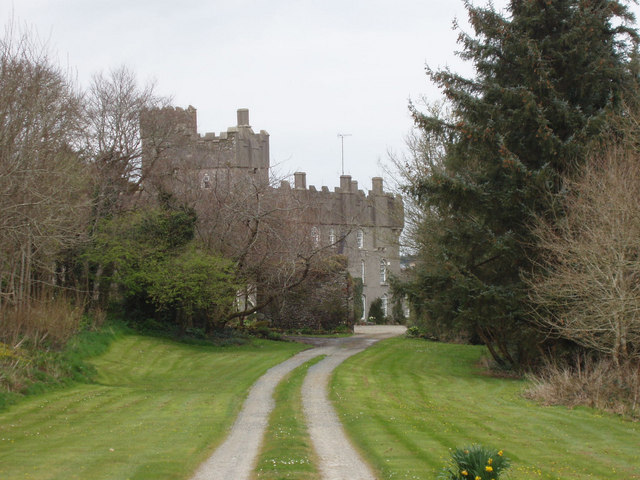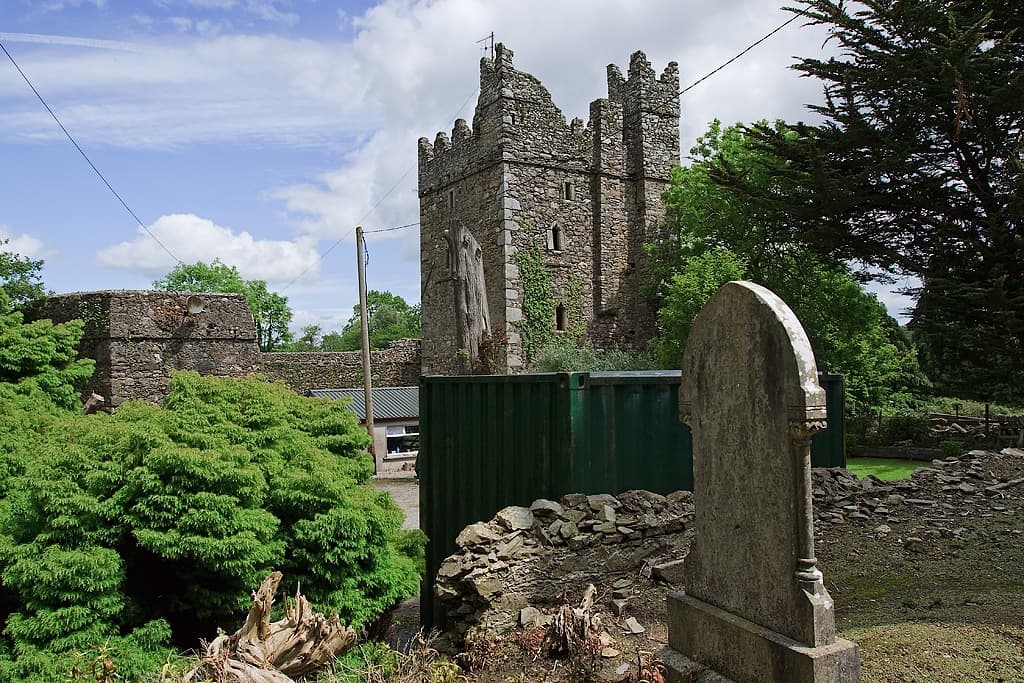
Rathmacknee Castle — Ireland castle

Rathmacknee Castle

Rathmacknee Castle, a historic tower house in County Wexford
Late Medieval (14th–15th c.)
Well Preserved

Rathmacknee Castle is a prominent tower house and designated National Monument situated in County Wexford, Ireland. This castle exemplifies the typical fortified residences constructed by the Anglo-Norman and Gaelic gentry during the late medieval period in Ireland, serving both defensive and residential purposes.

Historical context and significance

Built primarily as a fortified home rather than a large-scale military fortress, Rathmacknee Castle reflects the social and political climate of late medieval Ireland. Tower houses like Rathmacknee were widespread from the 15th to the early 17th centuries, representing a response to local conflicts and the need for defensible dwellings by local lords and landowners. The castle's location in County Wexford places it within a region rich in Norman and Gaelic history, where control of land was frequently contested.

Architectural features

The castle is a classic example of a hill castle type, strategically positioned on elevated ground to provide commanding views of the surrounding landscape. This elevation enhanced its defensive capabilities against potential attackers.

Structure and design

Rathmacknee Castle is characterized by its rectangular tower house design, typically rising several stories high. The thick stone walls, narrow slit windows, and battlements were designed to withstand sieges and attacks. The castle's entrance is often protected by a strong door and possibly a murder hole or machicolation, architectural features common in tower houses to defend against intruders.

Interior layout

Inside, the castle would have contained a great hall, used for dining and gatherings, as well as private chambers for the lord and his family. Fireplaces, stone staircases, and vaulted ceilings are typical interior elements. The upper floors provided living quarters, while the ground floor was likely used for storage and defense.

Preservation and current status

Today, Rathmacknee Castle remains a well-preserved example of medieval Irish tower houses. Its status as a National Monument ensures legal protection and recognition of its cultural heritage value. Visitors can explore the castle's exterior and some interior spaces, gaining insight into medieval life and architecture.

Visiting Rathmacknee Castle

The castle is accessible to the public, although specific visiting hours and facilities may vary, as it is primarily an archaeological and historical site. Its location in County Wexford makes it a notable destination for those interested in Ireland's medieval past and castle architecture.

Rathmacknee Castle in the broader Irish medieval landscape

Rathmacknee is part of a broader network of tower houses scattered across Ireland, which collectively illustrate the adaptation of defensive architecture to local social conditions. These structures often served as centers of local power and administration in their regions.

In summary, Rathmacknee Castle stands as a significant medieval tower house in Ireland, offering valuable insights into the architectural and historical developments of the period. Its preservation as a National Monument allows continued appreciation and study of Ireland's rich medieval heritage.

Frequently asked questions (FAQ)

How do I get to Rathmacknee Castle?
Rathmacknee Castle is located in County Wexford, Ireland. It is accessible by car and is situated a short drive from the town of Gorey. Visitors can use GPS coordinates or local maps for directions, and public transportation options are available, though they may require transfers.
What is the historical significance of Rathmacknee Castle?
Rathmacknee Castle dates back to the 15th century and is known for its unique medieval architecture. It played a significant role in the local history, serving as a stronghold for various noble families over the centuries. The castle's ruins are a testament to Ireland's rich heritage and tumultuous past.
When was Rathmacknee Castle built?
Rathmacknee Castle was constructed in the late 1400s, with its initial design reflecting the defensive needs of the time. Over the years, it underwent several renovations, adapting to the changing architectural styles and requirements. Today, it stands as a fascinating historical site for visitors to explore.
Can I tour Rathmacknee Castle?
Currently, Rathmacknee Castle is not fully restored, and touring options are limited to guided visits around the ruins. Visitors can explore the grounds and learn about the history and architecture from knowledgeable guides. It is advisable to check with local tourism offices for any special events or tours that may be available.
Why is Rathmacknee Castle a popular destination?
Rathmacknee Castle attracts visitors due to its intriguing history and scenic location in the Irish countryside. The castle's picturesque ruins provide excellent photo opportunities and a glimpse into Ireland's medieval past. Its proximity to other attractions in County Wexford makes it a worthwhile stop for travelers.
Is it possible to host events at Rathmacknee Castle?
While Rathmacknee Castle is primarily a historical site, certain areas may be available for private events or gatherings upon request. It is recommended to contact local event planners or the site management for more information on availability and any required permits. Hosting events amidst such historical surroundings can create a memorable experience.
What are the opening hours for Rathmacknee Castle?
Rathmacknee Castle typically opens to visitors during daylight hours, but specific opening times can vary by season. It is best to check the official website or contact local tourism offices for the most up-to-date information on visiting hours. Planning ahead will ensure you don't miss out on experiencing this historic site.
What are the ticket prices for visiting Rathmacknee Castle?
Entry to Rathmacknee Castle is generally free, as it is a historic ruin rather than a fully operational tourist site. However, guided tours or special events may have associated fees. Always confirm with local tourism resources for any updates on pricing or special offerings.
What is the best time to visit Rathmacknee Castle?
The best time to visit Rathmacknee Castle is during the spring and summer months when the weather is generally mild and conducive to exploring the outdoors. Additionally, these seasons often bring more visitors and local events, enhancing the experience. Autumn also offers beautiful foliage, making it a picturesque time for photography.
What nearby attractions can I visit while at Rathmacknee Castle?
While visiting Rathmacknee Castle, there are several nearby attractions worth exploring, including the scenic beaches of County Wexford and the charming town of Gorey. The area is also home to other historical sites and natural parks, providing a rich experience for visitors. Planning a day trip can allow you to enjoy both history and nature in this beautiful region.

Photo gallery

Rathmacknee Castle
Click to view

Photo by Mike Searle•CC BY-SA 2.0

1 photo • Click any image to view in full screen

Information

Hill Castle

Loading map...

Visitor reviews

No reviews yet. Been here? Write the first review and help other travelers!

Write the first review

Visited this castle? Share your experience

Your review helps other travelers and adds first-hand knowledge to our encyclopedia.
Write a review

(5/5)

0/2000 characters

Your review will be visible after admin approval

Nearby castles

2.8 km
Johnstown Castle — Ireland castle

Johnstown Castle

, Ireland

Johnstown Castle is a prominent Gothic Revival castle situated in County Wexford, Ireland. The castle is a striking example of 19th-century architecture, reflecting the tastes and ambitions of the landed gentry during the Victorian era. Although the site has medieval origins, the present structure was extensively rebuilt in the mid-19th century, showcasing the characteristic elements of the Gothic Revival style. Historical background and site origins The origins of Johnstown Castle trace back to an earlier medieval fortification, with the estate historically associated with the Esmonde family. The original castle was constructed during the High Medieval period, around the 12th century, serving as a defensive stronghold on a hilltop, which justifies its classification as a hill castle. Over the centuries, the castle passed through various hands and underwent substantial changes reflecting the evolving architectural trends and the changing needs of its owners. 19th-century reconstruction and Gothic Revival architecture The current Johnstown Castle was largely rebuilt between 1810 and 1850 by the Esmonde family, who commissioned the work to transform the medieval fortress into a grand country house. The reconstruction embraced the Gothic Revival architectural style, which was popular in Ireland and Britain during the 19th century. This style sought to revive medieval Gothic architectural elements, such as pointed arches, battlements, turrets, and decorative stonework, all of which are prominent features of Johnstown Castle. The castle's design includes a symmetrical layout with multiple towers and turrets that enhance its picturesque silhouette. The use of crenellated parapets and lancet windows contributes to the castle's medieval aesthetic, while the interiors were adapted for comfortable living, combining historicist style with Victorian-era conveniences. Architectural features and estate grounds Johnstown Castle is notable not only for its architectural features but also for its extensive landscaped grounds. The estate includes formal gardens, parkland, and a series of lakes that contribute to the scenic beauty of the site. The gardens were designed in the 19th century and reflect the Victorian passion for horticulture and landscape design. The castle itself features a range of architectural elements typical of the Gothic Revival, including a grand entrance gatehouse, battlemented walls, and a variety of towers with conical roofs. Inside, the castle contains richly decorated rooms with ornamental plasterwork, stained glass windows, and fine woodwork, all characteristic of the period's craftsmanship. Current status and cultural significance Today, Johnstown Castle is managed as part of the Irish National Parks and Wildlife Service and serves as a visitor attraction and research center. The castle and its grounds are open to the public, offering insights into Ireland's architectural heritage and landscape history. The site also houses the Environmental Protection Agency's headquarters, integrating historical preservation with modern administrative use. Johnstown Castle remains an important cultural landmark in County Wexford, representing the blend of medieval origins and 19th-century revivalist architecture. Its well-preserved gardens and historic buildings attract visitors interested in history, architecture, and natural beauty.

High Medieval (11th–13th c.)
Details
5.2 km
Bargy Castle — Ireland castle

Bargy Castle

, Ireland

Bargy Castle stands as a significant Norman fortress located near the village of Tomhaggard in the Barony of Bargy, County Wexford, Ireland. Positioned approximately 12 kilometres south-west of Wexford town, this castle occupies a strategic hilltop site that allowed control over the surrounding landscape and trade routes during the medieval period. The name "Bargy" originates from Ui Bhairrche, the name of a local Gaelic tribe, linking the site closely to the region's early history.The core structure of Bargy Castle is a square keep, a typical Norman architectural feature designed for defense and residence. This keep forms the heart of the castle and remains in good condition today, thanks to several phases of renovation and conservation over the centuries. The keep's robust stone walls, narrow windows, and battlements reflect the military priorities of its original builders.During the 15th and 17th centuries, two wings were added at right angles to the original keep, expanding the castle's footprint and adapting it to changing residential and defensive needs. These additions illustrate the castle's evolution from a purely military stronghold into a more complex fortified residence. The architectural modifications include larger windows and more comfortable living spaces, indicating a shift in the castle's function over time.Historical context and significanceBargy Castle was constructed during the period following the Norman invasion of Ireland, which began in the late 12th century. The Normans established numerous castles across Ireland to consolidate their control, and Bargy Castle served as a local power center in County Wexford. Its location on a hill provided a commanding view of the surrounding territory, essential for both defense and administration.The castle remained in use through the late medieval period, witnessing various historical events and changes in ownership typical of Irish castles. Its survival and preservation are notable, as many similar structures fell into ruin or were dismantled over time.Architectural features and layoutThe square keepThe square keep at Bargy Castle is a classic example of Norman military architecture. Its thick stone walls were designed to withstand siege weaponry and provide a secure refuge. The keep likely included multiple floors with vaulted chambers, a great hall, and defensive features such as arrow slits and battlements.Later wings and adaptationsThe two wings added in the 15th and 17th centuries reflect the castle's adaptation to changing times. These wings were built at right angles to the keep, creating a courtyard space within the castle complex. The additions feature architectural elements more typical of the late medieval and early modern periods, including larger windows and fireplaces, which improved comfort and habitability.Preservation and current conditionBargy Castle is currently in a well-preserved state, with the main keep and the added wings standing intact. The castle has undergone several renovations aimed at maintaining its structural integrity and historical character. Its preservation allows visitors and scholars to appreciate the architectural evolution from a Norman fortress to a fortified residence.Visiting Bargy CastleWhile the castle is privately owned, it can be viewed from public roads nearby. The surrounding landscape and the castle's prominent hilltop position make it a notable landmark in County Wexford. Visitors interested in Norman architecture and Irish medieval history will find Bargy Castle a valuable site for study and exploration.

High Medieval (11th–13th c.)
Details
25.3 km

Fethard Castle

, United Kingdom

Fethard Castle stands as a significant historical site near the village of Fethard-on-Sea in Ireland, embodying a rich legacy that spans Norman military architecture and ecclesiastical residence. Originating in the late 12th century during the Anglo-Norman invasion of Ireland, the castle's earliest incarnation was a classic motte-and-bailey fortification, a hallmark of Norman defensive design. This initial structure was likely established by Raymond le Gros, a leading Norman commander whose role was pivotal in the conquest and settlement of the region. The motte—a large artificial earth mound—was topped with a wooden fort, while the bailey served as a fortified courtyard housing essential service buildings, all protected by a surrounding ditch and a clay wall. Norman military architecture and early history The motte-and-bailey design of Fethard Castle reflects the strategic priorities of the Norman invaders, emphasizing rapid construction and strong defensive capabilities. The wooden fort atop the motte provided a vantage point and refuge, while the bailey contained vital infrastructure such as halls, kitchens, stables, workshops, and a chapel. These features were typical of Norman castles designed to establish control over newly conquered territories. The castle’s location in the County Wexford area, near the southeastern coast of Ireland, was strategically significant for overseeing land and maritime routes. Transition to ecclesiastical ownership Following its initial military function, the castle site transitioned into the hands of the Church of Canterbury, marking a shift from purely martial to ecclesiastical control. This change reflects broader patterns in medieval Ireland where religious authorities acquired lands and fortifications, often repurposing them for residential and administrative uses. In the 14th or 15th century, the original wooden structures were replaced by a more durable stone castle, constructed under the authority of the Bishop of Ferns. This stone building served primarily as a summer residence for the bishops, blending defensive features with domestic comfort. Architectural features of the stone castle The surviving ruins of Fethard Castle reveal an L-shaped stone structure rising four stories high, a design that provided both residential space and defensive advantages. A notable feature is the circular tower, which historically housed a medieval clock mechanism, indicating the castle's importance and the sophistication of its occupants. The presence of a gatehouse on the eastern side, considered the oldest stone element, highlights the castle’s fortified entrance and control over access. Defensive and residential elements The castle’s stone construction replaced the earlier timber fortifications, enhancing its durability and status. The L-shaped plan allowed for effective defense and internal organization, separating living quarters from service areas. The circular tower not only served as a lookout but also likely contained private chambers or storage. The gatehouse functioned as both a defensive barrier and a symbol of authority. Later history and decline In the 17th century, ownership of Fethard Castle passed to the Loftus family, who shifted their primary residence to Loftus Hall. The castle was leased to tenants and remained inhabited for several centuries. However, the turbulent period of the early 20th century, marked by the Irish War of Independence and the subsequent Civil War, brought destruction to the site. In 1922, the castle was set on fire amid local conflicts, leading to its abandonment and ruinous state. Current condition and preservation Today, the ruins of Fethard Castle stand as a testament to its layered history, with the L-shaped layout and circular tower still clearly visible. The original Norman motte remains nearby as an earthwork mound, preserving the memory of the castle's earliest phase. Although structural risks prevent public entry, the site is accessible for external viewing, allowing visitors to appreciate the castle’s medieval origins and its evolution from a military fortress to an ecclesiastical residence. Significance and heritage value Fethard Castle offers valuable insights into the Norman conquest of Ireland, medieval ecclesiastical architecture, and the social transformations of the region. Its combination of military and residential features illustrates the adaptability of castle design over centuries. The site’s preservation as ruins enables ongoing study and public engagement with Ireland’s complex medieval past.

High Medieval (11th–13th c.)
Details