Rahinnane Castle
Rahinnane Castle stands as a remarkable historical site in Ballybeg, County Kerry, Ireland, embodying centuries of Irish defensive architecture and noble residence. The castle is uniquely positioned atop an earlier early medieval ringfort, illustrating a continuum of occupation and fortification from the 7th or 8th century through the late medieval period. This layering of history offers a vivid glimpse into Ireland's evolving military and social landscape.
The early medieval ringfort: Rath Fhionnáin
The origins of the site trace back to a ringfort known as Rath Fhionnáin, meaning "Finan's ringfort" in Irish. This name suggests a possible connection to a local figure named Finan, though specific historical details about this individual remain scarce. Ringforts were typical fortified settlements in early medieval Ireland, serving as farmsteads or small defended homesteads for local communities.
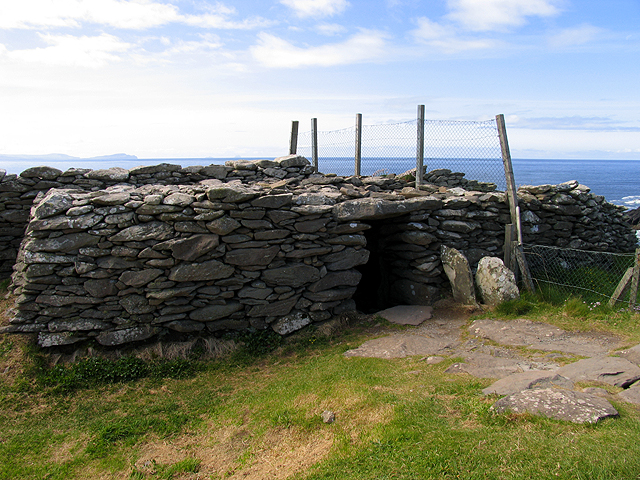
The ringfort at Rahinnane was characterized by a substantial circular earthen bank and a deep surrounding ditch approximately nine meters wide, designed to impede attackers and enhance defense. The entrance was strategically located on the southwest side, controlling access to the interior. Within the ringfort's southeastern sector lies a souterrain, an underground passage or chamber used for refuge or storage, a common feature in Irish ringforts providing protection during raids.
While local tradition claims the site was the last Viking stronghold in Ireland due to its defensible position, there is no documentary evidence to support this. Nevertheless, this legend reflects the site's enduring reputation in regional folklore and its perceived strategic importance.
The medieval tower house: construction and architecture
In the 15th or 16th century, the prominent FitzGerald family, holders of the hereditary title Knights of Kerry, constructed the stone tower house that dominates the site today. Tower houses were a common type of fortified residence in late medieval Ireland, built by noble families to assert control over their lands and provide defense against local conflicts.
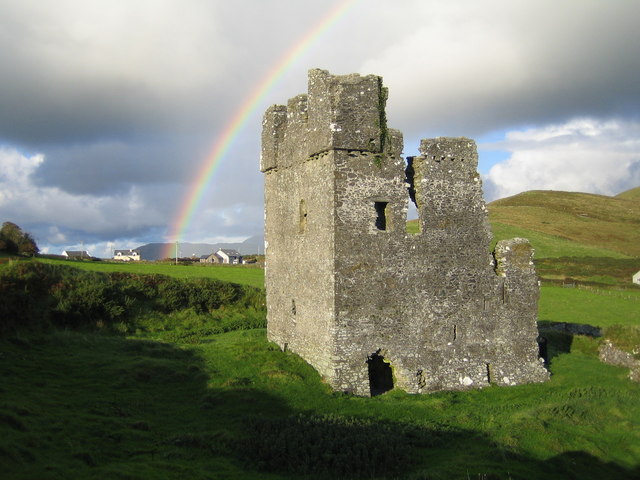
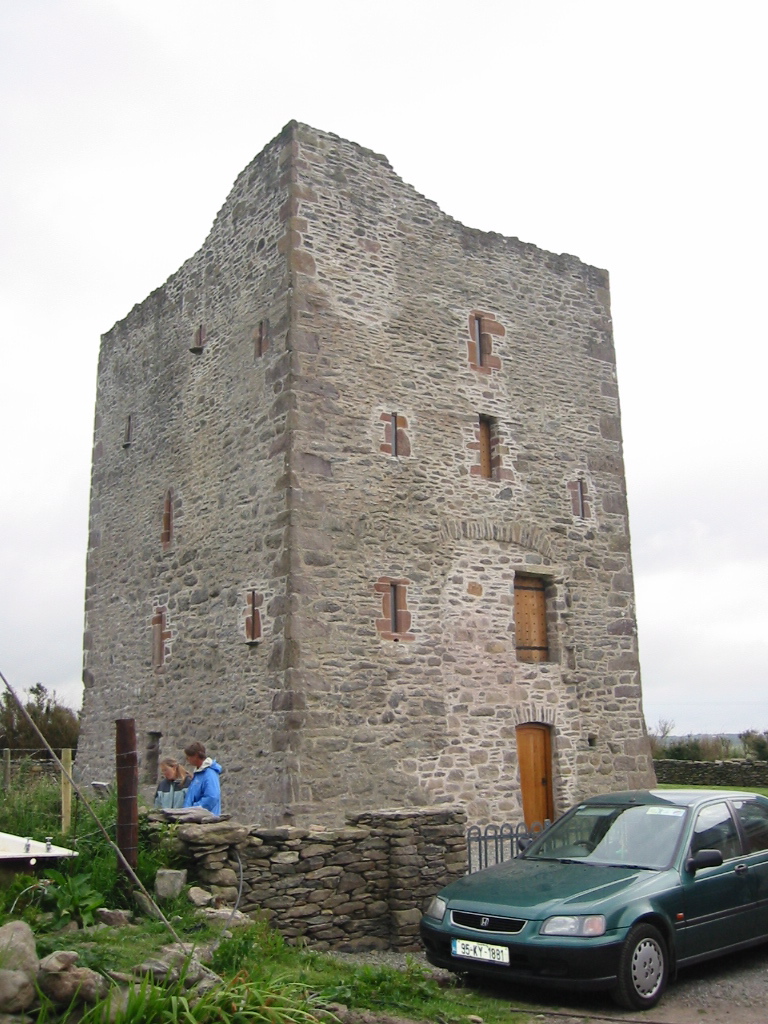
The castle is a rectangular, three-storey tower featuring thick stone walls designed for defense and habitation. Despite its ruined state, more than half of the external walls remain standing, showcasing the robust construction techniques of the period. The castle's design reflects a blend of military functionality and domestic comfort, typical of Irish tower houses.
Key architectural features include a mural stairway built within the thickness of the walls, allowing discreet movement between floors. The presence of vaulted ceilings in some rooms indicates the use of stone arches to support upper levels, a sophisticated technique enhancing structural stability. Additionally, a blind arcade inside the castle adds a decorative element, illustrating attention to aesthetic detail alongside defensive needs.
Two corner turrets project from the main tower, serving as lookout points and defensive positions to cover the castle's flanks. These turrets would have been crucial for surveillance and protection during attacks. The surviving walls and turrets convey the castle's imposing presence and strategic design.
Historical significance and military events
Rahinnane Castle played a role in the turbulent history of Ireland during the late 16th and early 17th centuries. In 1602, during the final years of the Nine Years' War, the castle was captured by English forces led by Sir Charles Wilmot. This event reflects the broader struggle between Gaelic Irish lords and the expanding English crown, marking a shift in regional power dynamics.
Later, during the Cromwellian conquest of Ireland between 1649 and 1653, Rahinnane Castle suffered significant damage. The military campaigns led by Oliver Cromwell's forces caused widespread destruction of Irish fortifications, and the castle was left in ruins. Its ruined state today bears witness to these violent conflicts and the transformation of Irish society under English rule.
Archaeological and heritage importance
The site of Rahinnane Castle is a rare example of a layered archaeological landscape combining an early medieval ringfort with a later medieval tower house. This continuity of occupation provides valuable insights into the evolution of Irish defensive architecture and settlement patterns.
The deep ditch and earthen bank of the ringfort, along with the souterrain, represent typical features of early medieval Irish fortifications, while the stone tower house exemplifies the adaptation of noble residences to the changing military and social conditions of late medieval Ireland.
Today, the castle's ruins, including the surviving walls, turrets, vaulted chambers, and mural stairway, attract historians, archaeologists, and visitors interested in Ireland's medieval heritage. The site illustrates the interplay between local tradition, architectural innovation, and historical events that shaped the region.
Visiting Rahinnane Castle and its surroundings
Rahinnane Castle is located in a scenic part of County Kerry, known for its rich cultural heritage and natural beauty. Visitors can explore the ruins and appreciate the castle's architectural features and the surrounding landscape that once provided strategic defense.
While the castle remains a ruin, its imposing walls and turrets offer a tangible connection to Ireland's medieval past. The site is accessible to the public, providing an opportunity to experience a significant historical monument embedded in the Irish countryside.
Frequently asked questions (FAQ)
- How do I get to Rahinnane Castle?
- Rahinnane Castle is accessible by car and public transport. If you are traveling by car, there are signposts directing you to the castle from the main roads. For those using public transport, local bus services run frequently to the nearest town, from which you can take a short taxi ride.
- What is the historical significance of Rahinnane Castle?
- Rahinnane Castle dates back to the 12th century and is a remarkable example of medieval architecture. It played a significant role in the region's history, serving as a defensive stronghold during various conflicts. The castle has been a witness to numerous historical events, making it a vital part of local heritage.
- When was Rahinnane Castle last renovated?
- The last major renovation of Rahinnane Castle took place in the early 2000s, focusing on preserving its structural integrity and restoring key historical features. Ongoing maintenance is performed regularly to ensure the castle remains safe and accessible for visitors. These efforts help to keep the castle's rich history alive for future generations.
- Can I visit Rahinnane Castle year-round?
- Yes, Rahinnane Castle is open for visitors year-round, although certain areas may be closed during the winter months for maintenance. It's always best to check the official website or local tourist information for any seasonal updates or special events. This allows you to plan your visit accordingly and make the most of your experience.
- Why is Rahinnane Castle a popular tourist attraction?
- Rahinnane Castle attracts visitors due to its stunning architecture and rich history. The picturesque surroundings and well-preserved structures offer both educational and aesthetic experiences. Additionally, the castle hosts events and exhibitions that draw history enthusiasts and families alike.
- Is it possible to book guided tours at Rahinnane Castle?
- Yes, guided tours are available at Rahinnane Castle, providing a deeper insight into its history and architecture. These tours are led by knowledgeable guides who share fascinating stories and highlight key features of the castle. You can book your tour in advance through the castle's official website or on-site, depending on availability.
- What are the ticket prices for visiting Rahinnane Castle?
- Ticket prices for Rahinnane Castle vary based on age and group size, with discounts available for children and seniors. Family tickets are also offered at a reduced rate, making it an affordable outing for all. Ensure to check the official website for the most current pricing information before your visit.
- What are the opening hours for Rahinnane Castle?
- Rahinnane Castle typically opens at 9 AM and closes at 5 PM, with extended hours during the summer months. It is advisable to check for any changes in hours or special holiday timings on the castle's official website. This will help you plan your visit effectively and avoid any surprises.
- Are there any nearby attractions to visit along with Rahinnane Castle?
- Yes, there are several nearby attractions, including charming villages and scenic landscapes that complement your visit to Rahinnane Castle. Local museums and historical sites within a short drive offer additional insights into the region's culture and history. Exploring these nearby attractions can enhance your experience and provide a full day of adventure.
Information
Loading map...
Visitor reviews
No reviews yet. Been here? Write the first review and help other travelers!
Write the first reviewVisited this castle? Share your experience
Your review helps other travelers and adds first-hand knowledge to our encyclopedia.