Dunbeg Fort
Dunbeg Fort (Irish: An Dún Beag) is a remarkable Iron Age promontory fort located near the modern village of Ventry in County Kerry, Ireland. This ancient defensive structure is perched on a dramatic coastal headland overlooking the Atlantic Ocean, showcasing the strategic use of natural landforms for protection. It is one of the best-preserved examples of promontory forts in Ireland, representing the ingenuity of early Iron Age communities in fortifying their settlements.
Location and geographical significance
The fort occupies a narrow rocky promontory that extends into the sea, providing natural defenses on three sides with steep cliffs dropping sharply into the ocean. This positioning allowed the inhabitants to monitor maritime activity and defend against seaborne invaders effectively. The only accessible approach to the fort is from the landward side, where the builders constructed substantial stone walls to fortify the entrance and protect the settlement.
Architectural features and construction
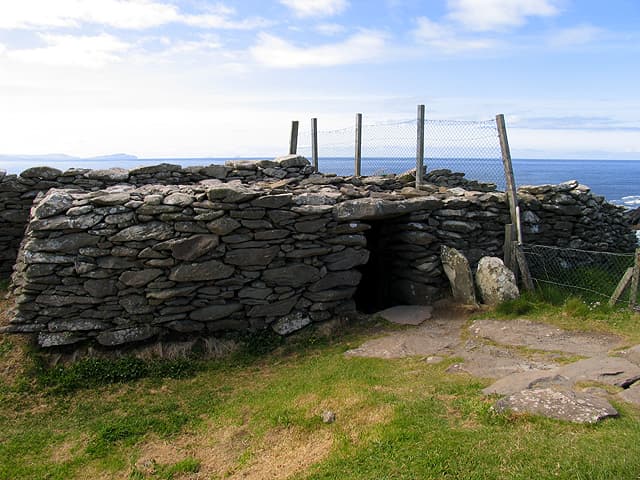
Dunbeg Fort is characterized by its massive dry-stone walls built without mortar, typical of Iron Age construction techniques in Ireland. The walls are constructed from large, carefully placed stones that have withstood centuries of coastal weathering. The fort's entrance is particularly notable, featuring a narrow gateway flanked by thick walls designed to control access and enhance defense.
Inside the fort, traces of internal structures such as hut foundations and storage pits suggest it was a small but well-organized settlement. The fort's layout maximizes the use of the natural terrain, with the walls following the contours of the promontory to create a defensible enclosure. The site also includes evidence of terracing on the slopes, which may have been used for agriculture or additional habitation space.
Defensive design elements
The fort's design incorporates a combination of natural and man-made defenses. The steep cliffs on three sides form a formidable barrier, while the landward side is protected by the thick stone walls and a narrow entrance passage. This bottleneck would have made it difficult for attackers to breach the fort, allowing defenders to repel assaults effectively.
Historical context and cultural significance
Dating from the Iron Age, approximately between 500 BC and 500 AD, Dunbeg Fort reflects the social and political landscape of early Ireland. Promontory forts like Dunbeg were typically occupied by small communities or chieftains and served as both defensive strongholds and symbols of power and status.
The fort's location in County Kerry places it within a region rich in prehistoric monuments and archaeological sites, including other forts, stone circles, and burial mounds. Dunbeg Fort contributes valuable insight into the settlement patterns and defensive strategies of Iron Age societies in southwestern Ireland.
Preservation and current condition
Today, Dunbeg Fort is classified as a partially preserved archaeological site. Its walls remain largely intact, although some sections have suffered from erosion and weather damage due to its exposed coastal position. Conservation efforts focus on maintaining the structural integrity of the stone walls and protecting the site from further degradation.
The fort is accessible to visitors, offering panoramic views of the surrounding coastline and the nearby Dingle Peninsula. Interpretive signage at the site provides historical context and explains the fort's significance within Ireland's Iron Age heritage.
Visiting Dunbeg Fort
Visitors to Dunbeg Fort can explore the remains of the ancient walls and appreciate the site's dramatic setting. The fort is open year-round, with no entry fee, making it an attractive destination for those interested in archaeology, history, and scenic coastal landscapes.
Nearby attractions include the village of Ventry, known for its traditional Irish culture and hospitality, and other archaeological sites in County Kerry, such as the Gallarus Oratory and the Cahergall Stone Fort.
Frequently asked questions (FAQ)
- What is Dunbeg Fort and where is it located?
- Dunbeg Fort is an Iron Age promontory fort situated near the village of Ventry in County Kerry, Ireland, known for its coastal defensive position.
- When was Dunbeg Fort built?
- Dunbeg Fort dates back to the Iron Age, approximately between 500 BC and 500 AD, reflecting early Irish settlement patterns.
- Can I visit Dunbeg Fort year-round?
- Yes, Dunbeg Fort is open to visitors throughout the year and there is no entry fee, making it accessible for all interested in ancient Irish history.
- What are the main architectural features of Dunbeg Fort?
- The fort features massive dry-stone walls, a narrow landward entrance, and natural cliff defenses on three sides, typical of Iron Age promontory forts.
- Is Dunbeg Fort well preserved?
- Dunbeg Fort is partially preserved; while much of the stone wall remains intact, some sections have been affected by coastal erosion and weathering.
Photo gallery

Information
Opening hours
Open year-round, no entry fee
Ticket prices
Free
Current owner
State
Loading map...
Visitor reviews
No reviews yet. Been here? Write the first review and help other travelers!
Write the first reviewVisited this castle? Share your experience
Your review helps other travelers and adds first-hand knowledge to our encyclopedia.