Radom
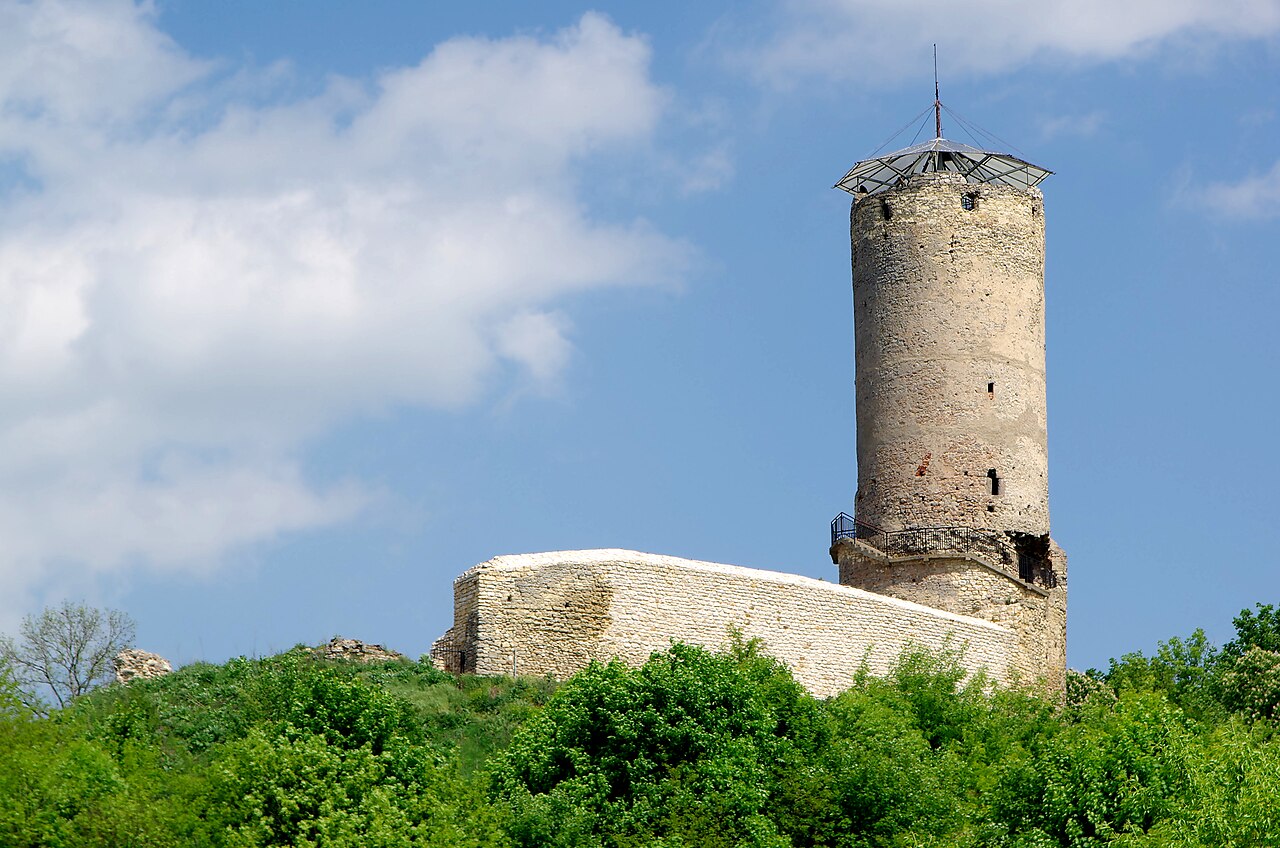
Radom castle stands as a significant historical monument in Radom, Poland, embodying a rich blend of Gothic and Renaissance architectural styles. Its origins trace back to the 10th century during the reign of the first Piast rulers, when a defensive stronghold guarded the borders of the Sandomierz province. The earliest recorded mention of this fortification appears in a 1155 papal bull by Pope Hadrian IV. This early stronghold formed the nucleus around which the medieval settlement, later known as the Old Town, developed. Around 1350, King Casimir the Great founded the New Town of Radom under Środa law, situated about a kilometer from the original settlement amidst the floodplains of the Mleczna River. This new urban area featured a regular grid street plan with a central market square and was enclosed by nearly 1200 meters of defensive walls accompanied by a water-filled moat.
Integral to the city's fortifications, the king erected a castle in the southeastern corner of the New Town. This fortress not only served as a military bastion protecting the northeastern borders of Lesser Poland against Mazovia but also functioned as a royal residence during the travels of King Casimir the Great and his successors. The castle was the administrative center for the castellans and starosts of Radom, underscoring its political and strategic importance.
Architectural features and layout
Reconstructing the original Gothic appearance of Radom castle is challenging due to extensive damage and subsequent alterations over the centuries. Historical research suggests the castle comprised perimeter walls, a main residential building known as the "Dom Wielki" (Great House), a principal tower, and a gate tower. It exemplified a typical lowland urban castle but was distinctly separated from the town by its own walls, emphasizing its autonomy and authority despite its location within the city limits.
Dom wielki and fortifications
The Great House was constructed of brick on a rectangular plan measuring approximately 10.5 by 38 meters. It projected about 7.5 meters beyond the city walls and was supported by massive stone buttresses, with corner buttresses reaching up to the ground floor ceiling. The building had two floors plus a basement level accessible from the courtyard, used for storage, and an attic space. The ground floor accommodated administrative rooms, while the first floor housed residential and representative chambers. A tower at the western corner provided vertical communication and access to the castle walls.
The castle's perimeter walls, except for the section adjoining the town, featured crenellations and a wall walk for guards. The main entrance faced the town. The gate tower was built using half-timbered construction and contained the burgrave's residence, illustrating a combination of defensive and domestic functions.
Additional structures and towers
Over time, the castle underwent several expansions. By the 15th century, a western wing was added to serve economic functions, including a kitchen, pantry, bakery on the ground floor, and a dining room above. In the southeastern corner, the so-called "White Tower" was built, likely named for its plastered exterior. This two-story tower with a vaulted basement served as a prison for nobility. Another smaller tower in the northeastern corner, called the "Thieves' Tower," functioned as a prison for common criminals. A wooden tower coated with clay was erected on the rampart before the castle, connected by a gallery to the main building, probably serving as a latrine.
Renaissance transformation and later history
Between 1510 and 1515, Mikołaj Szydłowiecki, the castellan of Radom and Crown Treasurer, initiated a Renaissance renovation of the castle. The Great House's courtyard side was enhanced with arcaded galleries inspired by those at Wawel Castle. Interiors were reconfigured into an enfilade of rooms, and facades were adorned with Renaissance stonework. Rooflines were crowned with decorative attics, and the western wing's dining room was connected to the arcades by a covered gallery, blending functionality with aesthetic refinement.
Despite these improvements, 17th-century inspections reported the castle in urgent need of repairs. During the Swedish invasion of 1655-56, Radom was occupied by King Charles X Gustav's forces. The castle was briefly held by a regiment of dragoons but was recaptured by Polish forces under Piotr Czarnecki. In retaliation, the Swedish king ordered the city burned, and the castle suffered damage and looting with assistance from allied Hungarian forces. Post-war restoration was mandated to the starosta Mikołaj Podlodowski, but the castle's role shifted primarily to judicial and archival functions.
18th-century remodeling and decline
In 1787, starosta Aleksander Potkański undertook repairs and transformed the castle's Great House by removing its upper floor, converting it into a Classical-style manor. Following the partitions of Poland, Austrian authorities ordered the demolition of the defensive walls and towers. The castle was repurposed to house administrative offices, including the district office, tax directorate, and archives. Several restoration plans for the western wing were proposed but never realized, reflecting the occupying powers' lack of interest in preserving a site symbolizing Polish patriotism.
Modern use and archaeological research
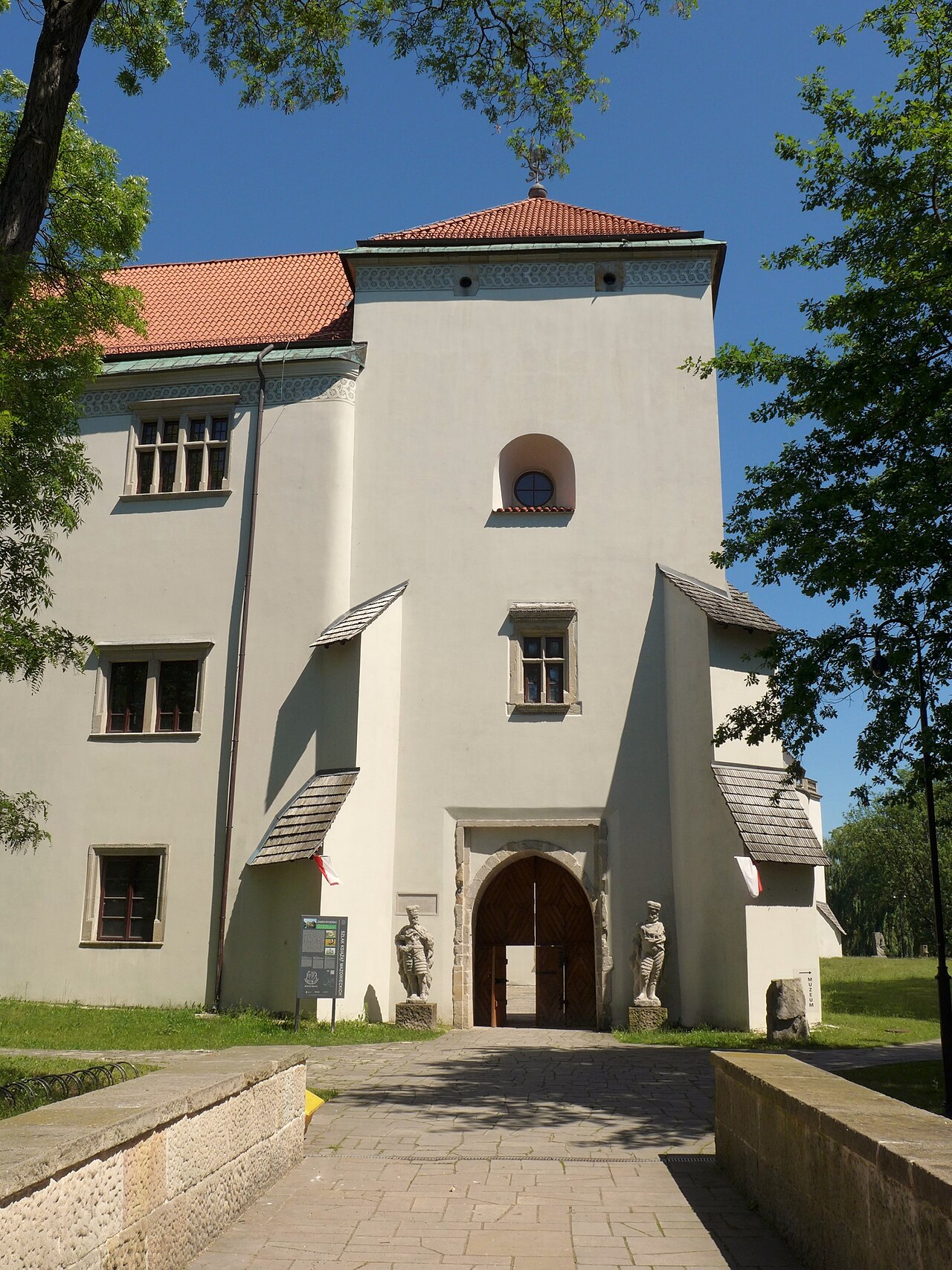
In 1863, the Roman Catholic Church acquired the Great House, adapting it as a parish rectory and temporary residence for the bishops of Sandomierz. The western wing, however, was demolished in 1847-48 and replaced by a school building. After World War II, this building housed a social welfare center until 2005.
Between 1999 and 2001, under the supervision of Professor L. Kajzer, extensive architectural and archaeological investigations were conducted at the castle site. These studies confirmed the Gothic and Renaissance origins of the surviving basement structures. Removal of plaster from the rectory revealed preserved medieval walls, which were highlighted on the southern facade. Five Gothic windows with stone frames and remnants of four buttresses were also exposed, providing tangible links to the castle's medieval past.
In 2001, the remnants of Radom castle were officially registered as a protected monument in the Mazovia region, following efforts by the Social Committee for the Preservation of Radom's Monuments. Today, the castle remains a well-preserved bastioned fortress that reflects the layered history of Radom, from its medieval defensive origins through Renaissance grandeur to modern conservation.
Historical significance and cultural heritage
Radom castle holds a prominent place in the history of Lesser Poland and the broader Polish realm. It was a key royal residence and military outpost guarding the northeastern frontier. The castle's evolution mirrors the political and cultural shifts in Poland over several centuries, including the impact of Renaissance art and architecture, the devastation of wars, and the challenges of preservation under foreign rule.
Its architectural features, such as the arcaded galleries, fortified walls, and distinctive towers, offer valuable insights into the design and function of Polish urban castles. The castle also serves as a symbol of Radom's historical identity and resilience, attracting scholars, tourists, and heritage enthusiasts alike.
Visitor experience and access
While the castle itself is not fully reconstructed as a museum, its preserved elements and archaeological displays provide an engaging experience for visitors interested in medieval and Renaissance architecture. The site is complemented by nearby historical landmarks in Radom's Old and New Towns, enhancing its appeal as a cultural destination.
Frequently asked questions (FAQ)
- When was Radom castle originally built?
- Radom castle originated in the 10th century as a defensive stronghold during the early Piast dynasty, with the first documented mention in 1155.
- What architectural styles are represented in Radom castle?
- Radom castle features a mix of Gothic and Renaissance architectural styles, reflecting its medieval origins and later Renaissance renovations.
- Can visitors see medieval elements of the castle today?
- Yes, visitors can observe preserved medieval walls, Gothic windows, and buttresses exposed during archaeological research in 1999-2001.
- What historical events affected Radom castle?
- The castle was damaged during the Swedish invasion of 1655-56 and underwent several reconstructions and changes in use over the centuries.
- Is Radom castle open to the public?
- While the castle is not fully a museum, its remains are accessible for viewing, and the site is part of Radom's cultural heritage.
Information
Loading map...
Visitor reviews
No reviews yet. Been here? Write the first review and help other travelers!
Write the first reviewVisited this castle? Share your experience
Your review helps other travelers and adds first-hand knowledge to our encyclopedia.