Chlewiska
Chlewiska Palace Castle in Poland stands as a remarkable testament to centuries of architectural evolution and noble heritage. Its origins trace back to the 12th century, when Piotr Dunin h. Łabędź established a wooden fortification atop an earthen mound, marking the beginning of this historic site. Over time, the castle transformed from a medieval stronghold into a refined residence, reflecting the changing tastes and fortunes of its successive owners.
Medieval origins and early construction
The earliest phase of the castle's history is rooted in the high medieval period, with the initial fortification serving defensive and residential purposes. Around 1360, the estate passed into the hands of the Odrowąż family, who adopted the surname Chlewicki after the locality. This era laid the groundwork for the castle's enduring legacy.
Transition to stone architecture in the 15th century
In the 15th century, significant architectural advancements were made under the stewardship of Dobiesław Chlewicki, the castellan of Czechów, and his elder brother Strasz. They replaced the earlier wooden structures with a stone residence, enhancing the castle's fortification and status. This stone construction marked a pivotal shift from timber to more durable materials, aligning with broader trends in castle building across Europe.
Renaissance enhancements in the early 17th century
The castle underwent further expansion in 1605 when Wawrzyniec Chlewicki added a new wing to the knightly castle. This addition reflected Renaissance influences, incorporating more refined architectural elements and accommodating the evolving needs of its inhabitants.
Transformation into a palace residence
By the mid-18th century, the castle's defensive role diminished, and it was transformed into a palatial residence. In 1750, ownership passed to Józef and Aleksander Potkański, who undertook a comprehensive remodeling. Their renovations removed the castle's military features, emphasizing comfort and aesthetics to create a stately home befitting the nobility.
19th-century ownership changes and historical events
The estate changed hands again in 1801 when Stanisław Sołtyk acquired it. His son, Roman Sołtyk, a general in the Napoleonic campaigns, later inherited the property. However, due to Roman Sołtyk's involvement in the November Uprising of 1831, the Russian authorities confiscated the estate. This period underscores the castle's connection to significant national historical events.
Late 19th-century acquisition and renovations
In 1896, the castle was purchased by Count Ludwik Kazimierz Plater, who continued the tradition of maintaining and renovating the property. Over the centuries, the castle experienced multiple reconstructions and restorations, reflecting changing architectural styles and the needs of its owners.
Architectural features and layout
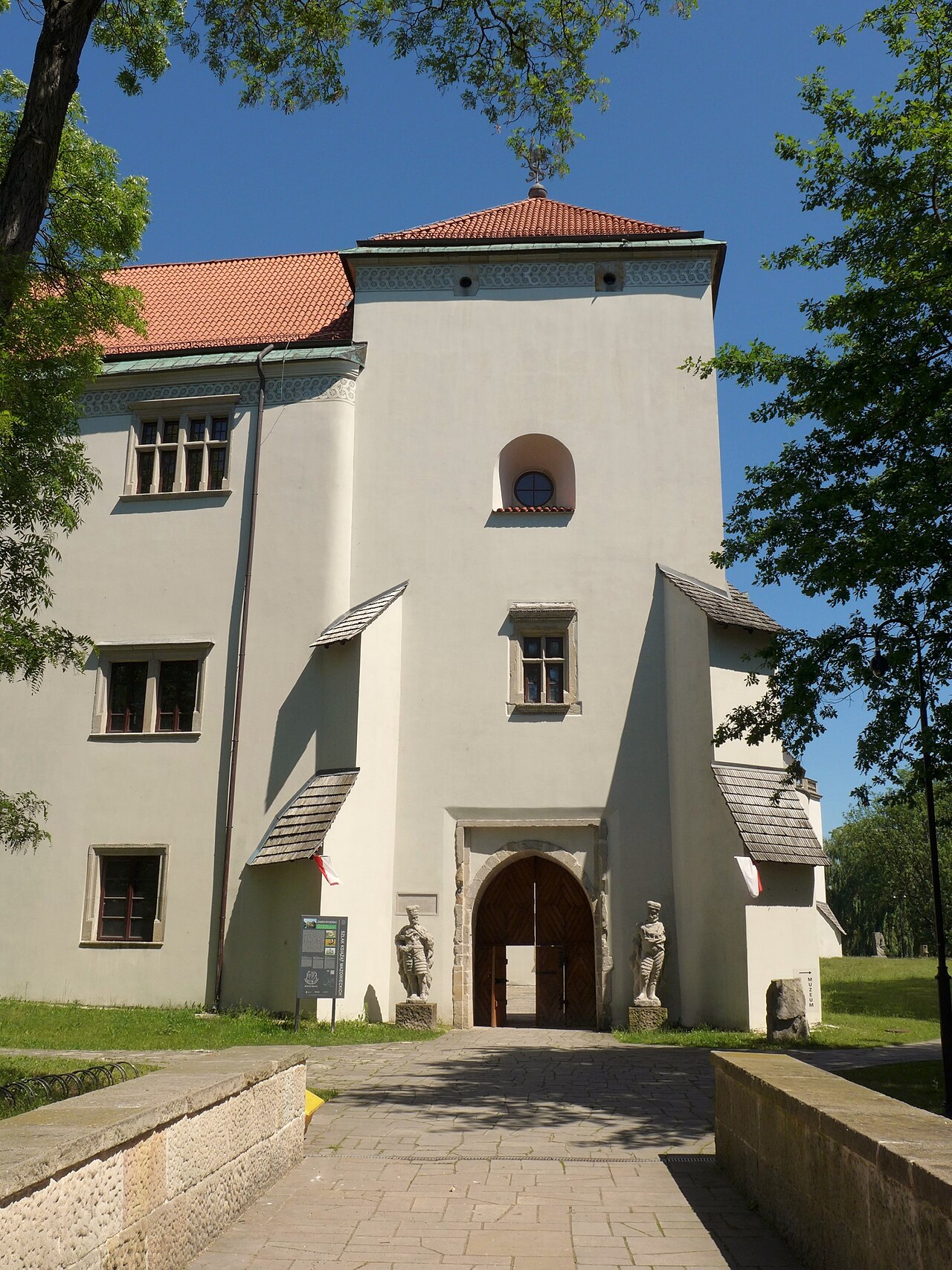
Today, Chlewiska Palace Castle comprises two wings joined at a right angle, forming an L-shaped plan. The main building is basemented and faces east, while a distinctive two-story tower housing two chapels is attached to the northeast corner. This tower is a notable architectural highlight, blending religious function with residential design.
Interior elements and preserved details
The ground floor retains barrel and cross vaults, alongside a stone Renaissance portal, showcasing the castle's rich architectural heritage. The preserved cellars reveal the castle's Gothic origins, providing a tangible link to its medieval past. These elements contribute to the castle's well-preserved state and historical authenticity.
Setting and surroundings
Situated on a gentle rise, the castle is enveloped by a park, enhancing its aesthetic appeal and providing a serene environment. This setting reflects the transition from a fortified medieval stronghold to a refined noble residence integrated with landscaped grounds.
Modern restoration and current use
Since 1999, the castle has been owned by Manor Hause, a company that has invested in its restoration and adaptive reuse. After suffering damage from a fire on December 25, 2012, the castle underwent careful reconstruction. Today, it functions as a luxury leisure and training center, blending historical ambiance with modern amenities.
Preservation and cultural significance
The castle's transformation into a hospitality venue ensures its preservation and accessibility to the public, allowing visitors to experience its rich history and architectural splendor firsthand. It stands as a symbol of Poland's noble heritage and architectural evolution from the medieval period through the Renaissance and beyond.
Frequently asked questions (FAQ)
- What is the historical significance of Chlewiska Palace Castle?
- Chlewiska Palace Castle dates back to the 12th century and showcases architectural evolution from medieval fortification to Renaissance residence, reflecting Poland's noble heritage.
- Can visitors explore the original medieval structures at Chlewiska?
- Yes, visitors can see preserved Gothic cellars and Renaissance architectural features such as stone portals and vaulted ceilings that highlight the castle's medieval origins.
- How has the castle been preserved and used in modern times?
- Since 1999, the castle has been restored and converted into a luxury leisure and training center, ensuring its preservation and public accessibility.
- Who were some notable owners of Chlewiska Palace Castle?
- Notable owners include Piotr Dunin, the Odrowąż family (later Chlewicki), the Potkański brothers, Stanisław Sołtyk, and Count Ludwik Kazimierz Plater.
- What architectural styles are represented in the castle?
- The castle features Gothic origins visible in its cellars, Renaissance elements in its stone portal and vaults, and later modifications transforming it into a palace residence.
Information
Current owner
Manor Hause
Loading map...
Visitor reviews
No reviews yet. Been here? Write the first review and help other travelers!
Write the first reviewVisited this castle? Share your experience
Your review helps other travelers and adds first-hand knowledge to our encyclopedia.