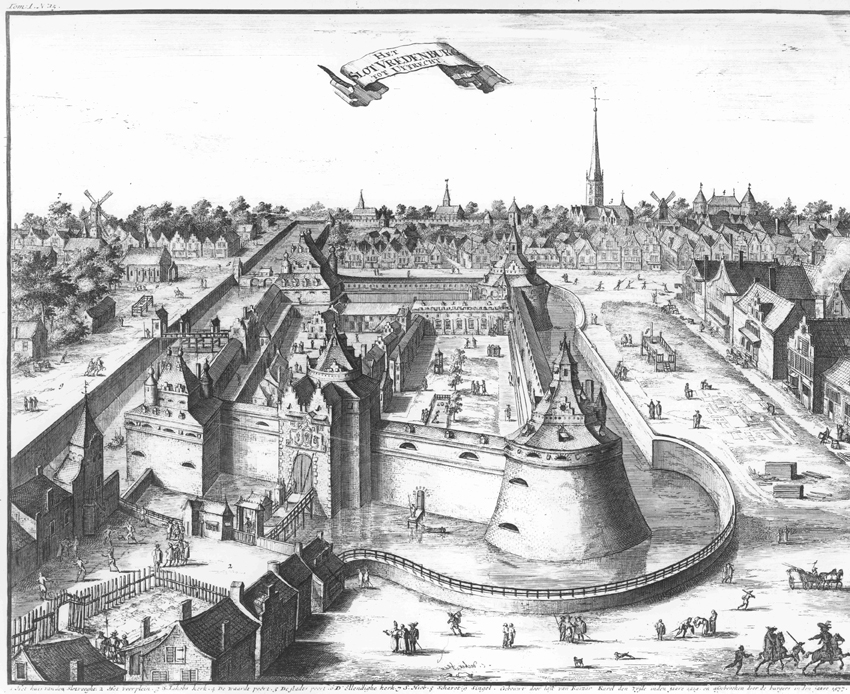
Putruwiel
Putruwiel was a notable medieval stone house located in the historic city of Utrecht in the Netherlands. Constructed between 1175 and 1350, it stands as one of the earliest examples of stone residential architecture within the city. The building’s strategic position near the Stathe trading district highlights its integration into Utrecht’s commercial life during the Middle Ages, a period when the city was an important regional hub despite not being a major player in the Hanseatic League.
Historical background and ownership
The name Putruwiel derives from the medieval couple Jacob van Putte and Oedele van Ruwiel, reflecting the residence’s connection to prominent local figures of the time. This association indicates the house’s status as a significant urban dwelling linked to influential families. In the mid-15th century, Putruwiel briefly served as a Hanseatic office, connecting it to the broader network of trade across Northwestern and Central Europe. This role, although temporary, underscores the building’s importance in facilitating regional commerce and its adaptability to the evolving economic landscape.
Architectural features and construction
Putruwiel was constructed primarily from cut stone, a material choice that provided both durability and a degree of defensive capability typical of fortified urban houses of the period. Archaeological excavations have revealed a multi-level underground structure beneath the main house, including a cellar and a wharf cellar that likely served as storage spaces for goods, reflecting the building’s commercial function and its proximity to the Oudegracht canal. The canal was integral to Utrecht’s trade quarter, facilitating the transport and storage of merchandise.
The original structure featured a solid stone build, with thick walls designed to withstand both environmental and human threats. Over the centuries, Putruwiel underwent significant architectural modifications. One of the most notable changes was the addition of a false front that raised the façade to over two stories high, altering the building’s external appearance while retaining its core medieval structure. These changes reflect evolving architectural tastes and functional requirements through the late medieval and early modern periods.
Archaeological remains and documentation
Despite its demolition in the mid-20th century (1958), the site of Putruwiel has been extensively studied through archaeological research and historical documentation. Excavations have preserved parts of the early masonry and the cellar structures, which provide valuable insight into medieval urban construction techniques and the use of subterranean spaces in stone houses.
Visual records, including detailed drawings and early photographs taken before demolition, document the building’s façade and its architectural evolution. These records are crucial for understanding the modifications made over time, such as the two-story false front and other exterior alterations. They also contribute to the broader knowledge of medieval urban housing in Utrecht’s historic center.
Putruwiel’s role in medieval urban life
The location of Putruwiel near the Stathe trading district and the Oudegracht canal positioned it at the heart of Utrecht’s medieval commercial activity. The building’s function as a residence and a Hanseatic office highlights its dual role in both domestic life and international trade. This combination of residential comfort and commercial utility is characteristic of urban stone houses of the period, which often served multiple purposes.
Its multi-level cellar system would have been essential for storing goods, particularly those transported via the canal, facilitating efficient trade operations. The stone construction also suggests a degree of wealth and status, as stone buildings were less common than timber structures in medieval Dutch cities.
Legacy and cultural significance
Although Putruwiel no longer stands, its archaeological remains and extensive documentation preserve its legacy as an early stone house in Utrecht. The building offers a window into the architectural and commercial history of the city during the Middle Ages, illustrating how urban residences could adapt to changing economic and social conditions over several centuries.
Putruwiel’s story enriches the understanding of medieval urban development in the Netherlands and provides a case study of the intersection between local nobility, trade networks, and architectural evolution. The preservation of its remains and archival materials ensures that this piece of Utrecht’s heritage continues to inform both scholars and the public about the complexities of medieval urban life.
Frequently asked questions (FAQ)
- How do I get to Putruwiel Castle?
- Putruwiel Castle is located in Utrecht, Netherlands, and can be easily accessed by public transportation. The nearest train station is Utrecht Central, from where you can take a local bus or taxi to the castle. If you're driving, there is parking available nearby.
- What is the historical significance of Putruwiel Castle?
- Putruwiel Castle has a rich history dating back to the 12th century, serving as a strategic fortification during various conflicts in medieval times. It played a crucial role in the defense of the region and has witnessed many significant events throughout Dutch history. Today, it stands as a symbol of Utrecht’s heritage.
- When was Putruwiel Castle built?
- The construction of Putruwiel Castle began in the early 12th century, making it one of the oldest castles in the Utrecht region. Over the centuries, the castle has undergone various renovations and restorations, preserving its historical architecture. Visitors can explore the different architectural styles that reflect its long history.
- Can I visit Putruwiel Castle year-round?
- Yes, Putruwiel Castle is open to visitors throughout the year, although its opening hours may vary by season. It is recommended to check the official website for the most current visiting hours and any seasonal events. Planning your visit ahead can enhance your experience.
- Why is Putruwiel Castle a popular tourist attraction?
- Putruwiel Castle is popular for its stunning architecture, beautiful gardens, and rich history, attracting history enthusiasts and families alike. The castle often hosts events and exhibitions that provide insight into medieval life, making it an engaging destination. Its picturesque setting also offers great photo opportunities.
- Is it possible to access Putruwiel Castle for visitors with disabilities?
- Yes, Putruwiel Castle strives to be accessible to all visitors, including those with disabilities. There are provisions in place to assist with accessibility, such as ramps and designated pathways. It’s advisable to contact the castle staff in advance for any specific needs or accommodations.
- What are the ticket prices for visiting Putruwiel Castle?
- Ticket prices for Putruwiel Castle vary depending on age, with discounted rates available for children and seniors. Adult tickets typically range from €10 to €15, while children under 12 may enter for free. Special family packages and group discounts may also be available.
- What is the best time to visit Putruwiel Castle?
- The best time to visit Putruwiel Castle is during the spring and summer months when the gardens are in full bloom and outdoor events are frequently held. Additionally, the weather is generally pleasant, making it ideal for exploring the castle grounds. However, fall also offers beautiful foliage and a quieter atmosphere.
- What nearby attractions can I visit after exploring Putruwiel Castle?
- After visiting Putruwiel Castle, you can explore other nearby attractions such as the historic city center of Utrecht, the Dom Tower, and the Utrecht University Botanic Gardens. There are also several charming cafes and shops in the vicinity that enhance your visit. These sites provide a comprehensive experience of Utrecht’s culture and history.
Information
Website
Visit websiteSources & official resources
Verify the information above using these authoritative references.
Loading map...
Visitor reviews
No reviews yet. Been here? Write the first review and help other travelers!
Write the first reviewVisited this castle? Share your experience
Your review helps other travelers and adds first-hand knowledge to our encyclopedia.