Pucará de Tilcara
The Pucará de Tilcara is an impressive pre-Inca archaeological fortress located on a hill just outside the small town of Tilcara in the province of Jujuy, Argentina. This ancient pukara, meaning fortress in the local Quechua language, was strategically constructed to oversee and defend the surrounding area, particularly the long stretch of the Quebrada de Humahuaca valley. Its elevated position provided extensive views for monitoring movement through this important trade and travel route in the Andes.
Historical context and cultural significance
The Pucará de Tilcara dates back to approximately the 11th century, during a period preceding the rise of the Inca Empire. It served as a defensive stronghold for the local indigenous communities, including the Omaguaca people, who inhabited the region before the Inca expansion. The site reflects the complex social and military organization of these pre-Inca cultures, demonstrating their ability to engineer fortified settlements adapted to the challenging Andean environment.
The fortress was built primarily to protect against rival groups and to control the vital corridor of the Quebrada de Humahuaca, which was a key route connecting different ecological zones and facilitating trade and cultural exchange across the Andes. The Pucará is one of the few surviving examples of such defensive architecture in northern Argentina, highlighting its importance in regional history.
Architectural features and layout
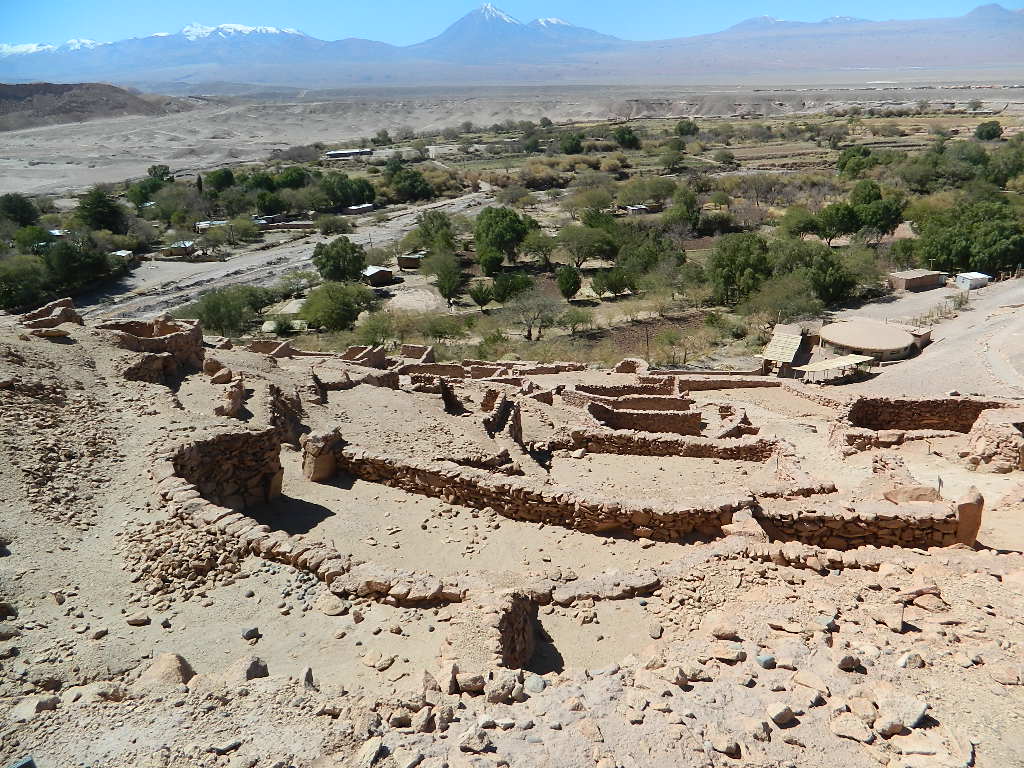
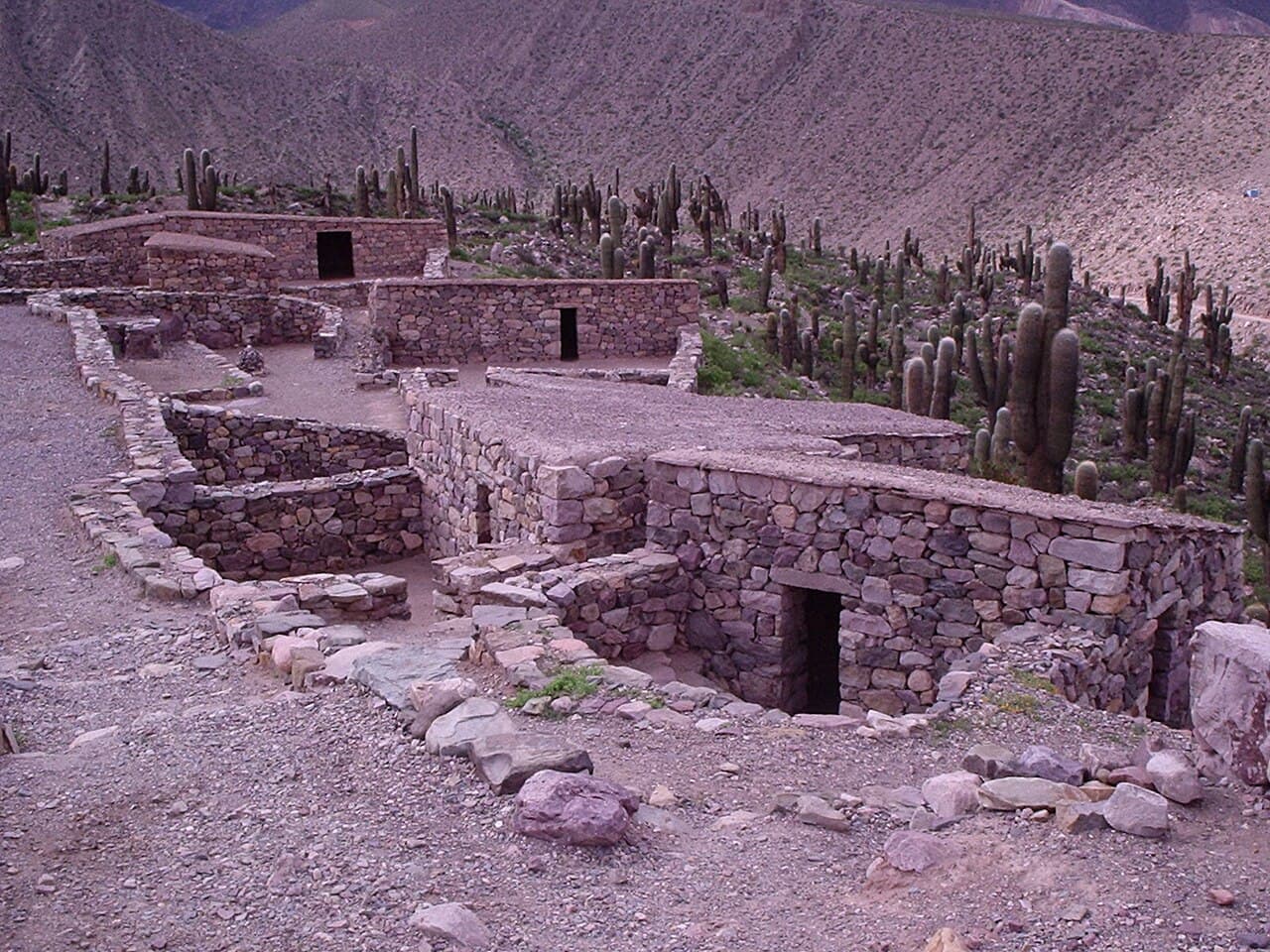
The site consists of extensive stone walls arranged in a series of terraces that follow the natural contours of the hill. These walls formed defensive barriers and enclosures for the inhabitants. The construction technique involved dry stone masonry, using locally sourced stones carefully fitted without mortar, a common method among Andean cultures.
The fortress complex includes remains of residential structures, storage facilities, and communal spaces, indicating a self-sustaining settlement. The layout is characterized by its adaptation to the steep terrain, with narrow pathways and stairways connecting different levels. The design reflects both practical defensive considerations and the need to maximize arable land on the terraced slopes.
Defensive elements
The defensive walls are the most prominent feature, built to withstand attacks and to provide vantage points for surveillance. The walls vary in thickness and height, with some sections reaching over two meters tall. The fortress also had limited access points, which could be easily defended against intruders.
Natural features of the hill, such as steep cliffs and rugged terrain, were incorporated into the defense strategy, making direct assault difficult. The positioning of the fortress allowed early warning of approaching enemies and control over the surrounding landscape.
Archaeological research and restoration
The Pucará de Tilcara has been the subject of archaeological study since the mid-20th century. Excavations have uncovered artifacts including pottery, tools, and remains of domestic life, providing insight into the daily activities and culture of its inhabitants.
Declared a National Monument in 2000, the site has undergone partial reconstruction to stabilize the ruins and enhance visitor understanding. These efforts aim to preserve the original structures while making the fortress accessible to the public. It remains the only publicly accessible archaeological site within the Quebrada de Humahuaca, attracting tourists interested in Andean history and pre-Columbian architecture.
Visiting the pucará de tilcara
Visitors to the site can explore the fortress ruins via marked trails that wind up the hill, offering panoramic views of the valley below. Interpretive signage provides context about the site's history, architecture, and cultural significance. The nearby town of Tilcara offers amenities and further cultural experiences related to the indigenous heritage of the region.
The site is open year-round, with the best visiting conditions in the dry season from May to October. Access involves a moderate uphill walk, making it suitable for visitors with reasonable mobility.
Frequently asked questions (FAQ)
- How do I get to Pucará de Tilcara from the town of Tilcara?
- The Pucará de Tilcara is located about a 15-minute walk from the center of Tilcara. Visitors can follow well-marked paths leading uphill to the archaeological site, which is easily accessible on foot.
- What is the historical significance of Pucará de Tilcara?
- Pucará de Tilcara is a pre-Inca fortress built in the 11th century. It served as a defensive stronghold for indigenous peoples controlling the Quebrada de Humahuaca trade route before the Inca Empire's expansion.
- Can I explore the entire site of Pucará de Tilcara?
- Yes, visitors can explore the partially reconstructed ruins, including defensive walls, terraces, and residential areas. Interpretive signs help explain the site's history and architecture.
- When is the best time to visit Pucará de Tilcara?
- The best time to visit is during the dry season, from May to October, when weather conditions are more favorable for hiking and outdoor exploration.
- Is Pucará de Tilcara suitable for families and children?
- The site is suitable for families with children who can manage moderate uphill walking. The trails are safe, but visitors should wear comfortable footwear and bring water.
Photo gallery

Public domain
Information
Current owner
Argentine government
Loading map...
Visitor reviews
No reviews yet. Been here? Write the first review and help other travelers!
Write the first reviewVisited this castle? Share your experience
Your review helps other travelers and adds first-hand knowledge to our encyclopedia.