Pezinok
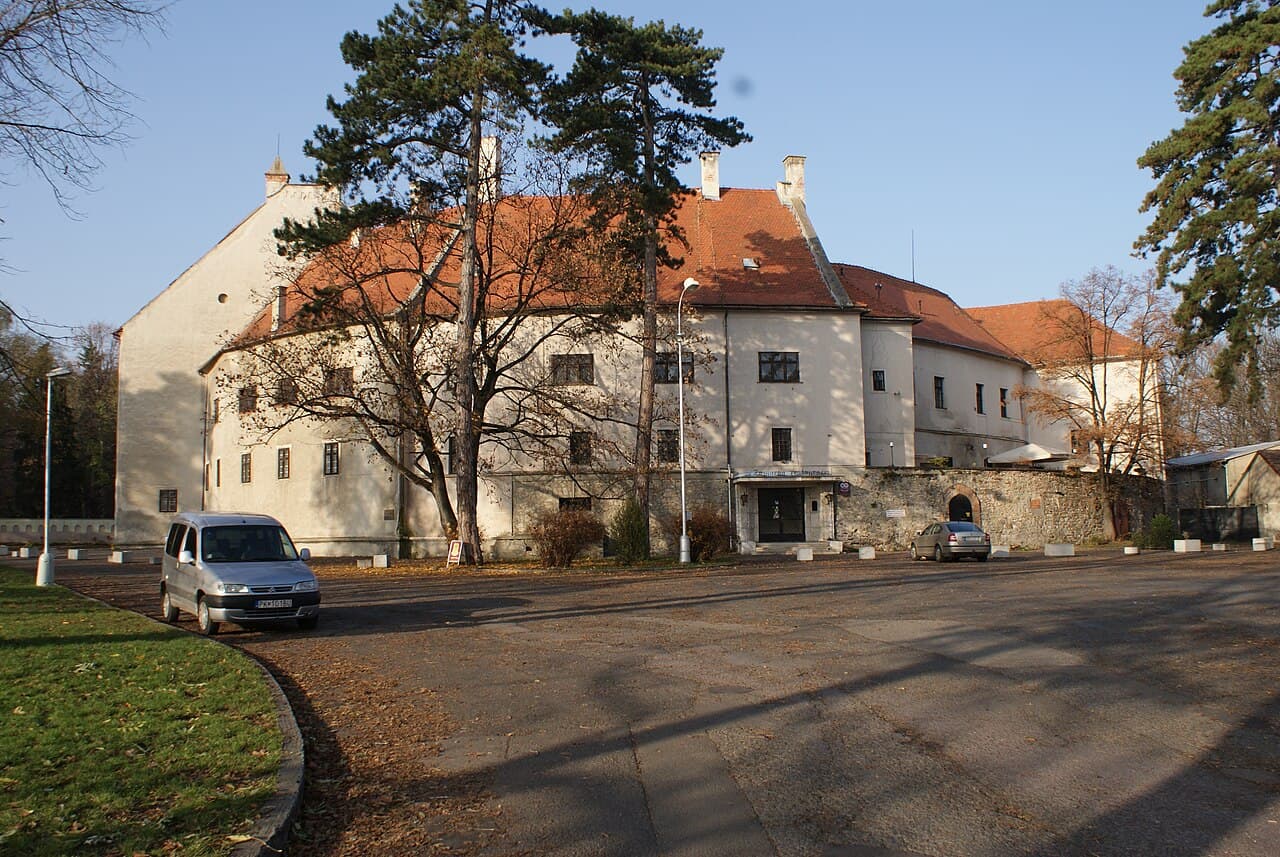
Pezinok Castle is a historic Gothic hill castle located in the town of Pezinok, Slovakia, nestled at the foothills of the Little Carpathians. Its origins date back to the early 13th century, with the first recorded mention of the area in 1208. Initially established as a mining settlement, Pezinok evolved into a prosperous town, supported by its strategic location and natural resources. The castle itself was constructed during the High Medieval period, likely in the late 13th century, serving as a fortified residence and administrative center for local noble families.
Medieval origins and early history
The castle was originally built by the counts from Svätý Jur and Pezinok, a noble family that played a significant role in the region's development. The fortress was designed on a circular plan featuring an inner courtyard with a central tower. Defensive structures included a second tower positioned above the gate passage in the outer curtain wall. Surrounding the castle were earth ramparts and two water-filled moats, which enhanced its defensive capabilities. Access was controlled via drawbridges spanning the moats, a typical feature of medieval fortifications.
In 1271, the castle became a target during military campaigns by the forces of King Přemysl Otakar II of Bohemia, highlighting its strategic importance. Despite damage sustained during these conflicts, Pezinok Castle remained a significant stronghold in the region.
Ownership and architectural evolution
The svätý jur family and 14th century rebuilding
During the 14th century, Pezinok Castle came under the ownership of the noble family from Svätý Jur, who adopted the surname Świętojurski. This family undertook substantial rebuilding efforts to restore the castle after earlier damages. Documentation from this period provides valuable descriptions of the castle's layout and features, including the circular defensive walls and towers.
15th to 17th century transformations
Between 1401 and 1429, a notable dispute occurred between Jerzy Świętojurski and his brother Mikołaj over the division of the Pezinok estate, reflecting the castle's role as a key asset in noble inheritance conflicts. In 1575, ownership passed to Ján Krušic, who also owned the nearby White Stone Castle (Biely Kameň).
In 1609, Pezinok Castle underwent a significant Renaissance-style reconstruction. While the renovation modernized the castle's appearance and living quarters, it preserved many of its original defensive features, maintaining its role as a fortified residence.
Baroque and 19th-century modifications
The castle later belonged to the Illesházy family before being acquired in the early 18th century by Ján Pálffy. In 1718, Pálffy commissioned a Baroque refurbishment that transformed the castle's character, shifting it away from military defense toward a more residential and representational function.
Count Francis Pálffy led another major renovation in 1844, during which the castle's fortifications were largely dismantled. The earthworks and defensive walls were removed, and the moats were converted into ornamental fish ponds. Around the castle, a large English-style park was created, featuring rare trees and a pond inhabited by waterfowl, enhancing the estate's aesthetic appeal.
Damage, restoration, and modern use
In 1875, a lightning strike caused extensive damage to the northern part of the castle, leading to the collapse of that section. Early in the 20th century, a new building was constructed on the damaged site, altering the castle's original circular layout.
In 1931, the town of Pezinok purchased the castle, only to sell it five years later to the Slovak Vintner Association. Today, the castle remains under the ownership of a wine company, reflecting the region's long-standing tradition of viticulture.
The castle's 19th-century appearance has been preserved, and its cellars house a small museum dedicated to the history of winemaking in the area. This museum offers visitors insight into the cultural and economic importance of wine production in Pezinok and the surrounding Little Carpathians.
Architectural features and layout
Pezinok Castle's original circular design with an inner courtyard and central tower was a distinctive medieval fortress layout. The presence of a gatehouse tower and outer defensive walls with moats provided multiple layers of protection. The use of drawbridges over the moats was a classic defensive feature allowing controlled access.
Over centuries, the castle evolved from a purely military fortress to a noble residence with Renaissance and Baroque stylistic influences. The removal of defensive walls and transformation of moats into ornamental ponds reflect this shift.
The surrounding English garden park established in the 19th century contributes to the castle's picturesque setting and is home to rare tree species and a pond that supports local wildlife.
Cultural significance and tourism
Pezinok Castle is an important cultural landmark in Slovakia, embodying centuries of regional history from medieval fortifications to Renaissance and Baroque noble residences. Its association with prominent noble families such as the Świętojurski, Krušic, Illesházy, and Pálffy families highlights its historical importance.
Today, the castle serves as a venue for cultural events and houses a museum dedicated to the region's renowned wine heritage. Visitors can explore the castle grounds, enjoy the scenic park, and learn about the area's viticultural traditions, making Pezinok Castle a notable destination for history enthusiasts and wine lovers alike.
Frequently asked questions (FAQ)
- How do I visit Pezinok Castle?
- Pezinok Castle is open to visitors who wish to explore its historic grounds and the wine museum located in its cellars. Check local tourism websites or the castle's official page for current opening hours and guided tour availability.
- What is the historical significance of Pezinok Castle?
- Pezinok Castle is a key medieval fortress with a rich history involving noble families and military events, reflecting the region's strategic importance in the Little Carpathians.
- When was Pezinok Castle built?
- The castle was originally constructed in the early 13th century, with the first mention of the area dating back to 1208.
- Can I learn about winemaking at Pezinok Castle?
- Yes, the castle houses a small museum dedicated to the local wine industry, showcasing the long-standing viticultural traditions of the Pezinok region.
- Is Pezinok Castle accessible for visitors with mobility issues?
- Due to the historic nature of the castle and its terrain, some areas may be challenging for visitors with mobility impairments. It is advisable to contact the castle management ahead of your visit for specific accessibility information.
Photo gallery

Photo by feťour•Public domain
Information
Sources & official resources
Verify the information above using these authoritative references.
Loading map...
Visitor reviews
No reviews yet. Been here? Write the first review and help other travelers!
Write the first reviewVisited this castle? Share your experience
Your review helps other travelers and adds first-hand knowledge to our encyclopedia.