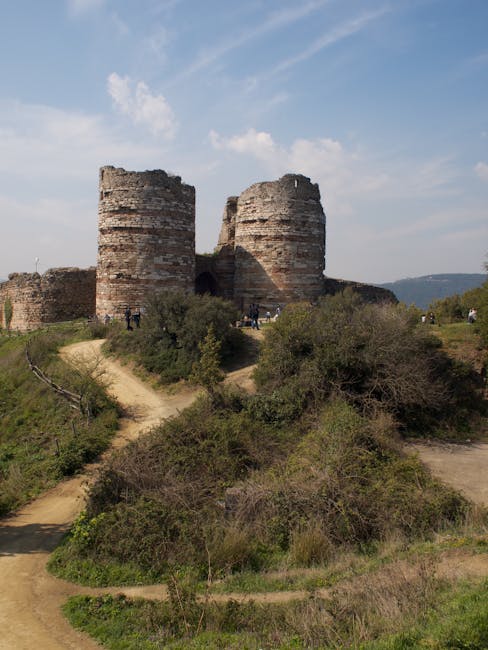
Ovidius Tower, locally called Ovidius or Ovid Kulesi, is a notable rectangular tower perched on a prominent hill in the village of Uskumruköy, within the province of Istanbul, Turkey. Its strategic location overlooking the Black Sea coast suggests it played a significant role in maritime surveillance and defense during its active years.
Historical context and origins
The exact origins of Ovidius Tower remain uncertain, with scholarly debate surrounding its construction period and initial purpose. While some traditions romantically associate the tower with the Roman poet Ovidius (Ovid), who was exiled to the Roman town of Tomis (modern Constanța, Romania) by Emperor Augustus, there is no direct historical evidence confirming this connection. This legend likely derives from the tower's name rather than documented history.
More credible research places the tower's construction in the late medieval period, specifically between the 12th and 14th centuries. This timeframe aligns with the era of the Byzantine Empire and the presence of Genoese traders and settlers along the Black Sea coast. The Genoese were known for establishing fortifications and trade posts in the region, including a castle in the nearby coastal town of Kilyos, which supports the theory that they may have built or used Ovidius Tower.
Architectural features and structure
Ovidius Tower is characterized by its rectangular plan, a common design for watchtowers and small fortifications in the medieval period. The tower's elevated position on a hill provided extensive visibility over the surrounding landscape and the Black Sea, making it an effective watchtower and lighthouse for guiding seafarers and monitoring maritime activity.
The construction materials and techniques reflect typical Byzantine and Genoese military architecture of the period, with robust stone masonry designed to withstand both natural elements and potential attacks. The tower's walls are thick to provide defense, and its height would have allowed for signaling and observation.
Although the tower has undergone restoration and consolidation efforts in recent years to preserve its structure, it remains closed to the public and is not currently used for any specific function.
Role in regional maritime defense
During the late medieval period, the Black Sea coast was a critical zone for trade and military control. Fortifications like Ovidius Tower were integral to the network of coastal defenses that protected trade routes and settlements from pirates and rival powers.
The tower's dual function as a watchtower and possible lighthouse would have been vital for early warning against naval threats and for safe navigation, especially in an era before modern maritime technology.
Legends and cultural significance
The association with Ovidius adds a layer of cultural intrigue to the tower, linking it to the rich literary heritage of the Roman Empire. While this connection is likely apocryphal, it enhances the tower's status as a historical landmark within the region.
Ovidius Tower stands as a symbol of the layered history of Istanbul's coastal areas, reflecting influences from the Roman, Byzantine, and Genoese periods. Its preservation contributes to understanding the complex maritime history of the Black Sea region.
Current condition and accessibility
Today, Ovidius Tower is restored and consolidated, ensuring its structural stability, though it is currently closed to visitors. It does not serve any active role but remains an important heritage site for historical study and cultural appreciation.
Frequently asked questions (FAQ)
- How do I get to Ovidius Tower?
- Ovidius Tower is conveniently located in the heart of Istanbul. You can reach it via public transportation, including trams and buses, or by taking a short taxi ride from major city landmarks.
- What is the historical significance of Ovidius Tower?
- Ovidius Tower dates back to the Byzantine era and has served various purposes throughout its history, including defense and observation. It is named after the Roman poet Ovid, highlighting its cultural and literary connections to ancient history.
- When was Ovidius Tower built?
- Construction of Ovidius Tower began in the 5th century AD, making it one of the oldest structures in Istanbul. Its enduring presence offers a glimpse into the architectural styles and historical changes of the region over centuries.
- Can I take guided tours of Ovidius Tower?
- Yes, guided tours are available for visitors who wish to learn more about the history and architecture of Ovidius Tower. These tours often provide deeper insights and fascinating stories that enhance the visitor experience.
- Why is Ovidius Tower a popular tourist attraction?
- Ovidius Tower is popular due to its unique historical significance, stunning architecture, and panoramic views of Istanbul. Visitors are drawn to its rich past and the opportunity to explore a lesser-known gem in a bustling city.
- Is it possible to access the upper levels of Ovidius Tower?
- Yes, visitors can access the upper levels of Ovidius Tower, which offer breathtaking views of the surrounding area. The climb may involve steep stairs, so be prepared for a bit of a workout.
- What are the opening hours for Ovidius Tower?
- Ovidius Tower is open to visitors daily from 9 AM to 6 PM. It's advisable to check for any seasonal changes in hours or special events that might affect access.
- What are the ticket prices for Ovidius Tower?
- Tickets for Ovidius Tower are reasonably priced, with discounts available for students and seniors. It's a good idea to check the official website for the most current pricing and any special promotions.
- What is the best time to visit Ovidius Tower?
- The best time to visit Ovidius Tower is during the spring and fall when the weather is mild and pleasant. Early mornings or late afternoons can also provide fewer crowds and a more enjoyable experience.
- Are there nearby attractions to visit after Ovidius Tower?
- Yes, after visiting Ovidius Tower, you can explore other nearby attractions such as the Hagia Sophia and the Basilica Cistern. These landmarks are within walking distance and offer rich historical contexts that complement your visit to the Tower.
Information
Address
Uskumruköy village, Istanbul Province, Turkey
Loading map...
Visitor reviews
No reviews yet. Been here? Write the first review and help other travelers!
Write the first reviewVisited this castle? Share your experience
Your review helps other travelers and adds first-hand knowledge to our encyclopedia.