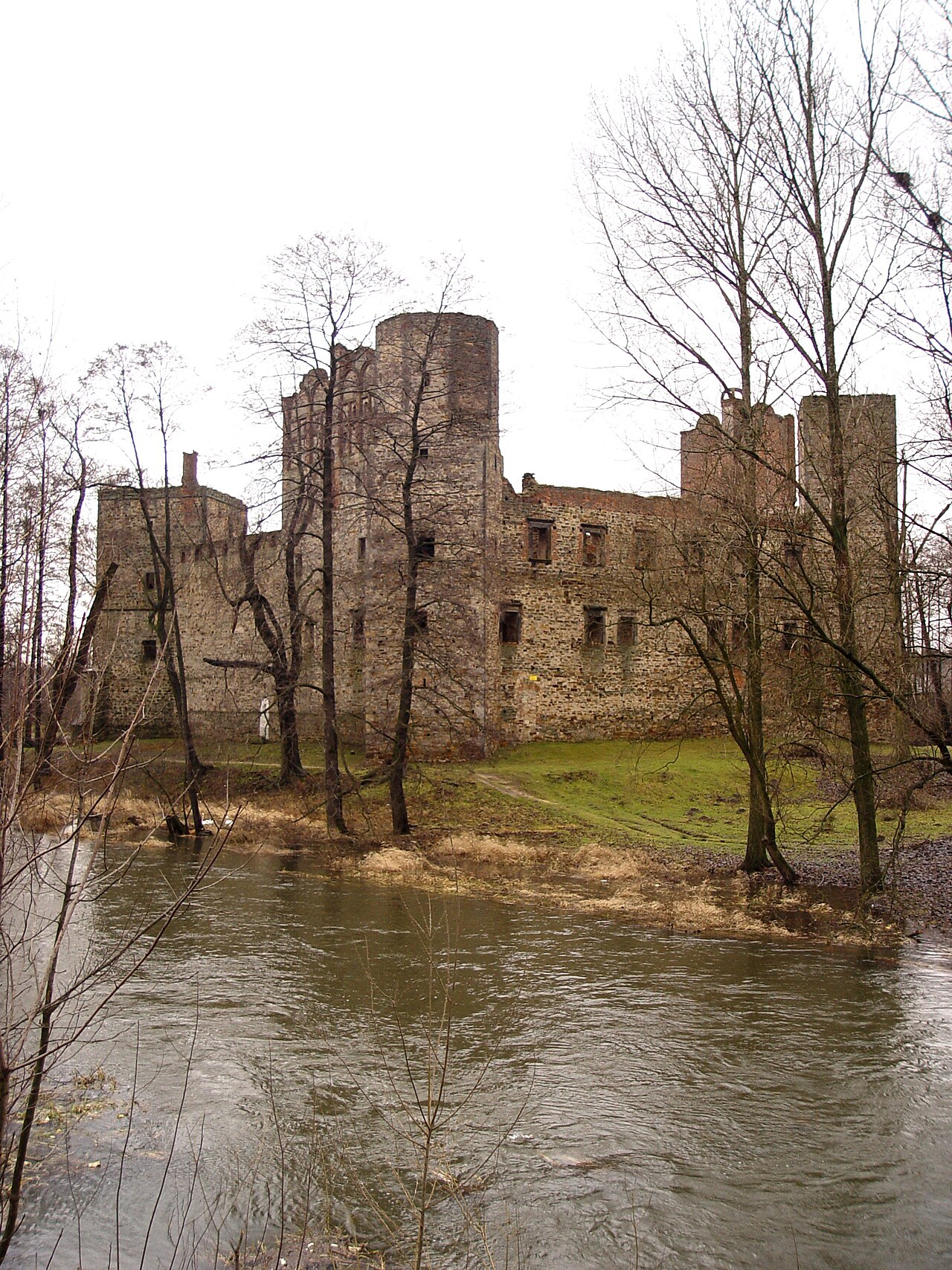
Opoczno
Opoczno Castle stands as a testament to Poland's layered history, blending medieval military architecture with later Renaissance revival modifications. Located in the town of Opoczno, this castle's origins trace back to the reign of King Casimir the Great in the mid-14th century, marking it as a significant royal stronghold within the region. Strategically positioned at the crossroads of important trade routes connecting Silesia, Ruthenia, Toruń, and Lwów, the castle played a vital role in both defense and administration.
The initial construction, which began around 1360-1365, featured a rectangular layout integrated into the town's defensive walls. The castle included a prominent rectangular tower at its western corner and a residential building along the southern wall. The main entrance was through a gate tower in the north-eastern section, all built predominantly from durable limestone, reflecting typical medieval fortification techniques.
Medieval origins and defensive architecture
The castle was part of a broader system of fortifications that protected Opoczno during the High Medieval period. It served as a residence for the royal starost, an official responsible for local governance and judicial matters, and occasionally hosted the monarch. The castle's design emphasized defense, with thick stone walls, a gate tower, and integration into the city's ramparts.
Castle layout and materials
The rectangular plan was typical for urban castles of the era, with the rectangular tower providing both lookout and defensive capabilities. The residential building along the southern wall housed administrative offices and living quarters. The use of limestone masonry ensured the structure's resilience against attacks and environmental wear.
Renaissance transformations and decline
By the late 16th century, the castle's military significance diminished as the town's fortifications evolved. In 1599, under the reign of King Sigismund III Vasa, a new city gate was pierced through the outer castle wall, likely in the southern corner, signaling a shift from military defense to urban development. This modification allowed a street to pass through the castle courtyard, indicating the fortress had lost its defensive function.
Partial reconstruction around 1620 adapted the castle for administrative purposes, housing the district court and offices. The castle's tower, notably without internal stairs, was repurposed as a prison in the 18th century. However, the castle suffered significant damage during the Swedish invasion of 1655 (the Deluge), leading to further decline.
Post-medieval reconstruction and modern usage
Following the destruction wrought by the Swedish invasion, the castle underwent several phases of rebuilding. In the 18th century, the tower's use as a prison underscored its functional transformation. By the mid-19th century, the castle had fallen into ruin, as documented in drawings from the 1840s.
After 1874, local authorities initiated reconstruction on the castle's foundations, but the restoration was not historically accurate, obscuring the original medieval appearance. In 1927, the building was remodeled in the Polish Renaissance revival style, featuring ornamental attics, distinctive portal designs with baniowe (onion-shaped) elements, and the display of the Odrowąż coat of arms, connecting the structure symbolically to Polish heritage.
During World War II, German forces demolished the western part of the southern wing to widen a road, altering the building's footprint. Post-war, the structure served as a hospital before being adapted into the Regional Museum from 1976 onwards.
Archaeological discoveries and current condition
Recent archaeological investigations, notably in 2017 led by Błażej Muzolf, uncovered remnants of a medieval half-bastion adjoining the town walls, confirming the castle's integration with the town's fortifications. These findings highlight the castle's original defensive role and architectural complexity.
Today, the castle building no longer retains its medieval character due to the extensive 19th and 20th-century reconstructions. It stands as a ruined monument reflecting centuries of architectural evolution, historical upheaval, and adaptive reuse. The castle's story exemplifies the challenges of preserving historic fortifications amid urban development and changing political landscapes.
Significance and heritage value
Opoczno Castle holds considerable cultural and historical significance as a symbol of medieval royal authority and regional governance in Poland. Its architectural transformations trace the broader shifts from fortified medieval strongholds to Renaissance administrative centers and modern civic buildings. The castle's layered history offers valuable insights into Poland's military, political, and social evolution from the Middle Ages through the modern era.
Visitors to Opoczno can explore the castle's museum housed within the reconstructed building, gaining an understanding of the site's multifaceted past. The archaeological remains and the castle's position within the town's historical fabric make it an important heritage site for both local residents and scholars of medieval and Renaissance architecture.
Frequently asked questions (FAQ)
- When was Opoczno Castle originally built?
- Opoczno Castle was originally constructed in the mid-14th century, around 1360-1365, during the reign of King Casimir the Great.
- What architectural style characterizes the current castle building?
- The present building reflects the Polish Renaissance revival style, particularly following the 1927 remodeling that added ornamental attics and historicizing portals.
- Is the current castle building the original medieval structure?
- No, the current building was constructed in the 19th century on the medieval castle's foundations and extensively remodeled in the early 20th century.
- Can visitors see remains of the original medieval fortifications?
- Yes, archaeological excavations have uncovered parts of a medieval half-bastion connected to the town walls, visible as part of the castle's heritage.
- What happened to the castle during World War II?
- During World War II, German forces demolished the western part of the southern wing to widen a nearby road leading towards Radom.
- What is the current use of Opoczno Castle?
- Today, Opoczno Castle houses the Regional Museum, showcasing the local history and the castle's layered past.
Information
Sources & official resources
Verify the information above using these authoritative references.
Loading map...
Visitor reviews
No reviews yet. Been here? Write the first review and help other travelers!
Write the first reviewVisited this castle? Share your experience
Your review helps other travelers and adds first-hand knowledge to our encyclopedia.