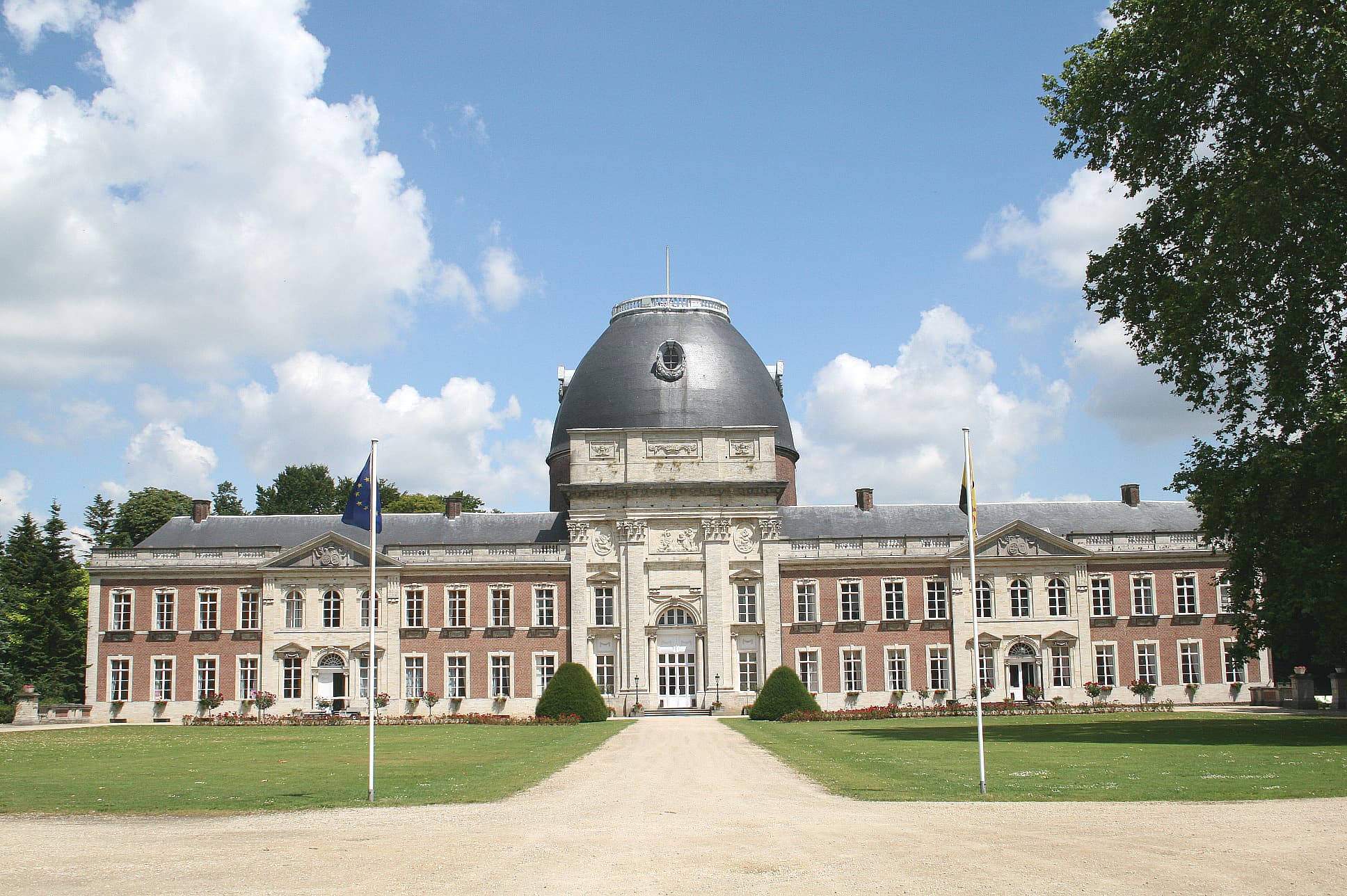
Opheylissem Castle — Belgium castle

Opheylissem Castle

Opheylissem Castle: historic abbey transformed into stately home
Hélécine, Belgium
Modern (19th–20th c.)
Well Preserved

Opheylissem Castle stands as a significant historical monument in Hélécine, Belgium, embodying the transformation of religious heritage into a stately residence. Originally part of the Premonstratensian Opheylissem Abbey, this site reflects centuries of religious, architectural, and cultural evolution. The abbey itself was dissolved in 1796 during the upheavals following the French Revolution, a fate common to many ecclesiastical properties across Europe at that time.

The majority of the abbey's monastic buildings were destroyed after its dissolution, leaving only the abbot's house—known as the prelatuur—intact. This surviving structure became the foundation for what is now recognized as Opheylissem Castle. In 1870, the renowned Belgian architect Alphonse Balat undertook a comprehensive restructuring of the abbot's house, reshaping it into a grand stately home that harmoniously blends historic elements with 19th-century architectural sensibilities.

Architectural transformation by Alphonse Balat

Alphonse Balat, noted for his contributions to Belgian architecture and as the mentor of Victor Horta, implemented a redesign that preserved the historic character of the abbey's abbot's house while adapting it for residential use. His work at Opheylissem Castle is emblematic of the 19th-century revivalist trends that sought to merge medieval and modern styles, though the castle itself does not strictly adhere to a single architectural style, reflecting a mixed architectural heritage.

Balat also designed the surrounding landscaped park, creating a picturesque setting that complements the castle's stately appearance. The park features typical elements of 19th-century landscape design, including expansive lawns, tree-lined avenues, and carefully planned garden spaces that enhance the castle's visual appeal and provide a serene environment.

Historical significance and ownership

The castle and its grounds were eventually acquired by the Province of Brabant, reflecting its importance as a cultural and historical asset. Following administrative changes, ownership passed to the Province of Walloon Brabant after 1995. This transfer ensured continued preservation and public accessibility, allowing visitors to appreciate both the architectural beauty and the rich history embedded in the site.

Opheylissem Castle

Photo by Richard (R.) Boske • CC0

The legacy of the Premonstratensian abbey

The original Premonstratensian abbey was part of a Roman Catholic religious order of canons regular founded in the 12th century. The order was known for its strict adherence to communal living and pastoral work. Although most of the abbey buildings were lost, the survival of the abbot's house provides valuable insight into the monastic life and architectural practices of the period.

Today, Opheylissem Castle serves as a tangible link to this religious heritage, illustrating the transition from ecclesiastical to secular use that many such properties experienced in the wake of political and social change in Europe. The castle's preservation and adaptation highlight the evolving functions of historic buildings and the importance of architectural conservation.

Visiting Opheylissem Castle and its park

Visitors to Opheylissem Castle can enjoy the elegant architecture of the restructured abbot's house and the beautifully maintained 19th-century park. The site offers a peaceful retreat into history and nature, with walking paths that invite exploration of the grounds. The castle's location in the Walloon Brabant region makes it accessible for those interested in Belgian heritage and the architectural legacy of former monastic sites.

While the castle is primarily a stately home rather than a fortress, its historical context and architectural evolution make it a noteworthy destination for enthusiasts of religious history, architecture, and landscape design. The careful preservation efforts by the provincial authorities ensure that Opheylissem Castle remains a cherished cultural landmark.

Frequently asked questions (FAQ)

How do I get to Opheylissem Castle?
Opheylissem Castle is located in Hélécine, Belgium, and is accessible by car via the E314 motorway. Public transport options include local buses that connect to nearby train stations, making it easier for visitors to reach the castle.
What is the historical significance of Opheylissem Castle?
Opheylissem Castle dates back to the 14th century and has a rich history associated with the local nobility. It played a significant role in regional politics and has been a witness to many historical events in Belgium.
When was Opheylissem Castle built?
The construction of Opheylissem Castle began in the 14th century, with various renovations and expansions taking place over the centuries. Its architecture reflects different historical styles, showcasing the evolution of castle design through time.
Can I visit Opheylissem Castle?
Yes, Opheylissem Castle is open to visitors, allowing them to explore its grounds and learn about its history. Guided tours may be available, providing deeper insight into the castle's architecture and significance.
Why is the architecture of Opheylissem Castle unique?
The architecture of Opheylissem Castle features a blend of medieval and Renaissance styles, showcasing its historical evolution. Its impressive towers, fortified walls, and intricate details make it a notable example of Belgian castle architecture.
Is it possible to host events at Opheylissem Castle?
Yes, Opheylissem Castle offers facilities for hosting private events, such as weddings and corporate gatherings. The picturesque setting and historical ambiance make it an attractive venue for special occasions.
What are the opening hours for Opheylissem Castle?
Opheylissem Castle is typically open to the public from Tuesday to Sunday, with specific hours that may vary by season. It is advisable to check the official website for the most current opening times before your visit.
What is the best time to visit Opheylissem Castle?
The best time to visit Opheylissem Castle is during the spring and early autumn when the weather is pleasant and the gardens are in bloom. These seasons also offer a variety of events and activities that enhance the visitor experience.
How much do tickets cost to visit Opheylissem Castle?
Ticket prices for Opheylissem Castle vary depending on age and whether you are participating in a guided tour. Discounts may be available for children, students, and seniors, so it's a good idea to check the website for the latest pricing information.
Are there any nearby attractions to explore while visiting Opheylissem Castle?
Yes, visitors to Opheylissem Castle can explore other nearby attractions such as the charming village of Hélécine and various walking trails in the surrounding countryside. The area is rich in natural beauty and offers opportunities for outdoor activities and local dining.

Photo gallery

Opheylissem Castle
Click to view

Photo by Jean-Pol GRANDMONT•CC BY-SA 3.0

Opheylissem Castle
2 photos • Click any image to view in full screen

Information

Palace Castle

Sources & official resources

Verify the information above using these authoritative references.

Loading map...

Visitor reviews

No reviews yet. Been here? Write the first review and help other travelers!

Write the first review

Visited this castle? Share your experience

Your review helps other travelers and adds first-hand knowledge to our encyclopedia.

Write a review

(5/5)

0/2000 characters

Your review will be visible after admin approval

Nearby castles

4.1 km

Gollard Tower

Near Rue Warichet, Belgium

Gollard Tower, also known locally as Tour de Gollard or Tour Sarrasine, is a medieval tower ruin situated in a field between the villages of Noduwez and Marilles, in the province of Flemish Brabant within the Flemish region of Belgium. This tower is a rare surviving example of a High Medieval fortified structure that once formed part of a small seigniory on the border of the Duchy of Brabant and the Principality of Liège. Historical background and ownership The construction of Gollard Tower is dated to the 13th century, a period marked by feudal conflicts and territorial defense. The tower was originally associated with the Gollard family, who were the lords of the seigniory and vassals to the Duke of Brabant. Positioned strategically near the boundary with the Principality of Liège, the tower's location was significant for controlling and defending this frontier area. Throughout the 14th century, the seigniory changed hands and came under the ownership of the Herbais family. Over subsequent centuries, several other families held the property, reflecting the typical feudal pattern of inheritance and sale. Architectural features and layout Historical records from the 15th century indicate that the castle complex included a keep, a residential house, farm buildings, a water mill, and a chapel. Today, only the remains of the keep survive, standing as a solitary ruin amidst the rural landscape. The keep itself was a fortified tower designed for defense and residence. Its robust stone construction and elevated position would have provided a vantage point over the surrounding territory, essential for monitoring movement along the border and protecting the seigniory. Defensive purpose and strategic importance Located between the fortified manors of Jauche and Linsmeau, the tower likely played a role in a network of defenses guarding the Duchy of Brabant's frontier. Its position on the border with the Principality of Liège made it a critical point for surveillance and military readiness during the turbulent High Medieval period. Later history and decline In 1678, the property was acquired by the Drouhot family. By this time, the castle had already fallen into disuse and was reportedly in ruins by the 18th century. The decline of the castle reflects broader changes in military technology and political stability that made such small fortified keeps obsolete. Despite its ruinous state, the site remains accessible and offers a glimpse into medieval feudal architecture and territorial defense strategies. Its small scale and relative obscurity make it a unique and quiet historical site. Visiting Gollard Tower today The ruins of Gollard Tower are freely accessible to the public. Visitors can explore the remains of the keep and appreciate the rural setting that once formed a strategic border zone. The tower's modest size and secluded location provide an intimate experience of medieval history away from more crowded tourist sites.

High Medieval (11th–13th c.)
Details
7.9 km

Oorbeek Castle

Tienen, Belgium

Oorbeek Castle is a notable example of Renaissance architecture located in Tienen, Belgium. Constructed between 1642 and 1646, the castle is distinguished by its three prominent round corner towers, a feature that exemplifies the defensive and aesthetic design principles of the period. Architectural features and design The castle's layout reflects the Renaissance emphasis on symmetry and proportion, with the three round towers positioned strategically at the corners to provide both structural strength and a commanding view of the surrounding landscape. These towers not only served defensive purposes but also contributed to the castle's imposing silhouette. The use of round towers was a common Renaissance adaptation to improve defense against artillery, as their curved surfaces could better deflect cannonballs compared to square towers. The masonry work and detailing of the castle exhibit typical Renaissance motifs, including balanced window placements and classical elements. Historical context and construction Oorbeek Castle was built in the mid-17th century during a period of relative stability in the region, allowing for the construction of such residences that combined defense with comfort. The castle likely served as a noble residence, reflecting the status and wealth of its owners through its architectural refinement and strategic design. The construction period of 1642 to 1646 places the castle firmly within the Renaissance era, a time when many castles transitioned from purely military fortresses to stately homes with fortified features. Location and surroundings Situated in the city of Tienen in the province of Flemish Brabant, Oorbeek Castle is part of the rich cultural heritage of the region. Tienen itself is known for its historical significance and proximity to other important castles and landmarks in Belgium. The castle's setting offers views of the surrounding countryside, which would have been important both for defense and for the enjoyment of the estate's inhabitants. Preservation and current state While detailed information about the current condition of Oorbeek Castle is limited, its distinctive architectural features, especially the three round corner towers, remain a key aspect of its historical identity. The castle is likely in a preserved or partially preserved state, maintaining its Renaissance character. Efforts to maintain such castles in Belgium often involve restoration to preserve their architectural integrity and historical value, although specific restoration records for Oorbeek Castle are not widely documented. Significance in Belgian castle heritage Oorbeek Castle contributes to the diverse tapestry of Belgian castles, representing the Renaissance period's architectural and cultural trends. Its construction during the 1640s marks it as a transitional structure between medieval fortifications and early modern noble residences. The castle's design reflects broader European trends in castle architecture, where functionality and aesthetic considerations merged to create residences that were both defensible and comfortable.

Renaissance (15th–17th c.)
Details
10.8 km

Meldert Castle

Meldert, Belgium

Meldert Castle, also known locally as Kasteel van Meldert, is situated in the village of Meldert within the province of Flemish Brabant in the Flemish region of Belgium. This castle is a notable example of 19th-century neo-Gothic architecture that replaced an earlier medieval structure on the same site. Historical background and origins The earliest recorded mention of Meldert Castle dates back to 1572, when it was inherited by Willem II van Oyenbrugge, who was the Lord of Meldert, from his father. The original medieval seat, known as the Meldert Keep, was located in the village center but suffered significant damage due to a fire in 1568. It is believed that the castle standing before the 19th-century reconstruction was built shortly after this event, although precise details about the medieval castle's form and extent remain limited. 19th-century reconstruction and architectural transformation By the mid-19th century, the castle was owned by Josephine Louise Van der Noot, Countess of Duras. Following the death of her first husband, Louis Eugène Marie Lamoral de Ligne, she remarried Charles-Ferdinand d'Oultremont de Wegimont. Around 1845, she undertook the demolition of the old castle and commissioned a new structure in the neo-Gothic style. This reconstruction was carried out by the architect Vivroux from Huy, who designed the castle to reflect the romantic revival of medieval Gothic architectural elements popular during that era. The new castle features characteristic neo-Gothic elements such as pointed arches, decorative tracery, and steeply pitched roofs that evoke the medieval aesthetic while serving modern residential functions. The design likely included towers, ornamental stonework, and other features typical of the style, although detailed architectural plans are scarce. Fire damage and restoration In 1877, Meldert Castle suffered a significant fire that damaged parts of the building. The restoration was promptly undertaken by Adrien d'Oultremont de Duras, who ensured the castle was repaired and maintained its neo-Gothic character. This restoration preserved the castle's architectural integrity and allowed it to continue as a noble residence. Notable residents and later uses Between 1888 and 1890, the castle served as the residence of Henry Shelton Sanford, the United States Ambassador to Belgium. This period highlights the castle's role not only as a noble family estate but also as a diplomatic residence, reflecting its status and suitability for high-profile occupants. In 1957, the castle and its surrounding domain were acquired by the Chaplains of Labor, a Roman Catholic congregation. They established the Sint-Janscollege within the castle, transforming it into an educational institution. This use continues to the present day, with the castle functioning as a private school. Architecture and grounds today Today, Meldert Castle remains a well-preserved example of neo-Gothic architecture from the 19th century. Although the castle's interior is not open to the public due to its use as a school, the surrounding estate has been developed into a public park. This park allows visitors to appreciate the castle's exterior and the landscaped grounds, which contribute to the site's historic ambiance. The castle's location on Waversesteenweg 1 places it within a rural setting that retains its historical character. The estate's park provides a green space for the community and visitors, linking the castle's noble past with its contemporary educational and recreational roles. Architectural significance and heritage Meldert Castle exemplifies the neo-Gothic revival movement in Belgium, a period when many medieval castles and estates were rebuilt or renovated to reflect romanticized medieval styles. The castle's transformation in the 19th century illustrates the era's fascination with Gothic architecture and the desire among the nobility to express status and heritage through such stylistic choices. The castle's survival through fire and its adaptive reuse as a school demonstrate the resilience and evolving function of historic estates in Belgium. Meldert Castle remains an important cultural landmark within Flemish Brabant, representing both the region's medieval legacy and its 19th-century architectural developments.

Post-Renaissance (17th–18th c.)
Details

