Nuwendoorn Castle
Nuwendoorn Castle, also known locally as Kasteel Nuwendoorn, is a medieval fortress located in the fields north of the village of Krabbendam in the province of North Holland, Netherlands. This castle was originally constructed in the late 13th century as part of a strategic network of coercion castles commissioned by Floris V, Count of Holland (1256–1296) to exert control over the rebellious West Frisian population.
The historical context and construction of Nuwendoorn Castle
In 1282, construction began on Nuwendoorn Castle alongside other fortifications such as Radboud Castle. These castles were designed to serve as military strongholds and administrative centers to enforce the authority of the Count of Holland in the contested West Frisian territories. Nuwendoorn was built during the High Medieval period, reflecting the typical defensive needs and architectural styles of that era.
The castle's design likely included a keep or donjon, surrounded by defensive walls and possibly a moat, although exact details are limited due to its destruction and subsequent ruin. Its strategic position in the flat Dutch landscape was intended to control movement and assert dominance.
Destruction, rebuilding, and decline
Nuwendoorn Castle's initial phase of construction was interrupted when it was destroyed in 1296 by rebellious West Frisian forces following the assassination of Floris V. This event marked a significant setback in the Count's campaign to dominate the region.
Despite this destruction, the castle was completely rebuilt, and by 1321, John I, Lord of Polanen, was appointed steward of the castle. The castle thereafter served as a minor garrison post, typically manned by about 15 soldiers, and saw a succession of stewards managing its affairs over the following decades.
After 1367, historical records no longer mention Nuwendoorn Castle, leading historians to believe it was likely destroyed or abandoned due to a major flood around 1370. This natural disaster may have caused significant damage, contributing to the castle's disappearance from memory and the loss of its precise location over time.
Rediscovery and archaeological excavations
The castle site remained lost until 1948, when a local farmer uncovered large stones while plowing his fields. These stones attracted the attention of amateur archaeologists who conducted preliminary excavations and uncovered part of the castle's foundations. However, these were subsequently reburied to preserve the site.
A comprehensive archaeological excavation was carried out in 1960, revealing the complete foundations of Nuwendoorn Castle. This excavation provided valuable insight into the castle's layout and construction techniques, confirming its 13th-century origins and function as a military fortress.
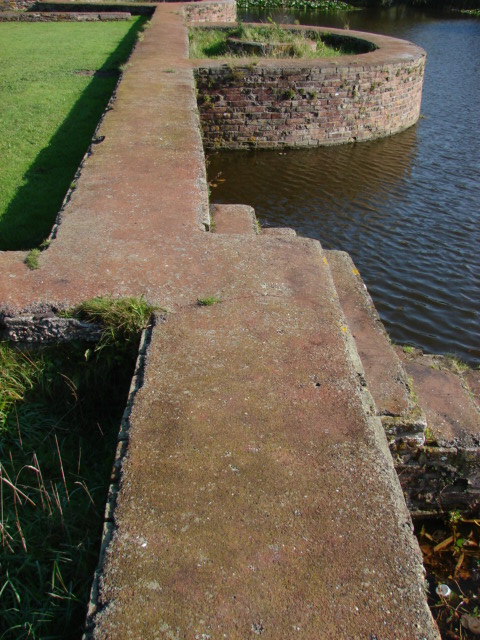
Following the excavation, the foundations were partially reconstructed to mark the castle's footprint in the landscape, allowing visitors to visualize the castle's original extent and structure.
Modern preservation and visitor experience
By the early 21st century, the site had become overgrown and the reconstructed foundations were deteriorating. In 2009–2010, efforts were made to restore and enhance the site. The foundations were rebuilt to a greater height to improve visibility, and a modern steel watchtower was installed on the location of the former keep, providing visitors with panoramic views of the surrounding Dutch countryside.
Today, Nuwendoorn Castle is freely accessible to the public. It offers a unique experience as a partially reconstructed medieval fortress ruin set within a tranquil rural setting. The site serves as both a cultural heritage landmark and an educational resource illustrating the history of medieval fortifications in the Netherlands.
Architectural features and significance
Although no above-ground structures remain from the original castle, the foundations reveal a compact layout typical of coercion castles built during the High Medieval period. These castles were primarily functional military installations rather than lavish residences. The presence of a watchtower today echoes the original castle's defensive purpose.
Nuwendoorn Castle exemplifies the military architecture employed by the Counts of Holland to assert control over fractious regions during the late 13th and early 14th centuries. Its history reflects the turbulent relationship between the Holland rulers and the West Frisian population, marked by conflict, rebellion, and shifting political power.
Visiting Nuwendoorn Castle
The castle site is located near Burchtweg in North Holland and is open to visitors year-round with no admission fee. The reconstructed foundations and watchtower provide a tangible connection to the medieval past. Visitors can explore the site on foot, enjoy views of the surrounding fields, and learn about the castle's history through onsite information panels.
The peaceful rural setting and the castle's evocative ruins make it a notable destination for those interested in medieval history, archaeology, and Dutch cultural heritage.
Frequently asked questions (FAQ)
- How do I get to Nuwendoorn Castle?
- Nuwendoorn Castle is located near Burchtweg in North Holland, Netherlands. It is accessible by car and local roads, with parking available nearby. Visitors should check local maps for the best route from nearby towns.
- What is the historical significance of Nuwendoorn Castle?
- Nuwendoorn Castle was built in the late 13th century by Floris V, Count of Holland, as a coercion castle to control the West Frisian population. It reflects the military and political struggles of the High Medieval period in the region.
- Can I visit the castle ruins and watchtower?
- Yes, the castle site is freely accessible to the public. Visitors can explore the reconstructed foundations and climb the steel watchtower to enjoy panoramic views of the surrounding Dutch countryside.
- When was Nuwendoorn Castle destroyed?
- The castle was first destroyed in 1296 by rebellious West Frisians shortly after the assassination of Floris V. It likely fell into ruin after a flood around 1370, which caused its final disappearance from historical records.
- Is there an entrance fee to visit Nuwendoorn Castle?
- No, there is no entrance fee to visit Nuwendoorn Castle. It is open year-round and accessible freely to all visitors.
Information
Address
Next to Burchtweg, Netherlands
Loading map...
Visitor reviews
No reviews yet. Been here? Write the first review and help other travelers!
Write the first reviewVisited this castle? Share your experience
Your review helps other travelers and adds first-hand knowledge to our encyclopedia.