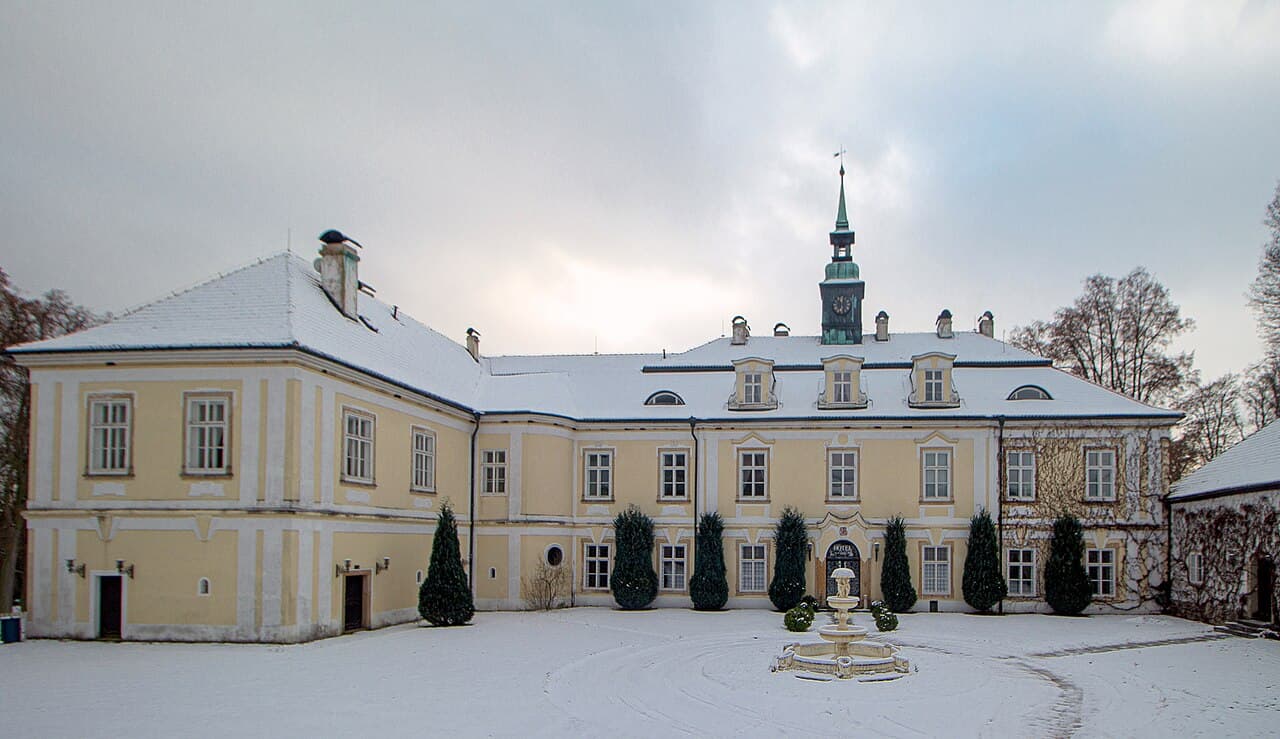
Nový Berštejn Castle — Czech Republic castle

Nový Berštejn Castle

Nový Berštejn Castle near Dubá, Czechia
Renaissance (15th–17th c.)
Well Preserved

Nový Berštejn Castle is a notable example of a 16th-century Renaissance hill castle located near the village of Dubá in the Doksy municipality, Czechia. The castle's name, Berštejn, also applies to a nearby chateau, which is often distinguished from the original castle structure. Nový Berštejn stands on a modest elevation, typical of hill castles designed for both defense and residence during the Renaissance period.

Historical background and location

The castle was constructed in the 16th century during the Renaissance, a time when many fortifications in the region were being adapted from medieval defensive structures into more comfortable noble residences. Nový Berštejn was strategically positioned to oversee the surrounding landscape, providing both security and control over local trade routes and agricultural lands.

Its proximity to the village of Dubá and the broader Doksy region places it within a historically significant area of northern Bohemia, known for its rich cultural heritage and numerous castles and chateaux.

Architectural features and style

Nový Berštejn Castle exhibits key characteristics of Renaissance architecture, which include symmetrical layouts, ornamental stonework, and the integration of defensive elements with residential comfort. The castle's design reflects the transitional nature of the period, combining traditional fortification elements such as thick walls and towers with Renaissance stylistic details.

The castle complex typically includes a main residential building, defensive curtain walls, and possibly a gatehouse or tower that would have served both as lookout points and symbols of noble status. The use of Renaissance motifs in window frames, portals, and interior decoration would have been part of the castle's original aesthetic.

Defensive structures

While primarily a noble residence, Nový Berštejn retained defensive features such as battlements and possibly a moat or dry ditch, which were common in Renaissance hill castles to deter attackers. The castle's elevated position further enhanced its defensibility, allowing occupants to monitor the surrounding terrain effectively.

Residential and functional spaces

The castle would have contained living quarters for the noble family, service rooms, storage areas, and possibly a chapel. The architectural layout aimed to balance security with the comfort and status expected by Renaissance nobility.

Later history and current condition

Over the centuries, Nový Berštejn Castle has experienced various changes in ownership and function. While the nearby chateau often receives more attention for its role as a later noble residence, the castle itself remains a significant historical monument.

The castle is currently well preserved, maintaining much of its Renaissance character and structural integrity. Its condition allows visitors to appreciate the architectural and historical significance of Renaissance hill castles in the Czech Republic.

Visiting Nový Berštejn Castle

Visitors to Nový Berštejn can explore the castle's exterior and appreciate its setting atop a hill near Dubá. The castle's surroundings offer scenic views of the northern Bohemian landscape. While access to the interior may be limited depending on ownership and preservation status, the site remains an important cultural landmark.

Nearby attractions

The Doksy region is rich in historical sites, including other castles and natural attractions such as lakes and forests, making it a rewarding destination for cultural and outdoor tourism.

Frequently asked questions

  • When was Nový Berštejn Castle built? Nový Berštejn Castle was constructed in the 16th century during the Renaissance period.
  • What architectural style is Nový Berštejn Castle? The castle exemplifies Renaissance architecture with a blend of defensive and residential features.
  • Is Nový Berštejn Castle open to the public? Access to the interior may be limited, but the castle grounds and exterior can be viewed by visitors.
  • Where is Nový Berštejn Castle located? It is located near the village of Dubá in the Doksy municipality, northern Bohemia, Czechia.
  • What type of castle is Nový Berštejn? It is classified as a hill castle, built on an elevated site for defense and visibility.
  • What is the current condition of Nový Berštejn Castle? The castle is well preserved, retaining much of its Renaissance architectural character.

Frequently asked questions (FAQ)

How do I get to Nový Berštejn Castle?
Nový Berštejn Castle is located in Dubá, Czechia, and can be reached by car or public transport. If traveling by car, follow the signs from the main road to Dubá. For public transport, check local bus schedules for routes that stop near the castle.
What is the historical significance of Nový Berštejn Castle?
Nový Berštejn Castle dates back to the 14th century and is an important example of Gothic architecture in the region. It has witnessed various historical events and changes in ownership, reflecting the rich history of Czechia. The castle's ruins offer insights into the medieval lifestyle and defense strategies.
When was Nový Berštejn Castle built?
Construction of Nový Berštejn Castle began in the early 14th century, with significant modifications made in the subsequent centuries. Originally built as a fortress, it was expanded into a residence for nobility over time. The castle's architecture showcases the evolution of styles from Gothic to Renaissance.
Can I visit Nový Berštejn Castle year-round?
Yes, Nový Berštejn Castle is open to visitors year-round, although access may vary based on weather conditions and maintenance. It's best to check the official website or local tourism information for any seasonal changes. Guided tours are often available, enhancing the visitor experience.
Why is Nový Berštejn Castle popular among tourists?
Nový Berštejn Castle is popular for its picturesque ruins and stunning views of the surrounding landscape. It offers a glimpse into the past with its historical significance and architectural beauty. Additionally, the castle is a great spot for hiking and exploring the natural beauty of the Czech countryside.
Is it possible to take guided tours of Nový Berštejn Castle?
Yes, guided tours of Nový Berštejn Castle are available during the visiting season. These tours provide in-depth information about the castle's history and architecture. It's recommended to book in advance, especially during peak tourist seasons to ensure availability.
What are the opening hours of Nový Berštejn Castle?
Opening hours for Nový Berštejn Castle vary by season, typically being open from late spring to early autumn. During peak season, the castle often opens from 9 AM to 6 PM. Always check the official website for the most current hours before planning your visit.
What are the ticket prices for Nový Berštejn Castle?
Ticket prices for Nový Berštejn Castle are usually modest, making it an affordable destination for families and history enthusiasts. Discounts may be available for children, students, and seniors. It's advisable to check online or at the entrance for the latest pricing information.
What nearby attractions can I visit while at Nový Berštejn Castle?
While visiting Nový Berštejn Castle, you can explore the charming town of Dubá and its surrounding natural parks. Nearby attractions include other historical sites and hiking trails that showcase the region's natural beauty. The area is rich in cultural heritage, making it a great spot for a day trip.

Photo gallery

Nový Berštejn Castle
Click to view

Photo by VitVit•CC BY-SA 4.0

1 photo • Click any image to view in full screen

Information

Hill Castle

Loading map...

Visitor reviews

No reviews yet. Been here? Write the first review and help other travelers!

Write the first review

Visited this castle? Share your experience

Your review helps other travelers and adds first-hand knowledge to our encyclopedia.

Write a review

(5/5)

0/2000 characters

Your review will be visible after admin approval

Nearby castles

2.6 km

Starý Berštejn

Dubá, Czech Republic

Starý Berštejn is a 15th-century hilltop castle ruin located near the town of Dubá in the Czech Republic. This medieval fortress was originally constructed by Jindřich Hlaváč of Dubá, a nobleman from a prominent local family, during a period marked by the division of family estates. The castle's strategic position atop Berkovský Hill at an elevation of 481 meters above sea level provided a commanding view of the surrounding landscape, making it a valuable defensive site. The castle's early history is closely tied to the fortunes of the Hlaváč family. Shortly after building Starý Berštejn, Jindřich expanded his influence by inheriting the nearby estate of Jestřebí in 1407, consolidating his holdings in the region. By the mid-15th century, ownership had shifted to the Vartenberk family, with Zikmund of Berštejn recorded as a notable lord of the castle. Subsequently, the property passed to the knights of the Šebířov family. Around 1500, the estate returned to the Berka family, with Jiří Berka adopting the title "of Berštejn" to emphasize his connection to the castle. Despite its status, the castle's accommodations were considered less comfortable compared to newer residences. Jiří Berka and his son preferred to reside in the nearby chateau of Kuří Vody (modern-day Kuřívody). In 1547, following the division of the estate among Aleš Berka's sons, Adam Berka inherited Starý Berštejn but chose to build a new residence called Nový Berštejn. This decision led to the gradual abandonment and decline of the original castle. Over time, local inhabitants scavenged stones from the ruins for their own construction needs. By 1592, Starý Berštejn had disappeared from estate records, signaling its disuse. Architectural features and layout Starý Berštejn exemplifies a typical 15th-century hilltop castle design, making strategic use of the natural basaltic rock outcrop on Berkovský Hill. The castle's defensive system included an outer bailey, a courtyard surrounded by auxiliary buildings, though only traces of these structures remain visible today. A surviving circular bastion projects from the defensive walls, illustrating the castle's fortified perimeter and its defensive capabilities against siege warfare. The central area of the castle was protected by a parkán, an outer defensive wall that enclosed the core living spaces. This wall extended further on the northeast side, enhancing the castle's defense. At the highest point within the parkán stood the main residential tower, notable for its thick walls approximately two meters wide. The interior of this tower measured roughly 4 by 5 meters, providing a compact but secure living space. During later construction phases, the tower's ground floor was vaulted, a common medieval architectural feature that strengthened the ceiling and provided fire resistance. Additional buildings were constructed within the castle's core during this period, indicating ongoing development and adaptation of the site. The upper floor of the tower contained the main chamber or světnice, which offered expansive views for surveillance and defense. Historical significance and preservation Starý Berštejn's history reflects the shifting fortunes of regional noble families and the changing nature of medieval fortifications. Its decline in favor of newer residences like Nový Berštejn illustrates the evolution of aristocratic living preferences during the Renaissance period. The castle's abandonment and subsequent stone scavenging by locals contributed to its ruinous state. In the 20th century, recognition of the site's cultural and historical value led to preservation efforts. Since 1965, Starý Berštejn has been protected as a cultural monument, ensuring the safeguarding of its remains. From 1972 onward, Miloš Novák, who leased the property, undertook maintenance and partial restoration work to stabilize the ruins and prevent further deterioration. Visiting starý berštejn today The castle ruin lies approximately 140 meters above the base of Berkovský Hill and is accessible via a yellow-marked hiking trail from Dubá. Visitors can explore the site to observe the remaining wall sections, earthworks, and the distinctive basalt rock formations that supported the castle's foundations. The location offers scenic views of the surrounding countryside, providing insight into the strategic considerations behind its original placement. Although much of the castle has fallen into ruin, the preserved elements such as the vaulted tower ground floor, the circular bastion, and the layout of the outer bailey allow visitors to appreciate the architectural and defensive features typical of a late medieval hill castle. Interpretive signage and local guides help contextualize the site's history and significance within the broader narrative of Czech medieval fortifications.

Late Medieval (14th–15th c.)
Details
7.5 km

Castle Jestřebí

Jestřebí, Czech Republic

Castle Jestřebí stands as a remarkable example of a medieval rock castle in the Czech Republic, located in the municipality of Jestřebí. Established around 1400 by the noble Berky of Dubá family, the castle was part of a strategic network of fortifications controlling regional power in northern Bohemia. The Berky family, influential landowners since the late 13th century, utilized the castle to assert dominance over the surrounding landscape and to protect their interests. The castle's history is deeply intertwined with the turbulent era of the Hussite Wars in the early 15th century, a series of religious and political conflicts that reshaped Bohemia. In 1426, the fortress fell under the control of the Hussites, who entrusted it to Jindřich Hlaváč of Dubá, a commander loyal to their cause. This period marked a significant shift in the castle's role, transforming it into a military stronghold for the Hussite movement. Following the conclusion of the wars, the castle returned to the hands of the Dubá family, with Čeněk of Dubá using it as a base for raids into the neighboring Lusatia region. These aggressive actions provoked retaliatory military campaigns, leading Čeněk to sell the castle to Jan Smiřický to avoid further destruction. The Smiřický family maintained ownership for about four decades during a relatively stable period before the castle passed to Kryštof of the Vartenberk family in 1491. Despite its strategic importance, by the mid-16th century, Castle Jestřebí was abandoned and had fallen into ruin. Over the following centuries, local villagers dismantled parts of the masonry to reuse the stone, accelerating the castle's decay. Natural erosion and repeated rockfalls further contributed to the degradation of the site. Since 1958, Castle Jestřebí's ruins have been legally protected as a cultural monument in the Czech Republic. However, preservation efforts face ongoing challenges due to natural rock instability, nearby sandstone quarrying, and invasive vegetation. A significant rock collapse in 2009 led to the temporary closure of the site and prompted safety measures, including the installation of protective barriers approved in 2012. Architectural features and site layout Castle Jestřebí is classified as a rock castle, uniquely constructed atop a prominent sandstone outcrop rising approximately 259 meters above sea level. The natural rock formation, once resembling the hull of a stranded ship, heavily influenced the castle's design. Unlike traditional castles with extensive stone walls, much of Jestřebí's defensive structure was carved directly into the sandstone, integrating the natural landscape into its fortifications. The summit of the rock was fortified with battlements hewn from the stone itself, providing a defensible position with commanding views of the surrounding terrain. The castle's layout adapted to the irregular shape of the rock, with chambers and defensive features carved into the stone rather than built as separate structures. The treadwheel well One of the most remarkable surviving features is the rock-cut chamber that housed a treadwheel well. This ingenious medieval mechanism used a large wheel powered by human effort to draw water from a well beneath the rock. Remnants of the treadwheel apparatus are still visible on the exterior of the chamber, illustrating the castle's self-sufficiency in water supply during sieges. In the 19th century, a spiral staircase was installed inside the well shaft, repurposing the space to facilitate visitor access to the elevated parts of the ruins. This adaptation highlights the site's transition from a defensive fortress to a historical monument accessible to the public. Historical significance and ownership transitions The castle's history reflects the shifting political and military landscape of Bohemia during the late medieval period. Initially a stronghold of the Berky of Dubá family, it became a strategic asset during the Hussite Wars. The involvement of notable families such as the Vartenberk and Smiřický further underscores its importance in regional power dynamics. Ownership changes often corresponded with broader political developments. The sale to Jan Smiřický was motivated by the need to protect the castle from destruction amid ongoing conflicts. Later, the acquisition by Kryštof of Vartenberk in the late 15th century represented consolidation of regional estates. Decline and ruin By the mid-16th century, Castle Jestřebí had been abandoned, likely due to changes in military technology and political stability reducing the need for such fortifications. The castle fell into disrepair, and its stones were quarried by local inhabitants for other construction projects. Natural degradation through rockfalls further diminished the structural remains. Preservation challenges and current status Despite legal protection as a cultural monument, Castle Jestřebí faces significant preservation challenges. The sandstone rock is prone to erosion and instability, with documented collapses occurring multiple times in the 19th and 20th centuries. These events have altered the original shape of the rock and destroyed parts of the castle's remains. Human activities such as nearby quarrying and the spread of invasive plants exacerbate the site's vulnerability. The 2009 rock collapse was particularly severe, prompting safety concerns that led to the installation of protective barriers in 2012. Access to the site is currently limited, with the southern, lower sections open to visitors while the northern, higher parts remain closed for safety reasons. Visitor experience and landscape context Visitors to Castle Jestřebí must ascend approximately 77 steps, climbing around 60 vertical meters from the village below to reach the ruins. The site offers panoramic views of the surrounding villages, mountain ranges, and nearby ponds, making it a significant landmark within the region. A marked hiking trail connects the castle ruins with the nearby town of Česká Lípa, integrating the site into local tourism and outdoor recreation. The castle's dramatic setting atop a sandstone outcrop and its unique rock-carved architecture provide a compelling experience for history enthusiasts and nature lovers alike.

Late Medieval (14th–15th c.)
Details
7.8 km

Jiljov

Holany, Czech Republic

Jiljov is a unique example of a romantic-style hill castle ruin located near the village of Holany in the modern Czech Republic. Unlike medieval castles built for defense or residence, Jiljov was conceived in the early 19th century as part of a deliberate landscape design reflecting the Romantic movement's fascination with medieval aesthetics and picturesque ruins. It stands today as a cultural monument that intertwines natural rock formations with artificial earthworks and masonry, offering visitors a glimpse into the era's artistic landscaping trends rather than military architecture. The creation of jiljov as a romantic garden folly The origins of Jiljov date back to the early 1800s when Vincenc Karel Kounic, the owner of the nearby Zahrádky Castle estate, commissioned significant modifications to the surrounding landscape. These efforts were part of a broader trend among European aristocracy to enhance their estates with scenic elements that evoked a sense of history and nostalgia. The site was transformed into a picturesque retreat featuring an oval-shaped rocky formation surrounded by a broad moat measuring between 15 and 32 meters in width. This moat enclosed an artificially created island, which was stabilized by sandstone masonry walls bonded with clay. These walls were primarily structural features designed to retain the reshaped terrain within the water barrier. Contrary to earlier assumptions by historian August Sedláček, who speculated a medieval origin linked to local nobility, archaeological investigations conducted in 1970 clarified that the site was entirely a product of 19th-century landscaping. The earthworks and masonry remain are not remnants of a defensive fortress but rather a carefully crafted garden folly intended to enhance the romantic ambiance of the estate grounds. Architectural and landscape features of jiljov The layout of Jiljov reflects the romanticized conception of medieval ruins popular in the 19th century. The site incorporates natural rock formations shaped into an oval plan, surrounded by a wide moat that emphasizes isolation and mystery. The surviving masonry fragments along the moat’s edge serve as retaining walls, constructed from sandstone blocks joined with clay mortar. These walls are the only substantial built elements on the site, with no evidence of extensive interior structures or defensive installations. The moat and island create a dramatic visual effect, simulating the appearance of a ruined fortress on a rocky outcrop. This artificial ruin was designed to evoke emotions of nostalgia and romantic melancholy, characteristic of the period’s aesthetic ideals. The site’s integration of natural and man-made elements exemplifies the 19th-century practice of landscape gardening where historic motifs were recreated to enhance the scenic quality of aristocratic estates. Historical significance and protection status Since 1965, Jiljov has been officially protected as a cultural monument in the Czech Republic. This designation recognizes its value not as a medieval fortress but as an important example of 19th-century romantic landscaping and garden architecture. The site provides insight into the cultural and artistic sensibilities of the period, illustrating how historic forms were reimagined to serve aesthetic rather than practical purposes. Visitors to Jiljov can explore the remains of the masonry ruins and the shaped natural rock, appreciating the site's role in the history of landscape design. The castle's location on a rocky hill and its surrounding moat contribute to its atmospheric setting, making it a noteworthy destination for those interested in the intersection of history, art, and nature. Access and visitor experience The ruins of Jiljov are accessible via a side path branching from a hiking trail that connects the villages of Holany and Zahrádky. This trail allows visitors to experience the site's blend of natural scenery and historic landscaping firsthand. The preserved stone fragments and moat outline the perimeter of the artificial island, offering a tangible connection to the 19th-century vision of a romantic ruin. While there are no extensive buildings or interior chambers to explore, the site’s charm lies in its atmospheric setting and the story it tells about the Romantic era’s influence on garden and estate design. Jiljov remains a distinctive cultural landmark that enriches the heritage of the Czech Republic.

Post-Renaissance (17th–18th c.)
Details
