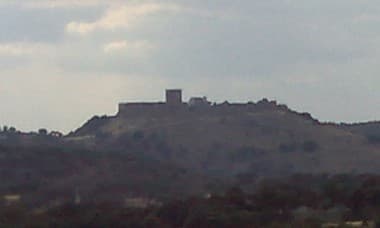
Noudar Castle
Noudar Castle, locally known as Castelo de Noudar, is a remarkable medieval fortress located northwest of the village of Barrancos in the Baixo Alentejo region of Portugal. Perched atop a 275-meter-high hill overlooking the bend of the Ardila River—which marks the border between Portugal and Spain—the castle commands sweeping views of the surrounding plains and stands as a testament to the turbulent history of the Iberian Peninsula.
The origins of Noudar Castle trace back to the 10th or 11th century when the first fortification was constructed by Muslim settlers. This early structure was likely a modest tower made of rammed earth, strategically placed to oversee the road leading to the town of Beja. The site’s significance grew during the Christian reconquest, when in 1167, forces led by Gonçalo Mendes da Maia captured Noudar from Muslim control, marking the beginning of its integration into the Christian kingdoms.
Medieval construction and military order influence
In the early 14th century, the castle underwent significant transformation under the auspices of the Military Order of Aviz. In 1303, King Denis of Portugal donated the territory to the Order with the explicit instruction to rebuild and fortify the castle. Under the leadership of Master Lourenço Afonso, who is commemorated in an inscription dating from 1308, construction began on the medieval fortress that largely defines the site today. Commanders such as Aires Afonso and Vasco Afonso continued the development, with Vasco Afonso documented as donating the castle in 1322.
The castle was designed as a hill castle with an irregular trapezoidal plan aligned northwest to southeast. It consisted of an inner castle featuring a robust square keep tower in the southeast and an outer castle enclosing the medieval village to the northwest. The curtain walls of the outer castle encircled the village, reinforced by twelve corbels—rectangular or square projections providing structural support—and two main gates facing east and west, each flanked by small rectangular towers for defense.
Architectural features and defensive structures
The keep tower stands approximately 17.5 meters high with two entrances: one at ground level and another on the upper floor accessible by an external staircase. Its roofline is adorned with pyramidal merlons, the stone crenellations that served as protective parapets. Inside the keep, a cistern retains water, essential for enduring sieges. The castle grounds include two additional cisterns within the central courtyard, ensuring a reliable water supply for its inhabitants.
The fortress also featured a barbican—an outer defensive wall—forming a trapezoidal secondary enclosure with a double wall line on the northeast side and two rectangular towers with tile-covered roofs on the southwest. Defensive elements such as semicylindrical corbels on the southeast side and square towers on the east and north further reinforced the castle’s fortifications, although some of these were already partially ruined by the early 16th century.
Within the castle walls lies the parochial church of Nossa Senhora do Desterro (Our Lady of Exile), reconstructed in the 1980s as part of modern conservation efforts. This church adds a religious dimension to the castle complex, reflecting its role as a fortified settlement rather than a mere military outpost.
Historical significance and turbulent border conflicts
Noudar Castle witnessed a series of conflicts and changes in control throughout its history, reflecting the broader geopolitical struggles between Portugal and Castile. It was taken by the Kingdom of Castile in 1339 but returned to Portuguese hands in 1372. The castle changed hands again during the late 14th century, notably during the 1383-1385 Portuguese succession crisis, before finally remaining under Portuguese control following the Treaty of Monção in 1386.
During the 17th and early 18th centuries, the castle was involved in the Restoration Wars and subsequent conflicts between Spain and Portugal. Spanish forces occupied the site multiple times, including notable occupations in 1644 and 1707. These repeated sieges and occupations contributed to the castle’s gradual decline and depopulation.
By the 18th century, the village of Noudar had lost its municipal status and administrative functions were transferred to the nearby town of Barrancos. The castle and village were eventually abandoned during the 19th century, leading to a state of ruin that persisted until modern restoration efforts.
Restoration and modern conservation efforts
Recognized for its cultural and historical value, Noudar Castle was declared a National Monument in 1910. Archaeological excavations and restoration projects began in earnest during the late 20th century, stabilizing the ruins and reconstructing key structures such as the castle’s church. Further restoration took place in the early 21st century, including the establishment of a training school within the castle in 2000 and landscape restoration efforts around the site.
Despite its remote location—accessible primarily by a dirt road from Barrancos—Noudar Castle is open to visitors during daytime hours and offers a unique opportunity to explore a well-preserved example of a high medieval hill castle on the Portuguese-Spanish border. Its solitude and dramatic setting amidst the plains and the Ardila River enhance the visitor experience, making it a hidden gem for enthusiasts of medieval architecture and Iberian history.
Archaeological and natural surroundings
The wider landscape around Noudar Castle is rich in archaeological and traditional features. Nearby are prehistoric dolmens and Chalcolithic settlements, indicating the area's long history of human occupation. Traditional structures such as watermills and shepherds’ huts with distinctive circular stone ceilings add to the cultural heritage of the region.
The natural environment includes vegetation such as oleanders along watercourses and woodlands dominated by various oak species. The terrain near the border has been shaped by modern agricultural practices, primarily monocultures, contrasting with the wild and historic character of the castle site itself.
Inscriptions and historical artifacts
Two medieval inscriptions discovered within the keep tower provide valuable insight into the castle’s early history. One commemorates Master Lourenço Afonso as the founder of the castle in 1308. The other inscription, linked to Aires Afonso and the Order of Aviz, features Gothic script, the Order’s cross, and symbolic motifs such as birds, fruits, a scallop shell, and an old Portuguese coat of arms. These artifacts are preserved in the Municipal Museum of Barrancos, underscoring the castle’s importance as a cultural and historical landmark.
Frequently asked questions (FAQ)
- What is the historical significance of Noudar Castle?
- Noudar Castle, located in Barrancos, Portugal, dates back to the 13th century and played a crucial role in the defense against the Moors. Its strategic position allowed it to oversee the surrounding region, serving as a military stronghold and a symbol of power during its time.
- When was Noudar Castle built?
- Noudar Castle was constructed in the 13th century, with its origins believed to be linked to the Reconquista period in Portugal. The castle has since undergone various renovations and restorations, preserving its historical essence for future generations.
- Can I visit Noudar Castle year-round?
- Yes, Noudar Castle is open to visitors throughout the year, providing opportunities to explore its rich history and stunning architecture. However, it is advisable to check local information for any seasonal changes in opening hours or special events.
- What are the opening hours for visiting Noudar Castle?
- Noudar Castle typically welcomes visitors from 9 AM to 5 PM, with extended hours during the summer months. It is recommended to verify the current opening hours before your visit, as they may vary due to holidays or special occasions.
- Is it possible to access Noudar Castle with public transportation?
- While public transportation options to Noudar Castle may be limited, visitors can reach Barrancos by bus or train from nearby cities. Once in Barrancos, a short walk or taxi ride will take you to the castle, making it accessible for those without a personal vehicle.
- What is the best time to visit Noudar Castle?
- The best time to visit Noudar Castle is during the spring and fall when the weather is mild and ideal for exploring the outdoor surroundings. Additionally, visiting during these seasons allows you to enjoy fewer crowds and more enjoyable sightseeing experiences.
- Are there any nearby attractions to explore after visiting Noudar Castle?
- Yes, after visiting Noudar Castle, you can explore the charming village of Barrancos, known for its traditional architecture and local cuisine. The surrounding natural landscapes also offer various hiking trails and scenic spots, perfect for nature enthusiasts.
- What are the ticket prices for Noudar Castle?
- Noudar Castle generally has a modest entry fee, making it affordable for most visitors. Special discounts may be available for students, seniors, and groups, so be sure to inquire about any applicable offers when purchasing your ticket.
Photo gallery

Photo by Tagido•Public domain
Information
Website
Visit websiteSources & official resources
Verify the information above using these authoritative references.
Loading map...
Visitor reviews
No reviews yet. Been here? Write the first review and help other travelers!
Write the first reviewVisited this castle? Share your experience
Your review helps other travelers and adds first-hand knowledge to our encyclopedia.



