Niš Fortress — Serbia castle

Niš Fortress

Niš Fortress: bastioned fortress in Niš, Serbia
Niš, Serbia
Post-Renaissance (17th–18th c.)
Well Preserved

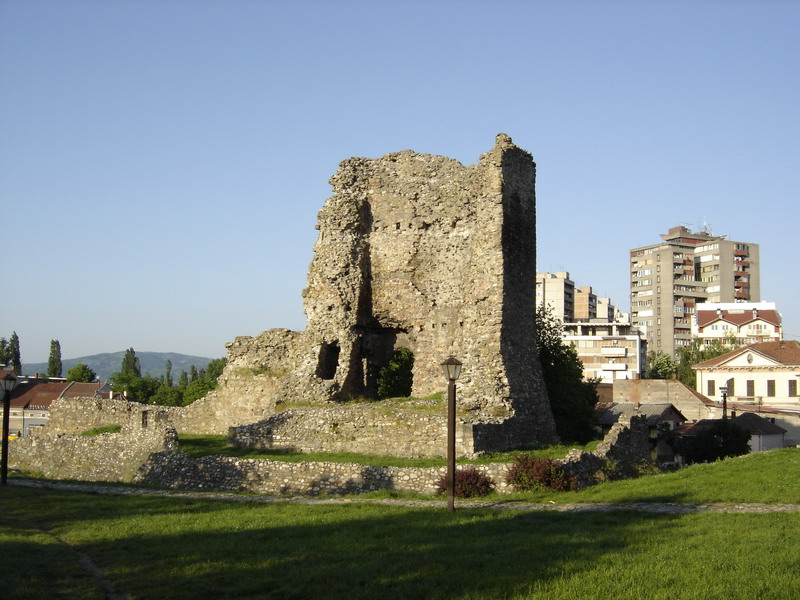
Niš Fortress (Serbian: Нишка тврђава / Niška tvrđava) stands as a significant bastioned fortress located in the city of Niš, Serbia. This imposing structure occupies a strategic position on the right bank of the Nišava River, overlooking an area that has been continuously inhabited for over two millennia. Recognized for its cultural and historical importance, the fortress was officially protected by law in May 1948 as a cultural site of great significance. Today, it is regarded as one of the best preserved fortifications of its kind in both Serbia and the wider Balkan Peninsula.

Historical background and strategic importance

The site of Niš Fortress has a long history of fortification dating back to Roman times, reflecting the city's crucial location at crossroads of important trade and military routes. The current fortress primarily dates from the 18th century, built during the post-Renaissance period under the Ottoman Empire. It was constructed on the foundations of earlier fortifications, including remnants from Roman, Byzantine, and medieval Serbian defenses.

The fortress was designed to serve as a military stronghold to control the surrounding region and protect the city of Niš, which was a key administrative and military center. Its position by the river allowed control over river traffic and access routes through the Balkans.

Architectural features and layout

Niš Fortress is classified as a bastioned fortress, a style that emerged in Europe during the Renaissance and continued into the post-Renaissance period. This design features angled bastions projecting from the main walls, allowing defenders to cover adjacent walls with flanking fire and reducing blind spots.

The fortress is roughly rectangular in shape, surrounded by thick stone walls with multiple bastions at the corners and along the sides. These bastions provided platforms for artillery and musketry, enhancing the fortress's defensive capabilities against siege warfare prevalent in the 17th and 18th centuries.

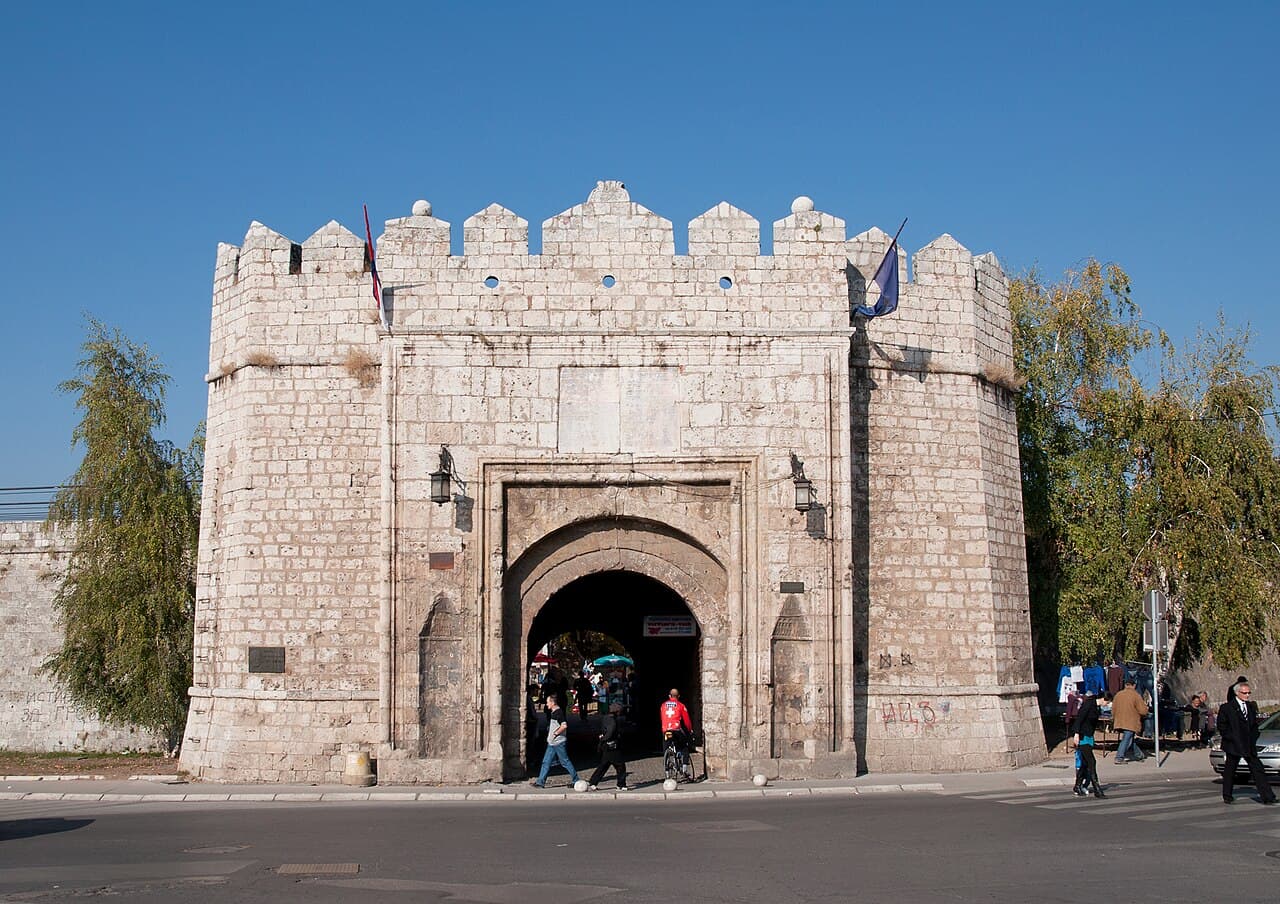
Within the walls, the fortress contains a variety of structures including barracks, storage facilities, gates, and administrative buildings. The main entrance is fortified with a gate complex designed to withstand assault and control access.

Walls and bastions

The walls are constructed from stone and brick, built to withstand cannon fire. The bastions are angular and robust, designed to deflect artillery shots and provide overlapping fields of fire. The fortress also includes a moat, which was historically filled with water from the Nišava River, adding an extra layer of defense.

Internal structures

Inside the fortress, visitors can find remains of military barracks, powder magazines, and cisterns for water storage. Some buildings have been restored to illustrate the living conditions of soldiers stationed there. The fortress also features a small church and several gates, each with distinct architectural details reflecting different construction phases.

Preservation and cultural significance

Niš Fortress is noted for its well-preserved condition, making it an important cultural monument. It has undergone various restoration efforts to maintain its structural integrity and to make it accessible to the public. The fortress is a popular tourist attraction and a venue for cultural events, including festivals, concerts, and exhibitions.

Its preservation allows visitors to experience a tangible connection to the region's military history and architectural evolution from the post-Renaissance period. The fortress also serves as a symbol of Niš's historical resilience and strategic importance through centuries.

Visitor information and accessibility

The fortress is located in the central area of Niš, easily accessible to visitors. It is open to the public year-round, with no or minimal entrance fees depending on events. Guided tours are available, offering detailed insights into the fortress's history and architecture.

The site includes walking paths along the walls and bastions, allowing panoramic views of the city and the Nišava River. Accessibility improvements have been made to accommodate visitors with mobility challenges, although some areas retain their historic ruggedness.

Frequently asked questions (FAQ)

What is the historical significance of Niš Fortress?
Niš Fortress, located in the city of Niš, Serbia, is one of the best-preserved examples of military architecture from the Ottoman period. It played a crucial role in the defense of the region and served as a strategic military outpost for centuries, witnessing numerous battles and historical events.
When was Niš Fortress built?
The construction of Niš Fortress began in the 18th century, specifically in 1713, under the rule of the Ottoman Empire. It was completed in 1723 and has since been a vital historical landmark, reflecting the architectural style of that era.
Can I visit Niš Fortress year-round?
Yes, Niš Fortress is open to visitors throughout the year, although the best time to visit is during the spring and fall when the weather is mild. Summer can be quite hot, while winter may bring snow and colder temperatures, affecting accessibility.
What are the opening hours for Niš Fortress?
Niš Fortress typically opens at 8:00 AM and closes at 8:00 PM during the summer months, while winter hours may vary. It is advisable to check the official website or local information for any changes in operating hours before your visit.
Is it possible to explore the fortress on my own?
Yes, visitors can explore Niš Fortress independently, as there are no mandatory guided tours. However, hiring a guide can enhance your experience by providing in-depth historical context and insights into the fortress's architecture and significance.
What are the ticket prices for Niš Fortress?
Admission to Niš Fortress is generally free, allowing everyone to enjoy its historical and architectural beauty without the burden of entry fees. However, special exhibitions or events may have separate charges, so it's best to check in advance.
Are there any nearby attractions to visit?
Yes, nearby attractions include the Red Cross Nazi Concentration Camp Museum and the Skull Tower, both of which are significant historical sites in Niš. These sites, along with the fortress, provide a comprehensive view of the city's rich history.
How accessible is Niš Fortress for visitors with disabilities?
Niš Fortress is partially accessible for visitors with disabilities, with some areas featuring paved pathways. However, due to the historical nature of the site, certain sections may present challenges, so it's advisable to be prepared for uneven terrain.
What architectural features can I expect to see at Niš Fortress?
Niš Fortress showcases a blend of Ottoman and European military architecture, characterized by its robust walls, bastions, and towers. Visitors can admire the stone fortifications, gates, and the overall layout that reflects the strategic military planning of its time.

Photo gallery

Niš Fortress
Click to view

Photo by MrPanyGoff•CC BY-SA 3.0

1 photo • Click any image to view in full screen

Information

Bastioned Fortress

Loading map...

Visitor reviews

No reviews yet. Been here? Write the first review and help other travelers!

Write the first review

Visited this castle? Share your experience

Your review helps other travelers and adds first-hand knowledge to our encyclopedia.

Write a review

(5/5)

0/2000 characters

Your review will be visible after admin approval

Nearby castles

34 km
Soko Grad — Serbia castle

Soko Grad

Sokobanja, Serbia

Soko Grad, also known as Sokolac, is a significant early medieval fortress located approximately 2 kilometers east of the spa town of Sokobanja in Serbia. This bastioned fortress stands as an important cultural and historical monument, reflecting the strategic military architecture of the 6th century. It was officially declared a Monument of Culture of Great Importance in 1982 and remains protected by the Republic of Serbia. Historical background and strategic importance The origins of Soko Grad trace back to the 6th century, a period marked by frequent conflicts and territorial defense needs in the Balkans. Constructed during the early medieval period, the fortress was part of the Byzantine Empire's efforts to secure its northern borders against invading forces. Its location near Sokobanja provided a vantage point over the surrounding valleys and routes, making it a critical defensive stronghold. Throughout the centuries, Soko Grad witnessed various military engagements and changes in control, reflecting the turbulent history of the region. The fortress played a role in defending against invasions by Slavic tribes and later Ottoman expansion, adapting its fortifications to evolving warfare technologies. Architectural features and layout Soko Grad exemplifies the characteristics of a bastioned fortress, a design that incorporates projecting bastions allowing defenders to cover adjacent walls with crossfire. The fortress is situated on elevated terrain, enhancing its defensive capabilities with natural barriers. The complex includes remnants of thick defensive walls, towers, and gatehouses that controlled access to the interior. The walls were constructed using local stone, carefully cut and fitted to withstand sieges. Although much of the structure is in ruins, the layout reveals a well-planned fortification system adapted to the topography. Inside the walls, there are traces of residential quarters, storage facilities, and possibly a chapel, indicating the fortress was not only a military installation but also a small community center during its peak use. Cultural significance and preservation Declared a Monument of Culture of Great Importance in 1982, Soko Grad holds a special place in Serbian heritage. It represents the resilience and strategic ingenuity of early medieval fortifications in the Balkans. The site attracts historians, archaeologists, and tourists interested in medieval military architecture and Balkan history. The fortress is under the protection of the Republic of Serbia, with ongoing efforts to preserve its remains and prevent further deterioration. Visitors can explore the ruins, which offer panoramic views of the surrounding landscape and insight into the region's medieval past. Visiting Soko Grad The fortress is accessible from the nearby town of Sokobanja, known for its spa and natural beauty. Hiking trails lead to the ruins, making it a popular destination for outdoor enthusiasts and history buffs alike. While the site is largely in ruins, informational signage helps visitors understand the historical context and architectural features of the fortress. Visiting hours and ticket prices may vary, so it is advisable to check locally before planning a trip. The site is generally open to the public, offering a unique opportunity to experience a piece of Serbia's early medieval military heritage.

Early Medieval (5th–10th c.)
Details
54.5 km
Kruševac Fortress — Serbia castle

Kruševac Fortress

Kruševac, Serbia

Kruševac Fortress stands as a significant monument of medieval Serbian history and architecture, located in the municipality of Kruševac, Serbia. Constructed prominently in the late 14th century, this fortress was closely associated with Prince Lazar Hrebeljanović, one of the most notable rulers of medieval Serbia. First mentioned in 1381, Kruševac Fortress served as the capital of the realm known as Moravian Serbia, reflecting Prince Lazar's efforts to establish a strong political and military center. During Prince Lazar's reign, Kruševac was not merely a military bastion but also the seat of his court and government. The fortress included the church of Lazarica, dedicated to St. Stephen, which functioned as the court church and a spiritual hub for the ruler and his domain. A charter from 1387 refers to Kruševac as the "famous city of my dominion", underscoring its political and cultural importance under Lazar's leadership. Architectural features and construction The fortress was strategically built on a hill, granting it a commanding view of the surrounding landscape, a typical characteristic of a hill castle. Its construction utilized a distinctive combination of building materials, including stone and pebbles, which contributed to its unique appearance. This varied use of materials later inspired the Ottoman name Aladža Hisar, meaning "Colorful City." Among the surviving architectural elements, the Donjon Tower is particularly notable. It served as the fortress's main entrance and included a hallway with a staircase leading to upper floors and connecting to the defensive walls encircling the city. The tower's construction technique, especially the use of pebbles, is uncommon in the region and highlights the fortress's architectural distinctiveness. The fortress's defensive system included robust walls, though only a portion of the eastern defensive wall remains today. These walls once enclosed the city and protected it from military incursions. Unfortunately, much of the original fortifications were dismantled in the 20th century to provide building materials for local construction, resulting in significant loss of the fortress's fabric. Historical significance and events Kruševac Fortress played a central role during a turbulent period in Serbian and Balkan history. After the Battle of Kosovo in 1389, the fortress experienced multiple changes in control. It was briefly captured by Ottoman forces but was soon reclaimed by the Serbs. Prince Lazar's son, Stefan Lazarević, governed from Kruševac until 1405, maintaining its strategic importance even after relocating the capital to Belgrade. The 15th century saw Kruševac subjected to successive occupations by various powers. The Ottomans occupied it twice, in 1413 and 1427, while Hungarian forces took control in 1437. The fortress was restored to the Serbian despot Đurađ Branković in 1444, but the Ottoman conquest was finalized in 1454, ending Serbian rule over Kruševac. Under Ottoman administration, the fortress was renamed Aladža Hisar, reflecting its colorful appearance due to diverse construction materials. The Ottomans repurposed parts of the fortress, notably desecrating the Lazarica church by converting it into a gunpowder magazine. Throughout the 18th and early 19th centuries, control of the fortress shifted among Ottoman, Austrian, and Serbian insurgent forces, mirroring the region's ongoing conflicts. The Ottoman garrison finally withdrew in 1833, concluding centuries of Ottoman presence. Preservation and current state Today, Kruševac Fortress survives largely in fragmentary form, with only a few structures illustrating its former grandeur. The best-preserved part of the complex is the palace church of St. Stephen (Lazarica), which retains its original religious function and stands as a symbol of Prince Lazar's court. This church contrasts with other parts of the fortress that have suffered from neglect and adaptive reuse. The Donjon Tower remains a key architectural feature, showcasing the fortress's unique construction style. However, much of the defensive walls have been lost, and many surviving ruins remain unmarked and vulnerable to damage. The fortress grounds have been transformed into a park and include a museum, but outside the immediate vicinity of the church, maintenance and protection are limited. Recognizing its cultural and historical importance, Kruševac Fortress was declared a Monument of Culture of Exceptional Importance in 1979 and is protected by the Republic of Serbia. The site continues to offer valuable insights into medieval Serbian architecture, military history, and the legacy of Prince Lazar's reign. Architectural style and influences The fortress embodies characteristics typical of medieval Serbian fortifications from the late medieval period. Its construction reflects a blend of practical military architecture and symbolic elements associated with the Serbian medieval court. The use of pebbles and the mixed materials technique not only enhanced defensive capabilities but also contributed to its distinctive aesthetic, which was notable enough to influence its Ottoman name. The church of Lazarica is an important example of Serbian medieval ecclesiastical architecture, combining elements of the Morava architectural school with Byzantine influences. Its preservation offers a rare glimpse into the religious and cultural life of the Serbian medieval elite. Visiting Kruševac Fortress today Visitors to Kruševac Fortress can explore the park area and view the remains of the defensive walls, the Donjon Tower, and the Lazarica church. The on-site museum provides historical context and exhibits related to the fortress's past. While some parts of the fortress require better preservation efforts, the site remains a significant cultural landmark and a testament to Serbia's medieval heritage. The fortress's location on a hill offers scenic views of the surrounding landscape, enhancing the visitor experience. Guided tours and informational signage help illuminate the complex history and architectural features of the site. Kruševac Fortress is a must-visit for those interested in medieval history, Serbian culture, and castle architecture.

Late Medieval (14th–15th c.)
Details
55.1 km
Stalać Fortress — Serbia castle

Stalać Fortress

, Serbia

Stalać Fortress is a significant 14th-century bastioned fortress located near the town of Stalać in Serbia. Positioned strategically on a hill at the confluence of the West and South Morava rivers, it commands a commanding view over this vital geographic junction. The fortress lies approximately 10 kilometres north of Kruševac, a historically important city in the region. Historical background and strategic importance The fortress was constructed during the late medieval period, a time marked by frequent military conflicts and the need for robust defensive structures in the Balkans. Its location was chosen for its natural defensive advantages, overseeing the confluence of two rivers which historically served as important trade and military routes. Stalać Fortress played a crucial role in controlling movement along these waterways and protecting the surrounding territories. Throughout its history, the fortress was part of the defensive network of the Serbian medieval state, particularly during the reign of the Serbian Empire in the 14th century. It witnessed various military engagements and sieges, reflecting the turbulent history of the region during the decline of the medieval Serbian state and the advance of the Ottoman Empire. Architectural features and layout Stalać Fortress is characterized by its bastioned design, typical of fortifications built in the late medieval period to adapt to the evolving art of warfare, including the use of artillery. The fortress consists of thick stone walls arranged to form bastions—projecting parts of the fortification that allowed defenders to cover adjacent walls with gunfire, eliminating blind spots. The fortress's walls are constructed from local stone, with evidence of skilled masonry work. Inside the fortress, there would have been various functional structures such as barracks, storage facilities, and possibly a keep or donjon, though much of the internal layout is now in ruins or has not been fully excavated. The hilltop location provided natural defensive advantages, with steep slopes on several sides making direct assault difficult. The fortress's design reflects the transition from purely medieval defensive architecture to incorporating elements suitable for early gunpowder weaponry. Cultural significance and preservation status Today, Stalać Fortress holds the status of a Cultural Monument of Great Importance in the Republic of Serbia. This designation highlights its value as a heritage site representing medieval Serbian military architecture and history. Although much of the fortress remains in a ruined state, efforts have been made to preserve its remains and promote awareness of its historical significance. The site attracts visitors interested in medieval history, archaeology, and Serbian cultural heritage. Visiting stalać fortress Visitors to Stalać Fortress can explore the hilltop ruins and enjoy panoramic views of the surrounding landscape, including the meeting point of the West and South Morava rivers. The site is accessible from Kruševac and nearby towns, although facilities may be limited due to the fortress's ruined condition. Exploration of the fortress offers insight into medieval fortification techniques and the strategic importance of river confluences in military history. Visitors are advised to wear appropriate footwear and be prepared for uneven terrain.

Late Medieval (14th–15th c.)
Details