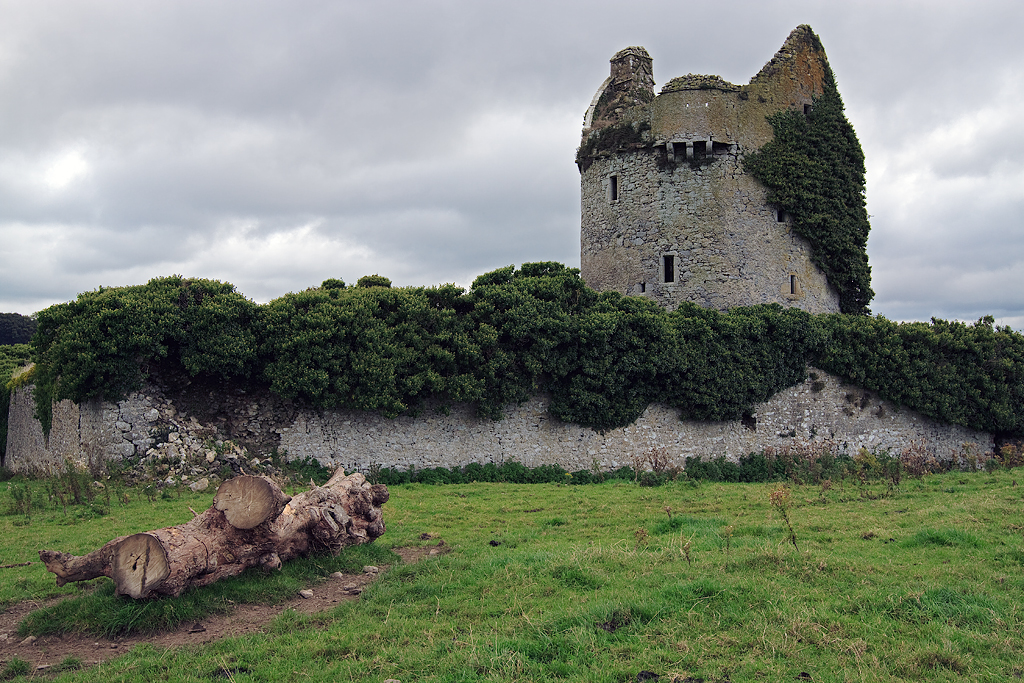
Nicholastown Castle
Nicholastown Castle is a historic ruin located west of the town of Clonmel, in County Tipperary, Ireland. This site represents the remains of a 17th-century Renaissance tower house associated with the prominent Keating family, notable landowners in the region during that period. Though little detailed historical documentation survives, the castle's architectural remnants provide insight into the defensive and residential structures typical of Irish tower houses built during the Renaissance era.
Historical background and ownership
The castle was mentioned in records dating from the 17th century, linking it to the Keating family, who also owned nearby Loughlohery Castle. The Keatings were a significant family in this part of Ireland, and their possession of multiple fortified homes indicates their social and political stature. Nicholastown Castle likely served both as a residence and a defensive stronghold, reflecting the turbulent times in Ireland during the 1600s, when local conflicts and English rule influenced castle construction and maintenance.
Architectural features and layout
What remains of Nicholastown Castle today is primarily the corner of a four-storey tower house. This tower house would have been part of a larger fortified enclosure, known as a bawn, which was a defensive courtyard typical of Irish tower houses. The castle was strategically positioned adjacent to a small cliff, which would have enhanced its natural defenses by limiting access on one side.
The tower house design was common in Ireland during the Renaissance period, combining residential and defensive functions. These structures typically featured thick stone walls, narrow windows for archery or musketry, and multiple floors with living quarters, storage, and defensive positions. While the surviving ruins of Nicholastown Castle are modest, they reflect these typical architectural elements.
Defensive elements
The bawn surrounding the tower house would have provided an additional layer of protection, enclosing a courtyard where livestock could be kept safe during raids. The positioning near a cliff further enhanced the castle's defensibility, creating a natural barrier against attackers. Although much of the bawn has not survived, its presence is inferred from the layout and the remaining tower corner.
Current condition and accessibility
Today, Nicholastown Castle exists as a small ruin on private farmland, limiting public access. The remains consist mainly of the tower house corner, which is partially preserved but lacks extensive structural integrity. Due to its location on a working farm, visitors cannot freely explore the site, and there are no formal facilities or guided tours available.
Despite its limited accessibility and modest remains, Nicholastown Castle holds value as a representative example of a Renaissance-era Irish tower house and contributes to the understanding of regional defensive architecture and family estates in 17th-century Ireland.
Context within Irish castle architecture
Nicholastown Castle is part of a broader tradition of tower houses built across Ireland from the late medieval period into the Renaissance. These structures were typically constructed by local Gaelic and Anglo-Irish families as fortified residences. The 17th century was a time of significant political upheaval in Ireland, and castles like Nicholastown served as both homes and military fortifications.
The castle's association with the Keating family connects it to other regional castles, illustrating the pattern of landholding and defensive architecture among Irish gentry. While many tower houses have been lost or heavily altered, the surviving ruins at Nicholastown provide a tangible link to this architectural and historical heritage.
Frequently asked questions (FAQ)
- What is the historical significance of Nicholastown Castle?
- Nicholastown Castle, built in the late 12th century, played a crucial role in the defense of Clonmel during various conflicts throughout history. Its strategic location allowed it to serve as a stronghold for local lords and later as a residence for influential families, reflecting the rich heritage of the region.
- When was Nicholastown Castle built?
- Nicholastown Castle was constructed in the late 1100s, making it one of the oldest structures in the area. Over the centuries, it has undergone numerous renovations, which have preserved its historical features while adapting to modern needs.
- Can I visit Nicholastown Castle?
- Yes, Nicholastown Castle is open to the public for guided tours. Visitors can explore the castle's rich history and stunning architecture, making it a perfect destination for history enthusiasts and families alike.
- What are the opening hours for Nicholastown Castle?
- Nicholastown Castle is open to visitors from 10 AM to 5 PM, Tuesday through Sunday. It's recommended to check the official website for any seasonal changes or special event hours before planning your visit.
- Is it possible to access Nicholastown Castle for individuals with mobility issues?
- Yes, Nicholastown Castle is committed to accessibility and offers facilities for individuals with mobility challenges. The staff is trained to assist visitors, ensuring everyone can enjoy the historical experience.
- When is the best time to visit Nicholastown Castle?
- The best time to visit Nicholastown Castle is during the spring and early autumn months when the weather is mild and pleasant. Additionally, these seasons often feature fewer crowds, allowing for a more enjoyable experience.
- What are the ticket prices for Nicholastown Castle?
- Ticket prices for Nicholastown Castle are reasonably set at £10 for adults and £5 for children aged 6-16. Family tickets and group discounts are also available, making it an affordable outing for all.
- Are there any nearby attractions to Nicholastown Castle?
- Yes, Nicholastown Castle is conveniently located near several attractions, including the picturesque River Suir and Clonmel's charming town center. Visitors can also explore local shops and restaurants after touring the castle.
Information
Loading map...
Visitor reviews
No reviews yet. Been here? Write the first review and help other travelers!
Write the first reviewVisited this castle? Share your experience
Your review helps other travelers and adds first-hand knowledge to our encyclopedia.