Moorstown Castle — Ireland castle

Moorstown Castle

Moorstown Castle near Clonmel, County Tipperary
Clonmel, Ireland
Late Medieval (14th–15th c.)
Partially Preserved

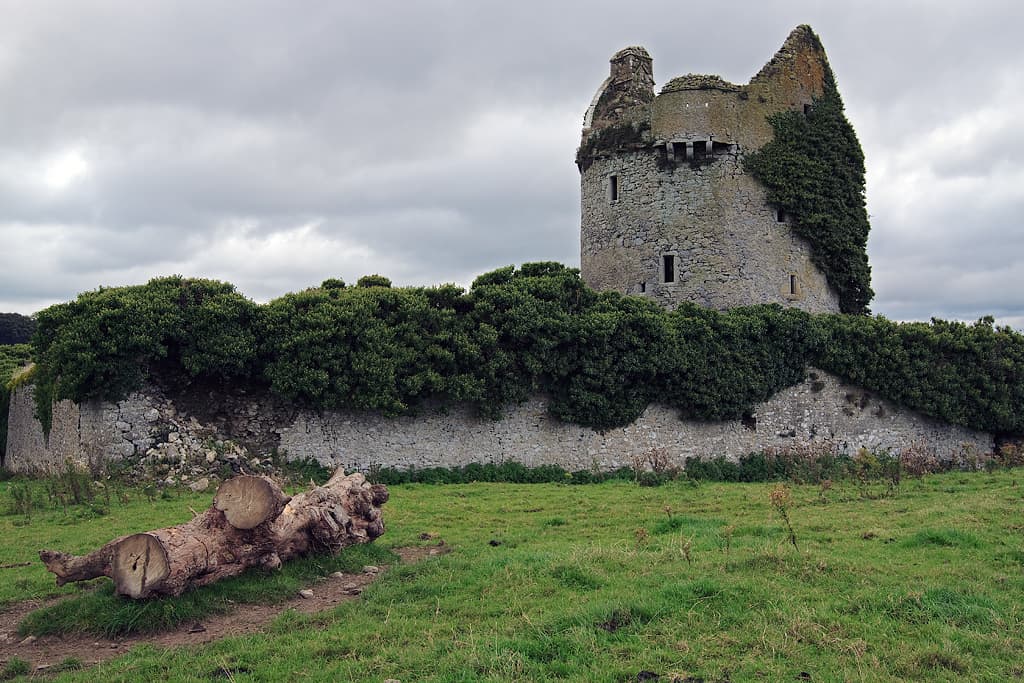
Moorstown Castle is a notable example of a late 15th-century fortified residence located near Clonmel in County Tipperary, Ireland. This stone structure stands out as an enclosed circular keep, a design relatively uncommon in Irish castles, which often favored rectangular or square keeps. The castle's form and construction reflect the defensive architectural trends of the late medieval period, combining both residential and military functions.

Architectural features and design

Moorstown Castle is characterized primarily by its circular keep, a feature that enhances its defensive capabilities by eliminating weak corners vulnerable to siege engines. The thick stone walls of the keep were designed to withstand attacks and provide a secure refuge for its inhabitants. The castle's height and narrow windows also served defensive purposes, allowing archers to defend the structure while minimizing exposure.

The castle includes a surrounding bawn wall, an enclosed courtyard area typical of Irish tower houses and keeps, which provided additional protection and space for domestic activities. The entrance to the castle is fortified, often featuring a murder hole and arrow slits to repel attackers.

Construction materials and techniques

The structure is built primarily from local limestone, a common building material in the region, known for its durability and availability. Masonry techniques of the period are evident in the finely dressed stonework and the robust mortar used to bind the stones. The castle's construction would have required skilled stonemasons and laborers, reflecting the resources and status of its original owners.

Historical context and ownership

Constructed in the late 15th century, Moorstown Castle was built during a period of frequent local conflicts and shifting power dynamics in Ireland. Castles of this type were often commissioned by Gaelic chieftains or Anglo-Norman lords seeking to assert control over their territories. The castle's strategic location near Clonmel, a significant town in County Tipperary, suggests its role in regional defense and administration.

While detailed records of the castle's original owners are scarce, the structure likely served as a fortified residence for a family of local importance. Over the centuries, Moorstown Castle would have witnessed various historical events, including local skirmishes and changes in land ownership following English consolidation in Ireland.

Preservation and current condition

Today, Moorstown Castle remains a partially preserved structure, retaining much of its original form despite the passage of time. The castle's walls and keep are largely intact, though some areas show signs of weathering and deterioration typical of medieval stone buildings exposed to the Irish climate.

Efforts to maintain and protect the castle have been limited, but its status as a heritage site contributes to ongoing interest from historians, archaeologists, and visitors. Access to the castle may be restricted due to safety concerns, but it remains an important landmark for understanding medieval military architecture in Ireland.

Significance in Irish medieval architecture

Moorstown Castle exemplifies the transition in castle design during the late medieval period in Ireland, where the emphasis shifted towards more comfortable living quarters combined with strong defensive features. Its circular keep is a distinctive architectural choice that sets it apart from many contemporaneous structures.

The castle contributes valuable insights into the social and military history of County Tipperary and the broader region. It stands as a testament to the architectural ingenuity and strategic considerations of its builders during a turbulent era in Irish history.

Visiting Moorstown Castle

Visitors interested in exploring Moorstown Castle should check local access conditions, as the site is on private land and may have limited public entry. The castle's remote location near Clonmel offers opportunities to combine a visit with exploration of the surrounding Irish countryside and other historical sites in County Tipperary.

Frequently asked questions (FAQ)

How do I get to Moorstown Castle?
Moorstown Castle is located in Clonmel, Ireland, easily accessible by car or public transport. If you are driving, there are designated parking areas nearby, and public buses regularly service the area. For those traveling from further afield, the nearest train station is in Clonmel, from where you can take a taxi or a local bus.
What is the historical significance of Moorstown Castle?
Moorstown Castle dates back to the 12th century and is a prime example of medieval architecture in Ireland. It served as a strategic stronghold during various conflicts and has witnessed significant historical events in the region. The castle's rich history attracts many visitors interested in Ireland's past.
When was Moorstown Castle built?
Moorstown Castle was constructed in the late 12th century, making it one of the oldest structures in the area. It has undergone various renovations over the centuries, retaining much of its original charm and architectural features. The castle's age adds to its allure as a historical landmark.
Can I take guided tours of Moorstown Castle?
Yes, guided tours are available at Moorstown Castle, providing visitors with in-depth information about its history and architecture. Tours are typically led by knowledgeable guides who share fascinating stories and insights about the castle and its surroundings. It's recommended to check the schedule and book in advance during peak tourist seasons.
Why is Moorstown Castle a popular tourist destination?
Moorstown Castle is popular due to its stunning architecture, rich history, and beautiful surroundings, making it an ideal spot for history enthusiasts and photographers alike. The castle offers a glimpse into Ireland's medieval past and provides a picturesque setting for visitors. Its proximity to Clonmel also makes it easy to include in a day trip.
Is it possible to host events at Moorstown Castle?
Yes, Moorstown Castle offers facilities for hosting various events, including weddings, corporate gatherings, and private tours. The unique setting and historical ambiance make it a memorable venue for special occasions. Interested parties should contact the castle management for more details on availability and arrangements.
What are the opening hours for Moorstown Castle?
Moorstown Castle is open to visitors from 10 AM to 5 PM daily, though hours may vary seasonally. It’s advisable to check the official website or contact the castle directly for the most current information before planning your visit. Special events or holidays may also affect opening times.
What are the ticket prices for visiting Moorstown Castle?
Ticket prices for Moorstown Castle are generally affordable, with discounts available for students and seniors. Children under a certain age may enter for free, making it a great family-friendly destination. For the latest pricing and any special offers, please refer to the castle’s official website.
What is the best time to visit Moorstown Castle?
The best time to visit Moorstown Castle is during the spring and early autumn months when the weather is mild and the gardens are in bloom. This period also sees fewer crowds compared to the summer peak season, allowing for a more enjoyable experience. However, each season offers unique charm and beauty, so your choice may depend on personal preferences.
Are there any nearby attractions to Moorstown Castle?
Yes, there are several nearby attractions to Moorstown Castle, including the scenic River Suir and the charming town of Clonmel, known for its shops and cafes. Additionally, the surrounding countryside offers beautiful walking trails and opportunities for outdoor activities. Visitors can easily spend a whole day exploring the area and its rich offerings.

Photo gallery

Moorstown Castle
Click to view

Photo by Mike Searle•CC BY-SA 2.0

1 photo • Click any image to view in full screen

Information

Hill Castle

Loading map...

Visitor reviews

No reviews yet. Been here? Write the first review and help other travelers!

Write the first review

Visited this castle? Share your experience

Your review helps other travelers and adds first-hand knowledge to our encyclopedia.

Write a review

(5/5)

0/2000 characters

Your review will be visible after admin approval

Nearby castles

3.7 km

Nicholastown Castle

Clonmel, United Kingdom

Nicholastown Castle is a historic ruin located west of the town of Clonmel, in County Tipperary, Ireland. This site represents the remains of a 17th-century Renaissance tower house associated with the prominent Keating family, notable landowners in the region during that period. Though little detailed historical documentation survives, the castle's architectural remnants provide insight into the defensive and residential structures typical of Irish tower houses built during the Renaissance era. Historical background and ownership The castle was mentioned in records dating from the 17th century, linking it to the Keating family, who also owned nearby Loughlohery Castle. The Keatings were a significant family in this part of Ireland, and their possession of multiple fortified homes indicates their social and political stature. Nicholastown Castle likely served both as a residence and a defensive stronghold, reflecting the turbulent times in Ireland during the 1600s, when local conflicts and English rule influenced castle construction and maintenance. Architectural features and layout What remains of Nicholastown Castle today is primarily the corner of a four-storey tower house. This tower house would have been part of a larger fortified enclosure, known as a bawn, which was a defensive courtyard typical of Irish tower houses. The castle was strategically positioned adjacent to a small cliff, which would have enhanced its natural defenses by limiting access on one side. The tower house design was common in Ireland during the Renaissance period, combining residential and defensive functions. These structures typically featured thick stone walls, narrow windows for archery or musketry, and multiple floors with living quarters, storage, and defensive positions. While the surviving ruins of Nicholastown Castle are modest, they reflect these typical architectural elements. Defensive elements The bawn surrounding the tower house would have provided an additional layer of protection, enclosing a courtyard where livestock could be kept safe during raids. The positioning near a cliff further enhanced the castle's defensibility, creating a natural barrier against attackers. Although much of the bawn has not survived, its presence is inferred from the layout and the remaining tower corner. Current condition and accessibility Today, Nicholastown Castle exists as a small ruin on private farmland, limiting public access. The remains consist mainly of the tower house corner, which is partially preserved but lacks extensive structural integrity. Due to its location on a working farm, visitors cannot freely explore the site, and there are no formal facilities or guided tours available. Despite its limited accessibility and modest remains, Nicholastown Castle holds value as a representative example of a Renaissance-era Irish tower house and contributes to the understanding of regional defensive architecture and family estates in 17th-century Ireland. Context within Irish castle architecture Nicholastown Castle is part of a broader tradition of tower houses built across Ireland from the late medieval period into the Renaissance. These structures were typically constructed by local Gaelic and Anglo-Irish families as fortified residences. The 17th century was a time of significant political upheaval in Ireland, and castles like Nicholastown served as both homes and military fortifications. The castle's association with the Keating family connects it to other regional castles, illustrating the pattern of landholding and defensive architecture among Irish gentry. While many tower houses have been lost or heavily altered, the surviving ruins at Nicholastown provide a tangible link to this architectural and historical heritage.

Renaissance (15th–17th c.)
Details
3.9 km

Loughlohery Castle

Cahir, United Kingdom

Loughlohery Castle is a notable example of a 16th-century tower house located east of the town of Cahir in County Tipperary, Ireland. This castle is part of the rich architectural heritage of Ireland's Renaissance period, reflecting the defensive and residential needs of the Irish gentry during that era. Historical context and ownership The castle dates back to the late 16th century, a period marked by social and political upheaval in Ireland. It was owned by the Keating family, a prominent local lineage who also held Nicholastown Castle nearby. The Keatings were part of the Irish gentry who built and maintained such tower houses as symbols of status and for protection during turbulent times. Although detailed records about Loughlohery Castle's history are sparse, its association with the Keating family situates it within the network of fortified residences that dotted the Irish countryside in this period. Architectural features and design Loughlohery Castle is a rectangular tower house rising to four stories in height. Tower houses were a common type of fortified dwelling built across Ireland from the late medieval period into the Renaissance. Their design balanced defense and domestic comfort, often featuring thick stone walls, narrow windows for archery defense, and battlements. The castle's full height remains intact, which is significant given the many tower houses that have fallen into ruin or partial collapse. Its rectangular plan is typical of the period, providing a compact, defensible footprint. The interior would have included a great hall, private chambers, and storage areas, although specific internal details for Loughlohery Castle are not well documented. Defensive elements While detailed descriptions of Loughlohery Castle's defensive features are limited, tower houses generally included features such as murder holes, arrow slits, and to resist attack. The castle's elevated height and narrow windows would have aided defenders in monitoring and repelling potential threats. Location and current condition The castle is situated next to a road within a fenced field likely used for cattle grazing, which restricts public access. Despite this, Loughlohery Castle remains a well-preserved tower house ruin that stands prominently in the landscape. Its preservation to full height makes it an important architectural relic of the Renaissance period in Ireland. The surrounding area is rural, with the castle's proximity to Cahir placing it within an area rich in historical sites. Though it is not currently open for public visitation, its visible exterior offers valuable insight into the construction and form of 16th-century Irish tower houses. Significance in Irish castle architecture Tower houses like Loughlohery Castle were widespread across Ireland from the 15th to the 17th centuries. They represent a distinct architectural response to the social conditions of the time, combining defensive features with residential needs. Loughlohery's preservation contributes to understanding this typology and the lifestyle of the Irish gentry during the Renaissance. Its connection to the Keating family also highlights the role of such families in regional power structures and landholding patterns. While less grand than large castles or palaces, tower houses were central to Ireland's medieval and early modern landscape.

Renaissance (15th–17th c.)
Details
5.8 km

Ballindoney Castle

Ballindoney West, United Kingdom

Ballindoney Castle is a striking example of a 16th-century Renaissance tower house located in the townland of Ballindoney West, County Tipperary, Ireland. This castle typifies the fortified residences built by the Irish gentry during the Renaissance period, combining defensive features with domestic comfort and architectural refinement. Historical background and ownership The earliest recorded mention of Ballindoney Castle dates to 1547, situating it firmly in the turbulent mid-16th century Ireland, a time marked by frequent local conflicts and shifting allegiances. According to the Civil Survey of 1655, the castle was owned in 1640 by Richard Butler of Kilkash, Esquire, an Irish Catholic landowner. The Butlers were a prominent Anglo-Irish family with several branches influential in Munster, and their ownership reflects the castle's role within the region's socio-political landscape. While detailed historical records of Ballindoney Castle are limited, its association with the Butler family places it within the context of Irish noble estates that balanced martial readiness with residential needs during the Renaissance. Architectural features and style Ballindoney Castle is a tower house, a common type of fortified dwelling in Ireland during the 16th century. These structures were typically built to provide defense against raids while serving as a residence for the local lord and his family. The castle exhibits characteristic Renaissance architectural details, evident in its masonry work and window designs, which blend functionality with aesthetic considerations. The castle's vertical emphasis is typical of tower houses, with thick stone walls designed to withstand attack. Architectural elements likely include narrow slit windows for defense, a crenellated parapet, and possibly a machicolation or bartizan for dropping projectiles on attackers. Internally, such castles often contained vaulted chambers, spiral staircases, and large hearths. Though the castle is situated on a working farm and is not open to the public, its structure remains a testament to the defensive domestic architecture of Renaissance Ireland. Location and current status Ballindoney Castle stands in a rural setting within County Tipperary, an area known for its rich medieval and early modern heritage. The castle's position in the townland of Ballindoney West places it within the agricultural heartland of Ireland, surrounded by farmland. The castle is currently well preserved as a tower house, though it is privately owned and located on farmland, which limits public access. Its preservation offers valuable insight into the architectural and social history of Renaissance Ireland. Significance in Irish castle architecture As a 16th-century Renaissance tower house, Ballindoney Castle represents a significant phase in Irish castle construction, where the need for fortified homes was balanced with the desire for more refined living spaces. This period saw a transition from purely martial castles to residences that incorporated Renaissance influences, including improved comfort and style. The castle's survival contributes to the understanding of how Irish gentry adapted their residences to the political and social realities of the time, making Ballindoney an important example of regional architectural heritage.

Renaissance (15th–17th c.)
Details
