Gothenburg Maritime Museum

Gothenburg Maritime Museum
Gothenburg, Sweden
Contemporary (20th–21st c.)
Well Preserved

The Gothenburg Maritime Museum, located in Gothenburg, Sweden, offers an extensive exploration of maritime history spanning over 400 years. Established in 1987, this contemporary institution is dedicated to showcasing the rich heritage of seafaring, shipbuilding, and maritime trade that has shaped the region and beyond. It serves as a cultural hub preserving the legacy of Sweden's maritime past while educating visitors about the evolution of sea travel and commerce.

Permanent exhibitions and themes

The museum features four permanent exhibitions that delve into various aspects of maritime history. These include detailed presentations on sea routes that connected continents, the flows of people and ideas facilitated by maritime travel, and the significant role of the Gothenburg port as a hub of trade and migration. Another key exhibition focuses on the technical development of seafaring, highlighting advancements in ship design, navigation, and maritime technology.

Life at sea and piracy

One of the compelling themes explored is the experience of life at sea, including the challenges faced by sailors and the cultural aspects of maritime communities. The museum also addresses the history of pirates past and present, providing insights into their impact on maritime security and trade routes. This includes historical piracy as well as modern-day maritime threats.

The Swedish American Line and maritime commerce

The Swedish American Line is prominently featured, reflecting its importance in connecting Sweden with the United States during the 20th century. This exhibition traces the history of transatlantic travel and migration, illustrating how maritime links facilitated cultural exchange and economic development. Artifacts, photographs, and ship models enrich the narrative, offering a tangible connection to this era of maritime commerce.

Architectural and cultural significance

Although the Gothenburg Maritime Museum is a modern facility, its design incorporates elements that resonate with maritime themes, such as nautical motifs and materials reminiscent of shipbuilding. The museum's location near the waterfront enhances its connection to the maritime environment it celebrates. It functions not only as a museum but also as a center for maritime research and education, hosting lectures, workshops, and events that engage the public with maritime heritage.

Visitor experience and educational value

Visitors to the museum can expect an engaging and informative experience, with exhibitions designed to appeal to a broad audience, including families, historians, and maritime enthusiasts. Interactive displays and multimedia presentations help bring the stories of the sea to life. The museum also offers educational programs tailored to schools and special interest groups, emphasizing the importance of maritime history in understanding global connections and cultural exchanges.

Accessibility and facilities

The museum is accessible to visitors year-round, with facilities that accommodate diverse needs. Its proximity to Gothenburg's city center and public transport links makes it a convenient destination for tourists and locals alike. Amenities include a café, gift shop, and spaces for temporary exhibitions and events, enhancing the overall visitor experience.

Maritime heritage in Gothenburg

Gothenburg's maritime heritage is deeply embedded in its identity as a major port city. The museum plays a crucial role in preserving and promoting this heritage, connecting the past with contemporary maritime activities. It highlights the city's historical importance as a gateway for trade, migration, and cultural exchange across the seas.

Frequently asked questions (FAQ)

What can I expect to see at the Gothenburg Maritime Museum?
The museum showcases over 400 years of maritime history with exhibitions on sea routes, piracy, life at sea, and the Swedish American Line.
When is the Gothenburg Maritime Museum open to visitors?
The museum is open daily from 10:00 to 17:00, providing ample opportunity to explore its extensive exhibitions.
Is the museum suitable for families and children?
Yes, the museum offers interactive displays and educational programs designed to engage visitors of all ages, including families and children.
How do I get to the Gothenburg Maritime Museum?
Located at Packhusplatsen 6, the museum is easily accessible by public transport and is within walking distance from Gothenburg city center.
Are there any facilities available at the museum?
Visitors can enjoy amenities such as a café, gift shop, and spaces for temporary exhibitions and events to enhance their visit.

Information

Opening hours

10:00-17:00, daily

Ticket prices

€10 adult, €5 child

Current owner

Municipality of Gothenburg

Address

Packhusplatsen 6, 411 13 Gothenburg, Sweden

Sources & official resources

Verify the information above using these authoritative references.

Loading map...

Visitor reviews

No reviews yet. Been here? Write the first review and help other travelers!

Write the first review

Visited this castle? Share your experience

Your review helps other travelers and adds first-hand knowledge to our encyclopedia.
Write a review

(5/5)

0/2000 characters

Your review will be visible after admin approval

Nearby castles

1.4 km
Crown Redoubt — Sweden castle

Crown Redoubt

Gothenburg, Sweden

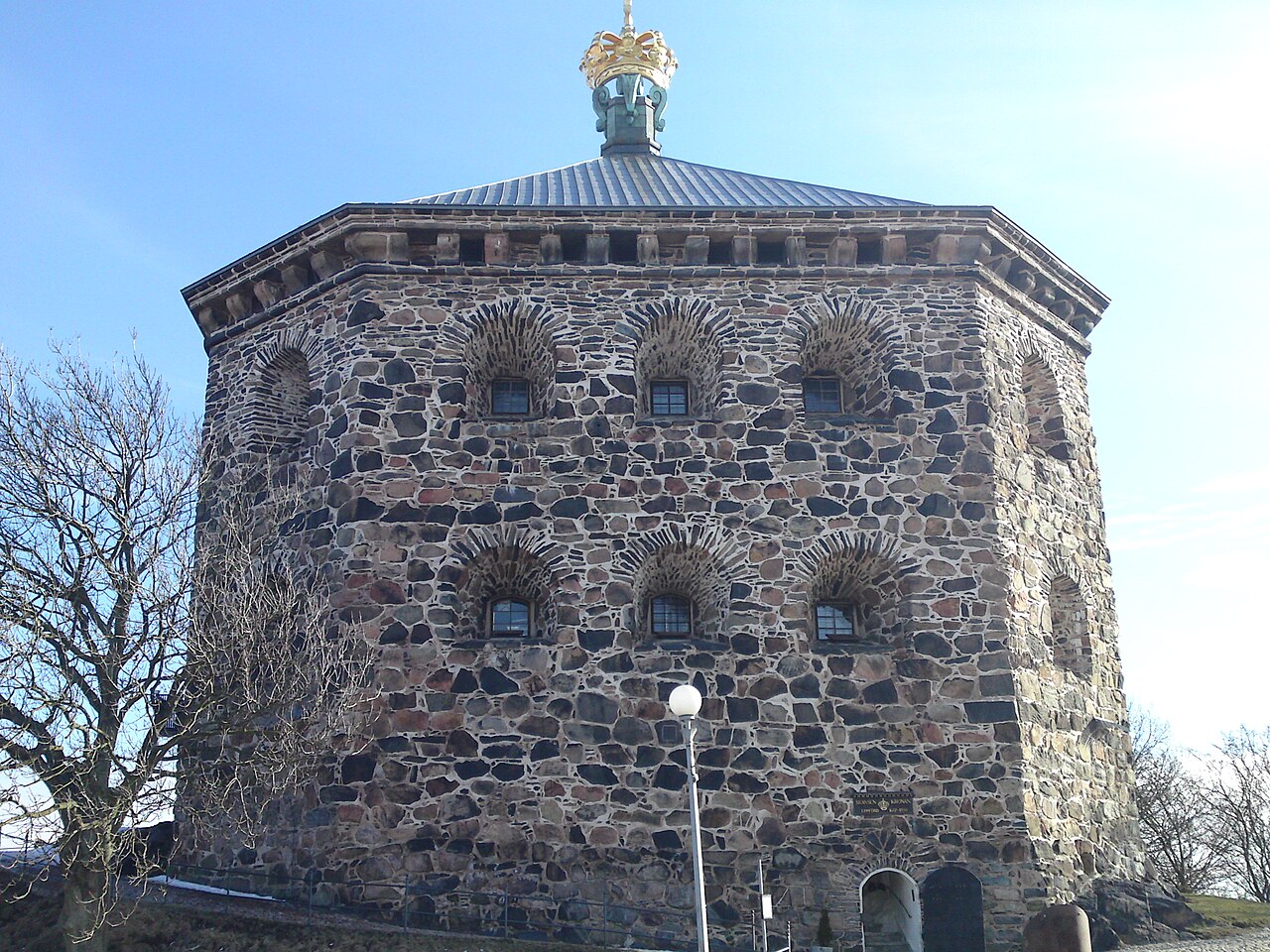
Skansen Kronan, also known as "the Crown Sconce," is a prominent bastioned fortress located on Risåsberget hill in the Haga district of Gothenburg, Sweden. Constructed in the 17th century during the Renaissance period, this fortress was a key element in the city's defenses against potential Danish invasions during a time of frequent conflicts in the region. Historical context and strategic importance The fortress was built as part of a broader defensive network that included its twin fortification, Skansen Lejonet, and the sea fort of New Älvsborg. These fortifications collectively aimed to protect the vital trading city of Gothenburg, which was founded in 1621 as a strategic port and military stronghold on Sweden's west coast. The construction of Skansen Kronan began in the 1680s, reflecting the military architectural trends of the time, particularly the bastioned fortress design which allowed for improved defense against artillery attacks. Architectural features and design Skansen Kronan is characterized by its circular bastioned layout, which provided overlapping fields of fire and reduced blind spots around the fortress walls. The thick stone walls were designed to withstand cannon fire, and the elevated position on Risåsberget hill gave defenders a commanding view over the surrounding area, including the city and approaches from the sea. The fortress includes a prominent central tower or keep, which served as the last line of defense and housed the garrison. Surrounding the tower is a curtain wall with bastions protruding at intervals, allowing defenders to cover the walls with crossfire. The design was influenced by the principles of military engineer Sébastien Le Prestre de Vauban, whose ideas on fortification were widely adopted across Europe in the late Renaissance. Defensive elements Thick stone walls resistant to cannon fire Bastions for flanking fire Elevated position commanding views of Gothenburg and surrounding terrain Moat and earthworks originally surrounded the fortress to impede attackers Role in military history Though built primarily as a deterrent, Skansen Kronan played a role in the defense of Gothenburg during the numerous conflicts between Sweden and Denmark-Norway in the late 17th and early 18th centuries. The fortress was part of a network designed to secure Swedish control over the strategically important west coast and to protect the city from siege or naval assault. Its twin, Skansen Lejonet, located on the opposite side of the city, complemented Kronan’s defense by covering other approaches. The combined fortifications ensured Gothenburg remained a secure base for Swedish naval and commercial operations. Preservation and current status Today, Skansen Kronan is well preserved and stands as a significant cultural and historical landmark in Gothenburg. The fortress has been restored and maintained to retain its original Renaissance military architectural features. It is accessible to the public and often used for cultural events, exhibitions, and private functions. The site provides visitors with panoramic views of Gothenburg and serves as a tangible reminder of the city's military past. Its preservation contributes to the understanding of 17th-century fortification techniques and the geopolitical tensions in Scandinavia during that era. Architectural and cultural significance Skansen Kronan exemplifies the Renaissance bastioned fortress style adapted for the Scandinavian context. Its design reflects the evolution of military architecture in response to the introduction of gunpowder artillery. The fortress’s location and construction demonstrate the strategic importance of Gothenburg in Sweden’s defense strategy during the early modern period. As a cultural monument, Skansen Kronan contributes to Gothenburg’s historical identity and attracts visitors interested in military history, architecture, and Swedish heritage.

Renaissance (15th–17th c.)
Details
1.8 km
Älvsborg Fortress — Sweden castle

Älvsborg Fortress

Gothenburg, Sweden

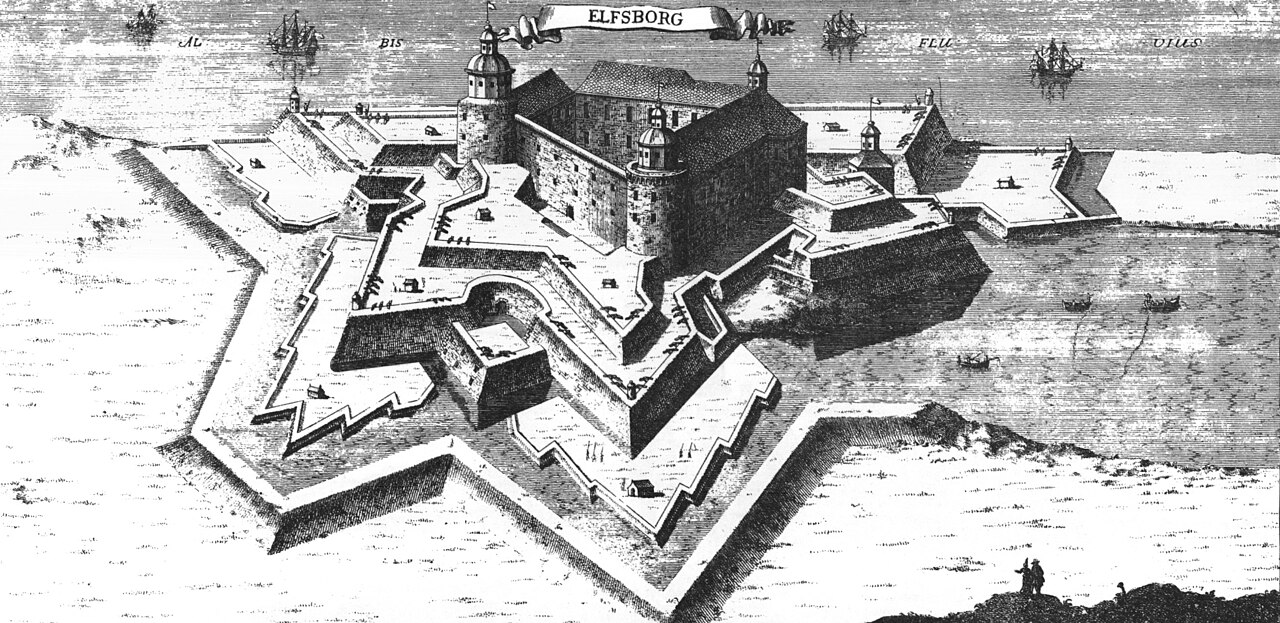
Älvsborg Fortress, often called Old Älvsborg or Älvsborg Castle, was a significant late medieval stronghold located on Klippan, a rocky outcrop on the southern bank of the Göta Älv river in what is now the city of Gothenburg, Sweden. The fortress played a crucial role in controlling access to the river and the important trade routes leading to the interior of Sweden. Its strategic position made it a key defensive site during the medieval period and later conflicts.Historical context and strategic importanceConstructed in the 14th century, Älvsborg Fortress was built to protect the vital waterway of the Göta Älv, which served as a main artery for commerce and military movement. The castle's location on a rocky promontory provided natural defenses and a commanding view of the river, enabling it to monitor and control naval traffic effectively.Throughout its history, Älvsborg was involved in several military engagements, especially during the numerous conflicts between Sweden and Denmark. Its control was essential for maintaining Swedish access to the North Sea, and it was often a target during wars in the region.Architectural features and layoutThe fortress was characterized by typical medieval defensive architecture, including thick stone walls, battlements, and towers designed to withstand sieges and attacks. The natural rocky terrain of Klippan was incorporated into the castle's defenses, enhancing its resilience.Though detailed architectural plans are scarce, historical records suggest that Älvsborg included a keep or donjon, curtain walls, and a gatehouse. The castle was likely surrounded by a moat or other water defenses, common features in medieval fortifications to hinder attackers.Defensive structuresThe fortress's position on a rocky outcrop served as a natural barrier on several sides, reducing the need for extensive fortifications in those directions. Walls were reinforced with towers at key points to provide vantage points for archers and artillery. The main gate would have been heavily fortified to control access.Living quarters and internal buildingsInside the walls, the castle contained residential quarters for the garrison and commanding officers, storage facilities, and possibly a chapel. These structures were built to support the fortress's military function while providing necessary accommodations for its defenders.Decline and current stateÄlvsborg Fortress was demolished in the late 17th century, following changes in military technology and shifting strategic priorities that rendered the castle obsolete. The construction of newer fortifications, including the New Älvsborg Fortress on an island in the river, reflected the evolution of coastal defense systems.Today, the site of Old Älvsborg is an archaeological ruin with some remnants of stone walls and foundations visible near the southern pylon of the Älvsborg Bridge. The ruins serve as a historical landmark, offering insight into medieval military architecture and the region's turbulent history.Cultural significance and heritage preservationThe remains of Älvsborg Fortress are an important part of Gothenburg's cultural heritage, symbolizing the city's medieval origins and its role in regional defense. Efforts to preserve and study the ruins contribute to understanding Sweden's medieval fortifications and historical landscape.Visitors to the site can explore the ruins and learn about the castle's history through local museums and informational displays, connecting the present-day city with its medieval past.

Late Medieval (14th–15th c.)
Details
2 km

Gothenburg Cathedral

Gothenburg, Sweden

Gothenburg Cathedral (Swedish: Gustavi domkyrka or Göteborgs domkyrka) stands prominently near the heart of Gothenburg, Sweden. Constructed in 1815, this cathedral replaced an earlier 17th-century church that once served as the city's main place of worship. Designed by the renowned architect Carl Wilhelm Carlberg, the cathedral exemplifies the neoclassical architectural style prevalent in early 19th-century Sweden. Its imposing façade and balanced proportions reflect the ideals of symmetry and simplicity that define neoclassicism.Historical background and constructionThe original cathedral on this site dated back to the 17th century but was destroyed by fire in the late 18th century. The decision to rebuild was entrusted to Carl Wilhelm Carlberg, who was a prominent figure in Swedish architecture and known for his mastery of neoclassical design. Construction began shortly after the fire, culminating in the completion of the new cathedral in 1815. The building was dedicated to King Gustavus Adolphus, a key historical figure in Gothenburg's founding, hence the name Gustavi domkyrka.Architectural featuresThe cathedral is characterized by its neoclassical elements, including a symmetrical layout, tall columns, and a restrained decorative scheme. The main entrance is marked by a portico supported by Ionic columns, leading into a spacious nave illuminated by large windows. The interior features a high vaulted ceiling and an elegant altar area, combining functionality with aesthetic grace. The use of clean lines and minimal ornamentation highlights the influence of classical antiquity on the design.Role in the community and cultural significanceBeyond its religious function, Gothenburg Cathedral serves as a key cultural venue in the city. It regularly hosts classical concerts and recitals, taking advantage of its excellent acoustics and grand interior. The cathedral is a popular destination for both locals and tourists, offering a glimpse into Gothenburg's historical and architectural heritage. Its central location makes it a focal point for civic and religious events alike.Preservation and current statusThe cathedral has undergone several restorations to maintain its structural integrity and appearance. Despite being over two centuries old, it remains well preserved and continues to function as the seat of the bishop in Gothenburg. Its neoclassical style stands out amidst the city's more modern architecture, providing a tangible link to Gothenburg's early 19th-century urban development.Visiting informationVisitors to Gothenburg Cathedral can explore the interior during opening hours, attend services, or enjoy scheduled concerts. The cathedral's central location in the city center makes it easily accessible by public transport and on foot. It remains one of Gothenburg's most visited landmarks, appreciated for both its architectural merit and its vibrant role in the city's cultural life.

Modern (19th–20th c.)
Details