Münchenstein Castle
Münchenstein Castle, known in German as Ruine Münchenstein, stands as an enduring medieval landmark above the village centre of Münchenstein in the canton of Basel-Land, Switzerland. The castle's ruins, perched on a narrow rocky outcrop, offer a tangible connection to the High Medieval period and the complex feudal history of the region. Although the remains are slender, they provide insight into the castle's original grandeur and strategic importance.
Founding and early development
The origins of Münchenstein Castle trace back to around 1260-1270, when the rising noble family Münch acquired the village situated on the hills overlooking the Birs river. The castle's construction was initiated by Hugo II Münch and his son Hugo III Münch, who established their estate on the rocky promontory. This location was chosen for its natural defensive advantages, a typical feature of hill castles of the era.
Under Hugo Münch IV, the castle underwent significant expansion, including the construction of a ring wall encircling the village over the following six decades. This fortification not only protected the castle but also the surrounding settlement, highlighting the Münch family's growing influence in the region. Following these developments, the family adopted the name Münch von Münchenstein, and by 1279, the village formerly known as Geckingen was renamed Münchenstein.
Ownership transitions and political context
The Münchs' tenure as owners was relatively brief. By 1280, they were compelled to transfer ownership to the Graf von Pfirt, who then granted the castle and village back to the Münchs as a fief. This arrangement reflects the feudal complexities of medieval Switzerland, where land ownership and vassalage were often intertwined.
In 1324, following the death of Ulrich III, Graf von Pfirt, the estate passed to the Herzog of Austria through marriage alliances. Johanna von Pfirt, the heiress, was wed to Herzog Albrecht II von Habsburg, linking Münchenstein to the powerful Habsburg dynasty. By 1334, the castle had reached its largest extent, marking the zenith of its medieval architectural development.
Damage, restoration, and notable residents
The castle sustained damage during the 1356 Basel earthquake but was promptly restored to its original condition. This event underscores the castle's resilience and the importance placed on maintaining its defensive and residential functions.
During the mid-14th century, Konrad VIII Münch von Münchenstein, known as 'Hape', resided in the castle. His marriage to Katharina von Löwenburg in 1340 brought additional territories under his governance, including Muttenz and three fortresses in the Wartenburg district. These alliances expanded the Münch family's regional power.
Conflicts and decline
In the context of the Old Zürich War, the castle was captured by Solothurn forces on 17 June 1444, shortly before the Battle of St. Jakob an der Birs. The Münchs regained control in 1469, but financial pressures forced Konrad Münch von Münchenstein to sell the estate to the city of Basel in 1470. Despite the sale, he remained as a city reeve and tenant, illustrating the complex relationship between nobility and emerging urban powers.
The 15th century marked the decline of the Münch dynasty's influence. The high costs of maintaining fiefdoms and estates led to the gradual loss of their holdings. The city of Basel governed Münchenstein for nearly three centuries until the aftermath of the French Revolution, when the village and castle were sold to the municipality and subsequently to private villagers.
Architectural features and current state
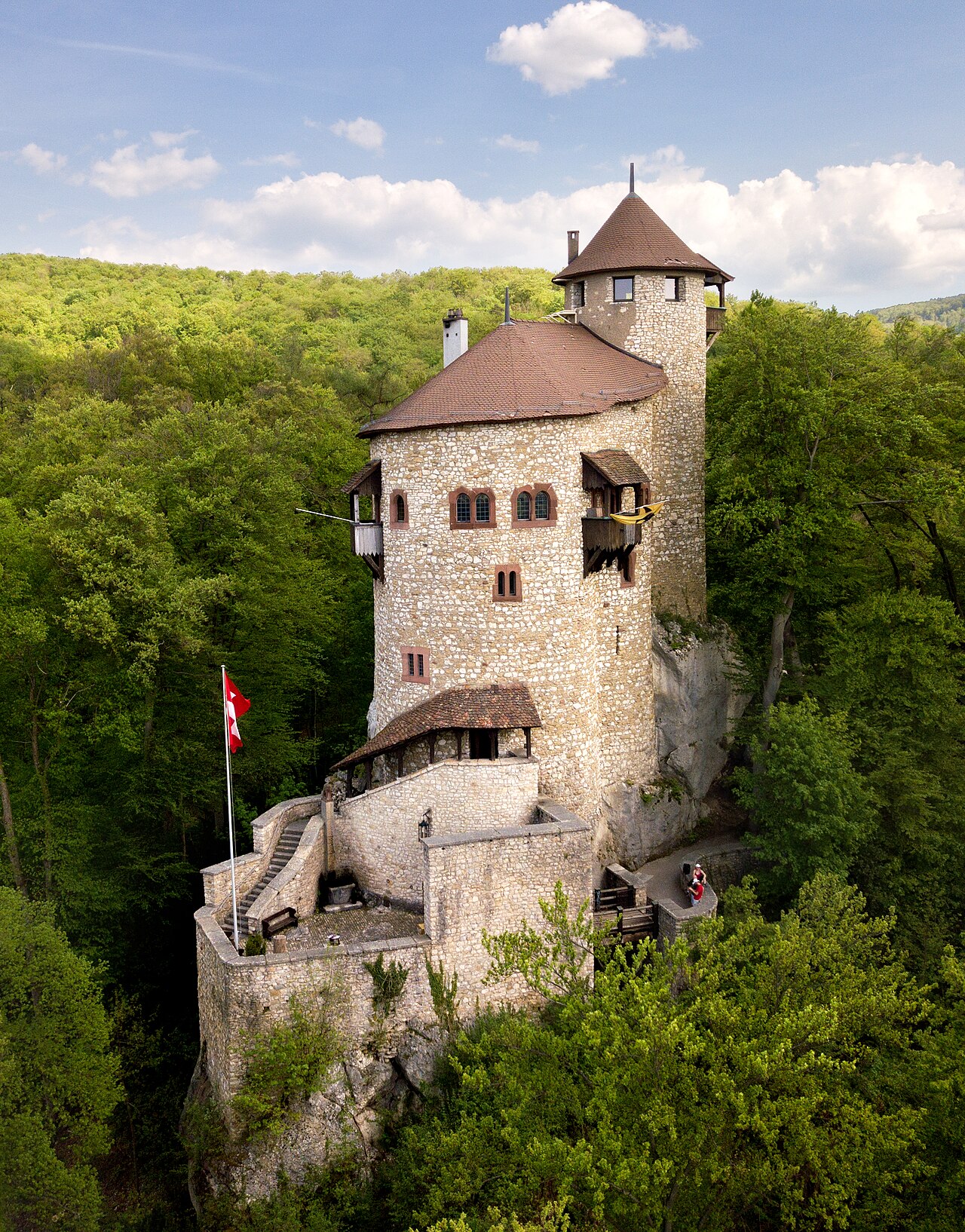
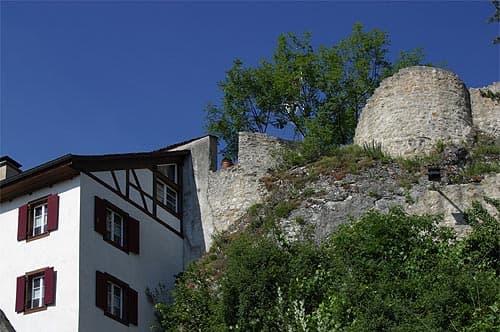
Münchenstein Castle was originally constructed as a hill castle, utilizing the natural rock formation for defense. The castle featured a ring wall enclosing the village, residential buildings, and defensive towers. Today, only slender remnants of the walls remain, situated directly above the village centre. These ruins are privately owned but accessible to visitors who wish to explore the historical site.
The castle's strategic location on a narrow rock ridge provided commanding views over the Birs valley and surrounding landscape, a typical characteristic of medieval fortifications designed to control trade routes and local territories.
Cultural significance and heritage
Münchenstein Castle holds considerable cultural importance as a symbol of the medieval feudal system in the Basel region. Its history reflects the shifting political allegiances and territorial disputes that shaped Switzerland's development. The castle's association with prominent families such as the Münchs, Pfirts, and Habsburgs adds to its historical value.
Despite its ruined condition, the castle remains a focal point for local heritage and tourism. Efforts to preserve the site, albeit limited by private ownership, contribute to the understanding of medieval castle architecture and regional history.
Frequently asked questions (FAQ)
- How do I visit Münchenstein Castle ruins?
- The ruins of Münchenstein Castle are privately owned but can be viewed from public areas above the village. Visitors should respect private property and check local guidelines before visiting.
- What is the historical significance of Münchenstein Castle?
- Münchenstein Castle was a medieval stronghold built in the 13th century by the Münch family. It played a role in regional feudal politics and was linked to the Habsburg dynasty through marriage.
- When was Münchenstein Castle built?
- Construction of Münchenstein Castle began around 1260 and was completed by 1270, with expansions continuing into the 14th century.
- Can I explore the interior of the castle ruins?
- Due to the castle's ruined state and private ownership, interior exploration is limited. Visitors can view the remaining walls and foundations from outside.
- Why is Münchenstein Castle in ruins?
- The castle suffered damage from the 1356 Basel earthquake and declined after the 15th century due to financial difficulties and changing political control, leading to its current ruined state.
Photo gallery

Information
Current owner
Private owner
Loading map...
Visitor reviews
No reviews yet. Been here? Write the first review and help other travelers!
Write the first reviewVisited this castle? Share your experience
Your review helps other travelers and adds first-hand knowledge to our encyclopedia.