Birseck Castle
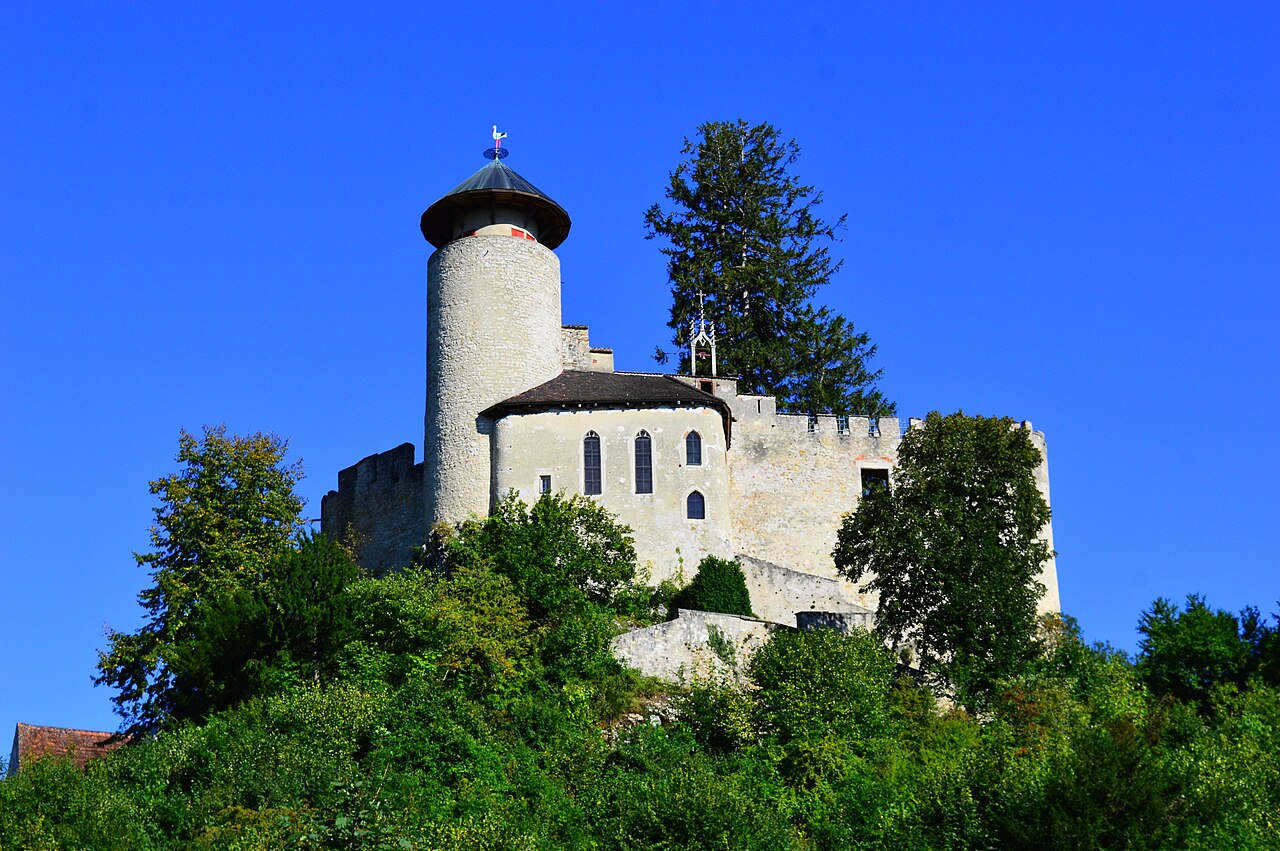
Birseck Castle, also known as Vordere Burg Birseck, is a prominent high medieval hill castle located in Arlesheim, within the Canton of Basel-Landschaft, Switzerland. Perched on a rocky spur overlooking the valley and the Ermitage estate, it commands strategic views of the surrounding landscape and the plain of the Birs river. The castle is part of a notable group of four castles aligned along the Birseck slope, including the better-preserved Reichenstein Castle to the north. Its origins trace back to the early 13th century, with archaeological evidence suggesting earlier fortifications possibly dating to the 12th century during the era of the Counts of Frohburg.
The castle was constructed between 1243 and 1244 after Bishop Lüthold of Basel purchased the castle hill from the Niedermünster monastery in 1239. This marked a significant phase in the regional power dynamics, as the bishop sought to establish fortified control over the southern Sisgau territory amid the territorial expansion of the Frohburg counts. The earliest masonry incorporated stones salvaged from a previous stone building that had suffered a severe fire, the cause of which remains unknown. By 1245, Ludwig von Froburg relinquished his claims to the lands around Birseck and Reichenstein, consolidating episcopal authority.
Historical development and significance
Medieval origins and episcopal residence
From the late 13th century, Birseck Castle served as a residence for the bishops of Basel. Notably, it hosted a papal visit in 1270 during the tenure of Bishop Heinrich von Neuenburg. The castle was a key administrative center, housing courts and the offices of episcopal bailiffs. However, the castle suffered significant damage during the Basel earthquake of 1356, which caused deep cracks in the masonry and likely ignited a major fire. Due to its diminished military importance and limited episcopal funds, the castle was pledged to the knights of the von Ramstein family in 1373.
Renaissance and counter-reformation transformations
In 1435, Birseck returned to episcopal control and underwent expansions in the 15th and 17th centuries. During the 15th century, battlements were added to the castle walls, enhancing its defensive capabilities. The 17th century brought major reconstruction efforts including the building of new gates, the rebuilding of residential quarters, and the addition of a chapel. These renovations coincided with the Counter-Reformation, when the castle served as the main residence of Bishop Jakob Christoph Blarer von Wartensee around 1600. The fortifications were significantly strengthened to reflect the castle’s renewed importance.
Decline and revolutionary damage
By the mid-18th century, the original drawbridge was replaced by a permanent stone bridge to improve access. However, the castle's condition deteriorated, and in 1763, the bailiffs' seat was moved to the village at the castle's base. During the French Revolution in 1793, local peasants set fire to parts of the castle park, the Ermitage, and several buildings, causing extensive damage. The ruins were auctioned in 1794 and used as a quarry for building materials by nearby farmers.
Architectural features and restorations
Castle layout and fortifications
Birseck Castle is naturally protected on several sides by steep rocky slopes. The castle complex comprises a core castle and a large outer bailey (vorburg), which includes a farmstead with residential and economic buildings. Originally, the main castle was accessed via a drawbridge spanning a deep rock-cut moat, replaced in the 18th century by a stone bridge. The core castle was once enclosed by an irregular ring wall, now partially preserved, with a small tower near the gatehouse still standing.
The bergfried and chapel
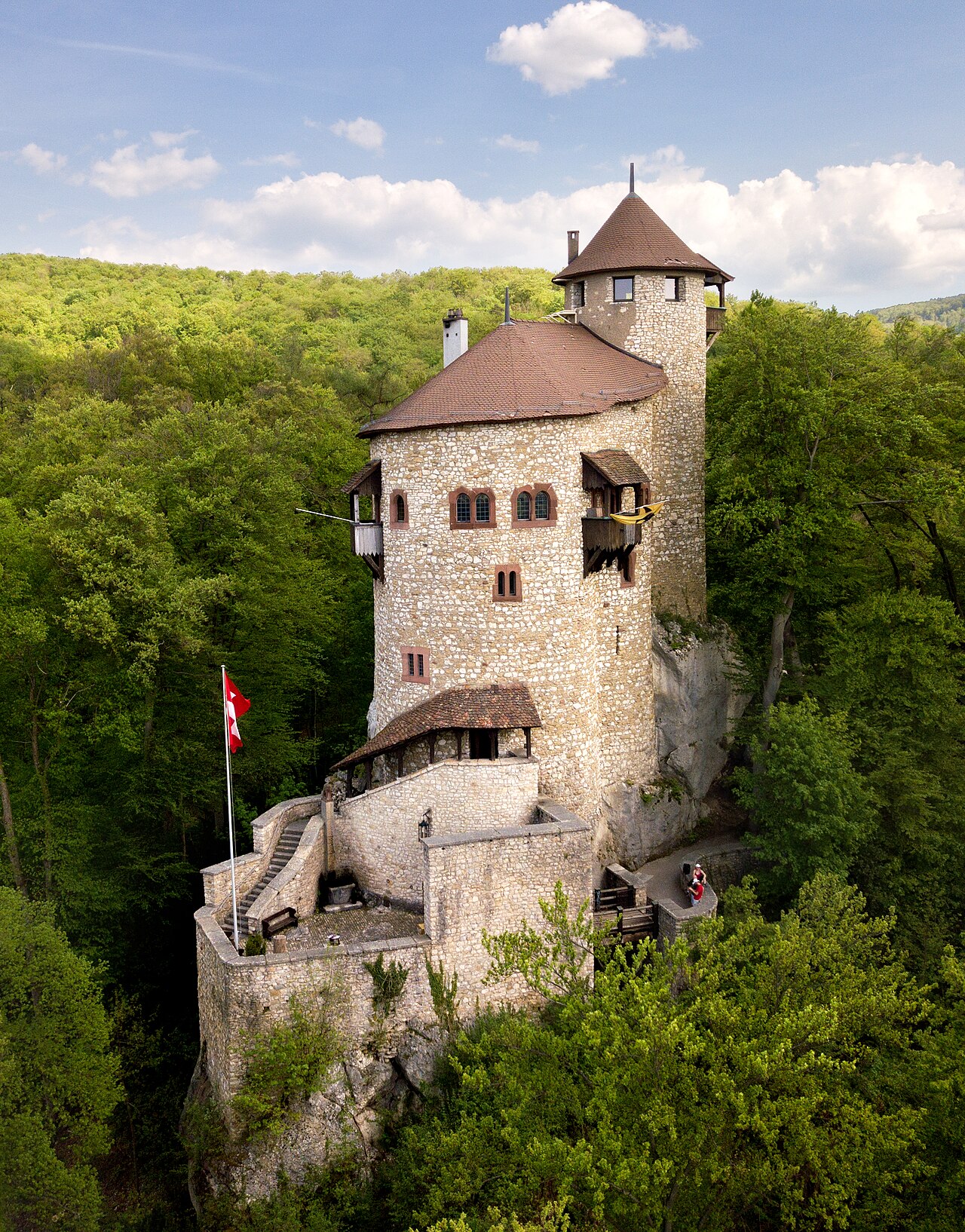
The main tower, or bergfried, and the chapel were restored in the 19th century in a neo-Gothic style, which altered their original medieval character. The chapel features neo-Gothic wall paintings, restored in 2007 to closely reflect the original artworks. The castle walls are decorated with battlements (crenellations) added in the 15th century and subsequently restored. The 19th-century restorations also included the construction of a Hall of the Knights with neo-Gothic decorations, built within the ruins in 1812, evoking romantic medieval imagery.
Modern conservation efforts
In 1808, the ruins were acquired by Conrad Karl Friedrich von Andlau-Birseck and Canon Heinrich von Ligerz, who initiated restorations of the tower and chapel in the neo-Gothic style. Further damage occurred in 2000 when part of the northern outer wall collapsed, prompting immediate repairs. Archaeological investigations during restoration phases in 2005 provided detailed building analyses and uncovered significant historical insights. Since 2007, a dedicated foundation has managed the castle, ensuring its preservation and public accessibility.
Cultural and archaeological importance
Birseck Castle is not only significant for its medieval architecture and history but also for its archaeological context. Near the castle, the Birseck-Ermitage cave revealed the oldest known Neolithic burial in Switzerland, dating from approximately 5400 to 5000 BCE. This burial contained the skeleton of a middle-aged man laid in a flexed position with stones arranged at his feet, likely part of a grave enclosure, though no grave goods were found. This discovery highlights the long-term human presence and cultural significance of the Birseck region.
Today, the castle ruins, complemented by the surrounding landscaped gardens and the Ermitage park, offer visitors a romantic and evocative journey into medieval and neo-Gothic architectural heritage. The combination of original medieval masonry, 19th-century neo-Gothic restorations, and the natural beauty of the site make Birseck Castle a unique cultural landmark in the Basel-Landschaft canton.
Visiting birseck castle
The castle is accessible from the northeast and through the Ermitage park. Visitors can explore the restored bergfried, the chapel with its neo-Gothic wall paintings, and the romantic courtyard adorned with hedges, trees, and roses. The site invites a contemplative walk through history, blending the medieval past with 19th-century romanticism. Its visibility from many parts of Basel makes it a notable landmark for tourists and locals alike.
Frequently asked questions (FAQ)
- How do I get to Birseck Castle?
- Birseck Castle can be reached from the northeast and through the Ermitage park in Arlesheim. The site is accessible by footpaths suitable for most visitors.
- When was Birseck Castle built?
- Birseck Castle was constructed between 1243 and 1244 after Bishop Lüthold of Basel acquired the site in 1239.
- What architectural style is Birseck Castle?
- The castle features original high medieval stonework combined with 19th-century neo-Gothic restorations, especially in the chapel and main tower.
- Is Birseck Castle open to the public?
- Yes, the castle ruins and surrounding gardens are open to visitors, offering a glimpse into medieval architecture and romantic neo-Gothic restorations.
- Why was the castle restored in neo-Gothic style?
- The neo-Gothic restorations in the 19th century aimed to revive medieval aesthetics and romanticize the castle ruins, reflecting contemporary tastes in historic preservation.
Information
Sources & official resources
Verify the information above using these authoritative references.
Loading map...
Visitor reviews
No reviews yet. Been here? Write the first review and help other travelers!
Write the first reviewVisited this castle? Share your experience
Your review helps other travelers and adds first-hand knowledge to our encyclopedia.