Moszna
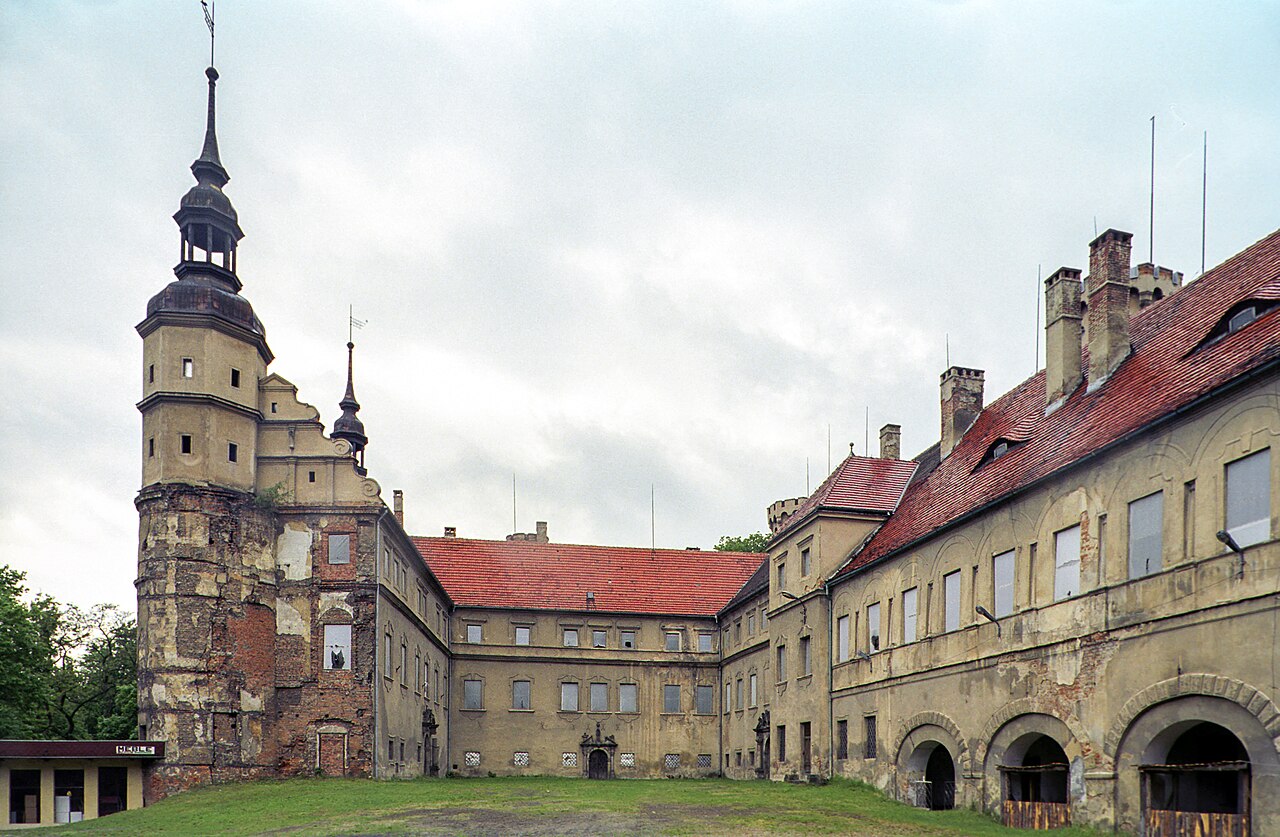
Moszna Castle is one of the most iconic monuments in the Opole region of Poland, renowned for its striking fairy-tale appearance and eclectic architectural style. Despite its common reference as a castle, it is in fact a palace that was never designed with defensive features typical of medieval fortresses. The current structure is the result of extensive rebuilding and expansion undertaken in the late 19th and early 20th centuries by the wealthy industrialist Franz Hubert von Tiele-Winckler, who transformed the site into a grand residence blending baroque, neo-Gothic, and neo-Renaissance architectural elements.
The origins of the Moszna estate date back to the 18th century, when a baroque palace was constructed for the noble von Reisewitz family. The property changed hands several times, passing through the ownership of the Seherr-Thoss family and later the von Erdmannsdorf family, before being acquired in 1866 by the Tiele-Winckler family, who were prominent industrial magnates in Silesia. The palace suffered a devastating fire in 1896, which destroyed much of the interior and roof. Franz Hubert von Tiele-Winckler seized this opportunity to rebuild and expand the palace, initiating a multi-phase construction project that would define its present-day appearance.
Architectural evolution and stylistic diversity
The reconstruction began immediately after the fire, with the central baroque wing restored to its original form. Between 1896 and 1900, a new eastern wing was added in the neo-Gothic style, featuring characteristic pointed arches, decorative spires, and an adjoining orangery designed to house exotic plants. This wing emphasized verticality and romantic medieval motifs, contrasting with the baroque symmetry of the central section.
From 1912 to 1914, a western wing was constructed in the neo-Renaissance style, showcasing ornate pilasters, semi-columns, and a distinctive octagonal hunting tower. This addition introduced classical Renaissance elements such as balanced proportions and decorative stonework, further enriching the palace’s eclectic character. The combination of three different architectural styles within one complex makes Moszna Castle a unique example of eclectic architecture blending historicist trends popular in Europe at the turn of the 20th century.
Layout and notable features
The palace is arranged in an irregular U-shape, with the central baroque wing positioned perpendicular to the main axis of the surrounding park. The entire complex spans approximately 8,000 square meters and contains exactly 365 rooms, symbolizing the days of the year. It also boasts 99 towers and turrets, a number said to correspond to the villages historically owned by the Tiele-Winckler family. This symbolic numerology adds a layer of cultural significance to the architectural design.
The southern facade prominently displays the coat of arms of Franz Hubert von Tiele-Winckler, commemorating his pivotal role in the palace’s restoration and expansion. The numerous towers, spires, and pinnacles create a dramatic vertical silhouette that has become synonymous with the palace’s fairy-tale image.
Historical context and ownership
Before the current palace, the site hosted a baroque residence dating from the 18th century, originally built for Georg Wilhelm von Reisewitz. In 1771, the estate was purchased by Heinrich Leopold von Seherr-Thossa, and later passed through the hands of Karl Gotthard Seherr-Thoss and Heinrich von Erdmannsdorf. The Tiele-Winckler family acquired the property in 1866, marking a new era of industrial wealth and architectural ambition.
The family’s industrial prominence and social standing allowed Franz Hubert von Tiele-Winckler to host notable guests, including Emperor Wilhelm II, who visited the palace in 1904, 1911, and 1912 for hunting expeditions in the surrounding forests. These visits underscore the palace’s role as a center of aristocratic life and leisure in early 20th-century Silesia.
Legends and archaeological findings
Local legends have linked Moszna Castle to the Knights Templar, fueled by the discovery of old cellars and underground passages during early 20th-century excavations. These were once thought to be remnants of a Templar fortress or secret tunnels connecting to nearby castles, but modern scholarship regards these claims as unproven. Postwar excavations revealed traces of a medieval palisade, suggesting the site had some form of earlier fortification, though no definitive medieval castle structure has been confirmed.
20th-century history and postwar transformations
After World War II, the Tiele-Winckler family fled westward ahead of the advancing Red Army. The palace was occupied by Soviet troops, who caused extensive damage to the interior furnishings and art collections. Unlike many European castles, Moszna escaped significant structural damage during the war itself, but the postwar period was marked by neglect and looting.
Throughout the postwar decades, the palace served various institutional roles, including as a military hospital branch during the war and later as a sanatorium from 1972. It became the Center for Neurosis Therapy in 1996, a function it maintained until 2013. Since then, parts of the palace have been opened to the public for tours and cultural events.
Current use and cultural significance
Today, Moszna Castle is a major tourist attraction and cultural venue. The palace chapel, once intended to house the Tiele-Winckler family crypt, is now used as a concert hall. Since 1998, the castle has hosted an art gallery featuring rotating exhibitions of contemporary artists. The surrounding park and gardens cover up to 200 hectares and include formal avenues, ornamental ponds, and a distinctive Chinese-style bridge leading to an island whimsically named Easter Island.
The park’s design reflects a blend of Dutch and French landscaping traditions, with a central linden-lined alley flanked by 19th-century water canals and diverse plantings such as rhododendrons and ancient oak trees. The family cemetery is located within the park, marking the enduring legacy of the Tiele-Winckler family on the estate.
Annual cultural events, including the Music Festival of Blooming Azaleas, take place on the grounds, reinforcing Moszna Castle’s role as a vibrant hub of heritage and the arts in the region.
Frequently asked questions (FAQ)
- How do I get to Moszna Castle?
- Moszna Castle is located in the village of Moszna in Poland. You can reach it by car via the A4 motorway, with well-marked roads leading to the castle. Public transportation options, including buses and trains, are also available from nearby cities.
- What is the historical significance of Moszna Castle?
- Moszna Castle dates back to the 17th century and is renowned for its eclectic architectural style that combines Gothic, Renaissance, and Baroque elements. It has served various purposes over the centuries, including as a residence for the noble family of Tiele-Winckler. The castle is a significant cultural landmark in Poland, attracting visitors interested in history and architecture.
- When was Moszna Castle built?
- Construction of Moszna Castle began in the late 17th century, with major renovations and expansions occurring in the 19th century. The castle's distinctive towers and fairytale-like appearance were shaped during these renovations, creating the iconic structure we see today. The castle was completed in its current form in the early 20th century.
- Can I take a guided tour of Moszna Castle?
- Yes, guided tours are available for visitors to explore the interior of Moszna Castle. These tours provide insightful information about the castle's history, architecture, and the families that lived there. It's advisable to check the schedule in advance, as some tours may require prior booking.
- Why is Moszna Castle considered an architectural gem?
- Moszna Castle is considered an architectural gem due to its unique blend of styles, featuring 99 towers and turrets that give it a fairytale appearance. The intricate details of the façade and the beautifully landscaped grounds enhance its charm. The castle's design reflects the artistic trends of various periods, making it a fascinating subject for architecture enthusiasts.
- Is it possible to host events at Moszna Castle?
- Yes, Moszna Castle offers facilities for hosting various events, including weddings, conferences, and cultural gatherings. The picturesque setting and elegant interiors provide a stunning backdrop for any occasion. It's recommended to contact the castle's administration for specific details and availability.
- What are the opening hours for Moszna Castle?
- Moszna Castle is typically open to visitors from March to October, with varying hours depending on the season. During peak tourist months, the castle may have extended hours to accommodate more visitors. Always check the official website for the latest information on opening hours before planning your visit.
- What are the ticket prices for visiting Moszna Castle?
- Ticket prices for Moszna Castle vary based on the type of tour and age of visitors, with discounts often available for students and seniors. Guided tours may have a higher fee compared to self-guided visits. It's best to check the official website for the most current pricing information.
- What is the best time to visit Moszna Castle?
- The best time to visit Moszna Castle is during the spring and summer months when the gardens are in full bloom and the weather is pleasant for outdoor activities. Additionally, many events and festivals take place during this time, enhancing the visitor experience. Fall can also be beautiful, with colorful foliage surrounding the castle.
- Are there any nearby attractions to visit?
- Yes, there are several nearby attractions to explore, including the beautiful park surrounding Moszna Castle and the charming village of Moszna. The region also offers opportunities for hiking and enjoying nature in the surrounding countryside. Nearby towns like Opole and Krapkowice feature additional historical sites and cultural experiences.
Information
Website
Visit websiteSources & official resources
Verify the information above using these authoritative references.
Loading map...
Visitor reviews
No reviews yet. Been here? Write the first review and help other travelers!
Write the first reviewVisited this castle? Share your experience
Your review helps other travelers and adds first-hand knowledge to our encyclopedia.