Morsko Castle — Poland castle

Morsko Castle

Bąkowiec castle in morsko, poland
Morsko, Poland
Late Medieval (14th–15th c.)
Ruins

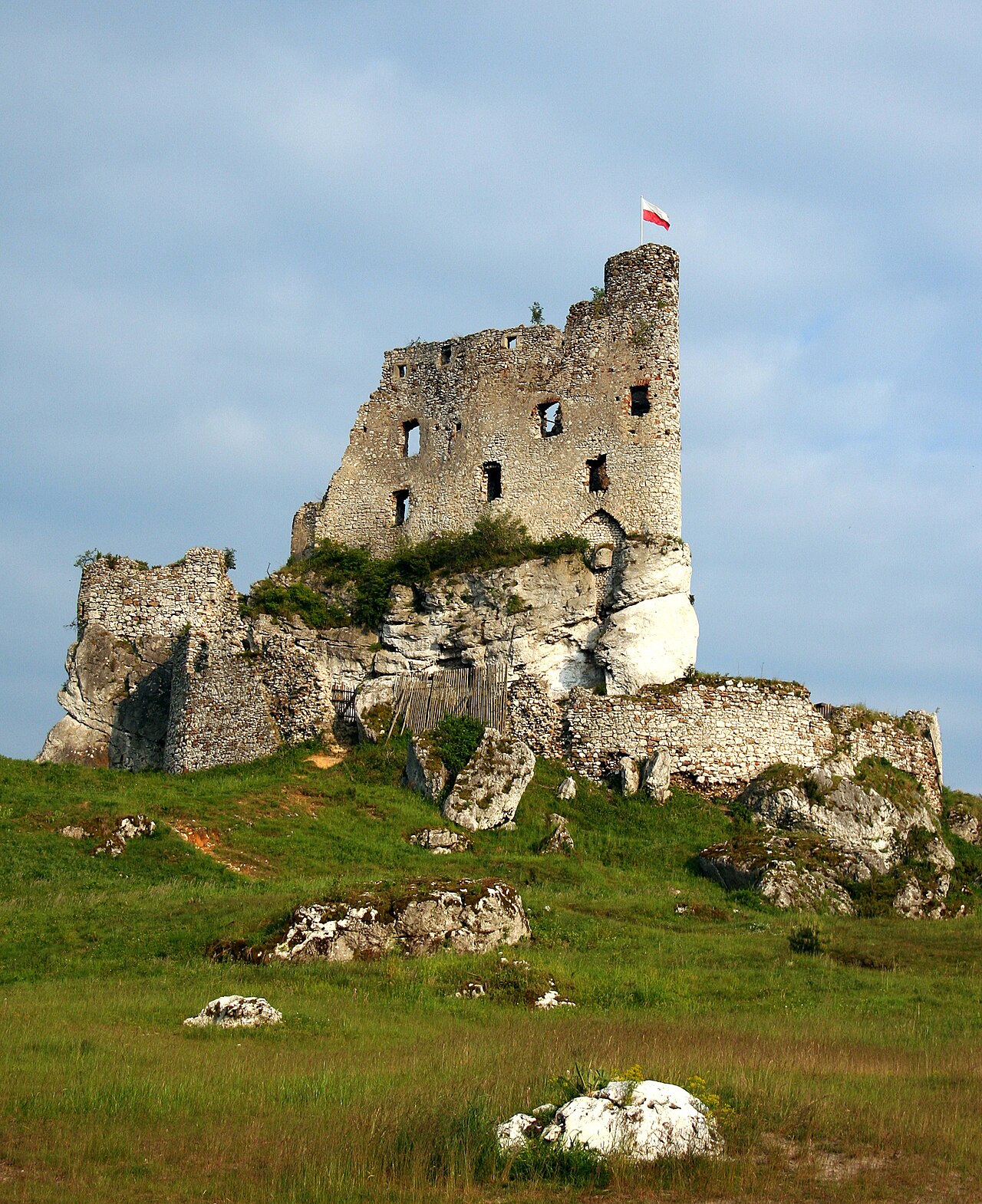
Bąkowiec Castle, located in the village of Morsko in southern Poland, is a remarkable example of a late medieval hill castle built atop a prominent limestone rock known locally as "Tygrys." This fortress, now in ruins, reflects the strategic military architecture and noble residence typical of the 15th century in the Kraków-Częstochowa Upland region.

Historical background and origins

The earliest mentions of the village of Morsko date back to a 1220 document by Bishop Iwo Odrowąż, where Morsko was described as a princely village. Although there is no direct documentation of the castle's initial construction, it is probable that the first fortifications were wooden and erected in the 14th century by the noble Toporczyk family, who later adopted the surname Morscy from the estate name. Historical records suggest these knights engaged in banditry, leading King Władysław Łokietek to confiscate the village in 1327 and transfer it to the monastery at Mstów.

While the early existence of a castle is not explicitly recorded, by analogy with other regional fortifications, it is likely that a watchtower or small fortified outpost was established during the reign of King Casimir the Great in the 14th century. Another theory attributes the construction to Duke Władysław Opolczyk, who controlled the area briefly in the late 14th century.

The first explicit written reference to the castle, named "Bancowecz," dates from 1390, mentioning its owner Mikołaj Strzała. Subsequently, the castle passed through several noble families, including Piotr of the Lis coat of arms and Jan of Sieciechowice. In 1435, the castle and its associated estates were acquired by the castellan of Sącz, Krystyn of Koziegłowy, whose descendants held it for some time.

At the transition from the 15th to the 16th century, the Włodki family took ownership and are credited with constructing the current stone castle, replacing earlier wooden structures. Later proprietors included the Brzeski and Giebułtowski families. The castle was abandoned in the 17th century, likely as a result of damage sustained during the Swedish invasions known as the Deluge, which led to widespread destruction of many Jura castles.

Architectural features and layout

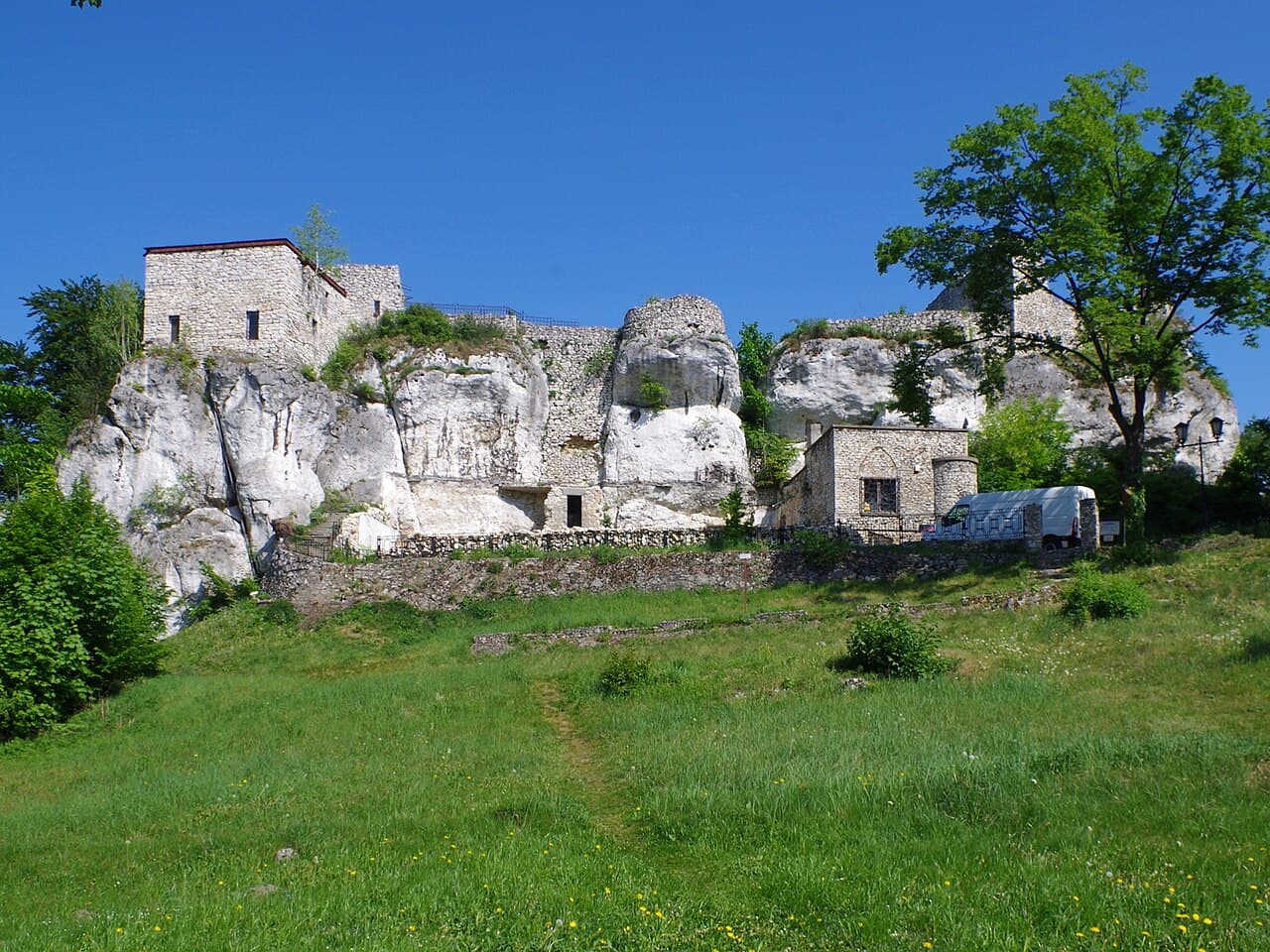
Bąkowiec Castle was ingeniously built on a steep limestone rock, adapting to the irregular shape of the summit. The castle’s irregular polygonal plan maximized the limited surface area of the rocky outcrop and its immediate surroundings.

The defensive walls were constructed primarily of locally quarried limestone. The exterior faces of the walls consist of finely cut stone blocks, while the interior core was composed of rubble stone bound with abundant lime mortar, a typical medieval building technique that enhanced structural integrity and resistance to siege engines.

The main entrance was through a stone gate, fragments of which remain visible today. This gate led into a small courtyard surrounded by a curtain wall with rectangular chambers arranged in an enfilade layout along the rock’s opposing sides. The castle’s defensive system included semi-circular towers at the corners, which served as lookout points and defensive bastions.

On the eastern side, the castle featured an economic courtyard protected by an earthen embankment with a distinctive oval tower and a dry moat. The southern perimeter was secured by a stone wall, remnants of which are still visible. Access to the castle was exclusively on foot, via a system of wooden platforms and ladders, reflecting a defense strategy that relied on elevation and controlled entry rather than conventional roads.

Historical role and decline

Despite its strong fortifications and strategic position overlooking the borderlands between Silesia and Lesser Poland, Bąkowiec Castle did not play a major role in significant military conflicts. Its primary function was as a fortified noble residence and a border watchpoint, ensuring local security.

The castle’s defenses were designed before the widespread use of artillery, which became a critical factor in its decline. During the Swedish invasion of Poland in the mid-17th century, the castle suffered damage and was subsequently abandoned. Like many castles in the Jura region, it fell into ruin over the following centuries.

Modern history and preservation efforts

From the 17th century until the 19th century, the village of Morsko and the castle ruins were owned by the Heppen family. In 1927, the site was purchased by architect Witold Czeczott, who used stone from the castle ruins to build a villa at the foot of the rock. Between 1929 and 1933, he constructed a new residential house on the southern side of the castle hill, incorporating some of the castle's materials.

In 1961, conservation work was undertaken to stabilize and raise the remaining walls, preserving the ruins for future generations. The site is now part of the Morsko Recreational and Training Center, which manages the castle grounds and promotes its historical significance.

Architectural significance and visitor experience

Bąkowiec Castle stands as an important example of medieval military architecture adapted to challenging natural terrain. Its use of limestone masonry, semi-circular towers, and a dry moat illustrate typical defensive features of late medieval hill castles in Poland.

Visitors to the site can explore the ruined gatehouse, remnants of the curtain walls, and the outlines of the corner towers. The castle’s elevated position offers panoramic views of the surrounding landscape, emphasizing its strategic importance. Although only ruins remain, the site provides valuable insight into the region's feudal history and medieval fortification techniques.

Faqs about bąkowiec castle

  • When was Bąkowiec Castle built? The castle's origins likely date to the 14th century, with the current stone structure constructed around the turn of the 15th and 16th centuries.
  • Is Bąkowiec Castle open to visitors? Yes, the ruins are accessible to the public as part of the Morsko Recreational and Training Center.
  • What architectural style characterizes the castle? The castle exhibits features typical of late medieval military architecture with limestone masonry and defensive towers.
  • How can I reach Bąkowiec Castle? The castle is located on a hill above the village of Morsko and is accessible on foot via trails and wooden platforms.
  • Why is the castle in ruins? It was abandoned after suffering damage during the 17th-century Swedish invasions and gradually fell into disrepair.
  • Are there any preservation efforts? Yes, conservation work was conducted in the 20th century to stabilize the ruins, and ongoing efforts aim to maintain the site.

Frequently asked questions (FAQ)

How do I get to Morsko Castle?
Morsko Castle is located in the picturesque village of Morsko, Poland. Visitors can reach the castle easily by car, with parking available nearby, or by public transport, with bus services connecting it to larger cities in the region.
What is the historical significance of Morsko Castle?
Morsko Castle dates back to the 14th century and played a crucial role in the region's defense against invasions. Its rich history reflects the architectural and cultural changes that have occurred in Poland over the centuries.
When was Morsko Castle built?
Construction of Morsko Castle began in the early 1300s, with several expansions and renovations taking place over the following centuries. The castle's design showcases the medieval architectural style prominent during that era.
Can I visit Morsko Castle year-round?
Yes, Morsko Castle is open to visitors throughout the year. However, it is advisable to check for specific seasonal hours or any special events that may affect access.
Why is Morsko Castle a popular tourist destination?
Morsko Castle attracts visitors due to its stunning architecture, rich history, and beautiful surrounding landscapes. The castle also hosts various cultural events and exhibits, making it an engaging destination for history enthusiasts.
Is it possible to take guided tours at Morsko Castle?
Yes, guided tours are available at Morsko Castle, offering visitors an in-depth look at its history and architecture. It's recommended to book these tours in advance, especially during peak tourist seasons.
What are the ticket prices for Morsko Castle?
Ticket prices for Morsko Castle vary depending on the season and the type of tour selected. Generally, entrance fees are affordable, making it accessible for families and groups.
What are the opening hours for Morsko Castle?
Morsko Castle typically opens at 10 AM and closes at 6 PM during the summer months, while hours may vary in the winter. Always check the official website for the most current information before planning your visit.
What nearby attractions should I visit while in Morsko?
While in Morsko, visitors can explore the beautiful natural scenery of the surrounding area, including hiking trails and parks. Additionally, nearby historical sites and local museums offer further insights into the region's rich cultural heritage.

Photo gallery

Morsko Castle
Click to view

Photo by Jerzy Opioła•CC BY-SA 4.0

1 photo • Click any image to view in full screen

Information

Hill Castle

Sources & official resources

Verify the information above using these authoritative references.

Loading map...

Visitor reviews

No reviews yet. Been here? Write the first review and help other travelers!

Write the first review

Visited this castle? Share your experience

Your review helps other travelers and adds first-hand knowledge to our encyclopedia.
Write a review

(5/5)

0/2000 characters

Your review will be visible after admin approval

Nearby castles

7.2 km
Bobolice — Poland castle

Bobolice

Bobolice, Poland

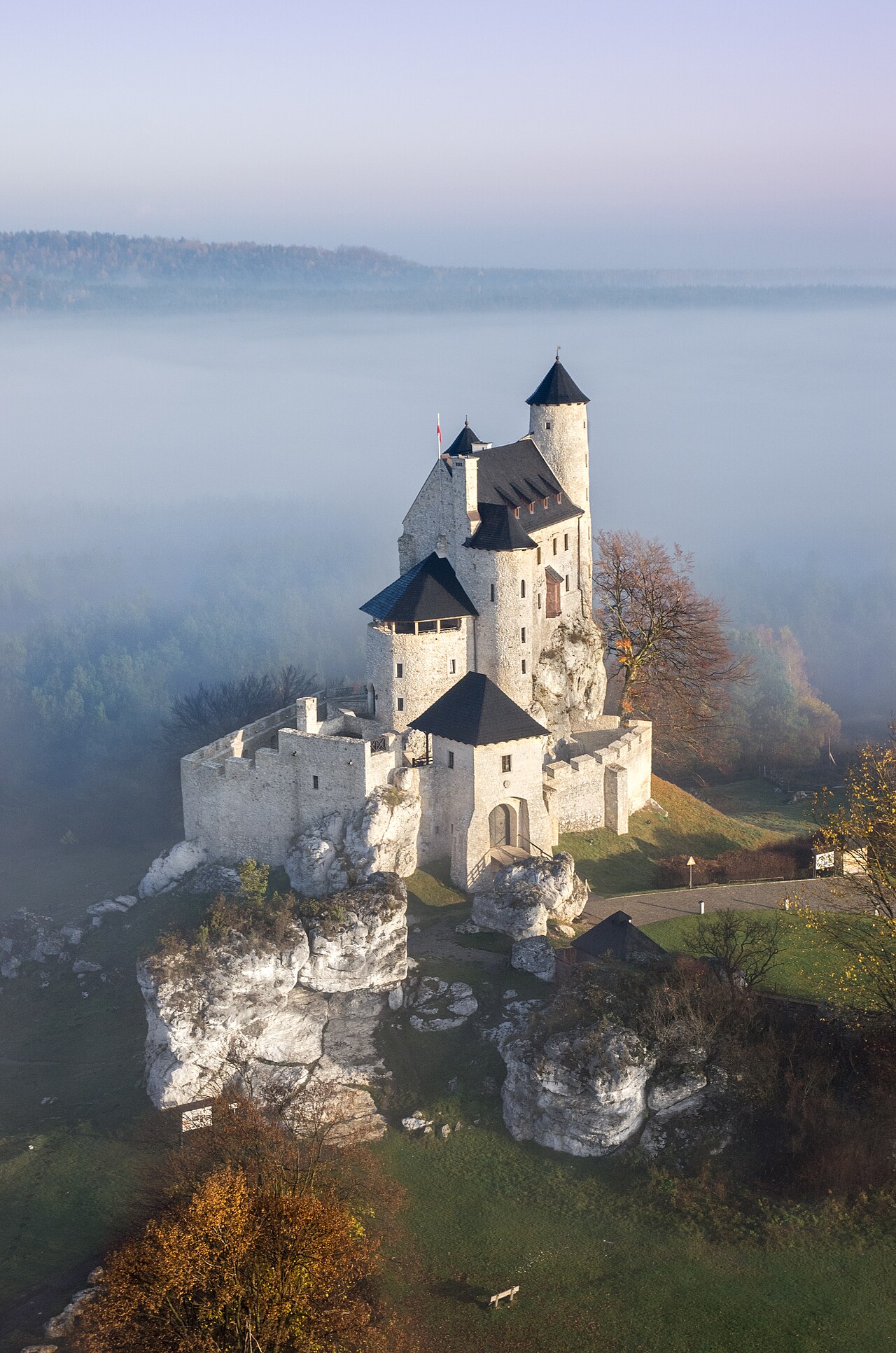
Bobolice Castle stands as a prominent medieval hill fortress located in the village of Bobolice, Poland, within the picturesque region of the Kraków-Częstochowa Upland, known as the Jura Krakowsko-Częstochowska. Constructed originally in the mid-14th century, around 1350-1352, by the order of King Casimir III the Great, the castle was a vital component of the defensive network known as the Eagle's Nests. This system of fortifications was designed to protect the western border of the Kingdom of Poland from incursions originating from Silesia, then a territory under the Bohemian crown. Medieval origins and strategic significance According to legend, Bobolice Castle was erected on the site of an earlier wooden defensive stronghold belonging to the knight Bobola. Both Janko of Czarnków and Jan Długosz, notable medieval chroniclers, attribute the construction of the stone castle to King Casimir the Great. The castle's late medieval Gothic architecture was typical for its time, featuring an irregular rectangular plan that adapted to the natural defensive advantages of the steep limestone rock on which it was built. The builders utilized locally quarried limestone, integrating the structure harmoniously into the Jura landscape. Bobolice was strategically positioned as a hill castle with a dry moat surrounding it, enhancing its defensive capabilities. The entrance was located on the western side, where the slope was gentler, and the castle included a free-standing tower (stołp) and an adjoining residential building known as the "kamieniec." The perimeter walls followed the edge of the hill, creating a formidable barrier against attackers. This fortress was part of a broader system guarding the western border of Poland against threats from the Czech-controlled Silesia. Ownership transitions and military conflicts Following the death of Casimir the Great, the castle passed to King Louis I of Hungary, who in 1370 granted it as a fief to Duke Władysław Opolczyk. Under Opolczyk's control, the castle was garrisoned by mercenary troops, including Germans and Czechs, who often disrupted local trade and security. This unrest prompted military intervention by King Władysław Jagiełło in 1391, who reclaimed Bobolice and reintegrated it into the royal domain. In the 15th century, the castle entered private hands, passing briefly through the Szafraniec and Trestko families before becoming the hereditary seat of the Krezowie family bearing the Ostoja coat of arms. During this period, significant architectural modifications were made, including the demolition of the original Gothic tower and much of the "kamieniec," replaced by a new two-story residential building. Defensive enhancements included two semicircular towers on the northern and eastern walls. A lower bailey, surrounded by its own walls and a dry moat with a drawbridge, was developed for economic and service functions. The castle saw military action in 1587 when it was briefly captured by forces loyal to Archduke Maximilian III of Habsburg during his bid for the Polish throne. It was soon retaken by troops under Hetman Jan Zamoyski and remained with the Krezowie family until 1625. Subsequently, the castle changed hands multiple times, including ownership by the Myszkowski and Męciński families. Decline and destruction during the swedish deluge The most devastating blow to Bobolice Castle came during the Swedish Deluge (mid-17th century), when in 1657 Swedish forces led by General Müller plundered and set fire to the fortress. This event marked the beginning of the castle's long decline. By the late 17th century, it was largely abandoned and in ruins. Notably, when King John III Sobieski passed through in 1683 en route to the Battle of Vienna, his entourage was forced to camp in tents due to the castle's dilapidated state. In the 18th and 19th centuries, the castle's remains were further degraded by treasure hunters and locals repurposing stones for other constructions. After World War II, parts of the ruins were dismantled to provide materials for road building between Bobolice and Mirow. 20th-century reconstruction and modern restoration In the late 20th century, the castle ruins were acquired by the Lasecki family, who embarked on an ambitious reconstruction project beginning in 1999. The restoration aimed to return Bobolice Castle to its approximate 16th-century appearance, guided by archaeological research, historical scholarship, and traditional construction methods using local limestone. Despite the absence of original architectural plans, the reconstruction was based on surviving ruins and expert interpretation. The restoration, completed in 2011, involved rebuilding the two-story residential building, the defensive walls, and the gatehouse, with particular attention to historical detail. However, the project has been subject to debate within the heritage conservation community, with some critics labeling it as overly interpretive or "Disneyland-like." Nonetheless, the castle now serves as a popular tourist destination, featuring a hotel and restaurant at its base offering regional cuisine. Architectural features and archaeological findings Bobolice Castle's layout is adapted to the irregular limestone hill rising approximately 360 meters above sea level. The castle was originally enclosed by white limestone walls with battlements and surrounded by a dry moat. Access was controlled via a drawbridge leading to a gatehouse featuring a Gothic pointed arch portal. The core of the castle included a kamieniec (stone residential building) and a stołp (free-standing tower), with two semicircular half-towers added in the 15th century to strengthen defense. The upper floors housed living quarters and a chapel, reflecting the castle's dual military and residential functions. The lower bailey served economic purposes, containing service buildings, a well, and accommodations for servants. Excavations during the reconstruction uncovered a wealth of artifacts, including ceramics, tiles, iron tools, glassware, and coins spanning several centuries. Decorative elements such as the Dołęga coat of arms on the main gate highlight the noble heritage of the castle's inhabitants. Cultural significance and visitor experience Today, Bobolice Castle is an integral part of the Eagle's Nests Trail, a popular tourist route linking a series of medieval fortresses across the Kraków-Częstochowa Upland. Visitors can explore the restored castle grounds, enjoy panoramic views of the Jura landscape, and learn about Poland's medieval border defenses. A scenic trail connects Bobolice Castle to the nearby Mirów Castle, approximately 1.5 kilometers away, passing through limestone rock formations with striking shapes. Local legends speak of a secret tunnel between the two castles, rumored to hide treasures left by former occupants, though no such passage has been discovered. The castle's restoration and its accompanying amenities, including a hotel and restaurant, make it a favored destination for weekend excursions and cultural tourism, offering a blend of history, architecture, and natural beauty.

Late Medieval (14th–15th c.)
Details
7.8 km
Mirów Castle — Poland castle

Mirów Castle

Mirów, Poland

Mirów Castle stands as a striking example of a late medieval hill castle nestled among the limestone outcrops of the Kraków-Częstochowa Upland in Poland. Its ruins are among the most picturesque of the Jura Krakowsko-Częstochowska castles, evoking the rich history and turbulent times of the 14th to 18th centuries. The castle's origins are somewhat shrouded in mystery, with hypotheses suggesting its construction in the mid-14th century, possibly initiated by King Casimir III the Great or alternatively by Prince Władysław Opolczyk after receiving the Wieluń lands as a fief from King Louis I of Hungary in 1370. The castle was strategically built as part of a defensive chain protecting the western border of Poland, threatened by the Bohemian-controlled Silesia. It played a significant role in the border conflicts of the period, including its return to Polish control in 1396 following a military campaign led by King Władysław Jagiełło against Opolczyk's pro-Czech policies and intrigues with the Teutonic Order. The earliest written mention of Mirów dates to 1405, naming a castle burgrave, Sassin. Architectural evolution and layout The original castle was erected on a high limestone rock, replacing an earlier wooden-earth fortification. Constructed from local limestone, it was designed on a trapezoidal plan with initially a single-storey building enclosed by defensive walls. Ownership passed through local noble families, including the Lis coat of arms holders Krzczon and Krystyna from nearby Koziegły. In 1489, Piotr Myszkowski of the Jastrzębiec coat of arms acquired the castle and initiated substantial expansions. The castle was heightened by two additional floors, and a prominent five-storey tower was integrated into the southern facade, enhancing its defensive and residential functions. This period marked the castle's peak as the Myszkowski family's seat for over a century. The lower castle and defensive features At the castle's zenith, a lower bailey known as the Lower Castle developed at the rock's base. It was enclosed by a semicircular curtain wall on the west and north, creating a courtyard used for economic activities. Access was via a southern gatehouse with a bridge over a moat. The eastern side featured a curtain wall connecting two towers: a quadrangular tower at the northeast corner and a massive five-storey residential tower adjoining the rock face. Defensive elements such as arrow slits and a guard's gallery were incorporated into the curtain walls, reflecting the castle's military purpose. Historical transitions and decline In 1633, the Mirów estate was sold to Jan Koryciński as the Myszkowski family relocated to a new residence in Książ Wielki, which they also named Mirów. The castle changed hands again in 1651 to the Męciński family. However, it suffered significant damage during the Swedish invasion known as the "Deluge" in the mid-17th century. Although partially restored, the castle was inhabited until 1787, after which it was abandoned and gradually fell into ruin due to neglect and natural decay. 20th-century conservation efforts During the 1960s, conservation and stabilization work was undertaken to preserve the ruins. Today, Mirów Castle is considered a well-maintained permanent ruin. The Upper Castle retains walls up to three stories high, with the tall tower still dominating the skyline despite the loss of floors and staircases. The Lower Castle's remains are more fragmentary, consisting of wall sections and two eastern towers with visible Gothic window frames. Cultural significance and legends Mirów Castle is often mentioned alongside the nearby Bobolice Castle, located just 1.5 kilometers away. The two castles are subjects of numerous local legends, the most famous being a supposed secret tunnel connecting them and hidden treasures within. While no such tunnel or treasure has been discovered, the castles' scenic beauty and dramatic limestone surroundings attract visitors and inspire folklore. The surrounding landscape is notable for its whimsical limestone formations, enhancing the area's appeal to tourists and history enthusiasts alike. Visitors to Mirów Castle are drawn not only by its historical significance but also by the opportunity to explore the unique Jura landscape and its natural rock formations. The site offers a glimpse into Poland's medieval past and the architectural evolution of hill castles designed for both defense and residence.

Late Medieval (14th–15th c.)
Details
9.7 km

Giełbo

Giełbo, Poland

The discovery of stone walls in 2000 on a private estate in Giełbo, Poland, unveiled the remains of a previously unknown medieval structure. Archaeological excavations revealed fragments of foundations dating primarily to the 14th century, with evidence suggesting the possibility of an earlier origin in the 13th century. This remarkable find is believed to be the remnants of a Jurassic castle or perhaps a watchtower, offering a significant addition to the region's historical landscape.The site consists mainly of stone masonry foundations, which indicate the presence of a fortified building. The recovered artifacts, predominantly ceramics, support the medieval dating and hint at the daily life and material culture associated with the structure's occupants. Despite the lack of written records mentioning this castle, the archaeological evidence suggests it played a role in local defense or administration during the Middle Ages.Archaeological significance and ongoing researchDue to the absence of contemporary historical documents, the exact function and history of the Giełbo site remain speculative. Further archaeological work is essential to uncover more information about the castle's layout, construction phases, and its role within the broader network of medieval fortifications in the region. This site presents a unique opportunity to deepen understanding of medieval fortification strategies in the Polish Jura area.Potential origins and architectural featuresThe uncovered foundations suggest a modest-sized castle or fortified watchtower typical of the medieval period in this part of Europe. The use of stone masonry aligns with construction techniques prevalent in the High to Late Medieval periods. The structure likely included defensive walls and possibly a tower, designed to oversee and control the surrounding territory.Historical context of jurassic castlesThe Polish Jura, known for its limestone cliffs and strategic vantage points, hosted numerous castles and fortifications during the medieval era. These castles served as defensive strongholds, administrative centers, and symbols of feudal authority. The Giełbo site may represent one such fortification, contributing to the understanding of medieval territorial control in southern Poland.Preservation and current conditionThe remains at Giełbo are currently classified as archaeological ruins, with the stone foundations well preserved beneath the surface. The site is protected under Polish heritage laws, though it remains on private property. Preservation efforts focus on safeguarding the integrity of the uncovered structures and facilitating future research.Accessibility and visitor informationAs the site is located on private land and primarily an archaeological excavation area, public access is limited. Visitors interested in medieval castles and archaeology should seek permission from the landowners or consult local heritage authorities for guided visits or information.Importance for medieval studies and heritageThe Giełbo castle ruins represent a significant find for medieval archaeology in Poland. They provide tangible evidence of lesser-known fortifications that contributed to regional defense and governance during the Middle Ages. Continued study and excavation will likely yield further insights into the architectural styles, construction methods, and historical narratives of the time.In summary, the Giełbo site enriches the cultural heritage of the Polish Jura and offers a compelling subject for historians and archaeologists interested in medieval fortifications. Its discovery underscores the value of archaeological investigation in uncovering hidden chapters of history.

High Medieval (11th–13th c.)
Details