Bobolice
Bobolice Castle stands as a prominent medieval hill fortress located in the village of Bobolice, Poland, within the picturesque region of the Kraków-Częstochowa Upland, known as the Jura Krakowsko-Częstochowska. Constructed originally in the mid-14th century, around 1350-1352, by the order of King Casimir III the Great, the castle was a vital component of the defensive network known as the Eagle's Nests. This system of fortifications was designed to protect the western border of the Kingdom of Poland from incursions originating from Silesia, then a territory under the Bohemian crown.
Medieval origins and strategic significance
According to legend, Bobolice Castle was erected on the site of an earlier wooden defensive stronghold belonging to the knight Bobola. Both Janko of Czarnków and Jan Długosz, notable medieval chroniclers, attribute the construction of the stone castle to King Casimir the Great. The castle's late medieval Gothic architecture was typical for its time, featuring an irregular rectangular plan that adapted to the natural defensive advantages of the steep limestone rock on which it was built. The builders utilized locally quarried limestone, integrating the structure harmoniously into the Jura landscape.
Bobolice was strategically positioned as a hill castle with a dry moat surrounding it, enhancing its defensive capabilities. The entrance was located on the western side, where the slope was gentler, and the castle included a free-standing tower (stołp) and an adjoining residential building known as the "kamieniec." The perimeter walls followed the edge of the hill, creating a formidable barrier against attackers. This fortress was part of a broader system guarding the western border of Poland against threats from the Czech-controlled Silesia.
Ownership transitions and military conflicts
Following the death of Casimir the Great, the castle passed to King Louis I of Hungary, who in 1370 granted it as a fief to Duke Władysław Opolczyk. Under Opolczyk's control, the castle was garrisoned by mercenary troops, including Germans and Czechs, who often disrupted local trade and security. This unrest prompted military intervention by King Władysław Jagiełło in 1391, who reclaimed Bobolice and reintegrated it into the royal domain.
In the 15th century, the castle entered private hands, passing briefly through the Szafraniec and Trestko families before becoming the hereditary seat of the Krezowie family bearing the Ostoja coat of arms. During this period, significant architectural modifications were made, including the demolition of the original Gothic tower and much of the "kamieniec," replaced by a new two-story residential building. Defensive enhancements included two semicircular towers on the northern and eastern walls. A lower bailey, surrounded by its own walls and a dry moat with a drawbridge, was developed for economic and service functions.
The castle saw military action in 1587 when it was briefly captured by forces loyal to Archduke Maximilian III of Habsburg during his bid for the Polish throne. It was soon retaken by troops under Hetman Jan Zamoyski and remained with the Krezowie family until 1625. Subsequently, the castle changed hands multiple times, including ownership by the Myszkowski and Męciński families.
Decline and destruction during the swedish deluge
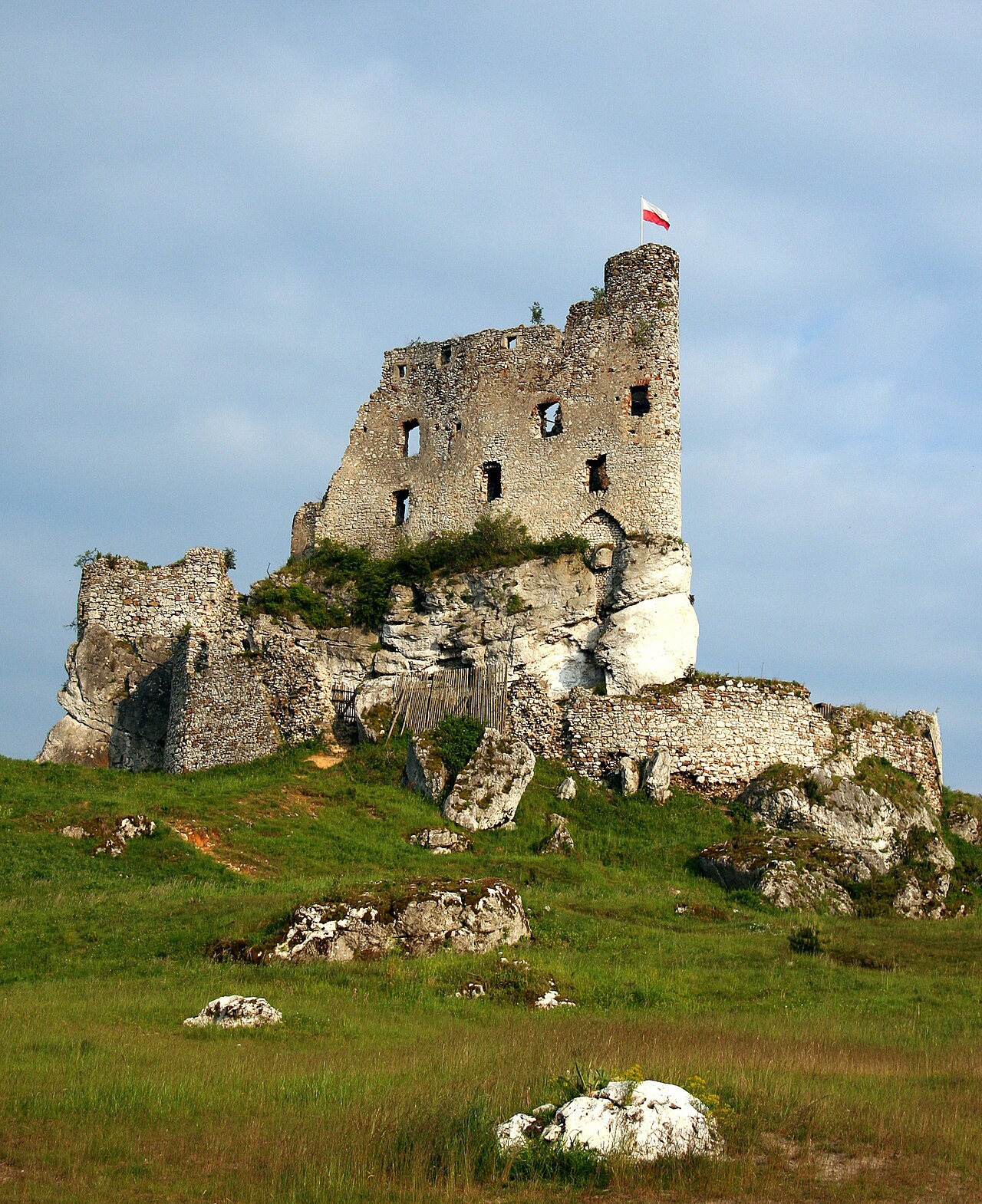
The most devastating blow to Bobolice Castle came during the Swedish Deluge (mid-17th century), when in 1657 Swedish forces led by General Müller plundered and set fire to the fortress. This event marked the beginning of the castle's long decline. By the late 17th century, it was largely abandoned and in ruins. Notably, when King John III Sobieski passed through in 1683 en route to the Battle of Vienna, his entourage was forced to camp in tents due to the castle's dilapidated state.
In the 18th and 19th centuries, the castle's remains were further degraded by treasure hunters and locals repurposing stones for other constructions. After World War II, parts of the ruins were dismantled to provide materials for road building between Bobolice and Mirow.
20th-century reconstruction and modern restoration
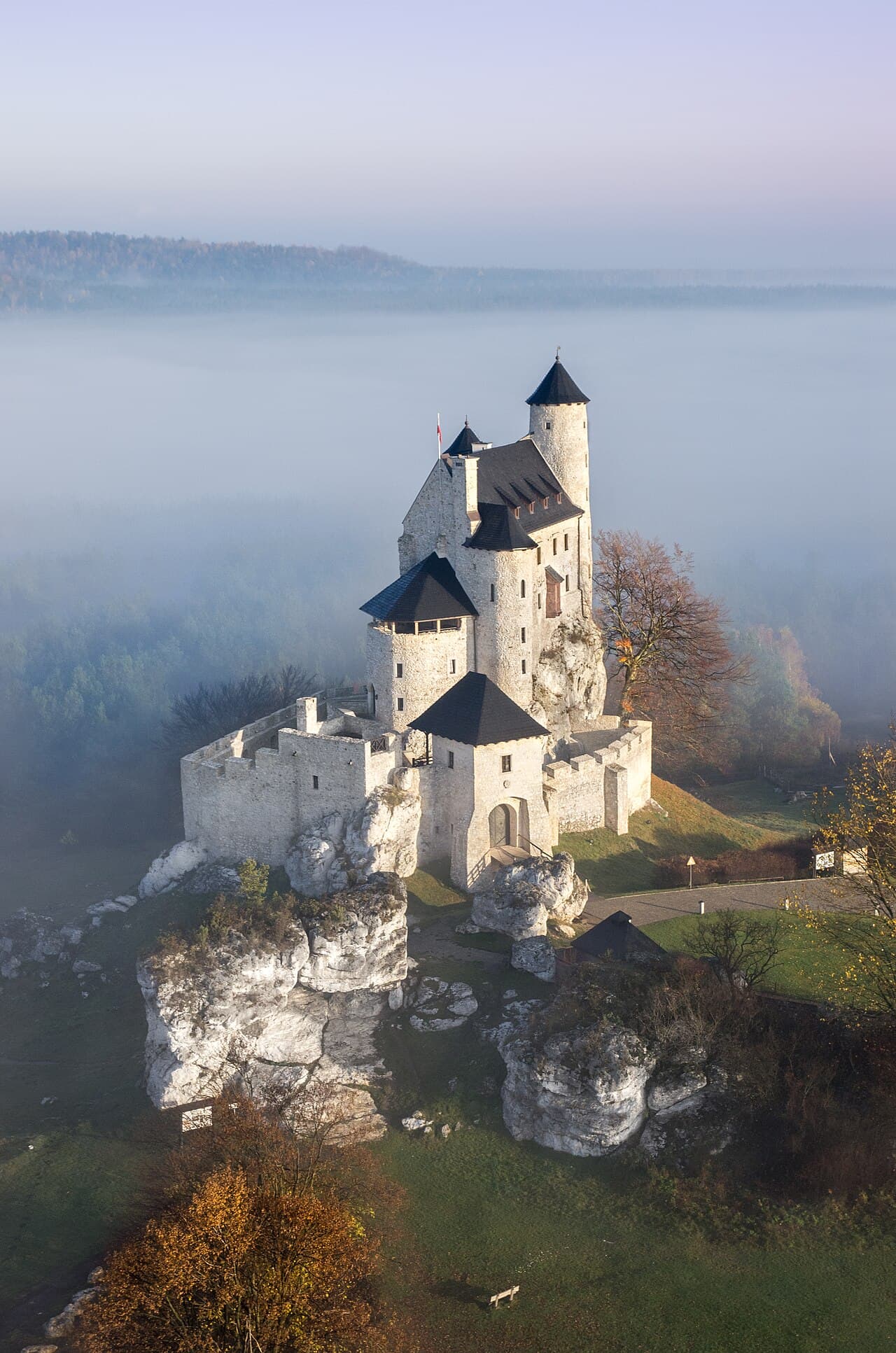
In the late 20th century, the castle ruins were acquired by the Lasecki family, who embarked on an ambitious reconstruction project beginning in 1999. The restoration aimed to return Bobolice Castle to its approximate 16th-century appearance, guided by archaeological research, historical scholarship, and traditional construction methods using local limestone. Despite the absence of original architectural plans, the reconstruction was based on surviving ruins and expert interpretation.
The restoration, completed in 2011, involved rebuilding the two-story residential building, the defensive walls, and the gatehouse, with particular attention to historical detail. However, the project has been subject to debate within the heritage conservation community, with some critics labeling it as overly interpretive or "Disneyland-like." Nonetheless, the castle now serves as a popular tourist destination, featuring a hotel and restaurant at its base offering regional cuisine.
Architectural features and archaeological findings
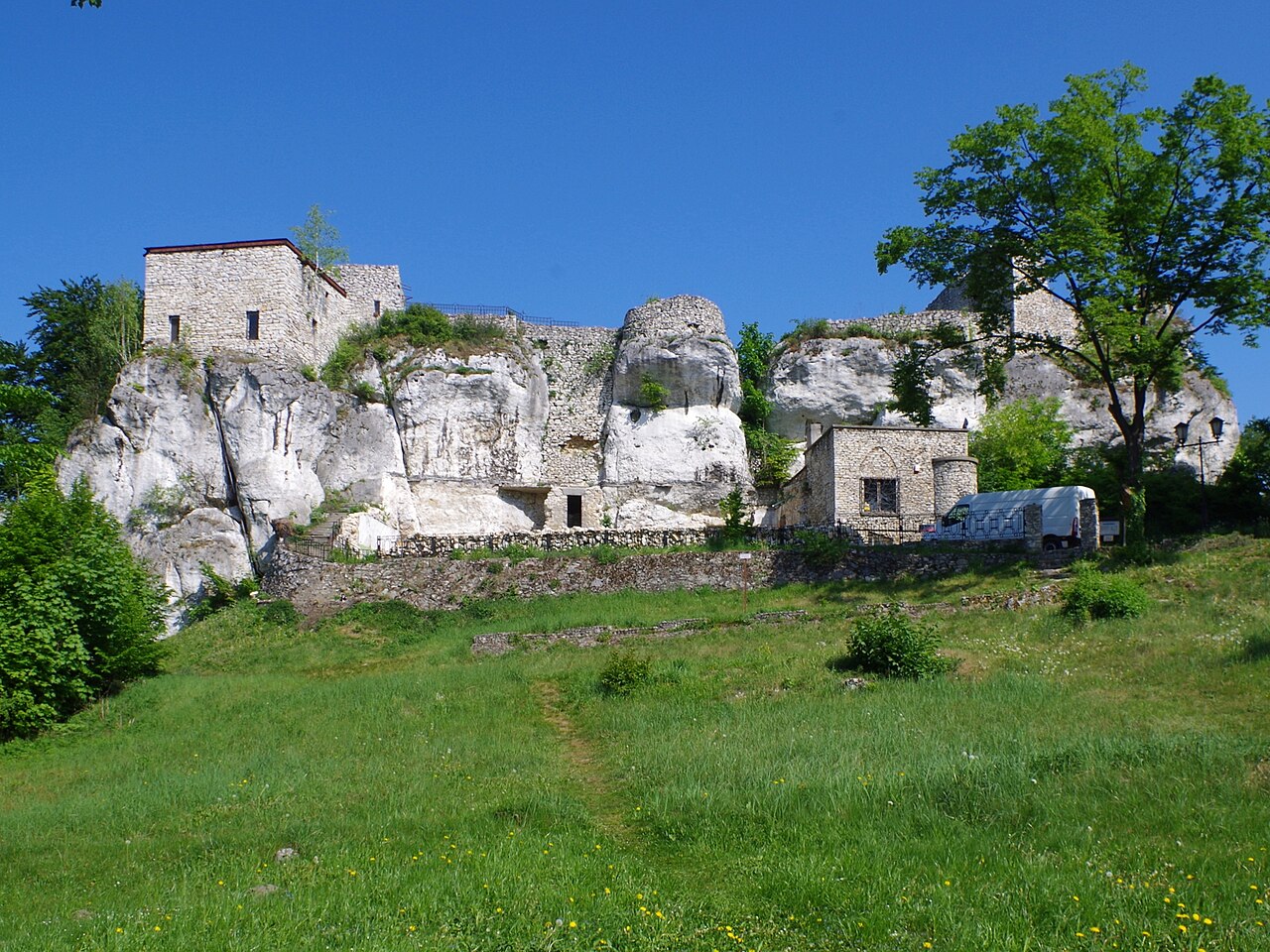
Bobolice Castle's layout is adapted to the irregular limestone hill rising approximately 360 meters above sea level. The castle was originally enclosed by white limestone walls with battlements and surrounded by a dry moat. Access was controlled via a drawbridge leading to a gatehouse featuring a Gothic pointed arch portal.
The core of the castle included a kamieniec (stone residential building) and a stołp (free-standing tower), with two semicircular half-towers added in the 15th century to strengthen defense. The upper floors housed living quarters and a chapel, reflecting the castle's dual military and residential functions. The lower bailey served economic purposes, containing service buildings, a well, and accommodations for servants.
Excavations during the reconstruction uncovered a wealth of artifacts, including ceramics, tiles, iron tools, glassware, and coins spanning several centuries. Decorative elements such as the Dołęga coat of arms on the main gate highlight the noble heritage of the castle's inhabitants.
Cultural significance and visitor experience
Today, Bobolice Castle is an integral part of the Eagle's Nests Trail, a popular tourist route linking a series of medieval fortresses across the Kraków-Częstochowa Upland. Visitors can explore the restored castle grounds, enjoy panoramic views of the Jura landscape, and learn about Poland's medieval border defenses.
A scenic trail connects Bobolice Castle to the nearby Mirów Castle, approximately 1.5 kilometers away, passing through limestone rock formations with striking shapes. Local legends speak of a secret tunnel between the two castles, rumored to hide treasures left by former occupants, though no such passage has been discovered.
The castle's restoration and its accompanying amenities, including a hotel and restaurant, make it a favored destination for weekend excursions and cultural tourism, offering a blend of history, architecture, and natural beauty.
Frequently asked questions (FAQ)
- How do I get to Bobolice Castle?
- Bobolice Castle is located in the village of Bobolice, Silesian Voivodeship, Poland. It is accessible by car and public transport from nearby cities like Myszków and Katowice. Clear signage and parking are available near the site.
- What are the opening hours for visiting Bobolice Castle?
- The castle is open daily from 10:00 to 18:00, allowing visitors ample time to explore the grounds and museum exhibits.
- Is Bobolice Castle suitable for families with children?
- Yes, Bobolice Castle offers a family-friendly environment with safe walking paths, educational displays, and a nearby hotel and restaurant that cater to visitors of all ages.
- What is the historical significance of Bobolice Castle?
- Bobolice Castle was a key part of the Eagle's Nests defense system, protecting Poland's western border during the late medieval period. It witnessed significant historical events including sieges and ownership changes among noble families.
- Can I visit both Bobolice and Mirów Castles in one trip?
- Absolutely, the two castles are connected by a scenic 1.5-kilometer trail through limestone formations, making it easy and enjoyable to visit both in a single day.
- Are there guided tours available at Bobolice Castle?
- Guided tours are offered regularly, providing detailed insights into the castle's architecture, history, and restoration efforts, enhancing the visitor experience.
Photo gallery

Information
Opening hours
10:00-18:00, daily
Ticket prices
€10 adult, €5 child
Current owner
Private owner
Website
Visit websiteSources & official resources
Verify the information above using these authoritative references.
Loading map...
Visitor reviews
No reviews yet. Been here? Write the first review and help other travelers!
Write the first reviewVisited this castle? Share your experience
Your review helps other travelers and adds first-hand knowledge to our encyclopedia.