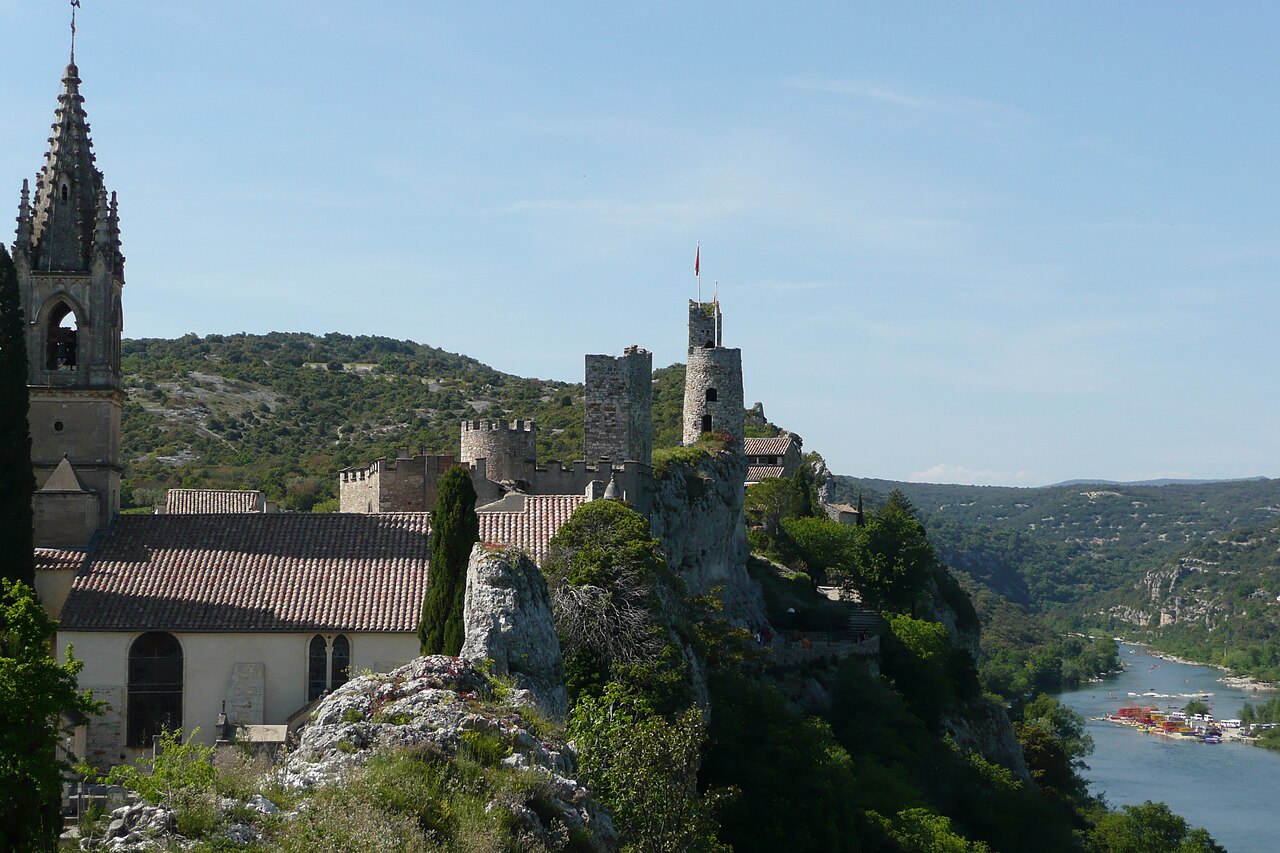
Mornas Fortress
Mornas Fortress, perched dramatically on a rocky outcrop in the village of Mornas, France, is a striking example of a High Medieval stone fortress with origins dating back to the 9th century. Originally mentioned as Rupea Morenata, the earliest incarnation of the fortress was likely a wooden structure designed to protect the local settlement. Its strategic position overlooking the Rhône River allowed it to control this vital waterway and the surrounding lands.
Early origins and medieval reconstruction
The fortress was rebuilt in stone starting in the 12th century, marking its transition into a formidable medieval stronghold. This reconstruction reflected the architectural and military needs of the High Medieval period, with robust walls and defensive features suitable for the turbulent times. The stone fortress was likely constructed with thick curtain walls, towers for surveillance and defense, and a keep or donjon serving as the last refuge during sieges.
Strategic importance and ownership
Throughout its history, Mornas Fortress was a coveted asset, changing hands between powerful entities. It was initially under the control of the Counts of Toulouse, a significant noble family in southern France. Later, the fortress came under the authority of the Papacy, reflecting its importance in the political and religious conflicts of the region.
Religious wars and violent episodes
The fortress is notably linked to the French Wars of Religion in the 16th century, a period marked by violent clashes between Catholics and Protestants (Huguenots). In 1562, the fortress witnessed a brutal episode known as the Sauto Barri or "wall jump." Protestant forces led by the ruthless Baron des Adrets massacred the non-combatants—women, children, and elderly—who had taken refuge in the chapel. The Catholic garrison was forced to leap from the fortress walls to escape, a tragic event that has become infamous in the fortress's history. When the Catholics recaptured the fortress in 1568, the Huguenots suffered a similar fate, highlighting the fortress's role as a battleground during these religious conflicts.
Decline and restoration efforts
Following the French Revolution, the fortress was abandoned, leading to its gradual decline and ruin. The loss of its military and strategic relevance meant it was no longer maintained, and the centuries took their toll on the structure.
Modern revival and cultural significance
Since 1978, the fortress has experienced a revival thanks to the dedicated efforts of the association Les Amis de la Forteresse. This group has worked tirelessly to restore the ruins and bring the fortress back to life, focusing on historical accuracy and public engagement. Today, visitors can experience medieval life reenacted through pageants where knights and lords in period costume welcome guests. These events are especially popular with children and provide an immersive educational experience.
Architectural features and visitor experience
The fortress's location on a rocky promontory offers visitors unparalleled views over the Rhône River and the surrounding landscape. The site includes remnants of the original curtain walls, towers, and the chapel where the tragic massacre occurred. A cliff path nearby leads to the small Saint-Baudile Chapel, adding to the historical and scenic appeal of the area.
Visitors to Mornas Fortress can explore the restored sections, learn about the fortress's turbulent past, and enjoy the scenic beauty of the region. The combination of dramatic history, architectural remains, and cultural activities makes it a compelling destination for those interested in medieval fortifications and French history.
Frequently asked questions (FAQ)
- When was Mornas Fortress originally built and what materials were used?
- Mornas Fortress was originally mentioned in the 9th century as a wooden structure. It was rebuilt in stone from the 12th century onwards, reflecting medieval military architecture.
- What significant events took place at Mornas Fortress during the French Wars of Religion?
- During the French Wars of Religion, Mornas Fortress saw violent clashes between Catholics and Protestants. In 1562, Protestant troops led by Baron des Adrets massacred civilians in the chapel, forcing the Catholic garrison to jump from the walls. The fortress was recaptured by Catholics in 1568, with similar violence against Huguenots.
- Is Mornas Fortress open to visitors and what can they expect?
- Since 1978, restoration efforts have allowed Mornas Fortress to host medieval pageants with knights and lords in period costume. Visitors can explore partially restored ruins, enjoy historical reenactments, and take scenic walks to nearby sites like Saint-Baudile Chapel.
Information
Loading map...
Visitor reviews
No reviews yet. Been here? Write the first review and help other travelers!
Write the first reviewVisited this castle? Share your experience
Your review helps other travelers and adds first-hand knowledge to our encyclopedia.