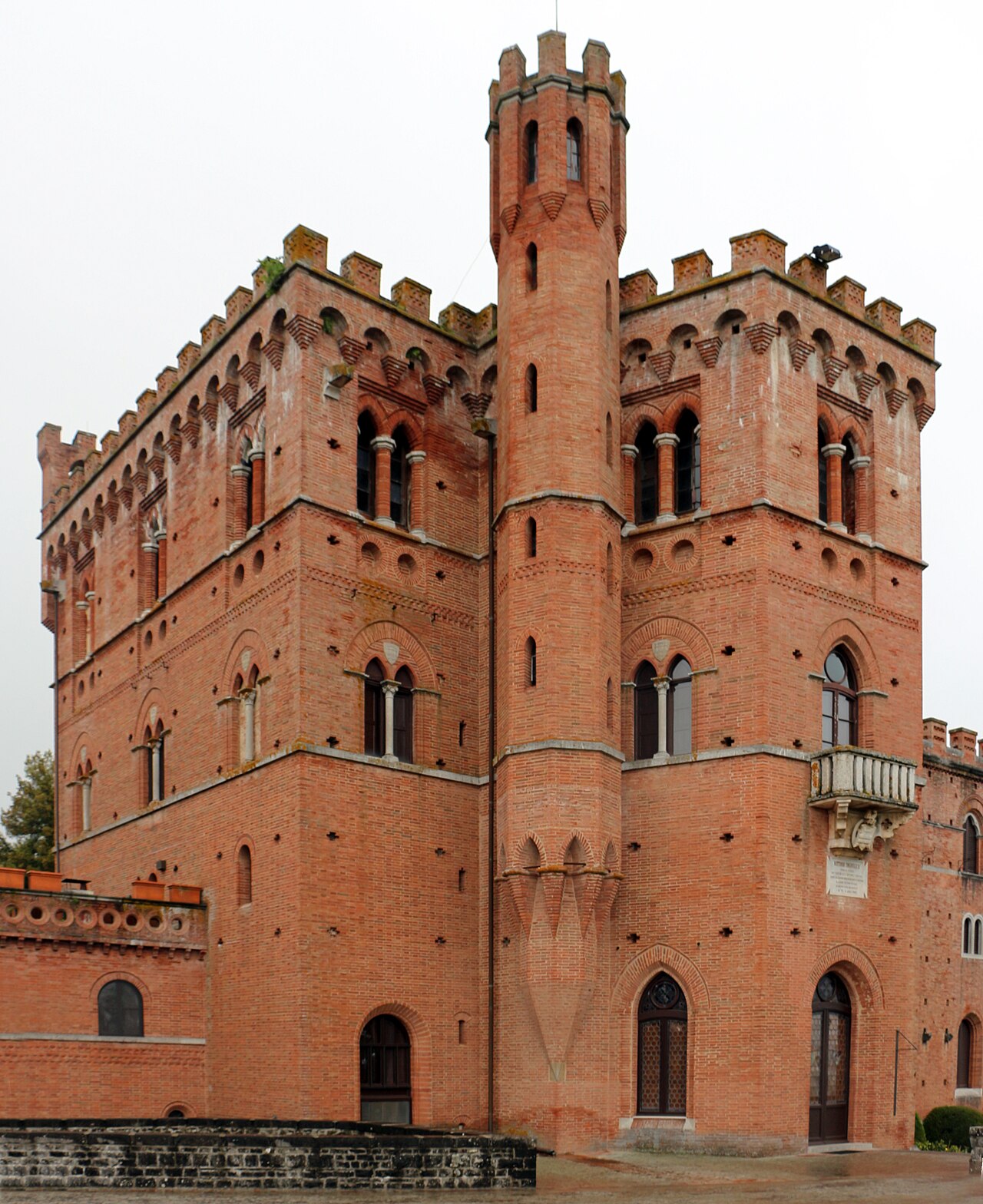
Montozzi Castle
Montozzi Castle stands as a remarkable example of a hill castle with a rich history stretching back to the 6th century. Located in the municipality of Laterina Pergine Valdarno in Tuscany, Italy, this site originally began as a fortified settlement founded by the Bulgar people, allies of the Lombards. The earliest documented association is with the Sassi family, particularly Teuzzo di Ildebrando dei Sassi, whose lordship gave rise to the name “Mons Teuzi.” This early medieval foundation set the stage for centuries of strategic military and residential development on the Bulgari hill.
By the 12th century, control of Montozzi shifted to the influential Ubertini family of Arezzo, who constructed a new fortification atop the hill to oversee the surrounding valleys. This castle is first mentioned in a 1221 agreement involving the Ubertini and the powerful Guidi family. The castle's early history was marked by conflict, including a 1303 siege by Florentine forces that led to its destruction. After the Ubertini rebelled against Bishop Guido Tarlati of Arezzo, the fortress was again destroyed by the Florentines in 1326. Despite these setbacks, the Ubertini rebuilt Montozzi, but by 1335, the castle and the surrounding Valdambra territory were ceded to Florence, marking a significant shift in regional power.
Medieval and renaissance transformations
Montozzi Castle's military importance diminished after the late 14th century, particularly following a 1399 rebellion and subsequent Florentine reconquest. Its defensive walls and keep gradually fell into disuse. However, the castle's site remained significant as the Bartolini Baldelli family began acquiring the estate in the 16th century, expanding their holdings over the following century.
In 1660, brothers Francesco and Ottavio Bartolini Baldelli constructed a villa that incorporated the remains of the medieval castle's keep. This villa, with its rectangular layout and northwest-facing façade, features a double symmetrical staircase leading to an entrance adorned with the family's coat of arms. The architectural style blends Renaissance and Baroque elements, evident in the stone corbels supporting the windows and the relief keystone above the portal. The villa reuses original medieval masonry in its foundations, preserving a tangible link to the site's fortress origins.
Artistic and structural enhancements
Early 18th-century additions to the villa include a double loggia and agricultural buildings such as a granary. The interior boasts stucco reliefs by Giovan Martino Portogalli and frescoes by Giovanni Camillo Sagrestani, showcasing the artistic tastes of the period. In 1843, the central hall was renovated with a Venetian-style terrazzo floor and a neo-medieval fireplace, adding historicizing features. The villa sustained damage during World War II but was restored post-war by family members, preserving its historical and architectural integrity.
The church of saints martino and lucia
Attached to the villa's west side is the Church of Saints Martino and Lucia, built starting in 1702. This church incorporated an older oratory dedicated to Santa Lucia and features a simple façade with a broken pediment and a rounded arched window illuminating the single nave interior. The church's altars, carved from local pietra serena sandstone, include notable artworks such as a fresco by Sagrestani depicting Saint Bartholomew and an early 18th-century painting of the Virgin Mary with Saints Martino and Lucia. A 15th-century sandstone tabernacle from the original San Martino di Tours church is also preserved inside. The church's choir loft connects directly to the villa, symbolizing the integration of religious and residential life.
Cemetery chapel and family commemorations
Nearby stands the cemetery chapel of San Martino, constructed in 1866 by Bartolomeo Bartolini Baldelli. This chapel replaced an earlier Romanesque structure and combines classical architectural elements in an eclectic style. The interior is divided into a plain nave for local residents and an upper floor for family commemorations, including the Bartolini Baldelli burial chapel, underscoring the family's enduring connection to the estate.
Landscape and estate agriculture
The villa is surrounded by the mid-19th-century English-style park known as la Bandita, designed by Bartolomeo Bartolini Baldelli and gardener Angiolo Pucci. This woodland park features holm oaks, winding paths, and a sandstone gate with classical columns topped by decorative vases. Adjacent formal gardens, laid out in the late 19th century, are divided into eight segments by boxwood hedges and contain rare tree species such as Lebanon cedars arranged in stone circles, thuja trees, yews, and historically, a giant Californian pine.
Beyond the ornamental grounds, the Montozzi estate includes extensive farmland and woodland cultivated for organic agricultural production since 2010. The estate produces Chianti and IGT wines from its vineyards, alongside olive groves, cereal crops, and fodder plants. It also manages areas for wildlife hunting and conservation, reflecting a harmonious balance between cultural heritage and environmental stewardship.
Historical significance and preservation
Montozzi Castle exemplifies the evolution of a medieval fortress into a Renaissance-Baroque villa, illustrating the shifting political and social dynamics of Tuscany over centuries. Its layered architecture, from the original Bulgar settlement to the Bartolini Baldelli family's enhancements, offers valuable insights into regional history and aristocratic life. The preservation of artistic works and the integration of religious structures highlight the estate's cultural importance. Today, Montozzi remains a testament to Tuscany's rich historical tapestry and architectural heritage.
Frequently asked questions (FAQ)
- How do I get to Montozzi Castle?
- Montozzi Castle is located in Laterina Pergine Valdarno, Italy, and can be easily accessed by car or public transport. The nearest train station is in Arezzo, from where you can take a bus or taxi to the castle. Make sure to check local transport schedules for the most convenient route.
- What is the historical significance of Montozzi Castle?
- Montozzi Castle dates back to the 11th century and played a crucial role in the defense of the area during the Middle Ages. It has witnessed numerous historical events and changes in power, making it a fascinating site for history enthusiasts. The castle's well-preserved architecture reflects its strategic importance throughout the centuries.
- When was Montozzi Castle last renovated?
- Montozzi Castle has undergone several renovations over the years, with significant restoration efforts in the 20th century to preserve its historical integrity. The latest renovations aimed to maintain its original features while enhancing visitor accessibility. These efforts ensure that visitors can enjoy the castle's rich history in a comfortable setting.
- Can I visit Montozzi Castle year-round?
- Yes, Montozzi Castle is open to visitors throughout the year, although hours may vary depending on the season. It is advisable to check the official website or contact the castle administration for the latest information on opening hours and any seasonal events. Visiting during the spring and fall offers a beautiful backdrop of the Tuscan landscape.
- Why is Montozzi Castle popular among tourists?
- Montozzi Castle attracts tourists due to its stunning architecture, picturesque views, and rich history. Its location in the scenic Tuscan countryside enhances its appeal, making it an ideal spot for photography and exploration. Additionally, the nearby attractions, such as local wineries and charming villages, add to the overall experience for visitors.
- Is it possible to book guided tours of Montozzi Castle?
- Yes, guided tours are available for visitors who wish to learn more about the history and architecture of Montozzi Castle. These tours provide an in-depth look at the castle's features and historical significance, often led by knowledgeable guides. It is recommended to book in advance, especially during peak tourist seasons.
- What are the ticket prices for Montozzi Castle?
- Ticket prices for Montozzi Castle vary depending on age and the type of tour selected. Generally, adults can expect to pay a modest fee, while children and seniors may receive discounted rates. Special packages or group rates may also be available, so it’s best to check the official website for the most current pricing information.
- What are the best times to visit Montozzi Castle?
- The best times to visit Montozzi Castle are during the spring and fall months when the weather is mild, and the surrounding landscapes are particularly beautiful. Summer can be quite hot, while winter may bring cooler temperatures, but the castle remains charming year-round. Visiting during weekdays can also help you avoid larger crowds.
- Is Montozzi Castle accessible for visitors with disabilities?
- Montozzi Castle strives to be accessible for all visitors, with efforts made to accommodate those with mobility challenges. While some areas may have limitations due to the castle's historic structure, staff are available to assist and provide information on accessible routes. It is advisable to contact the castle in advance to discuss specific needs and arrangements.
Information
Website
Visit websiteSources & official resources
Verify the information above using these authoritative references.
Loading map...
Visitor reviews
No reviews yet. Been here? Write the first review and help other travelers!
Write the first reviewVisited this castle? Share your experience
Your review helps other travelers and adds first-hand knowledge to our encyclopedia.